 Quail Corner
What Size Feeder Ports for Quail (2026): 1.5-Inch Guide
For adult Coturnix, 1.5-inch feeder ports are a common starting point in this product set. The opening size is only one check: you also need the right bird fit, container cutout, secure installation, clean edges, and enough access for the whole covey.
This guide helps you choose between a port-only bucket or bin retrofit and a complete outside-hanging feeder. You will see where pack count matters, why a 1.5-inch label does not always tell you the drill size, and when it is smarter to skip the DIY step.
Types compared
Port feeders fall into three useful buying groups. The first two need your own container or mounting plan. The third arrives as a feeder, so you trade some DIY flexibility for a faster setup.
| Type | What you buy | Best fit | Main trade-off |
|---|---|---|---|
| Push-through port kit | Individual ports | A bucket, bin, or tub you already have | You must cut a matching opening and finish the edge |
| Screw-on port kit | Ports with retaining rings | A container wall that can accept the hardware | You still need accurate placement and a suitable wall |
| Complete outside feeder | Hopper, ports, and mounting body | Wire cages and keepers who want less building | Less control over hopper shape and port layout |
Push-through kits
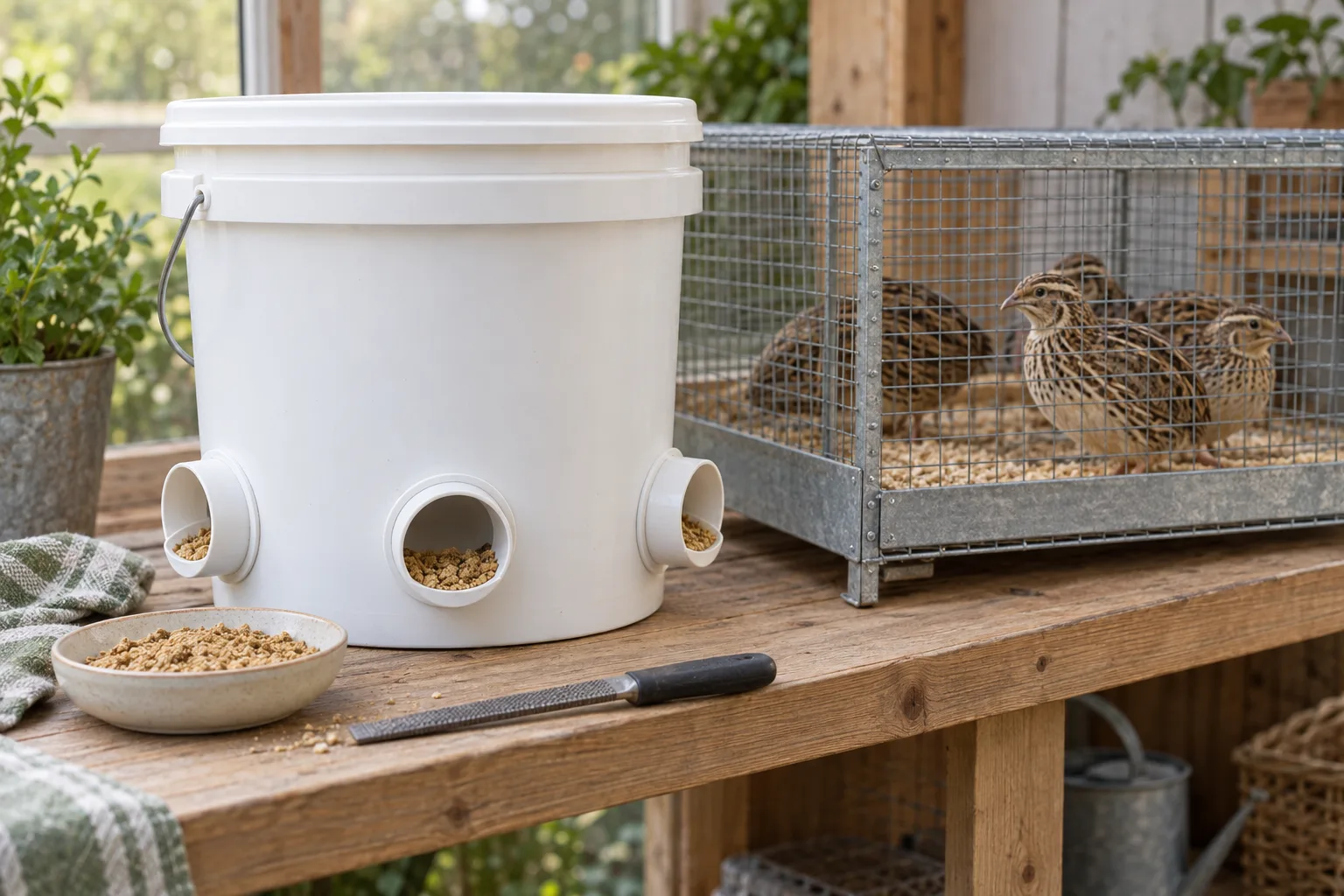
A push-through kit is the simple bucket conversion. You make the opening, press the port into place, and check that the collar sits flat. The 2B Creations 16-pack is aimed at a quail-specific multi-port retrofit from button quail through large Coturnix quail. The port is the component; your container becomes the hopper.
The Happy Chicken Coop’s feeder overview is useful context here: open access lets quail scratch and fling feed, while a port limits how much feed a beak can reach at once. That can cut the mess, though it cannot replace a good fit and a level, secure container.
Screw-on kits
Screw-on ports use a retaining ring to hold the port against the container wall. That can be a tidy choice when you want detachable parts for cleaning. The Rite Farm 8-pack is a lower-cost way to try a small retrofit, while the 2B Creations port kit gives you more pieces for a larger build. Its listing does not identify a screw-on ring system, so do not assume every multi-port pack installs the same way.
Complete outside feeders
A complete feeder makes sense when you want the hopper and ports designed together. The CluckRoots example is an outside-hanging feeder with three 1.5-inch ports, approximately 4-pound capacity, and intended use with adult Japanese, Jumbo, and Pharaoh quail. If you want ready-made no-waste feeder designs compared side by side, see Best quail feeder (2026): 7 no-waste picks.
For a wider verified port roundup, including more installation styles and pack sizes, read best quail feeder ports (2026): 6 DIY no-waste picks. That page is the better next stop if you already know a port retrofit is right for your container.
Silver Homestead’s bucket-feeder example shows the keeper side of this choice: birds might need a short introduction to a new port. Give them time to find the feed before deciding the opening or layout has failed.
Key factors to consider
1.5-inch opening versus container cutout
“1.5 inch” usually describes the bird-facing inner opening, not automatically the hole you cut in the bucket. Some designs have an outer collar or retaining surface. Treat the maker’s cutout instruction as the deciding measurement, and compare it with the tool you own before buying.
Farmstead Guide’s DIY feeder discussion also treats 1.5 inches as a common starting point for quail ports. That still is not a drill-size promise. After installation, run a finger around every accessible edge. The port should sit firmly, the container wall should not crack, and the opening should give birds clear feed access without a sharp lip.
Bird stage and intended fit
Choose a product whose stated bird range includes your birds. The 2B Creations listing says button quail through large Coturnix quail, while CluckRoots names adult Japanese, Jumbo, and Pharaoh quail. Rite Farm’s listing names quail and chicks. Those descriptions are useful starting points, yet you should still watch small birds at the installed port rather than assuming one opening suits every age.
Port count and real access
More ports give more possible feeding positions, though they do not guarantee equal access. Space them where birds can approach without a corner, perch, or cage wire blocking the opening. Adult Coturnix eat about 1 oz (25–30 g) per bird per day, so access and hopper refill capacity answer different questions: a full bin does not help a bird that cannot reach it.
Use How Many Feeders per Quail (2026): Capacity & Setup for a fuller access and refill plan. Count the birds, look at the cage shape, and decide how often you are willing to refill before choosing a 4-port, 8-port, or larger pack.
Installation and cleaning
Port-only products require a suitable container plus measuring, drilling or cutting, deburring, and secure mounting. Screw-on rings can simplify retention, while push-through parts can make a faster build on the right wall. Either way, test the empty feeder for wobble and flex before adding feed.
Make cleaning part of the purchase decision. Detachable or unscrewable parts are convenient when you need to clear damp crumbs. For container ideas and build layouts around feeder ports, see Homemade Quail Feeders: 3 DIY Builds for 2026.
Budget tiers
Think about the whole setup, not only the port pack. A low-cost kit can become less appealing if you also need a container, hole saw, deburring tool, mounting hardware, and time to redo a poor cut.
| Budget tier | What you get | Who should choose it |
|---|---|---|
| Budget, $ | A small port pack for one trial container | Keepers who want to test the idea before building several feeders |
| Mid-range, $$ | A larger port pack or a complete feeder with built-in access | Most keepers choosing between a multi-port retrofit and less DIY work |
| Higher spend, $$$ | A fuller system or several containers with mounting supplies | Keepers paying for scale, convenience, or a more finished installation |
The Rite Farm 8-pack is the sensible trial point if you want a lower-cost first retrofit. Choose the 2B Creations 16-pack when a quail-specific pack and expansion room matter. Choose CluckRoots when you want a complete outside-hanging feeder instead of sourcing and cutting a container. Availability and price bands can change.
Common mistakes to avoid
- Buying by the 1.5-inch label alone : Confirm whether the listing means the inner opening, outer collar, or container cutout before making the first hole.
- Skipping the edge check : Feel around the installed port, remove burrs, and replace a cracked or loose part before birds use it.
- Assuming more ports solve every access problem : Placement, height, cage wire, and bird behavior still decide who can feed comfortably.
- Filling a port kit without a retention plan : A loose port lets the container shift and can leave feed access uneven. Test the empty build first.
- Ignoring spills after installation : If feed still reaches the litter, check fill level, port position, damp crumble, and damaged edges. Then use Quail Wasting Feed: 7 Fixes for Cleaner Feeders (2026) for symptom-based fixes.
Our picks
Start with the purchase that matches your build. Use the 2B Creations 16-pack for a quail-specific multi-port retrofit, the Rite Farm 8-pack for a smaller trial, or the CluckRoots complete feeder when you want to hang a finished unit outside the cage.
See the 2B Creations 16-port listing if you are building a bucket or bin. For a lower-cost trial, see the Rite Farm 8-port listing.
The CluckRoots unit is the decision for a keeper who wants built-in 1.5-inch ports, an outside-hanging format, and approximately 4-pound capacity without building the hopper. It is still worth checking cage compatibility and bird access at the final mounting position.
Frequently asked questions
Are 1.5-inch feeder ports suitable for adult Coturnix quail?
Many adult Coturnix setups use 1.5-inch ports, and that is the size listed for the 2B Creations and CluckRoots examples here. Check the maker’s intended-bird guidance, then inspect the installed opening and edges before adding feed.
How many feeder ports do quail need?
There is no single universal port-per-bird number established for every cage and flock. Plan around access, pecking order, feeder height, and refill needs, then watch whether birds can reach feed without crowding.
Do port kits include the bucket or bin?
Usually, a port kit is only the set of ports. You supply a suitable container and handle measuring, drilling or cutting, deburring, and secure mounting. A complete outside-hanging feeder is easier if you do not want that build work.
Is a 1.5-inch port hole always 1.5 inches?
No. A port’s stated inner opening and the container cutout can be different. Follow the installation instructions for the exact product, and do not enlarge the container until you know which surface the measurement describes.
Will feeder ports stop all wasted feed?
No feeder design guarantees that. Ports can reduce easy bill-flinging when the fit and height suit the birds, while spilled feed can still come from overfilling, poor mounting, damp crumble, or a damaged edge.