 Quail Corner
Quail Wasting Feed: 7 Fixes for Cleaner Feeders (2026)
Quail spill feed mostly because the feeder is open, loose or placed where feed can be scratched out. Overfilled hoppers and poor access add to the loss. Look at the setup first, then make one change at a time before choosing a replacement.
Stop quail wasting feed
A repeatable three-step process
- Watch how the birds reach the feed
- Check the mount, ports and litter
- Stabilize or reposition the feeder
- Limit sideways access with a suitable port
- Use a dry catch tray
- Recheck the next feeding period
A cleaner feeding area and a clear reason for any remaining waste
How do you stop quail wasting feed?
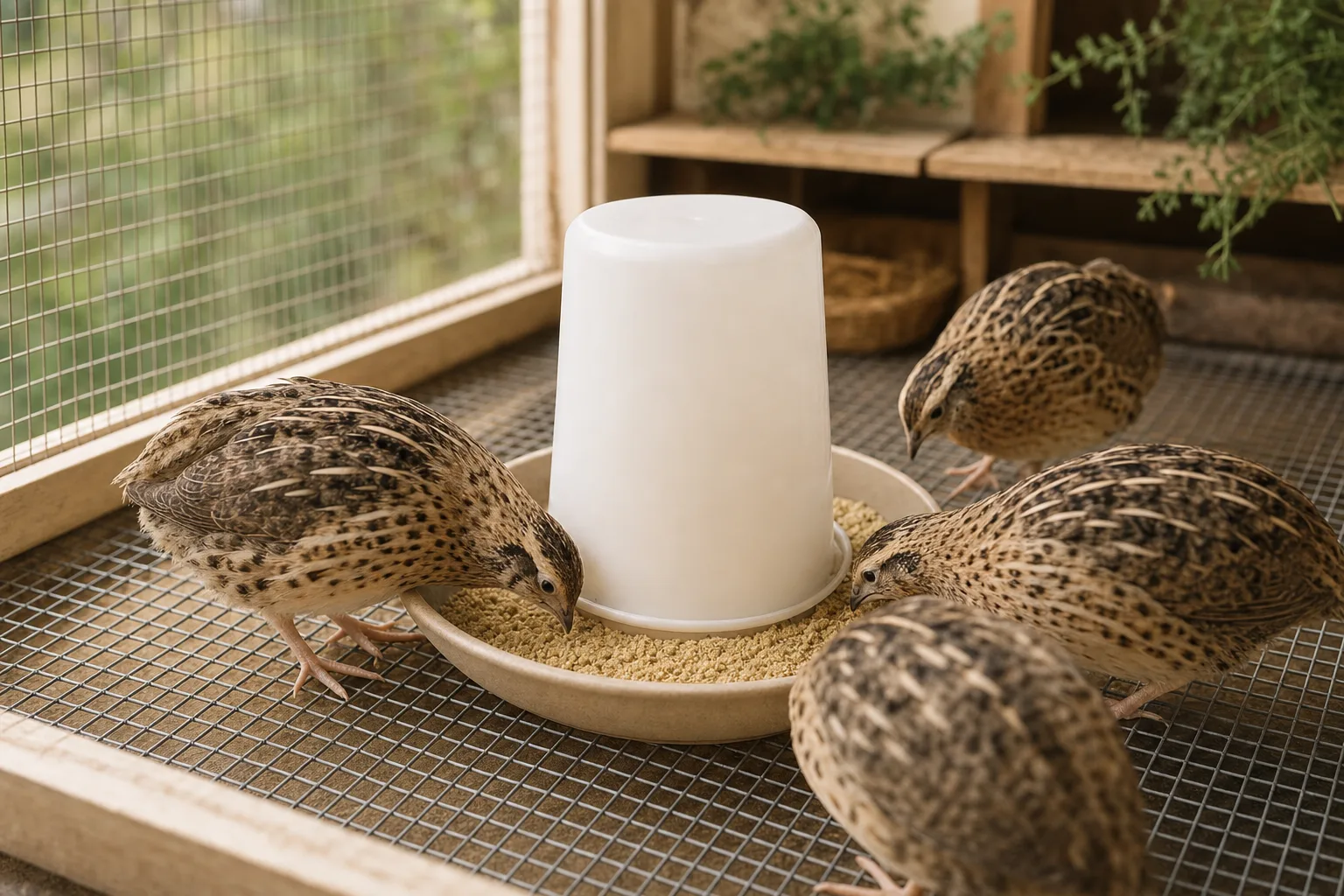
Start by steadying the feeder and watching how the birds reach it. If they hook their beaks into an open trough or knock the container while feeding, move to a protected port or hopper that fits the cage and the birds. A dry catch tray below the feeding area can recover feed that still falls off.
Outside-hanging adult feeders save floor space and make refilling easier, though they need a compatible opening or mount: a no-waste port feeder that mounts outside the cage is the usual fix for beak-flicking, and a multi-port feeder insert retrofits the same principle to a bucket. Protected hoppers reduce scratching while still allowing access. DIY port systems give you flexibility, but you supply the container, openings, mounting and weather protection. “No-waste” and “no-mess” are product labels, not promises of zero waste. For finished options, read our quail feeder picks.
What do you need to check the feeder?
You need a simple way to catch and inspect spilled feed, plus dry cleaning tools. Keep the rest of the routine steady while you check the setup. That makes it easier to see where the waste starts.
- A shallow catch tray that sits below the feeding area
- A dry brush, scoop and clean cloth
- The feeder's mounting hardware, or a compatible replacement
- Complete game-bird feed for the birds' life stage
Mississippi State University Extension's “Feeding Quail” and “Quail Feeding Programs” explain complete game-bird feed and age-based feeding. The feeder and catch tray shape access and cleanup; they do not replace the right feed or water setup.
How do you fix a wasteful quail feeder?
Inspect the cause first, adjust one part, then verify the result. This order keeps you from blaming the feeder for a loose mount, poor placement or blocked opening.
Step 1: Inspect stability and access
Watch the birds during feeding and find the first point where feed leaves the feeder. If the container swings, tips or scrapes against the cage, fix the mount before changing the ports. Check that the birds can reach the feed without pulling large mouthfuls sideways.
Check the fill level too. A feeder packed to the top gives beaks more feed to push out. Litter under the feeder points to a placement problem. Feed stuck near an opening points to a blocked port or damp feed.
Step 2: Adjust the access or position
Stabilize the current feeder, move it away from falling litter and protect it from rain or splashing. Then make one access change. Adult Coturnix often do well with a protected outside-hanging feeder or a hopper with ports, provided the cage opening and mount match the design.
A DIY port system can be economical and flexible. You supply the bucket or jar, create the openings and keep the assembly weather-safe. A finished hopper is easier to install, though blocked ports and difficult cleaning can still create waste.
Step 3: Verify with a dry catch tray
Place a shallow, dry tray below the feeder and inspect what lands in it. This catch-tray approach comes from Silver Homestead's no-waste feeder work, which also covers keeper experience with bucket-style port designs. Use the tray to recover clean feed and see if your changes reduced scatter.
Brush away old feed and remove anything damp or dirty. An adult Coturnix eats about 1 oz (25–30 g) per day, so repeated loss adds up quickly and is worth correcting.
If a bird looks visibly unwell, watch for changes and consult a veterinarian or extension office rather than assuming the feeder is the cause.
Which mistakes cause more feed waste?
The biggest waste-makers are treating every spill as a feeder failure, leaving the feeder loose, and placing it where litter or moisture can enter. Correct the physical cause first, then decide if another design earns its place.
- Open feeder on a busy cage floor: Replace or shield it with protected access instead of accepting the loss.
- Loose mount: Tighten or change the hardware so the feeder stays put while birds feed.
- Overfilled hopper: Fill only as much as your routine needs and check for feed pushed out around the openings.
- Adult setup for small birds: Give chicks stable, shallow access. Keep button quail separate and check fit instead of assuming adult-Coturnix ports work.
Farmstead Guide's editorial coverage and Rustic Tools both frame the finished-versus-DIY trade-off. Outdoor use adds weather concerns, while DIY designs add construction and cleaning work.
What should you do when the feeder still makes a mess?
Match the visible symptom to one correction and give the birds time to use the changed setup. Rustic Tools says feeders deserve a look at durability, cleaning, capacity, contamination and spillage, which is a useful checklist here.
Feed is scattered around the feeder
Open access or a moving container is the first suspect. Secure the mount, then choose a protected port that the birds can reach without raking feed sideways.
The port looks full, but birds keep pecking around it
A blocked opening, poor fit or inconvenient position is stopping the flow. Clear the port, check its orientation and reposition the feeder. Do not make an opening larger without checking bird size and safe access.
Feed in the tray is damp or dirty
Moisture or litter is entering from outside. Move the feeder under better protection, clean the area and discard the compromised feed. Keep the tray dry so it stays a cleanup tool instead of becoming the next mess.
The feeder is clean but waste continues
Watch the birds again during feeding. Flock pressure, poor access or a design that exposes too much feed can keep the problem going. If one adjustment does not help, compare a protected outside-hanging or hopper option.
Frequently asked questions
Why are quail spilling feed?
Quail spill feed when they can rake it sideways from open access, when the feeder moves, or when it is overfilled. Flock pressure and litter or moisture entering the feeding area can add to the mess, so watch the setup before choosing a replacement.
How do I stop quail wasting feed?
Make one change at a time: stabilize or reposition the feeder first, then use a suitable port or hopper to limit sideways scratching. Put a dry catch tray below the feeding area so clean, recoverable crumble does not disappear into litter.
What are common no-waste quail feeder problems?
Blocked ports, openings the birds cannot reach, damp feed, hard-to-clean parts and continued scattering are common problems. Clear a blockage, check access, remove damp feed, clean the parts and change the setup step by step.
What is the best no-mess quail feeder setup?
For adult Coturnix, start with a protected outside-hanging or hopper-style feeder. Check the cage opening, cleaning access, weather protection and placement, because those details matter more than a “no-mess” label.
Do quail chicks need a different feeder?
Yes. Chicks need stable, shallow, easy-to-clean access, and button quail need their own small-bird setup because they are much smaller. Check the opening and floor before using any adult-Coturnix feeder; never assume the fit is safe.