 Quail Corner
How Many Feeders per Quail (2026): Capacity & Setup
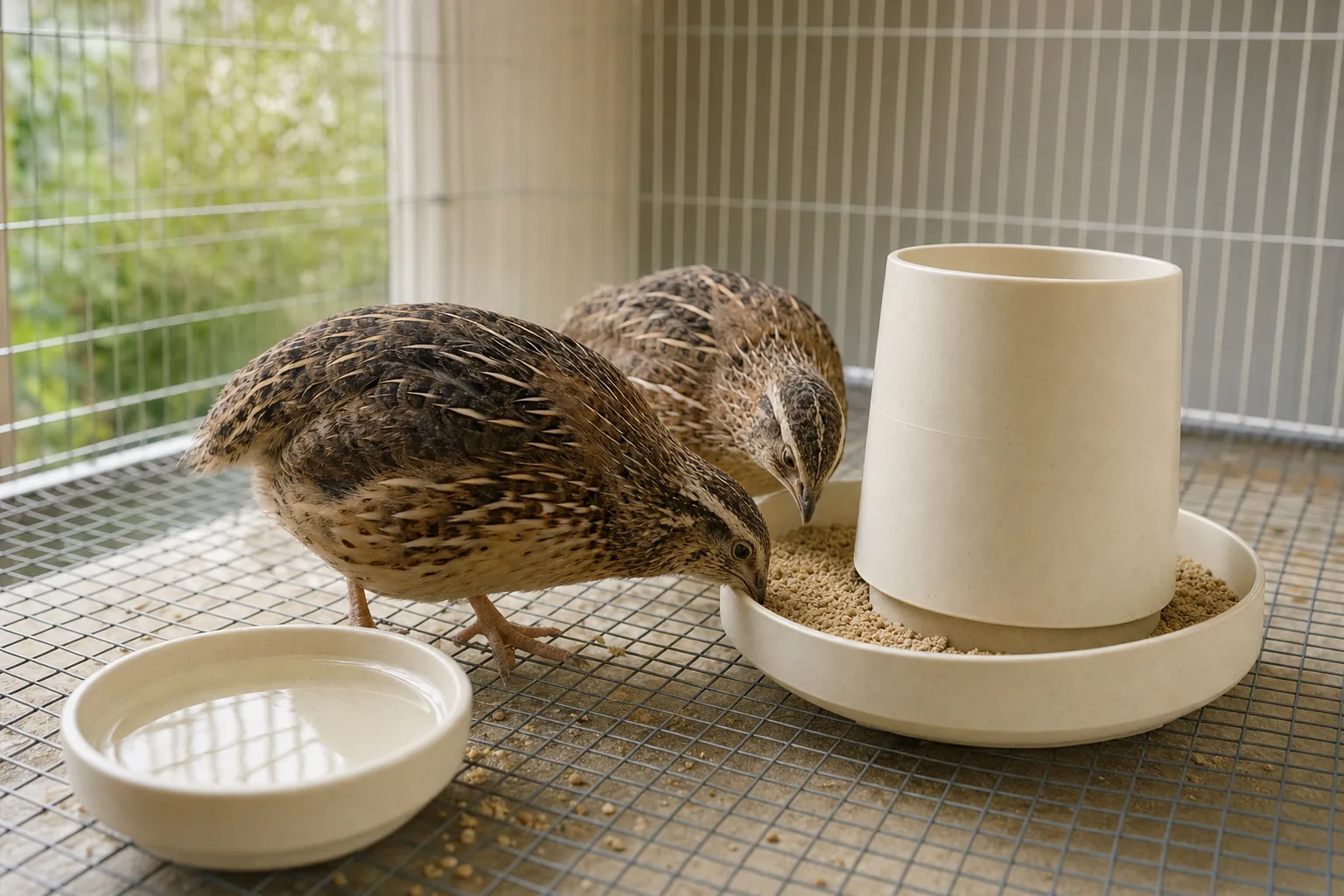
There is no universal number of feeders per quail. Plan for dependable access to complete feed, then watch the flock for crowding, chasing, blocked openings, and empty feeding points before deciding whether to add another station.
This guide helps you choose feeder type, capacity, cage fit, access, and cleaning routine for adult Coturnix, Coturnix chicks, and button quail. For specific finished and DIY options, start with our quail feeder picks.
How many feeders per quail do you actually need?
There is no universal feeder-per-bird or port-per-bird answer in our husbandry references. Every bird needs dependable access to complete feed. One station can work when every bird reaches it freely. Add access points when one bird guards the opening, birds wait or get displaced, or separate cage sections cannot share a feeder.
Count access points separately from whole feeders. A three-port feeder gives three openings, yet its layout may still suit one cage poorly. Observe the flock after installation and adjust the arrangement instead of relying on a fixed ratio.
| Type | Access pattern | Main advantage | Main trade-off | Best use |
|---|---|---|---|---|
| Outside-hanging port | Birds feed through mounted ports | Saves floor space | Needs a compatible opening or mount | Adult cage setups |
| Gravity hopper | Feed drops into an access area | Familiar, finished setup | Spill control and cleaning vary | Small, closely observed flocks |
| Trough | Broad exposed access | Easy for birds to find | More exposed to scattering and contamination | Earlier stages or simple layouts |
| Chick feeder | Stable, small-bird access | Easy to inspect and clean | Not automatically right for adults | Coturnix chicks |
| DIY port system | Keeper-created openings | Flexible fit | You solve mounting and weather protection | Custom cages and budgets |
Outside-hanging port feeder
An outside-hanging port feeder such as a three-port no-waste quail feeder preserves floor space and lets you refill from outside the cage. Where one feeder cannot serve every bird, a four-pack of smaller hanging feeders spreads access across the cage more cheaply than buying four full units. It is the first category I would investigate for adult Coturnix. Look at the actual wire opening or mount before buying, because a good feeder is useless if it cannot sit securely where the birds can reach it.
Gravity hopper
A gravity hopper gives you a finished, familiar setup and can suit a small flock that you watch closely. Inspect its spill control, roosting risk, cleaning access, and cage fit. Capacity alone does not tell you if feed stays dry or if the hopper is practical to empty.
Trough feeder
A trough gives broad, obvious access and can be useful during early stages. The exposed feed is easier for birds to scatter, and bedding or droppings can reach it more easily. It suits keepers who value quick visual checks and do not mind a more frequent cleanup routine.
Chick feeder
A chick feeder prioritizes stable access and simple cleaning for small birds. Keep this choice separate from adult-Coturnix planning. Mississippi State University Extension's “Feeding Quail” and “Quail Feeding Programs” provide useful life-stage context, while your feeder still needs to fit the brooder and remain easy to inspect.
DIY port system
A DIY port system can be economical and flexible. You provide the bucket or container, create the openings, solve the mounting, and assess weather exposure and cleanability. Silver Homestead describes bucket-style port designs and a catch tray for leftover crumble, while Farmstead Guide discusses the outdoor and installation trade-offs. Those are keeper and editorial sources, not universal husbandry rules.
Which budget tier fits your feeder setup?
The right tier depends on how much adjustment and cleanup work you want to do. There is no universal dollar cutoff here. Think about the routine you are buying. The linked roundup handles current price bands and specific options.
| Tier | What the buyer generally gets | Best fit | Trade-offs |
|---|---|---|---|
| Entry | Basic trough or gravity arrangement with simple mounting | Small, closely observed setup | More exposed feed and potentially more cleanup |
| Mid-range | Finished hopper or port design with improved refill and spill control | Most adult-Coturnix cage keepers | Confirm cage compatibility and cleaning access |
| Premium or flexible DIY | Durable materials, custom fit, or a larger system | Multiple cages or outdoor exposure | More money or build work; maintenance still matters |
What feeder-buying mistakes cause waste and frustration?
- Choosing by hopper capacity alone: A bigger container does not solve blocked access, poor visibility, or difficult cleaning.
- Ignoring cage fit: An outside feeder helps only when the opening and mount work with the actual cage.
- Treating “no-waste” as literal: Port designs can reduce scattering; dust, crumble, and poor placement still create waste.
- Using one design for every life stage: Chicks and button quail need separate small-bird consideration. An adult feeder is not automatically suitable.
- Making DIY an afterthought: A bucket or jar still needs safe openings, stable mounting, a cleanable container, and protection from dampness.
Where can you compare specific quail feeder picks?
The roundup best quail feeder (2026): 7 no-waste picks is the place to compare finished outside-hanging, gravity, chick, and DIY-port options. This page supplies the selection framework, while that article handles current product details, price bands, and specific recommendations.
Build the rest of your station around the feeder and daily routine. If water sits beside the feeder, pair it with our quail waterer picks for a matching access and cleaning plan.
Frequently asked questions
What is the best feeder for quail?
The best feeder depends on the bird stage, cage opening, access arrangement, and cleaning routine. For adult Coturnix, compare those points in our quail feeder picks. A feeder that suits one cage can be awkward in another, especially if a bird can block the only opening.
What is the best no-waste quail feeder?
A port-style feeder is a strong category to investigate if you want to reduce scattering. Feed still contains dust and crumble, and birds can spill some during use, so “no-waste” describes a design goal rather than a zero-waste promise.
What is the best no-mess quail feeder?
A low-mess setup combines sensible placement with a design that limits flicking, a careful refill routine, and easy cleaning. A catch area can collect leftover crumble. A port feeder can cut scatter, while poor fit and damp feed still leave cleanup.
What is the best quail chick feeder?
The best feeder for quail chicks offers stable, easy-to-see access and simple cleaning. Choose for small-bird safety and inspection rather than adult hopper capacity. Coturnix chicks need 1/4-inch floor wire where wire is used, but that fact does not set a feeder-opening size.
Can you use a chicken feeder for quail?
You can use some chicken feeders for quail if the opening, access, stability, and placement suit the birds. Check that quail can feed without excessive waste or awkward squeezing. Chicken equipment has no universal compatibility rule for every Coturnix cage or life stage.
Do quail need a feeder outside the cage?
Quail do not universally need an outside feeder. Outside mounting can preserve floor space and make refilling easier when the cage opening and mount match. If the arrangement blocks access, spills feed, or is difficult to clean, an inside or trough setup can work better.