 Quail Corner
How to Set Up a Quail Cage: Step-by-Step (2026)
In about an hour you can take a new stackable quail cage from cardboard box to a level, stocked, predator-safe home for your flock. The payoff hits the next morning, when you roll out a tray of clean eggs instead of scrubbing a coop.
How to Set Up a Quail Cage
A six-step setup, level to stocked
Step 1 Pick the spot
- Find level, dry, draft-free floor
- Check power and water reach
Step 2 Assemble the frame
- Build the stack on the level spot
- Lock each layer into place
Step 3 Set up floors and trays
- Seat the sloped roll-out floors
- Slide the front trays in flat
Step 4 Run water and feed
- Fill the tank and test every nipple
- Load the feeder troughs
Step 5 Stock your flock
- Count floor space per section
- Keep one male per 4–5 hens
Step 6 Final checks
- Confirm doors latch and vents open
- Watch the first night once stocked
Result
A level, predator-safe, stocked quail cage in about an hour
Quick answer
Pick a level, dry, draft-free spot near power and water, assemble the stack on it, seat the sloped roll-out floors and trays, run the drinker nipples and feeders, then stock by floor space. One square foot per bird minimum, one male per 4 to 5 hens, and you are done in about an hour.
What you'll need
If you have not bought the cage yet, start with our quail cage picks, then come back here to set it up. For a six-section stack the Hatching Time 3-Section 2-Layer Traditional below is the one this guide assembles. First-timers with a smaller flock can run the same steps on the 2-Section 1-Layer, which comes ready to run out of the box with its 1-gal tank and drinker cups.
- Hatching Time stackable quail cage with its frame and assembly hardware
- Sloped roll-out egg floors and front collection trays
- Water tank, drinker nipples, and feeder troughs
- Small level and a couple of shims for the base
- Half-inch wire floor panels (chicks need quarter-inch)
- Sand dust-bath tray, oyster shell for layers, insoluble grit
- Timer light for 14–16 hours of daylight
Our Top Picks

Step-by-step
Where should you put a quail cage?
Set the cage somewhere level, dry, and out of the draft, with power and water in reach. Quail are fine to about 20 degrees F and get heat-stressed above 90, so shelter beats warmth. Airflow matters too: the Hatching Time blog notes quail are sensitive to ammonia, so do not back the cage into a sealed corner where fumes collect.
Leave room to walk behind the cage for easy tray access. You are emptying those trays every day or two, so freedom of reach around the stack is not a luxury. If you are not sure where the cage goes in your setup, the housing hub lays out the wider options for pens, coops, and aviaries.
How do you assemble the frame and cage?
Set the frame on the level spot you picked before you load anything. Stack the layers one at a time, locking each section into place so nothing shifts when a bird startles. The Hatching Time 3-Section 2-Layer Traditional weighs about 40 lb on its own, so brace it against a wall so the stack cannot rock.
Run a small level across the top rail and shim the feet under the base until the bubble sits dead center. That one step saves you the tray-binding trouble of step three, and it is the most skipped part of the whole setup. Do it before the plastic beds in.
How do you set up the floors and trays?
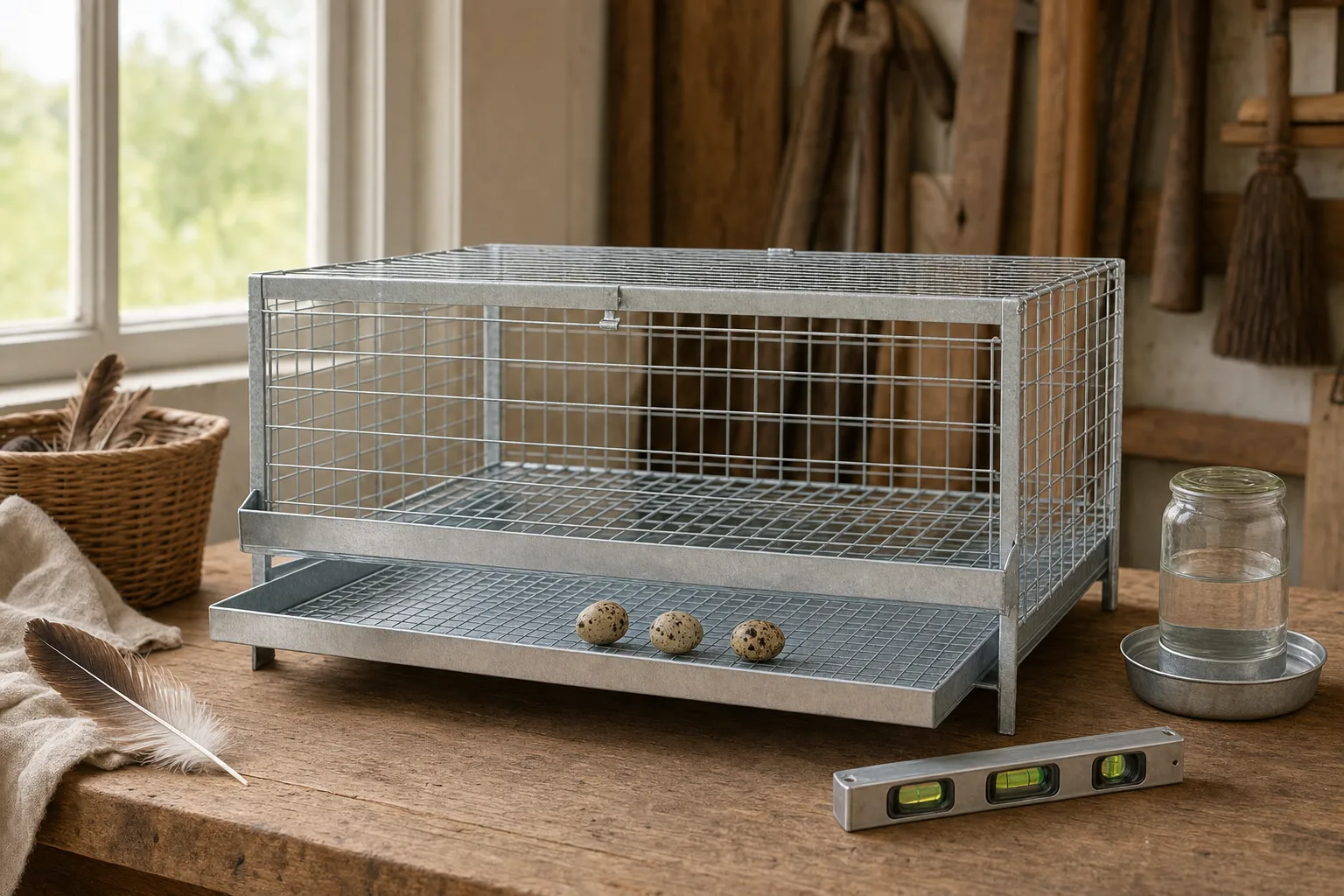
Seat the sloped roll-out floors first, then slide the front trays in until they sit flat on the rails. The floors slope 7 to 10 degrees, enough that an egg rolls clear of the birds in seconds, so you are not picking glop off shells. That slope depends on the cage sitting level, which is why shimming matters.
Lay the half-inch wire floor panels over the slope and push the removable walls into their tracks. Do the same on every level and section. If you later move chicks in, swap for quarter-inch wire so tiny toes cannot slip through the gaps.
How do you set up water and feed?
Fill the tank and press each drinker nipple by hand; you want a clean stream, not a drip, which signals a good seal. Route the water line so every section reaches a nipple without kinking. Then load the feeder troughs so every bird can eat without crowding.
Each adult quail eats about 1 ounce (25 to 30 grams) and drinks 1 to 1.5 fl oz per day, so size daily refills to your flock count, and more in heat. Give layers oyster shell and insoluble grit free-choice if they take anything other than straight crumble.
How many quail should you stock?
Stock by floor space, not by looks. Give each bird 1 square foot minimum on wire, 1.5 if you are kind, and Hatching Time rates each section for 3 large or 5 small birds, which lines up with that square-foot math. On the 2-layer unit that is roughly 15 to 30 birds total.
Now split the sex ratio: keep one male per 4 to 5 hens, never tighter than 1 to 3, or the extra roosters fight and break eggs. If you are moving adult hens in, move them in daylight and settle them before lights off so they feel safe overnight.
What final checks matter before quail move in?
Run a hand along every door, latch, feeder seam, and tray edge. Confirm nothing pinches a toe or catches a wing, and that every vent points open. Then set a timer light to hold 14–16 hours of daylight through autumn and winter so hens keep laying, and drop in a shallow sand tray for dust baths, offered a few times a week.
With a clean cage and daylight, watch the first night quietly. Stress after a move settles within a couple of days, and mature hens can be rolling eggs to the tray before the week is out.
Common mistakes
- Skipping the level check. Build the stack on an unlevel floor and the roll-out tray binds within a week. Level the base before you load a single bird.
- Crowding sections. More than one bird per square foot on wire and pecking starts fast. Trust the 3 large or 5 small per section math.
- Ignoring ventilation. Quail are sensitive to ammonia, so daily tray dumps and an open vent matter more than an airtight cage. The Hatching Time blog says the same.
- Adding a roost or nest box. Quail do not roost and lay on the floor, so skip the chicken thinking. The roll-out slope does the collecting.
Troubleshooting
Tray won't slide in or out
The cage is not level. Shim the base under the feet until the rails sit flat, and the tray frees up. Also check nothing is wedged under the tray.
Drinker nipples leak
Pull each nipple and reseat it, then verify the tank seal and O-rings are seated. A clean stream means it is sealing. Don't force a clip onto a kinked line.
Ammonia smell in the first week
Ventilation plus a daily tray dump is the fix. Open the air slots, dump that tray every morning, and the smell clears. Quail are sensitive to it, so do not wait.
Cracked eggs on the tray
The floor slope is too shallow or the gap between tray and rail is catching eggs. Aim for the 7 to 10 degree slope and check the gap sits flush so nothing clips a shell on the way down.
Hens go quiet after the move
Moving stress plus short daylight drops laying. Keep the timer at 14–16 hours of light and give the birds a couple of quiet days before expecting a full tray.
Frequently asked questions
Where should I put a quail cage?
Put it level, dry, and draft-free, with power and water within reach. Quail are fine to about 20 degrees F and get heat-stressed above 90, so a sheltered spot beats a warm one. Good airflow matters: the Hatching Time blog flags ammonia buildup and quail respiratory sensitivity, so never tuck the cage into a fully sealed corner.
How many quail fit in a quail cage?
Give each bird 1 square foot minimum on wire, or 1.5 if you want them comfortable. Hatching Time rates each section for 3 large or 5 small quail, which lines up with that floor space. A 6-section 2-layer unit holds roughly 15 to 30 birds at the minimum.
Do quail need a nest box or roost?
No. Quail are ground birds and lay right on the cage floor, which is why a sloped roll-out tray beats a nest box. Roosts are chicken thinking: on wire they cause foot trouble, which is why Brimwood Farm runs no perches at all. You save the space and collect eggs from the front tray.
How many males should I keep with my hens?
Keep one male per 4 to 5 hens, and never tighter than 1 to 3. Any more males and the extra roosters fight, which stresses the hens and cuts egg numbers. If you hatch your own chicks, pull the excess males out for grow-out early so the breeder pens stay calm.
What do quail need in a cage to stay healthy?
A half-inch wire floor, feed and water sized to the flock, and the basics for laying. Each adult eats about 1 ounce of feed and drinks 1 to 1.5 fl oz of water a day. Layers get oyster shell free-choice, insoluble grit if they eat anything but crumble, and a sand dust-bath offered a few times a week.