 Quail Corner
Why Are My Quail Fighting in the Cage? 7 Fixes That Work
Chasing, feather-pulling, and blood in the cage almost always trace back to housing: crowding, too many males, or a bad ratio. Nearly every fight keepers describe on the forums comes down to one of those three, and all three are fixable today. Work through the diagnosis in order, most urgent first.
How to stop quail fighting right now
A five-step order of operations, most urgent first
Step 1 Pull any bleeding bird
- Remove the injured quail at once
- Isolate it until it looks nearly normal again
Step 2 Count your birds
- Check you have at least 1 ft² per bird on wire
- Count males and hens
Step 3 Fix the ratio
- Keep one male per 4-5 hens
- Move surplus males to a bachelor pen
Step 4 Split the pen
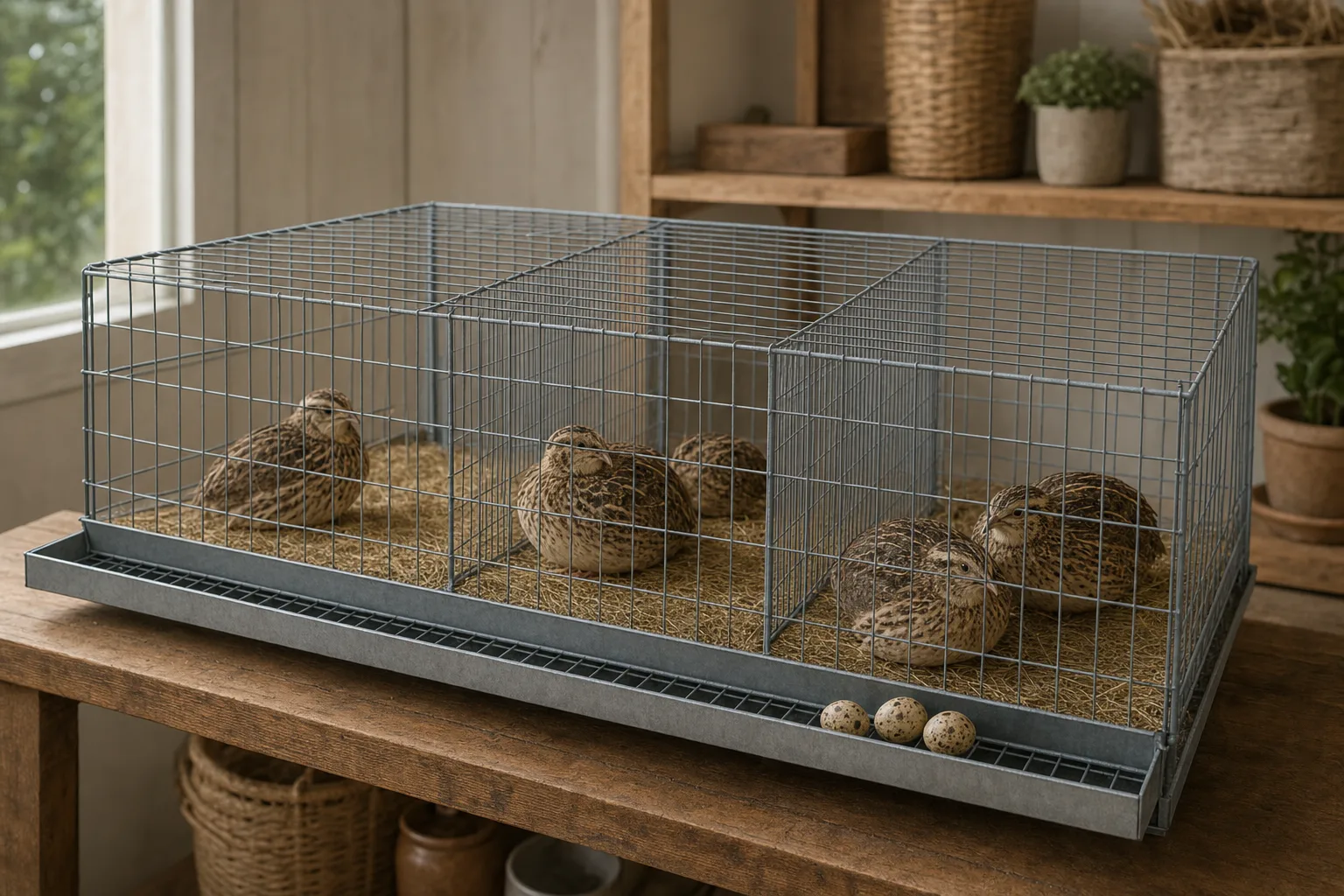
- Separate the fighters with a divider wall
- Move one breeding group to another section
Step 5 Add cover and reintroduce slowly
- Offer hiding spots or a dust-bath tray
- Introduce new birds through visual separation first
Result
A calm pen with the right space, the right ratio, and nowhere for a bully to corner a victim.
Quick answer
First, pull any bird that is bleeding. Blood draws more pecking and an injured quail can be mobbed, as keepers on the BackYard Chickens forum (thread 1124686) report bluntly. Then check three numbers: 1 ft² of floor per bird minimum on wire, one male per 4-5 hens, and cage height of 8-12 in. Most fights trace back to one of those three being wrong, so before you change anything else, check the cage itself. The space math in Best Quail Cage (2026): 6 Verified Picks for Every Flock tells you whether the pen is the bottleneck.
What you'll need
- A way to split the pen. Divider walls, a second cage, or a multi-section unit. A sectioned cage like the Hatching Time 3-section 2-layer stack gives you six pens in one footprint.
- An isolation pen. Somewhere a bloodied or bullied bird can recover out of sight of the flock.
- Cover. A dust-bath tray, a low branch, or a cardboard hide. A chased quail that can break line of sight stops being chased.
- Patience for reintroductions. New birds need days of visual separation before any face-to-face meeting.
Our Top Picks


The seven questions
Is anyone bleeding?
Answer this before anything else. An open wound turns mild pecking into a mob event, because quail are attracted to blood and will keep working at a wound. Remove the bird now, keep it warm and quiet in a hospital pen, and only return it once the wound is closed and the feathers cover it, roughly when it looks nearly normal again. A ready-to-run option is the two-section Hatching Time cage: 23.8 in by 24 in, one section for the patient, one for a bachelor if you need it.
Is your cage overcrowded?
Most likely, yes. If the count is simply beyond the cage, a three-section, two-layer cage buys real floor area, and a single-layer add-on section is the usual way to expand a stack before the pecking starts. Give each bird at least 1 ft² of floor on wire, and 1.5 ft² if you want the birds comfortable; ground pens and aviaries need 2 ft² per bird. Count your birds, measure the floor, and divide. Under the minimum, pecking usually starts within the week. If the math fails, either thin the flock or add floor area, and see the housing guides for pen layouts that hold the peace.
Do you have too many males?
One male per 4-5 hens, with 1:3 as the absolute floor. Every male past that is a fighter with nothing to do but defend hens that are already spoken for. Keepers on the r/quails forum (thread w6kajk) echo the same rule of thumb, four or five hens minimum per male. If you hatched your own birds, you probably have more males than you think. At 6-8 weeks, the same age males first pass the foam test for vent-sexing, the pecking order turns physical, and the surplus roos start drawing blood.
Are your hens bald on the head?
Bald heads and torn neck feathers on hens mean overbreeding: too few hens per male. A single overworked roo will ride every hen in the pen until their head feathers wear off. Fix the ratio, or split the pen so each male has his own group, and the feathers usually grow back at the next molt.
Is it just normal pecking-order sparring?
Some chasing and pecking is ordinary quail life, especially in the first days after a change. Normal sparring looks like brief chases, a pulled feather here and there, and everyone still eating. Fighting looks like one bird relentlessly cornering another, or blood. Watch for ten minutes: if a bird cannot eat or rest without being pursued, the pen needs to change.
Did you recently add new birds?
New introductions are a classic trigger, and day one is the worst. The protocol from Forget Me Not Quail Farm works well: quarantine the newcomer and house it where both groups can see each other but cannot touch, using a wire divider or an adjacent cage, for a few days. Then let them meet on neutral ground or at dusk, and supervise. Expect some chasing; intervene at blood.
Are your birds bored?
Quail in a bare pen with nothing to do will find entertainment in each other. A shallow tray of sand or a sand-and-DE mix for dust bathing a few times a week, a handful of greens, and somewhere to hide change the mood quickly. It will not fix a bad ratio, so do this after the space, ratio, and split work, never instead of them.
Common mistakes
- Removing the victim and returning it the same day. The wound and the pecking order both need time. Wait until the bird looks nearly normal.
- Adding more birds to calm things down. If the pen is already under 1 ft² per bird, more birds mean more fighting, and worse.
- Keeping spare males in with the hens. Every surplus male is a fighter. Move them out to a bachelor pen.
- Introducing new birds straight into the pen. Skip visual separation and day one usually ends in blood.
Troubleshooting
Fighting started suddenly after weeks of calm
That is almost always a maturity event. Chicks that left the brooder together at 3-4 weeks (see the hatching and brooding guides) hit 6-8 weeks, and hormones arrive: males become vent-sexable, hens approach first lay, and the pecking order gets physical. Sex them, pull surplus males, and give each breeding group its own section.
Fighting returns whenever you merge two groups
The introduction was too fast. Go back to visual separation for several days, then reintroduce at dusk when activity is lowest, and add extra hides so nobody can be cornered. Some pairings never settle; two breeding groups that will not merge stay split, and a six-section cage makes that cheap to live with.
One bird is a persistent bully
Remove the bully, not the victim. A dominant bird that draws blood goes to its own section or the bachelor pen, and the rest of the flock settles within a day. If the bullying hen or roo is otherwise valuable, run it as a single bird in its own section rather than risking the flock.
Frequently asked questions
Why are my male quail fighting?
Males are territorial. Keep one male per 4-5 hens, with 1:3 as the floor; surplus males go to a bachelor pen away from the hens.
Will quail kill each other fighting?
They can, and a bloodied bird draws more pecking. Pull any injured bird out immediately and keep it isolated until it looks nearly normal again.
How many quail can live in one cage?
At least 1 ft² per bird on wire, 1.5 ft² is kinder, and ground pens need 2 ft² per bird. Our cage roundup has per-cage math for every verified pick.
At what age do quail start fighting?
Sparring usually shows up around 6-8 weeks, the same age males can first be vent-sexed by the foam test and hens approach first lay.
How do I introduce a new quail without fighting?
House the newcomer where both groups can see but cannot touch for a few days, using a wire divider or an adjacent cage, then supervise the first introduction closely.
Can I keep all my males together?
Yes, in a bachelor pen away from hens. Expect some chasing, but with no hens to defend, serious injury is far rarer.
Why are my hen quail losing head feathers?
That is overbreeding: too few hens per male. Fix the ratio to one male per 4-5 hens and the bald heads usually grow back within a molt.