 Quail Corner
Best Quail Cage (2026): 6 Verified Picks for Every Flock
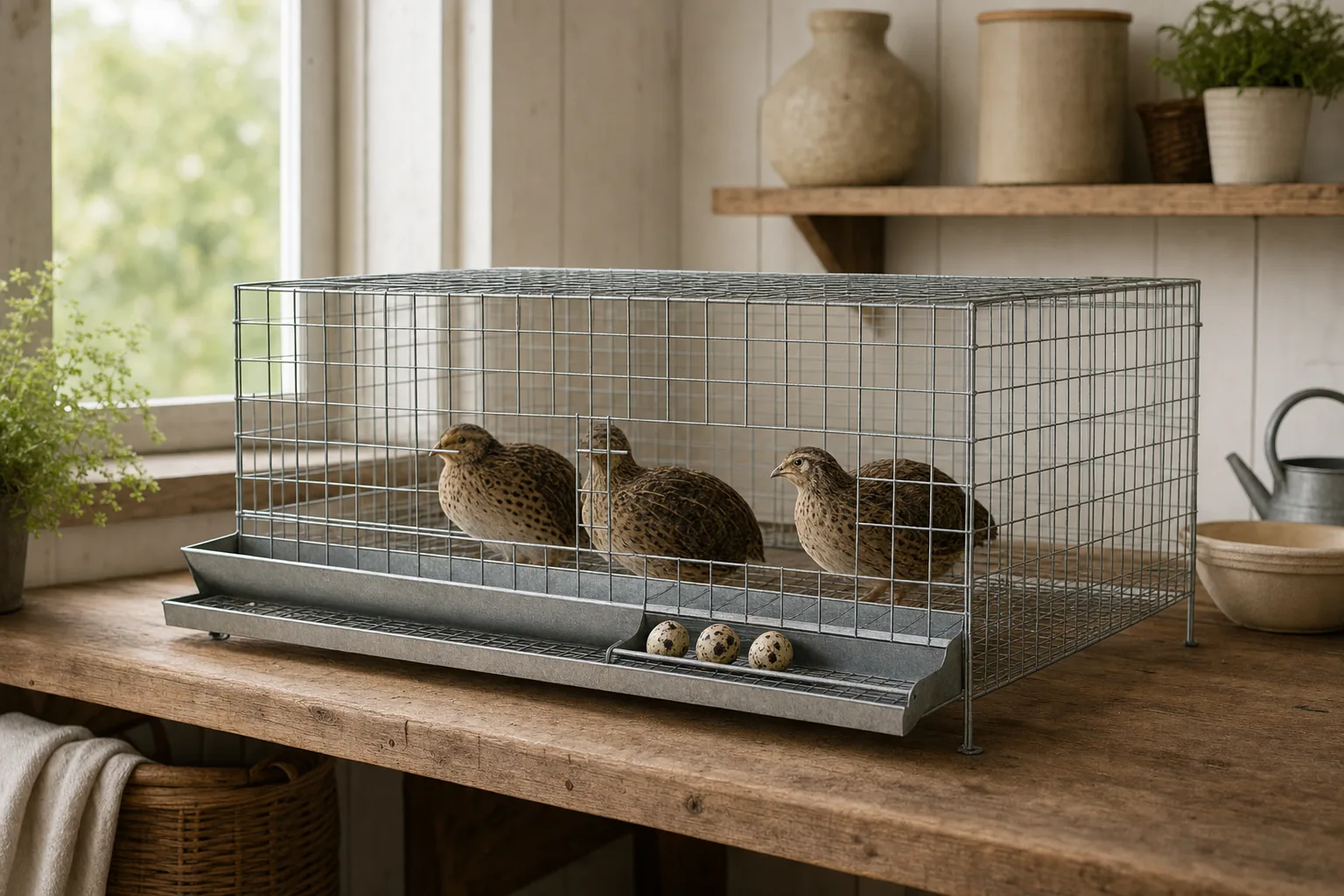
The best quail cage for a backyard egg flock is the Hatching Time 2-Section 1-Layer Traditional: a rust-free plastic breeder with two sections, sloped roll-out egg trays, and a water tank in the box. It won because it does the three things a starter coturnix cage must do: hold a first flock, keep the eggs clean, and hose out in minutes.
The specs that matter: 23.8"L x 24"W x 18.1"H, two sections on one level, moulded PP plastic, and egg trays that slope out the front so you collect without opening a door. Hatching Time rates it at up to 6 large or 10 small quail, which is the vendor's number, so check it against our 1 ft² per bird floor-space minimum. Bigger flocks can step up to the 3-Section 2-Layer Traditional, six sections on a 38.6 x 24 inch footprint.
6 Quail Cages Worth Buying
Ranked by stocking math, clean-out effort, stackability, and value per section
Overall
Traditional flooring, sloped egg roll-out, gravity-fed water
- 2 sections on 1 layer
- Traditional 5/8 x 5/8 in flooring
- Sloped roll-out egg trays
- 1-gal tank + 2 drinker cups
Top Pick Hatching Time 2-Section 1-Layer Traditional
$$
The complete, ready-to-run first cage
Check Price on Amazon Premium
Same footprint, jumbo flooring for big birds
- Jumbo flooring for 10–14 oz adults
- 3 sections, add a Jumbo layer for 6
- Front roll-out egg collection
- Rust-free PP plastic
Top Pick Hatching Time 3-Section Jumbo Flooring
$$$
For jumbo coturnix and meat lines
Check Price on Amazon Upgrade
Nine grow-out sections, three layers
- 9 sections across 3 levels
- 2-gal nipple water system
- 5 lb smart feeder trough
- 9.5-inch level height
Top Pick Hatching Time Grow-Out Pen, 3 Section, 3 Layer
$$$
The chick-to-butcher pipeline
Check Price on Amazon Budget
Turn a 3-section cage into a 6-section stack
- Stacks onto existing HT units
- Feeder trough included
- 38" 3-nipple water pipe
- No frame or water tank in the box
Top Pick Hatching Time 3-Section 1-Layer Addition
$$
Cheapest way to double capacity
Check Price on AmazonQuick answer: Buy the 2-Section 1-Layer Traditional for a backyard egg flock: it arrives complete, and Traditional flooring (5/8 x 5/8 in) is the right size for standard Coturnix. Buy the 3-Section Jumbo only if you keep jumbo lines, since its wider 7/8 x 5/8 in flooring is meant for bigger birds, and stack its matching Jumbo layer on top when you need a second tier. Add the 1-Layer Addition if you already own a Hatching Time stack and want to double it, the Grow-Out Pen if you are raising batches of chicks to butcher weight, and the Kecreque Wooden A-Frame if you want a few quail on grass outdoors.
Quick picks
Our Top Picks


Best Wooden Budget
Kecreque Wooden A-Frame Quail Cage with Run, 47 x 18 x 19.5 in
$
Check Price on AmazonComparison table
| Product | Best for | Price band | Key spec | Verdict | Link |
|---|---|---|---|---|---|
| Hatching Time 2-Section 1-Layer Breeding Cage | Backyard egg flocks and first cages | $$ | 2 sections (1 level), 23.8"L x 24"W x 18.1"H, 1-gal tank + cups, roll-out trays, 13 lb | Best starter cage | Check Price |
| Hatching Time 3-Section 1-Layer Jumbo Cage | Jumbo coturnix and meat lines | $$$ | 3 sections (1 level), 38.6"L x 24"W x 23"H, jumbo flooring, roll-out tray, matching Jumbo layer adds 3 more | Worth it for jumbo lines | Check Price |
| Hatching Time 3-Layer Grow-Out Pen, 9.5-Inch | Raising chicks to butcher weight, batch after batch | $$$ | 9 sections (3 × 3 levels), 9.5" level height, ABS plastic, 2-gal nipple water system, 63 lb | Batch growers only | Check Price |
| Hatching Time 3-Section Cage Add-On, 1 Layer | Adding a layer to an existing Hatching Time stack | $$ | 3 sections (1 level), 38.6"L x 24"W x 13.8"H, feeder + 38" 3-nipple pipe, no frame | Best value expansion | Check Price |
| Kecreque Wooden A-Frame Quail Cage with Run, 47 x 18 x 19.5 in | A few quail housed outdoors on grass | $ | 47"L x 18"W x 19.5"H A-frame, wood + wire mesh, attached run, nesting box, weatherproof roof | Cheapest way to keep a few outdoors | Check Price |
How we evaluate
Stocking math comes first. One square foot per bird on wire is the floor, so we checked the real usable floor area of each cage against a realistic flock, using Hatching Time's own per-section ratings as the starting point and rounding down. A cage that looks big in photos can be tight for a dozen adult coturnix.
Clean-out effort comes second. A sloped floor that rolls eggs to a front tray means you collect eggs without opening the cage, and droppings trays between layers wash out in minutes. Then we checked what the box actually holds, since addition layers skip frames and water tanks. Everything on this page traces to verified listings, Hatching Time's spec pages, and keeper reports on the Backyard Chickens forum. We read what owners say after six months, because that is where the weak spots show.
Individual product reviews
1) Hatching Time 2-Section 1-Layer Breeding Cage (Best Overall)
The classic first cage. It comes fully equipped: a 1-gal water tank, two drinker cups, a feeder trough, and sloped roll-out egg trays, so the only thing you add is the birds. The vendor rates it at up to 6 large or 10 small quail, which covers a starter flock, and at 13 lb it sits on a garage workbench, a planter, or a couple of sawhorses without complaint.
Two things to know going in. There is no stacking frame, so when the flock bug bites you either replace it or run it alongside a bigger unit, and most keepers do outgrow it, because quail are addictive. But as a low-risk way to find out whether you even like keeping quail, with everything in the box, it is the right first purchase. Match the included feeder to the right crumble from day one and it runs itself; our feed and water guides cover the starter-to-layer switch.
Pros
- ✓ Comes fully ready to run
- ✓ Roll-out trays for clean eggs
- ✓ Small footprint fits a corner
Cons
- ✗ No stacking frame
- ✗ Most keepers outgrow it within a year
2) Hatching Time 3-Section 1-Layer Jumbo Cage (Premium Pick)
The same 38.6-inch, three-section footprint as Hatching Time's bigger breeders, with one change that matters: Jumbo flooring, 7/8 x 5/8 in openings instead of the Traditional 5/8 x 5/8 in. For most standard coturnix that wider floor is money wasted. The buyers who should spend it are running jumbo coturnix lines, where adults hit 10–14 oz against the standard bird's 4–5 oz, and anyone who found the standard sections cramped for their birds.
This is one layer of three sections. When you need a second tier, Hatching Time sells a matching Jumbo add-on layer that stacks on top for six sections on the same footprint; it is a layer, not a freestanding cage, and its listing does not mention its own watering parts, so plan the upper water line first. The jumbo flooring also suits meat-minded keepers, since a heavier bird standing on wire all day is harder on its feet. If you bought jumbo hatching eggs or chicks and they are growing visibly past their cage mates, this is your cage. If your birds are standard coturnix from a farm store, a Traditional-floor cage is the better buy.
Pros
- ✓ Jumbo flooring for heavy birds
- ✓ Matching Jumbo layer stacks on later
- ✓ Roll-out tray included
Cons
- ✗ No need for standard 4–5 oz coturnix
- ✗ A second tier means buying the add-on layer
3) Hatching Time 3-Layer Grow-Out Pen, 9.5-Inch (Upgrade Pick)
This is the chick to butcher pipeline. Nine sections across three 9.5-inch levels, a smart feeder with a 5 lb trough, and a 2-gal automatic nipple drinker system, all vendor specs, so a batch of grow-out birds feeds and waters itself between your visits. It folds in exactly where the brooder stage ends: chicks leave the brooder at 3–4 weeks once fully feathered, and standard birds reach butcher weight at 6–8 weeks, so this pen carries them through that window.
Be clear-eyed before you buy. This is a big, single-purpose rig, and it only earns its space when you keep it full of growing birds. It is indoor only, it weighs 63 lb, and three layers is overkill for a hobby flock that just wants eggs. Buy it if you hatch batches on purpose, and skip it if your flock stays small.
Pros
- ✓ Three layers of grow-out space on one footprint
- ✓ Automatic nipple water system and 5 lb feeder
- ✓ Built for the 3–4 week brooder to grower handoff
Cons
- ✗ 63 lb, so it stays where you set it up
- ✗ Indoor only
- ✗ Overkill for a hobby egg flock
4) Hatching Time 3-Section Cage Add-On, 1 Layer (Budget Pick)
The budget-clever play. It is one layer of three sections that stacks onto an existing Hatching Time unit, turning a 3-section cage into a 6-section stack for much less than buying the whole 2-layer unit. The box includes a feeding trough and a 38-inch water pipe with three nipples, so the birds on the new layer are fed and watered out of the box.
Read the fine print, though: there is no frame, no wheels, and no water tank in this box. It is an addition, and it assumes you already own a stand and plumbing from a full unit. If you do, adding a layer beats a second cage on cost, floor space, and clean-out time. If you do not, buy the full 2-layer instead.
Pros
- ✓ Doubles capacity for half the cost of a new 2-layer unit
- ✓ Feeder trough and 3-nipple water pipe included
- ✓ Keeps one floor footprint
Cons
- ✗ No frame, wheels, or water tank in the box
- ✗ Only useful if you own a Hatching Time unit
5) Kecreque Wooden A-Frame Quail Cage with Run, 47 x 18 x 19.5 in (Best Wooden Budget)
Best Wooden Budget
Kecreque Wooden A-Frame Quail Cage with Run, 47 x 18 x 19.5 in
$
Check Price on AmazonThe cheapest verified entry on this page, and the only wooden one. It is a wooden A-frame hutch with an attached outdoor run, genuinely marketed for quail, and it suits one job well: a few birds living on grass in the yard. The floor is roughly 47 x 18 inches, so think 3–5 birds, not a flock. Because it is a ground pen, the ground-pen rules apply: 2 ft² per bird, honest predator-proofing on every seam, and a soft or sloped roof line so a startled bird cannot hit hard wood at speed.
Know the trade before you buy. Wood needs yearly weather care, and you will want to rodent-proof the base, where mice and rats find wooden coops first. You give up the hose-clean plastic and front roll-out trays that the Hatching Time systems earn their money with. In exchange you get fresh grass under the birds every day and a pen that looks at home in a garden. For a first pair or a kids' project outdoors, that is a fair trade at this price.
Pros
- ✓ Cheapest verified cage on this list
- ✓ Attached run on real grass
- ✓ Weatherproof roof and nesting box
Cons
- ✗ Wood needs weather care and rodent-proofing
- ✗ Only fits 3–5 birds
- ✗ No roll-out trays, so eggs are hand-collected
Frequently asked questions
How many quail fit in a 3-section cage?
Hatching Time says 3 large or 5 small quail per section, so a 3-section single layer suits roughly 9–15 birds. The 2-layer version doubles that to six sections, about 15–30 birds at our 1 ft² per bird minimum. Count your sections, then count your birds, and give yourself room to grow.
What is the best quail cage for a beginner?
The Hatching Time 2-Section 1-Layer. It arrives with a 1-gal water tank, two drinker cups, a feeder trough, and roll-out trays, so you unbox it and put birds in. It holds up to 6 large or 10 small quail, which is plenty for a first flock.
How much space does one quail need?
One square foot per bird on wire, minimum, and 1.5 ft² is kinder. In a ground pen or aviary, give 2 ft² each. Crowd them past the minimum and the pecking starts within a week.
Is a plastic or wire quail cage better?
Both work, and keepers run both happily. Plastic systems like these are rust-free and you can power-wash them; wire floors should be ½ in × ½ in hardware cloth so feet and eggs stay intact. Either way, a floor sloped about 7–10° rolls eggs clear of the birds.
Can I stack quail cages?
Yes, and stacking is the whole point of systems like these. Droppings trays sit between layers, so the lower birds stay clean, and one floor footprint holds two or three layers of birds. Check the box before buying an addition unit: frames, wheels, and water tanks are not always included.
How tall should a quail cage be?
Eight to twelve inches of interior height is the sweet spot. A startled quail launches straight up, and in a low cage it cannot build enough speed to hurt itself. If you go taller, fit a soft roof so a boinking bird does not hit hard plastic.
How many male quail can I keep together?
Keep one male for every 4–5 hens, and never leaner than one male to three hens. Extra males fight, and the loser gets bloodied fast. Sections help here: you can split breeding groups across the cage instead of running one mixed crowd.
Related guides
- Housing guides: cage setup, spacing, and predator-proofing for the rest of your quail housing.
- Hatching and brooding guides: the brooder stage that comes before any grow-out pen.
- Feed and water guides: starter and layer feed, matched to the feeders these cages include.