 Quail Corner

Best Quail Feeder Ports (2026): 6 DIY No-Waste Picks
For most backyard keepers, the 2B Creations Original Quail Feed Saver Port, 16-pack is the best place to start. Its listing clearly states a 1.5-inch port size and fit from button quail through large Coturnix quail.
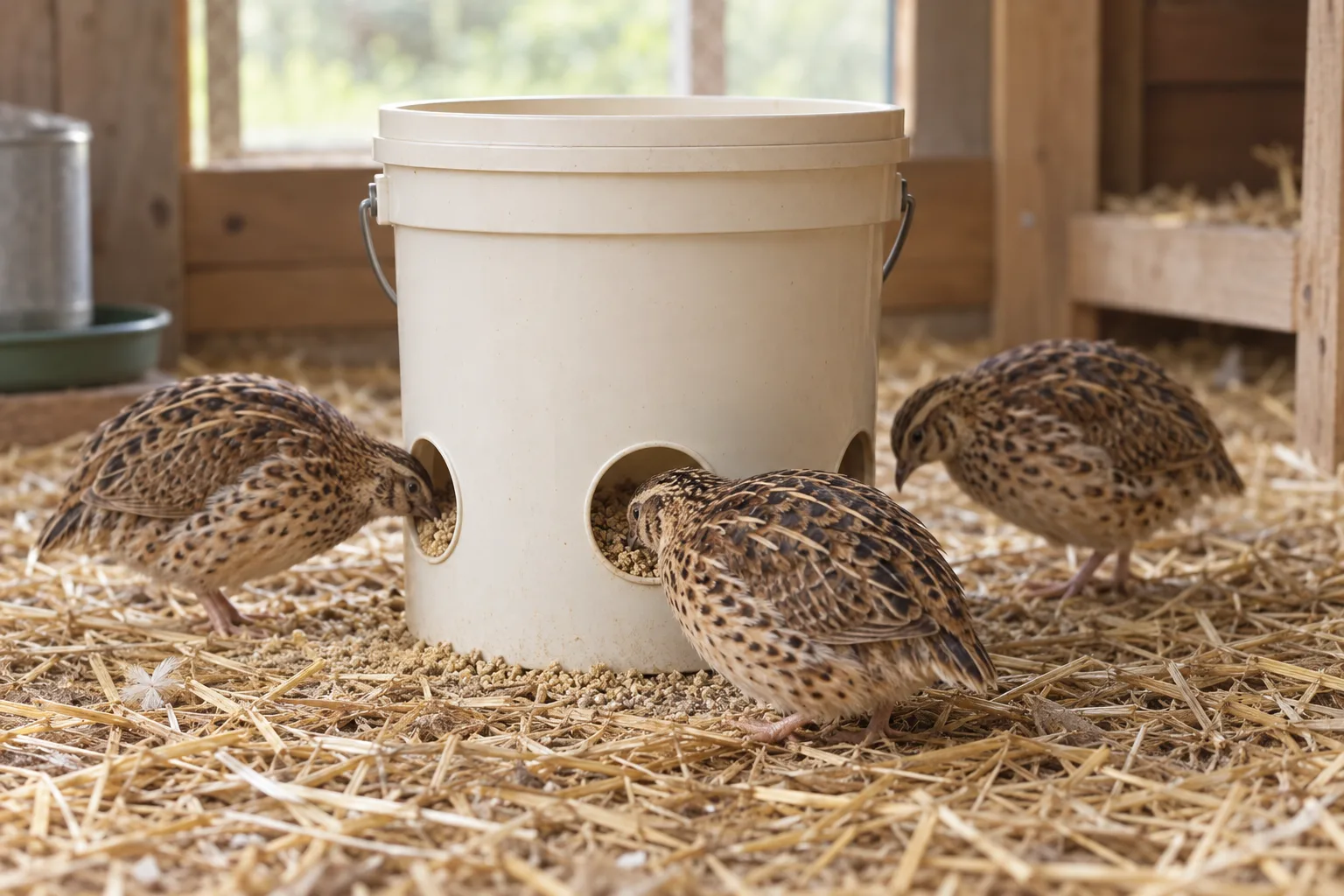
Port kits are inexpensive parts for a DIY feeder. You supply the bucket, bin, or other container, then make and finish the openings. Skip this route if you want a ready-made hopper, an outside-hanging feeder, or screw-on rings. Compare complete feeder designs in our best quail feeder roundup instead.
Quick picks for quail feeder ports
Ranked by fit information, installation style, pack size, and practical value
Overall
The clearest quail-specific retrofit
- 16-port pack
- 1.5-inch port size
- Button quail through large Coturnix
- 3D-printed in the USA
Top Pick 2B Creations Quail Feed Saver Port, 16-Pack
$$
Best for a multi-port DIY bucket or bin
Check Price on Amazon Budget
A low-cost way to try the idea
- 8-port pack
- For quail and chicks
- 2 x 1.75 x 1.75-inch dimensions
- One-year warranty
Top Pick Rite Farm Quail Port Feeder, 8-Pack
$
Best for a small first retrofit
Check Price on Amazon Screw-on
The tidy choice for a small container
- 4-port pack
- 1.5-inch port size
- Screw-on rings
- Designed to unscrew for cleaning
Top Pick NWQuailFarm Quail Port Feeder, 4-Pack
$
Best for testing one screw-on build
Check Price on AmazonQuick answer: The 2B Creations Quail Feed Saver Port wins for its quail-specific fit information and useful 16-port pack. Choose the Rite Farm Quail Port Feeder if you want the budget pick for a small trial, or the NWQuailFarm 4-Pack if screw-on rings matter more than expansion room.
Quick picks
Our Top Picks


Comparison table
| Product | Best for | Port or pack detail | Installation or mounting | Link |
|---|---|---|---|---|
| 2B Creations Quail Feed Saver Port, 16-Pack | A quail-specific multi-port retrofit for DIY buckets and bins | 16 ports, 1.5 inch | Container retrofit | Check price |
| Rite Farm Quail Port Feeder, 8-Pack | A low-cost first retrofit for a small DIY feeder | 8 ports | Container retrofit | Check price |
| NWQuailFarm Quail Port Feeder, 4-Pack | Testing a screw-on retrofit on one small container | 4 ports, 1.5 inch | Screw-on rings; no glue or silicone needed | Check price |
| NWQuailFarm Quail Port Feeder, 16-Pack | Multiple containers or a larger retrofit project | 16 ports | Screw-on rings; no glue or silicone needed | Check price |
| Teenyyou Quail Feeder Port, 20-Pack | Keepers building several DIY feeders from one bulk pack | 20 ports, 1.5 inch inner; 1.75 inch outer | Drill a 1.75-inch hole and insert the port | Check price |
| PIAOLGYI Quail Feeder Port, 16-Pack | A straightforward push-through port build with a 16-piece pack | 16 ports, 1.5 inch | Drill or cut a matching container opening, then push through | Check price |
How we evaluate
Fit comes first. A port is useful only when the opening suits the birds and the finished edge is smooth. The listed port size helps you plan, though it is not the whole safety check. Inspect the installed opening before offering feed, especially after drilling or cutting a plastic container.
Next comes the installation method. Push-through parts keep the build simple, while screw-on rings can make removal and cleaning easier. Pack count matters too: a small pack limits the first project, while 16 or 20 pieces make sense when you are building several containers. We also separate port-only parts from complete feeders, since they solve different problems.
Individual product reviews
1) 2B Creations Quail Feed Saver Port, 16-Pack: Best overall
This is the strongest starting point when you want a true quail port retrofit rather than a general small-bird part. The 1.5-inch size is stated clearly, and the listing gives the broadest fit description in this group, from button quail through large Coturnix quail.
The 16-piece pack gives you room to put ports around a larger bin or keep spares for another container. It is 3D-printed plastic and listed as made in the USA. Skip it if you want a hopper that arrives ready to hang, or if you specifically want a screw-on ring system.
Pros
- ✓ Clear quail fit range
- ✓ Useful 16-port pack
- ✓ Quail-specific product
Cons
- ✗ Requires your own container
- ✗ Requires a finished opening
2) CluckRoots 3-Port Quail Feeder: Budget pick
Rite Farm is the sensible low-cost trial. The 8-pack lets you retrofit a small container without committing to a large supply of parts, and the listing identifies it for quail and chicks. That is enough for a keeper who wants to see how a port setup fits a covey before building more.
The trade-off is expansion room. Its listed dimensions are 2 x 1.75 x 1.75 inches, and the listing does not show a port size or material. The listing does state a one-year warranty. Buy it when the budget is tight and the first build is modest.
Pros
- ✓ Lowest price band here
- ✓ Good first retrofit pack
- ✓ One-year warranty listed
Cons
- ✗ Only 8 ports
- ✗ Port size is not shown in the listing
3) Rite Farm Quail Port Feeder, 8-Pack: Best small screw-on pack
This four-port kit suits a keeper testing one small container. Its 1.5-inch port size is stated, and the screw-on rings are the main reason to choose it. The listing says no glue or silicone is needed, which keeps the project cleaner than a build that depends on sealant.
The rings are food-grade plastic and designed to unscrew for cleaning. The pack is small, so it has less room for a second feeder or a larger flock. It is a good fit when you want to learn the screw-on process before buying in bulk.
Pros
- ✓ Screw-on installation
- ✓ No glue or silicone needed
- ✓ Designed to unscrew for cleaning
Cons
- ✗ Only 4 ports
- ✗ Less useful for several containers
4) NWQuailFarm Quail Port Feeder, 4-Pack: Bulk screw-on choice

The 16-pack takes the same screw-on idea to a larger project. It makes sense for several bins, a spare feeder, or a keeper who wants matching rings across the setup. The listing identifies food-grade plastic and says the ports are reusable and detachable for cleaning.
Do not assume the larger pack has different port geometry from the four-pack. The listing gives the pack count, mounting style, intended birds, and cleaning feature, so choose this one for quantity. You still need a suitable container and a way to make the openings.
Pros
- ✓ 16-port supply
- ✓ Screw-on rings
- ✓ Detachable for cleaning
Cons
- ✗ Needs a DIY container
- ✗ Listing does not state a port size
5) NWQuailFarm Quail Port Feeder, 16-Pack: Best bulk push-through pack

Teenyyou is the quantity pick for a keeper making several DIY feeders. The listing gives a 1.5-inch inner size and a 1.75-inch outer size, plus a direct installation instruction: drill a 1.75-inch hole and insert the port. That makes the planning step unusually clear.
The ports are PETG plastic and the 20-piece pack leaves the most room for expansion in this group. You need to make a matching opening carefully, then check the edge and fit before feed goes in. Choose a smaller pack if one container is all you need.
Pros
- ✓ Largest pack here
- ✓ Hole size is stated
- ✓ PETG plastic listed
Cons
- ✗ More parts than a small project needs
- ✗ Requires drilling a matching opening
6) Teenyyou Quail Feeder Port, 20-Pack: Simple push-through retrofit

PIAOLGYI keeps the build straightforward: make a matching opening, then push the port through. The listing gives a 1.5-inch port size and a 16-piece pack, so it sits between a small trial kit and the largest bulk option.
This is the pick for a keeper who does not need screw-on rings or a detailed installation system. It is still a DIY part, so the container opening and its edges are your responsibility. Check the fit from both sides before filling the feeder.
Pros
- ✓ Simple push-through method
- ✓ 16-port pack
- ✓ 1.5-inch size listed
Cons
- ✗ Requires careful cutting or drilling
- ✗ Plastic type is not shown in the listing
Frequently asked questions
What is the best quail feeder port overall?
The 2B Creations Original Quail Feed Saver Port is the best overall choice for a DIY retrofit. Its listing gives a 1.5-inch port size, a 16-port pack, and a stated range from button quail through large Coturnix quail.
Are port kits the same as complete no-waste feeders?
No. A port kit is a component that you install in a bucket, bin, or other container. A complete feeder already has the hopper and mounting system, so choose one of those if you do not want to drill or cut a container.
How many ports should a DIY quail feeder have?
Choose the count around your container layout and flock access, rather than buying the largest pack automatically. A 4-port kit suits a small trial, while 16 or 20 ports leave room for several containers or future changes. See our guide to <a href="/posts/how-many-feeders-per-quail">how many feeders per quail</a> for setup planning.
Do quail feeder ports stop all feed waste?
No. They can keep birds from standing in the feed and tossing as much out, yet spilled feed still depends on the opening, fill level, placement, and bird behavior. Check the installed edges and use the troubleshooting steps in <a href="/posts/quail-wasting-feed">our guide to quail wasting feed</a>.
What should I check before using a port?
Inspect the opening, the inside and outside edges, and the fit around the container. Remove sharp burrs or rough spots, make sure the port cannot loosen, and watch the birds use it before leaving the feeder in service.
Related guides
- Best quail feeder (2026): 7 no-waste picks for ready-made feeder designs.
- Homemade Quail Feeders: 3 DIY Builds for 2026 for container ideas.
- How Many Feeders per Quail (2026): Capacity & Setup for planning access and refills.
- Quail Wasting Feed: 7 Fixes for Cleaner Feeders (2026) for spill troubleshooting.