 Quail Corner
Quail Throwing Feed Out of Feeder Ports: 7 Fixes (2026)
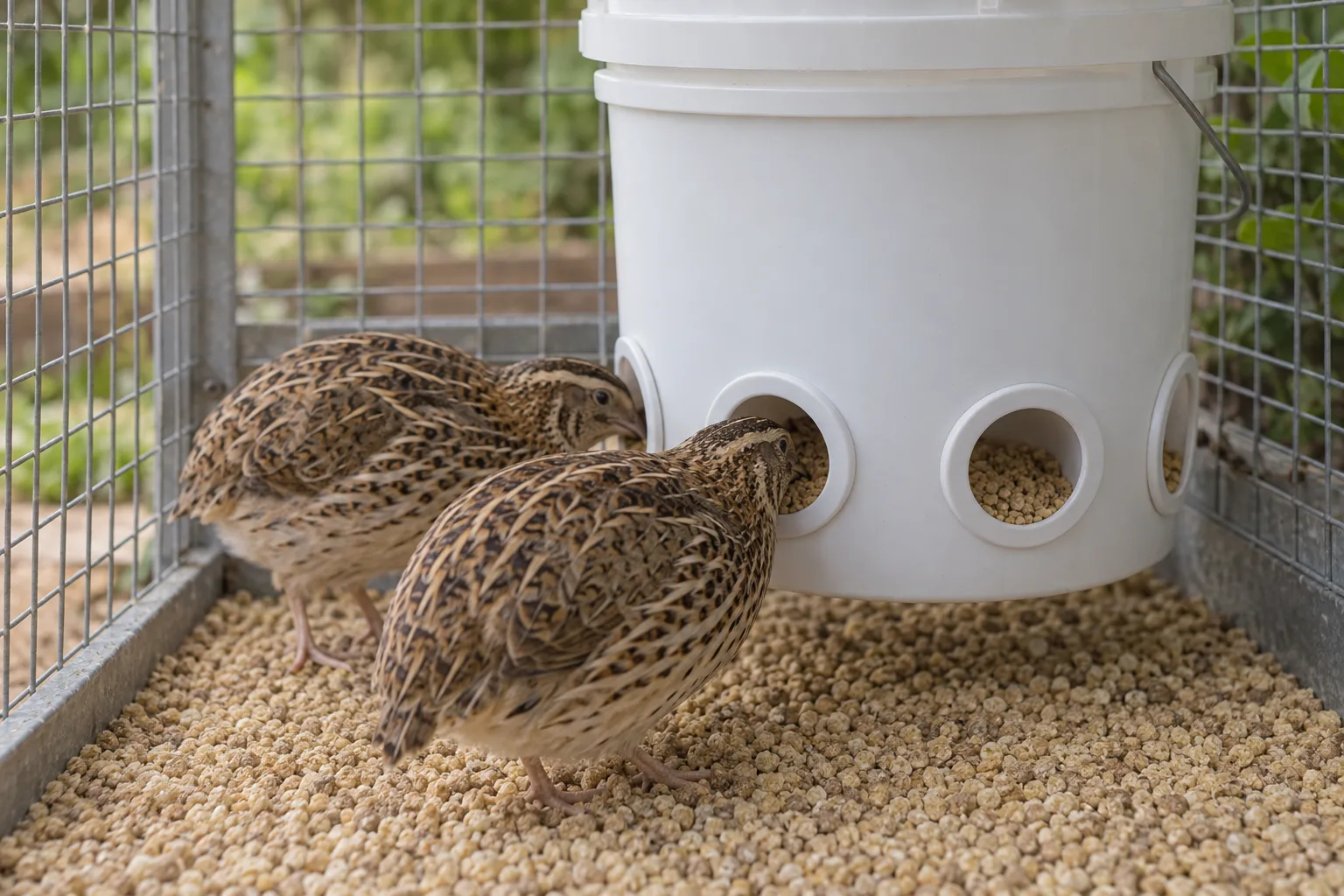
Quail throwing feed out of feeder ports usually means the port and its container do not work as one system. Inspect the opening, inner lip, feed depth and mounting before buying another feeder. This guide helps you find the failure, refit a DIY setup, and decide when a complete outside-hanging feeder makes more sense.
Stop feed spilling through the ports
A three-step check for the actual spill
- Check the opening and inner lip
- Look for gaps or sharp edges
- Set the feed depth
- Secure the bucket or bin
- Observe the birds
- Refit or replace the feeder
A stable port feeder with less feed on the cage floor and a clear replacement decision
Quick answer
First, watch where the feed escapes. Feed through the port points to raking or a feed level that is too high; feed around the port points to a poor fit; a moving container points to mounting. Clean the floor, correct one problem at a time, and observe the next feeding session.
A port reduces waste only when the opening, inner lip, container, fill level and mounting agree. For a DIY refit, the best quail feeder ports (2026): 6 DIY no-waste picks compares port-only kits, complete feeder options, pack sizes and installation styles.
What you'll need
- A brush or cloth to remove old feed and dust
- A flashlight for checking the inside edge of each opening
- A stable bucket, bin or other rigid container
- A suitable port kit and the cutting tool its installation requires
- A way to secure the container to the cage or wall
If you are willing to refit a suitable container, the 2B Creations Quail Feed Saver Port, 16-Pack is the first product I would reach for. Its listing describes 1.5-inch ports, 16 pieces, 3D-printed plastic, and use from button quail through large Coturnix quail. It is a $$ port kit, so you still supply the container and fitting work.
See the 2B Creations port listingIf cutting a clean opening is outside your comfort zone, choose a ready-made route instead. The CluckRoots 3-Port Quail Feeder is an outside-hanging complete feeder for wire cages, with three 1.5-inch ports and approximately four pounds of capacity in the listing. It is a different purchase, not evidence that every port kit fails.
See the CluckRoots feeder listingStep-by-step
Step 1: Find the escape route
Empty the loose feed from beneath the feeder and wipe the area clean. Add a small amount of feed, then watch the birds from the side. If a beak sweeps feed through the port, you are looking at raking. If feed appears outside the port without a bird touching it, inspect the seal and inner edge first.
Take the container down and run a finger around the inside, with the feeder empty. The inner edge should meet the port cleanly. A lip that sticks out, a gap around the opening, or a rough cut gives feed a path out and can scratch a bird. Smooth or remake the opening rather than hiding the problem with extra feed.
Step 2: Set the container and feed level
Use a rigid container that holds its shape when a bird leans on it. Keep the port firmly seated and set the feed below the opening instead of filling right up to it. Give the birds enough feed to reach, without leaving a deep pocket for a beak to rake outward.
Secure the bucket or bin so it cannot swing, twist or bounce against the cage. A stable container matters as much as the port shape. Silver Homestead's DIY feeder example makes the same point: the container has to stay put. For bucket, tub and PVC ideas, see Homemade Quail Feeders: 3 DIY Builds for 2026.
Step 3: Check access, then observe again
Make sure each bird can reach a port without shoving another bird or twisting the container. After the refit, watch another feeding session and check the floor later. Fresh feed directly below one port points to that port or the bird's technique. An even scatter around the whole feeder points to movement or a feed level that is too high.
Port count also affects access and refills. Use How Many Feeders per Quail (2026): Capacity & Setup for help planning feeder access and a refill setup for your flock.
Step 4: Refit the kit or replace the setup
Refit when the container is rigid, the opening can be made cleanly, and the port can sit securely. The 2B Creations kit is the best fit here because its listing gives a quail-specific size range and a useful 16-port pack.
Skip a retrofit if you cannot make a clean, secure opening, the container flexes, or you want a ready-made feeder. In that case, the CluckRoots feeder gives you built-in ports and outside hanging for a wire cage. Follow the listing's setup instructions, then inspect the edges and mounting before adding feed.
Common mistakes
- Filling above the port: A full container gives birds more feed to rake outward. Start lower and watch the floor.
- Trusting the outside edge: The inside edge is the one feed meets. Check it for a lip, gap or rough cut.
- Leaving the container loose: A bucket that rocks turns every peck into movement. Add a firm mount before changing the birds' feed.
- Cutting first and checking fit later: Match the opening to the port instructions, then test the empty assembly before offering feed.
Troubleshooting
These symptoms tell you where to look first. If feed waste continues after the port is secure, see Quail Wasting Feed: 7 Fixes for Cleaner Feeders (2026) for additional symptom-based fixes when the port is not the only source.
Feed is piled directly under one port
That bird is probably raking, or the feed is sitting too high at that opening. Lower the level, check the inside lip and watch again. If the same port keeps spilling while the others stay clean, remove and refit that port instead of replacing the whole feeder.
Feed leaks around every port
The container opening is likely too large, uneven or mismatched to the port. Empty the feeder and check the inner edge with a light. A clean, flush fit is the target described in DIY feeder instructions from Instructables. Remake the opening or use a different container if you cannot get that fit.
The whole feeder scatters feed when birds use it
Stop changing the ports and secure the container. A flexible bucket or loose mount lets birds move the feeder as they eat. If the container cannot become stable, move to a complete outside-hanging feeder rather than continuing to patch the retrofit.
Frequently asked questions
Why are my quail throwing feed out of the ports?
Start with the port and container together. A gap, rough inner edge, shallow lip, overfilled bin, or moving bucket lets birds rake feed onto the floor. Empty and clean the area, then watch one feeding session so you can see whether feed leaves through the opening or around it.
Should I fill a port feeder to the top?
No. Keep the feed level below the opening so a beak cannot sweep a full pocket straight out. The right level depends on the container and port design, so begin lower, observe the birds, and add feed only as needed while checking the floor for fresh scatter.
When should I replace a DIY port feeder?
Replace it when the container flexes, the port will not sit flush, the edge stays rough, or the feeder moves when birds push against it. A complete outside-hanging feeder is a sensible choice when you want built-in ports and no container cutting.
Do feeder ports eliminate all wasted feed?
No. Ports can reduce raking when the opening, inner lip, container, feed depth and mounting work together. Birds can still scatter feed through behavior, a poor fit, or a shifting feeder, so inspect the setup instead of treating the port as a guarantee.