 Quail Corner
What Size Cage for Button Quail: A Practical Buying Guide
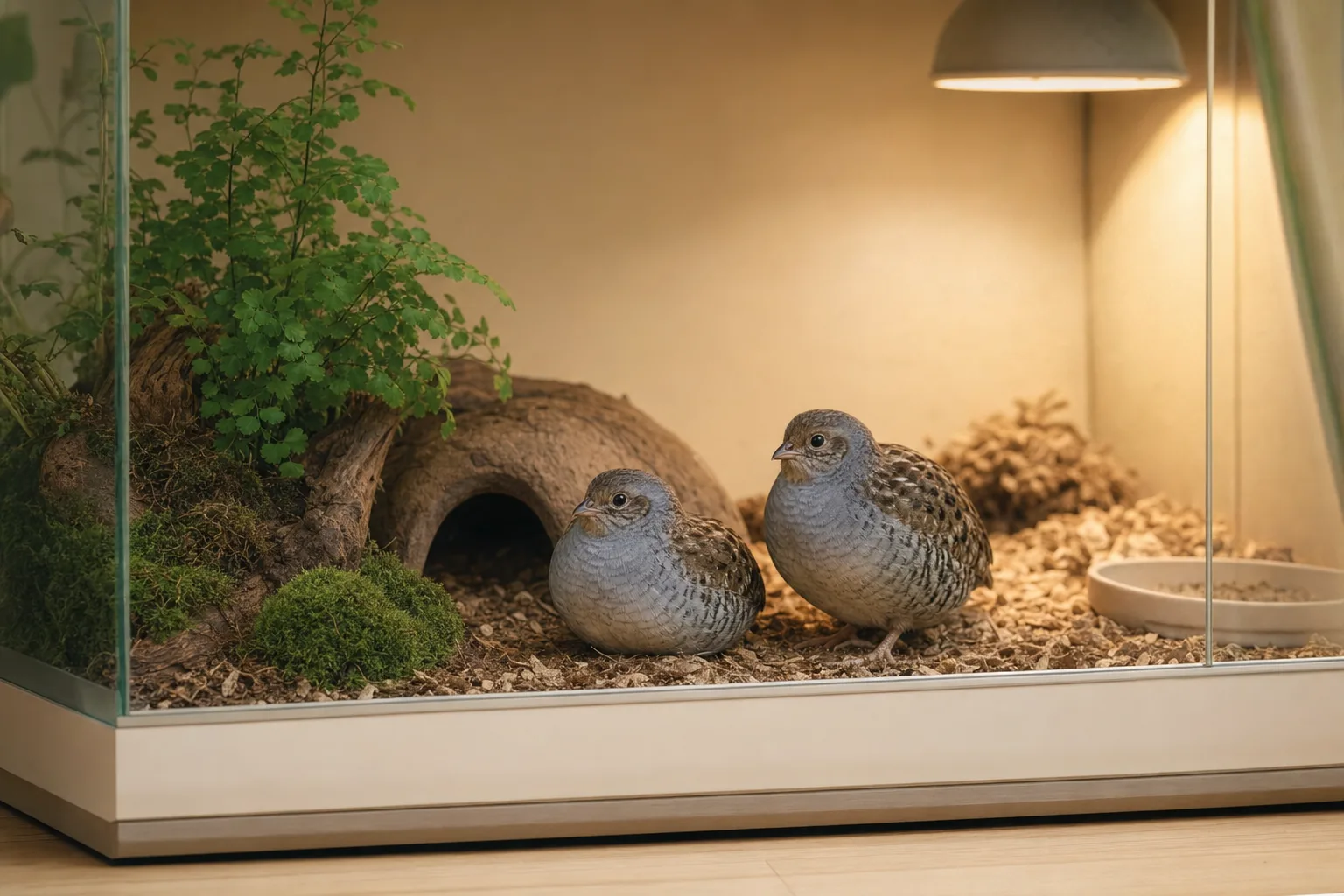
Choose the broadest practical floor footprint for your button quail group, then favor a low or softly protected top over a tall open cage. Check every panel, door, corner, and feeder opening for escape risk. A pair or one male with 2–3 hens is social-grouping guidance, not a stocking formula that overrides usable floor or individual behavior.
Button quail live close to the ground, and a startled bird can jump straight up, or “boink.” Before you shop, compare the enclosure shape, floor, gaps, cleaning access, and placement. For actual listings, start with our button quail cage picks.
Which cage types work for button quail?
For most indoor keepers, a broad floor enclosure is the best starting shape. Covered aviaries suit secure outdoor spaces. Quail-specific and regular bird cages can work, yet their labels do not prove that the floor, openings, height, or roof suit this tiny species. Inspect those details before you buy.
Broad indoor floor enclosure
This is usually the most natural shape for a pet pair. It gives you ground-level room for substrate, hides, water, and movement, with easier access than a tall flight cage. Acrylic, solid-sided, and similar enclosure concepts can work when ventilation is sensible and the top is protected.
The catch is waste control. A floor enclosure can use disposable bedding instead of a tray, so check how you will replace the substrate and spot-clean it each day. A clear front is useful only if you can still reach the far corners.
Quail-specific cage
A quail-specific cage such as a two-section breeding cage can simplify cleaning and egg collection, especially when it includes washable surfaces or a roll-out tray. For a pet pair kept indoors, an acrylic floor-style enclosure trades the tray for a broader, more visible ground area. The word “quail” on a listing proves very little. Some designs target Coturnix and can have more height, different gaps, or a floor that needs adjusting for button quail.
Choose this type when the seller clearly states the openings, floor construction, and access points. Treat any vendor capacity claim as a listing detail. It is not a stocking recommendation.
Covered aviary or run
A covered aviary or run works when you have a sheltered location and want the birds to use more ground. wikiHow Pet’s discussion of multiple button quail takes this ground-based approach. Keeper reports on BackYard Chickens also often emphasize hides and practical access.
Outdoor housing needs secure doors, predator checks, weather protection, and a framework you can clean. A run attached to a small shelter still needs all of those checks before birds go outside.
Regular bird cage
A regular bird cage is acceptable only after you verify its usable floor, gap size, flooring, ventilation, access, and roof. Perches and extra height do not make up for a narrow base.
Petco’s “How to Care for Button Quail: Food, Habitat & Health” presents a rectangular, floor-oriented indoor habitat context. Use that shape guidance as context. Do not copy its numerical habitat claims without independent verification.
What should you measure before buying?
Start with the inside floor, then inspect the roof, openings, flooring, cleaning access, airflow, and placement. Walls, trays, dividers, hides, feeder ports, and awkward corners can take away space that looks generous in a product photo. A tape measure and a careful look at the doors will save a bad purchase.
Compare footprint before height
Button quail housing prioritizes floor space over height. Compare the area the birds can actually walk across, rather than the outside dimensions or cubic volume. A broad, low shape gives them room for ground movement and furnishings.
Mark out the inside floor on paper and subtract trays, dividers, nest areas, feeders, and fixed hides. Product dimensions are listing details. There is no universal button-quail floor minimum to copy from one product page to the next.
Protect the roof from boinking
Button quail jump straight upward when startled, so a low or soft-protected top is preferable. A tall enclosure gives a frightened bird more vertical run-up and can leave hard wire or sharp edges in the landing zone.
Florida Button Quail’s “Cages for Button Quail” article discusses long, low housing and practical top protection. Use its keeper-focused ideas as setup guidance, then inspect the actual enclosure for hard surfaces, loose wire, and places where a bird could strike or catch a foot.
Check every opening
Find a stated gap or mesh size before buying. Inspect the main door, corners, panel joins, feeder openings, and the space around a tray. A tiny button quail needs more than a product title promising “small pet” housing.
If a listing reports an opening, treat that measurement as a listing detail and confirm it yourself. Look at the join between panels as closely as the main mesh. That is where escape routes often hide.
Match the floor to bedding and chicks
For adults, choose a solid, cleanable floor or verified mesh that creates no escape or foot hazard. The floor must hold the planned bedding or substrate without turning daily cleaning into a teardown.
Button-quail chicks need ¼-inch floor wire or a solid floor. Put marbles or pebbles in water dishes for chick safety. Do not transfer Coturnix wire advice to button quail without checking the species and the actual opening. See our quail cage setup guide for the link between floor choice, bedding, and cleaning.
Make cleaning reachable
You should be able to remove waste, replace bedding, reach corners, and check water without taking the enclosure apart. Pull-out trays, washable plastic, and open-access doors can all help. Each feature still needs a look at the actual access it provides.
Indoor button quail are common house pets, and their enclosure should be non-drafty and spot-cleaned daily. If the attractive plan leaves you unable to reach the back edge, choose a simpler design.
Separate ventilation from drafts
Ventilation moves stale air away. A draft blows directly through the birds’ resting area. Check where the enclosure will sit, how air enters and exits, and whether that location stays draft-free.
For indoor placement, consider room light, noise, access, and how to keep the enclosure draft-free. Button quail kept indoors need 12+ hours of light, but that is a room and setup requirement, not a reason to place the enclosure in direct sun. Outdoor setups need shelter, predator checks, secure doors, and a cleanable floor.
Judge social grouping and capacity together
Capacity is a judgment call based on usable floor, hides, safe access, and the behavior of the actual birds. Button quail may live as pairs or as one male with 2–3 hens. That guidance helps you plan a social group, yet it does not turn a vendor’s capacity claim into a stocking rule.
Plan a safe way to separate birds if introductions or conflict go badly. Read how to plan cage capacity before choosing a cage around a printed number.
How much should a button quail cage cost?
There is no useful price target until you know the enclosure is safe. Spend first on a suitable floor, secure openings, roof protection, and access for cleaning. A higher price can buy convenience or stronger construction, but it does not prove that the cage suits button quail.
- Basic: A simple floor pen or enclosure can be inexpensive. Verify the opening size, safe floor, roof protection, and cleaning access before bringing birds home. Low cost is not a safety feature.
- Mid-range: A washable or quail-specific cage may add trays, doors, dividers, or easier access. Those conveniences matter only when the floor and gap size fit button quail.
- Higher-cost: A broad indoor enclosure or secure aviary system may buy more usable floor, stronger construction, easier access, or better airflow. It still needs an opening, roof, floor, and placement check.
Which button quail cage mistakes should you avoid?
The costly mistakes are easy to avoid once you know what to measure. Start with the ground footprint, then check the cage label, top, chick floor, and cleaning route before you bring birds home.
- Buying by height alone: Compare the floor and usable space first. Extra vertical room does not add floor.
- Trusting a label: Confirm the opening size and floor for tiny button quail. “Quail” and “small animal” describe marketing categories, not a safety check.
- Ignoring the top: A hard, tall roof can be a poor fit for a startled jumper. Look for a low or soft-protected top and inspect its edges.
- Using unsafe chick flooring: Use ¼-inch floor wire or a solid floor for chicks, plus marbles or pebbles in water dishes.
- Choosing a cage that is hard to clean: If you cannot clean or replace bedding daily, the footprint alone is not enough.
If birds are being introduced, separated, or showing conflict, keep safe access to the enclosure. Read our guide to cage fighting before you commit to a design that makes separation difficult.
Where can you find specific button quail cage picks?
For actual indoor and aviary listings, see Best Button Quail Cage (2026): 6 Indoor & Aviary Picks. The roundup compares a floor-first enclosure, quail-specific compact and modular cages, a taller wooden option, a run-style option, and a configurable floor-area concept.
Use this guide’s checklist while you read those listings. Pay attention to the usable floor, opening measurements, roof, and how you will clean the enclosure daily. For more quail housing guides, browse the housing section.
Frequently asked questions
What is the best cage for button quail?
Choose the broadest practical floor-first enclosure with safe openings, a low or soft-protected top, good ventilation, and easy cleaning. There is no universal square-foot minimum for button quail. For specific listings, see the Best Button Quail Cage (2026): 6 Indoor & Aviary Picks roundup.
Is an indoor button quail cage better than an aviary cage?
Neither is right for every keeper. Indoor housing is common and easier to monitor and spot-clean. An aviary can work in a secure, sheltered location with safe doors, suitable floor space, and ventilation without drafts. Indoor setups also need 12+ hours of light.
How should I set up a button quail cage?
Start with a solid or verified safe floor, suitable bedding or substrate, hides, safe water, secure openings, and a protected top. Leave room to reach every corner for daily spot-cleaning. For chicks, use ¼-inch floor wire or a solid floor, with marbles or pebbles in water dishes.
How many button quail can fit in one cage?
A product listing cannot answer this alone. Judge usable floor, safe openings, hides, access, and the behavior of your actual birds. Button quail may live as pairs or as one male with 2–3 hens. That social guidance does not override the enclosure or the birds’ welfare.
Can button quail use a regular bird cage?
Yes, if the cage has enough usable floor, safe gaps, suitable flooring, practical ventilation, cleaning access, and a roof that reduces boinking risk. A tall cage with perches and a narrow base is a poor default. The words “bird cage” say little about tiny button quail.
How do I stop button quail from boinking into the cage roof?
Choose a low or softly protected top, reduce hard vertical impact surfaces, and inspect for exposed edges or unsafe mesh. Florida Button Quail’s “Cages for Button Quail” article discusses practical padding and mesh ideas. Use those ideas without adding an unverified height rule.