 Quail Corner

What Cleaner Is Safe for Quail Cages (2026): Label-First Buying Guide
For routine quail cage cleanup, start with a surface cleaner whose current label names bird cages or the exact surface you need to clean. Nature’s Miracle Bird Cage & Surface Cleaner is the cautious first pick because its listing describes an unscented bio-enzymatic formula for bird and small-animal cages.
No cleaner is automatically safe in every setup. Remove the birds, food, water, and loose waste first, then follow the label and keep quail away from wet product, residue, and fumes. This guide separates surface cleaners, disinfectants, and bedding deodorizers so you buy for the mess in front of you.
What cleaner is safe for quail cages? Start with the job
For droppings on bars, liners, accessories, and a removable manure tray, choose a product labeled for bird cages or the precise surface. A disinfectant is a different purchase with different label directions. A bedding deodorizer belongs in bedding or a suitable waste area, not on every cage part.
Our best quail cage cleaner (2026): 7 picks for cleaner cages compares bird-cage sprays, coop formulas, and zeolite odor-control products for different cleaning jobs.
| Type | Best for | What to check | Limit |
|---|---|---|---|
| Surface cleaner | Bars, liners, trays, and accessories | Bird-cage use and surface directions | Does not replace waste removal |
| Disinfectant | A label-supported sanitation job | Animal setting, dilution, contact, and rinse directions | Never improvise directions or mix products |
| Bedding deodorizer | Moisture and odor in bedding or waste areas | Quail or housed-bird positioning and application site | Does not clean dried manure from surfaces |
Surface cleaners
This is the right starting point for most wire cages. Nature’s Miracle is the featured routine option, with a 24 fl oz bottle, an unscented bio-enzymatic formula, and listing language for bird and small-animal cages. Use it only where the current label fits the surface and job. It is a poor answer to wet bedding that needs moisture control.
Disinfectants
Disinfectants need more label discipline than a general surface spray. Look for directions that cover your surface and animal setting, then follow the stated preparation, application, and removal steps. Do not borrow a dilution or contact time from another bottle. Use the current label for that product, rather than assuming every disinfectant works the same way.
Bedding deodorizers
A zeolite bedding product such as Sweet PDZ has a separate purpose: managing moisture and odor in bedding or a manure area when its current listing supports that use. It cannot scrub cage bars clean. Persistent odor still points you toward manure removal, dry housing, and airflow, as UMN Extension’s poultry housing guidance explains.
Key factors to check before buying
Start with the product whose current label matches your surface, animal context, and cleaning job. Fragrance-free or unscented wording can be useful for a respiratory-sensitive bird environment, but it does not replace the directions or fresh airflow.
1. Read the use case first
Look for bird-cage, small-animal, poultry, or the exact surface you plan to clean. A product aimed at a floor or coop may have directions that do not fit a wire cage, plastic liner, painted wood, or galvanized tray. Best Friends Animal Society’s cleaning guidance for birds also stresses careful product use because birds have sensitive respiratory systems.
2. Separate dirt removal from sanitation
Surface cleaning removes visible waste. Disinfection is a separate label-led task. For ordinary tray cleanup, a cage cleaner is usually the simpler fit. Choose a disinfectant only when you have a clear reason and the label supports the intended setting, surface, and process.
3. Check application and residue directions
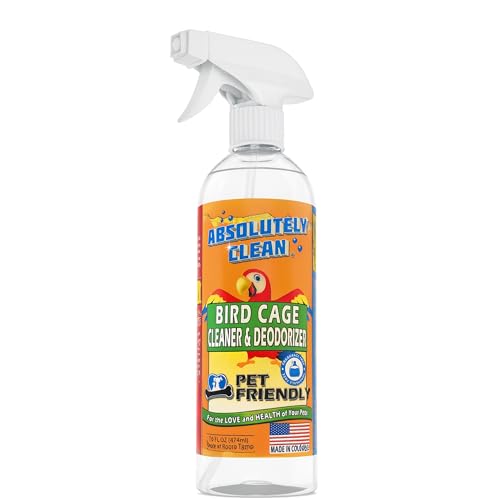
Absolutely Clean Bird Cage Cleaner is listed as a 16 fl oz, fragrance-free enzyme cleaner. Its current listing says to spray, wait 3–5 minutes, then wipe or brush. Treat that as product-specific guidance. Another cleaner may require a different process, including a rinse or other removal step.
4. Fix the housing that creates the mess
A cleaner cannot compensate for cramped or hard-to-reach housing. Wire cages need at least 1 ft² per bird, and 1.5 ft² is kinder. Ground pens need 2 ft² or more. A removable tray and open access make waste easier to remove before it dries. See Best Quail Cage (2026): 6 Verified Picks for Every Flock for trays, access, and layouts that make cleanup easier.
After choosing a cleaner, How to Set Up a Quail Cage: Step-by-Step (2026) covers practical placement and setup before you start a cleaning routine. UMN Extension’s wet-litter and waterer guidance is a useful reminder that moisture management starts with the setup, not the spray bottle.
Budget tiers for cage-cleaning products
A single cage-cleaner bottle covers the basic job. Pay more when you need a larger container, a coop-scale formula, or separate odor control. A stronger-sounding claim is no bargain if the label does not fit your surface and animal setting.
| Price band | What you get | Best fit |
|---|---|---|
| $ | A ready-to-use cage spray or small enzyme cleaner | Bars, liners, accessories, and one manure tray |
| $$ | More product or a separate coop and odor-control formula | Larger outdoor housing or persistent bedding moisture |
| $$$ | Specialized products for a larger maintenance setup | Only when the label solves a real surface or housing need |
Common mistakes to avoid
- Spraying around the birds Clean with quail, feed, and water out of the area. Birds should not breathe fumes or contact wet cleaner.
- Using a deodorizer as a scrubber Odor-control material does not remove dried manure from wire or plastic. Remove waste first, then clean the surface.
- Mixing products Never combine cleaners or add a household chemical to a commercial formula. One label at a time.
- Ignoring moisture Ammonia odor or damp bedding calls for better manure cleanup and airflow. Penn State Extension’s ammonia guidance discusses detection without turning one odor observation into an unsupported threshold.
- Choosing a hard-to-clean cage A cage with a removable tray and enough access saves more work than a stronger spray. Check the layout before adding chemicals.
Our picks for the first shopping trip
Nature’s Miracle is the best starting point for routine cage and manure-tray cleanup. Its listing positions the product for bird and small-animal cages, and the formula is unscented. Absolutely Clean is the useful alternative when its fragrance-free enzyme positioning and product-specific spray, wait 3–5 minutes, then wipe directions fit your routine.
These are surface-cleaning choices. If your real problem is damp bedding or odor in a waste area, compare the zeolite option in best quail cage cleaner (2026): 7 picks for cleaner cages instead of expecting a spray to solve it.
Related housing guidance
For more layout, airflow, tray, and maintenance advice, browse Quail housing guides.
Frequently asked questions
Is vinegar safe for quail cages?
Vinegar is a label question, not a universal recommendation. Birds still need to be away from wet cleaner, residue, and fumes, and vinegar does not replace waste removal. If the product label does not support your surface and use, choose a product with clearer bird-cage directions instead.
Can I use household disinfectant on a quail cage?
Only use a household disinfectant when its current label supports the surface and the intended animal setting. Keep quail away from wet product, residue, and fumes, prevent feed and water contamination, and follow every label step. Never mix it with another cleaner.
Are enzyme cleaners safe for quail cages?
An enzyme cleaner can fit a quail cage when its current label supports bird cages or the specific animal and surface. Nature’s Miracle is positioned for bird and small-animal cages, while Absolutely Clean lists a spray, wait, and wipe process. Read the current label before buying.
How do I clean a quail manure tray safely?
Remove the tray and waste before applying a surface cleaner, then follow the product label for that material and use. Keep birds, feed, and water clear of the work area until the surface is dry and free of residue. Adequate airflow helps too.
Does a cage deodorizer replace cleaning?
No. A deodorizer has a separate role in bedding moisture and odor control. It cannot replace removing manure, keeping housing dry, or improving airflow. If you are worried about a bird’s health or notice a persistent housing problem, talk to a vet or extension office.