 Quail Corner
Quail Cage Still Smells After Cleaning: 7 Fixes (2026)
A quail cage still smells after cleaning when the odor source is hiding in wet waste, a leaking waterer, a damp tray, or a poorly ventilated corner. Find that source first. Use Nature's Miracle Bird Cage Cleaner for labeled cage surfaces, and reserve Sweet PDZ Coop Refresher for bedding or manure-tray moisture control.
A surface cleaner removes residue from bars, liners, and tray surfaces. A bedding deodorizer manages moisture and odor in bedding. Neither replaces waste removal, dry housing, airflow, or enough room for the covey.
Fix a quail cage that still smells
A four-step source-finding process
- Pull the tray and liners
- Scrape dried manure from joints
- Check the waterer and tray
- Replace wet bedding
- Use a labeled cage cleaner
- Rinse or wipe as directed
- Open the airflow path
- Check access and space
A dry cage with the odor source identified instead of covered up
Quick answer
Start with trapped manure or wet waste, then check for water leaks and poor drying. Next inspect bedding and nearby walls or floors. If the smell keeps returning, look at airflow, tray access, cage layout, and space before reaching for a stronger household chemical.
For routine surfaces, use Nature's Miracle Bird Cage Cleaner when its current label covers the material. For damp bedding or a manure tray, use Sweet PDZ Coop Refresher as a moisture and odor control product. Follow current labels, keep both products away from feed and water, never spray birds, and never mix cleaners.
See best quail cage cleaner (2026): 7 picks for cleaner cages for the full comparison of surface sprays, coop formulas, and zeolite odor-control options.
What you'll need
Gather the tools before moving the birds or opening the tray. Choose one surface cleaner and use it only on surfaces covered by its current label.
- Gloves, a scraper, disposable towels, and a clean cloth
- A bucket or waste container for manure and wet bedding
- A labeled cage cleaner for bars, liners, and the manure tray
- Fresh, dry bedding if the setup uses bedding
- A flashlight for checking the underside, wall, floor, and tray runners
Step-by-step
Step 1: Remove waste and trace the smell
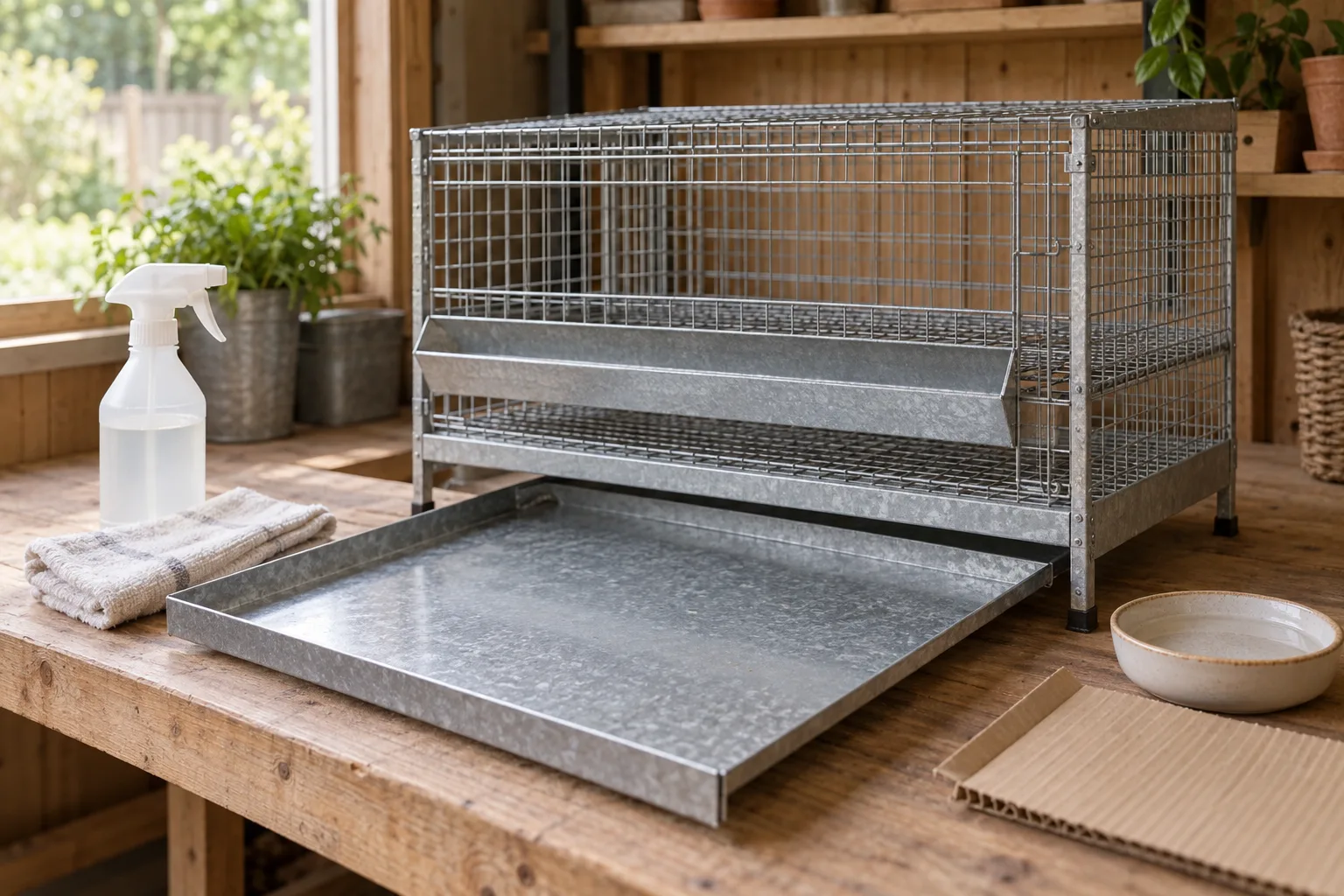
Take out the manure tray, liners, dust-bath tray, and any loose bedding. Scrape dried manure from tray corners, wire overlaps, door edges, and the underside of the cage. Smell each removed piece away from the birds, then use the flashlight to inspect the floor and wall beneath it.
Wet litter needs removal. UMN Extension's guidance on layer chicks and pullets also stresses keeping litter dry and cleaning waterers, which translates well to a small quail setup. A clean-looking top layer can hide a wet patch underneath.
Step 2: Check every moisture source
Fill and watch the waterer for drips. Check its mounting point, the tray beneath it, and any place water can splash onto bedding. Look for a warped liner, a tray that does not slide fully home, condensation, or rain entering an outdoor coop.
Remove damp bedding instead of covering it with powder. If the tray itself holds odor after the waste is gone, wash and dry it according to the cleaner label. Sweet PDZ Coop Refresher belongs on bedding or manure-tray moisture control, following its current listing or label. It is not a spray cleaner.
Step 3: Clean the surfaces correctly
Use a cage cleaner on the bars, liner, or tray only when the current label fits that material. Nature's Miracle Bird Cage Cleaner is the straightforward choice for routine bird-cage surfaces. Apply it as directed, observe the stated contact time, and wipe, rinse, or allow drying exactly as the label says.
Do not combine products to chase a stubborn smell. Remove the birds from the work area, protect feed and water, and wait until surfaces are dry before restoring the setup. Product claims come from the current listing or label, not independent testing.
Check the current Nature's Miracle listingStep 4: Dry the cage and open the airflow path
Leave cleaned parts open to dry, then return only dry liners and bedding. Keep vents clear and avoid pushing the cage tight against a wall. UMN Extension's cold-weather housing guidance connects ammonia with moisture, manure buildup, and ventilation. Quail housing is smaller, so the same practical warning is easy to miss: blocking airflow traps damp air near the tray.
For practical placement and tray-access ideas, follow How to Set Up a Quail Cage: Step-by-Step (2026). Good placement makes it easier to pull the tray, spot leaks, and keep the housing dry.
Step 5: Recheck the setup before blaming the product
Run your hand along the outside of the tray and inspect the floor again after the cage is reassembled. If the odor returns, compare the smell from the tray, bedding, cage surface, and surrounding room. Penn State Extension's ammonia-monitoring guidance describes inexpensive instruments as an option for checking poultry-house air quality, so use an appropriate instrument if you need information beyond your nose. Do not invent a smell threshold.
For coturnix in a wire cage, provide at least 1 ft² per bird; 1.5 ft² is kinder. Ground pens need 2 ft² per bird or more. Keep cage height around 8–12 in and use ½-in floor wire. A removable or roll-out tray lets you remove waste before it turns damp. A crowded cage produces more concentrated waste and gives you less room to keep the tray and bedding dry.
Common mistakes
- Spraying over wet manure: Remove the waste first, or the residue and odor remain underneath the cleaner.
- Using a bedding product on cage bars: Sweet PDZ is for bedding or manure-tray moisture control. Choose a labeled surface cleaner for bars and liners.
- Closing the cage while it is damp: Let surfaces dry as directed, then return dry bedding and keep airflow clear.
- Ignoring the waterer: A small drip can keep the tray wet long after the rest of the cage looks clean.
Troubleshooting
Match the symptom to the source before changing products. A stronger chemical rarely fixes a leaking waterer or a blocked tray.
The smell returns within a short time
Inspect the underside of the tray, tray runners, cage joints, and the floor beneath the cage. Dried manure can sit outside the area you usually wipe. Remove it, clean the labeled surface, and improve access so you can see the whole waste path.
The tray smells even after it is empty
Wash it according to the current label, then dry it fully. If wet bedding or manure sits in the tray, manage that moisture separately with a product labeled for the use. Do not spray a deodorizer onto birds or leave feed and water where powder or cleaner can reach them.
The room smells stronger than the cage
Check surrounding walls, floors, mats, and stored bedding. Move the cage away from a blocked wall and remove damp material nearby. If birds show signs of illness, or the air remains irritating after the setup is dry and clean, watch them closely and talk to a vet or extension office.
The cage is difficult to keep dry
Rework the tray, waterer position, and access doors. Best Quail Cage (2026): 6 Verified Picks for Every Flock can help you compare removable trays, access, and housing features that reduce recurring cleanup problems.
For more setup and airflow help, browse Quail housing guides.
Frequently asked questions
Why does my quail cage smell after cleaning?
The odor usually comes back because wet manure, residue in tray corners, a leaking waterer, or damp bedding remains. Pull out every removable part, find the wet spot, then clean and dry it. Airflow and suitable space matter too.
How do I fix a quail coop ammonia smell after cleaning?
Remove wet waste and bedding first, then improve airflow while keeping the birds dry and free from drafts. A cage cleaner can handle residue on surfaces. It cannot replace manure removal or make an unsuitable setup safe.
What should I do when quail cage odor won't go away?
Trace the smell with the tray removed, then inspect the underside of the cage, wall, floor, waterer, and nearby bedding. Clean the surface source and manage moisture separately. If the space stays damp, revisit tray access, layout, and ventilation.
Can a cage cleaner remove ammonia smell from a quail tray?
A cleaner can remove residue from a tray when its current label covers that surface and gives suitable application directions. Ammonia odor can return if wet manure stays in the tray or the housing does not dry. Keep cleaner away from feed and water.
Does cage size or ventilation affect recurring quail odor?
Yes. For coturnix in a wire cage, allow at least 1 ft² per bird, with 1.5 ft² kinder. Airflow carries moisture away, while crowding and blocked trays make waste harder to manage. Ground pens need 2 ft² per bird or more.