 Quail Corner
Best Overall
IncuTherm™ Plus Digital Thermometer and Hygrometer for Egg Incubator
$$
Check Price on AmazonA readable digital monitor at chick level is the best starting point for most quail brooders. Choose the IncuTherm Plus Digital Thermometer and Hygrometer for Egg Incubator, a $$ remote-probe option, when the sensing point needs to stay inside while the display stays outside.
This guide separates air readings from surface checks, explains warm-zone placement, and shows when a simple monitor is enough. You will also see when humidity, memory, Bluetooth alerts, or a second sensor earns its place.
A fixed digital monitor suits a small, open brooder that can hold it securely at chick level. A remote probe is better when the display must stay outside. Infrared tools check surfaces, app sensors show trends, and analog or combined hygrometer units work when their display and sensing point are easy to read.
This is the simple everyday choice. Set the unit at a representative chick-level spot in the warm zone, keep it dry, and glance at it during routine checks. A reading several inches above the bedding is a room reading, not a chick-level reading.
The probe sits inside the brooder while the display hangs outside. That layout suits an enclosed box or any setup where electronics would be exposed to bedding, splashes, or curious beaks. You still choose the probe location, so an outside display does not fix a poorly placed sensor.
The IncuTherm Plus is a useful example of this layout. Its remote probe can sit inside while its LCD display stays outside, which suits a brooder where you want the sensing point at chick level without putting the display near water or bedding. The incubator label does not choose the right spot for you.
For model-by-model options, see our brooder thermometer picks. If the warm zone is difficult to separate from the cooler area, our quail brooder picks can help you sort out the enclosure before buying another monitor.
An infrared unit is handy for a quick, non-contact check of a heat plate or another warm surface. It reads the surface being aimed at. Move the aim and you can get a different result, so use this as a spot checker alongside a monitor that measures brooder air at chick level.
An app sensor helps a keeper watch trends or receive alerts without standing beside the brooder. Bluetooth range, the path between sensor and phone, and phone dependence are real limits. An alert cannot replace a safe local setup or a visual check.
An analog dial can be serviceable if you can read its markings and keep it stable. A combined hygrometer adds humidity information, which is optional for a basic brooder. Judge the unit by the temperature reading and the display location before adding a humidity number you will not use.
Choose the layout first, then judge readability, stated range, memory, care, and optional humidity features. The useful reading is the one you can check consistently at chick level in the warm zone, while the rest of the enclosure stays open.
Put the sensing point at chick level in the warm zone where chicks can stand or rest. Leave a cooler area available. A separate outdoor unit gives a room reading; only a chick-level sensor shows what the birds actually feel.
Cover the probe cable so chicks cannot peck or pull it. Keep the sensor away from wet bedding and splashing, and keep displays and electronics away from water. Enclosure size changes the placement problem, so do not assume one location fits every box. For the way size affects the warm and cool zones, see How Big Should a Quail Brooder Be? A Sizing Guide.
A direct, glanceable display and a stable mount matter more than novelty features. Tabletop, magnetic, or wall placement helps only if the unit remains secure and readable at the right height. A display hidden under bedding, or a sensor moved between checks, makes changes harder to interpret.
The IncuTherm Plus is the verified contextual example here. It has an LCD display, a remote probe, temperature and humidity high/low memory, Celsius and Fahrenheit readings, and one included battery. Its product record lists wipe-clean care and an upper temperature range of 70 °C. A correctly placed probe matters more than the brand or the incubator label.
$$
Check Price on AmazonChoose a device whose stated range covers the brooder's warm end. Then separate the manufacturer's stated accuracy from false precision. Extra decimal places do not prove the setup is more accurate, and consistent sensor placement matters when you compare one reading with the next.
Temperature is the essential brooder measurement. Humidity is optional for trend awareness and more central to incubation. High and low memory can show a change while you were away, while app alerts can add a useful nudge. Neither replaces observing the chicks or reading the local screen.
Keep brooder guidance separate from hatch guidance. For incubation, use our quail incubation settings guide, which covers incubation temperature and humidity rather than turning an incubation target into a brooder rule.
Keep the sensor and display dry, clean them only as the instructions allow, and inspect the cable or mount during routine checks. Put electronics where a splash cannot reach them. Keep bedding, water, and curious chicks from pulling on a probe or its cable.
Spend enough for a clear reading and a safe placement. The $ tier covers a supervised small brooder or several locations, while $$ pays for a layout that removes a real inconvenience, such as keeping the display outside. There is no reason to buy a costly unit for this job.
Choose a simple fixed monitor or a multi-pack when you supervise a small brooder or want readings in several locations. Low cost is fine. Poor placement or a tiny display still gives a poor reading.
This is the useful middle ground when a remote probe, app sensor, or infrared spot checker solves a real monitoring problem. The IncuTherm Plus fits here as a remote-probe recommendation for a display-outside setup.
Premium spending is unnecessary when a clear local reading solves the job. Put the money toward a safe warm-to-cool layout or a second useful sensing location before paying for features that do not change your daily checks.
The biggest errors are placement and interpretation, not the brand. Put the sensor where the chicks rest, keep readings comparable, and treat alerts as helpers. A fan or heat source cannot be judged well without a sensor in the right place.
Choose the format that matches how you check the brooder. The roundup below compares model-level options, while the linked enclosure guide helps you match sensor placement to the shape of the box.
For Coturnix chicks, use 95 °F / 35 °C at chick level during the first week, then drop about 5 °F per week. In warm weather, chicks are generally off heat by 3–4 weeks. Button quail also begin at 95 °F in the first week, then follow the same drop.
These figures describe the warm area, not every point at the same time. Keep a cooler area open so chicks can move away from the heat, and use their position and activity as a reason to check the setup. If behavior raises a health concern, contact a vet or extension office rather than trying to diagnose the home temperature.
Mississippi State University Extension Service's guidance on temperatures recommended for brooding quail and Penn State Extension's brooding of domestic fowl guide provide the husbandry context for this starting point and weekly reduction.
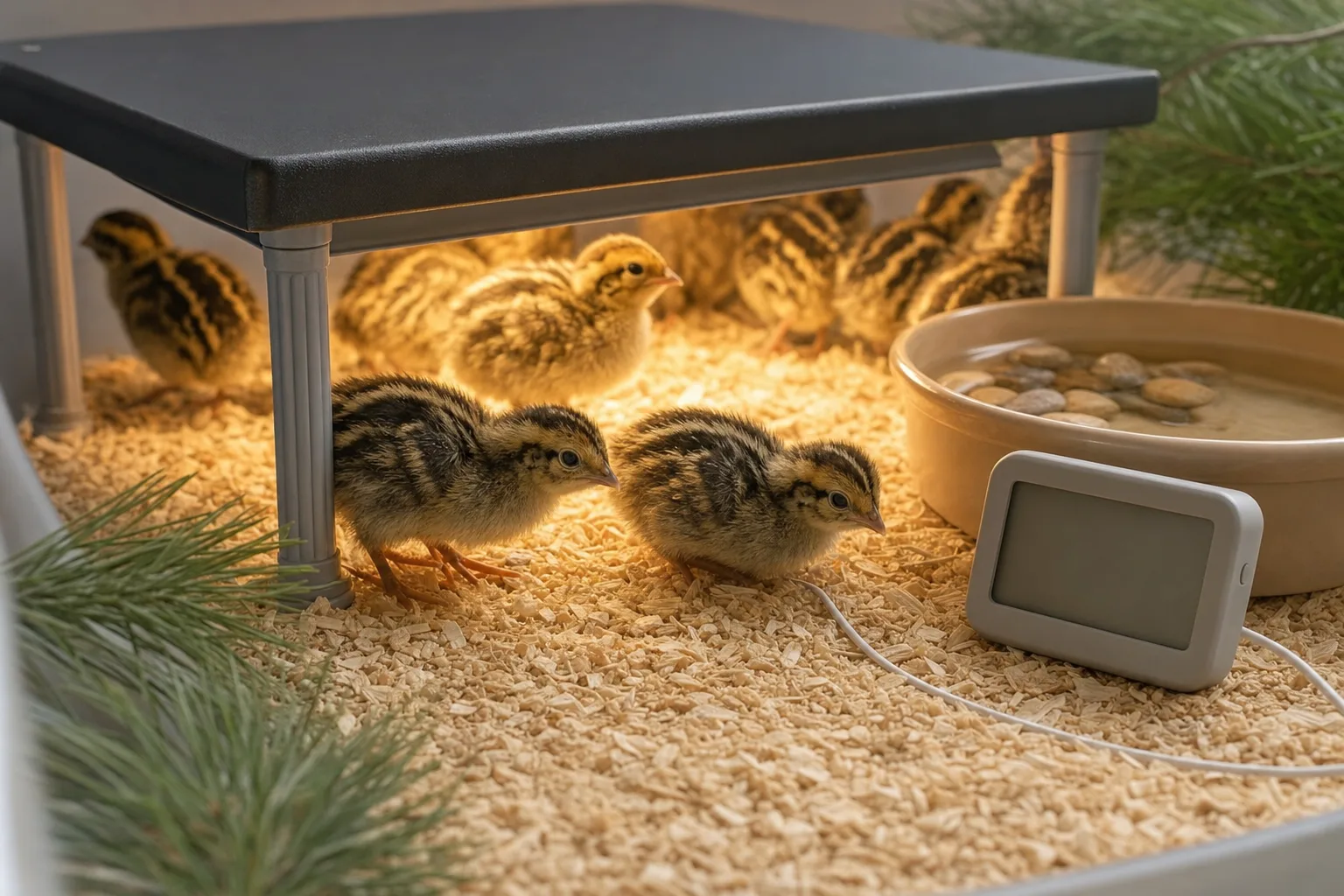
A readable digital monitor at chick level is the best starting point for most brooders. Choose a remote-probe model when the display needs to stay outside an enclosed brooder. For Coturnix and button quail, the week-one reading is 95 °F / 35 °C at chick level.
Start with one sensor in the warm zone at chick level. Add another when the enclosure is large or the warm and cool areas are hard to judge. One reading cannot describe every part of a brooder, so give the chicks room to move away from heat.
Digital is usually easier to read at a glance and often offers a remote probe or memory feature. An analog dial can work when its markings are clear and it stays secure at chick level. Placement and readability matter more than the display style.
Yes. An infrared thermometer is useful for quick, non-contact checks of a heat plate or another surface. It reads the surface you aim at, rather than the ambient air throughout the enclosure. Keep a fixed or probe monitor for continuous air checks.
A thermometer reports temperature, the essential brooder measurement. A hygrometer reports humidity, which is optional for brooder trend awareness and more central to incubation. A combined unit is fine if its temperature sensor sits where the chicks rest.
Coturnix chicks should have 95 °F / 35 °C at chick level during week 1. Drop the setting about 5 °F per week afterward. Button quail follow the same week-one starting point and weekly drop, with chicks generally off heat by 3–4 weeks in warm weather.