 Quail Corner
Best Overall Heat Plate
RentACoop 12x12" Adjustable Heating Plate with Foldable Anti-Roost Cone
$$
Check Price on AmazonThe best quail brooder for most keepers is the RentACoop 12×12 Adjustable Heating Plate (about $60): it radiates mother-hen warmth at chick level on just 22 watts, adjusts through 25 height settings as your chicks grow, and carries none of the fire risk of a 250 W heat lamp.
Below are seven verified plates and brooder boxes for coturnix and button quail, from a budget radiant plate to a full wooden whole-batch box. Every temperature figure matches standard coturnix practice: 95°F at chick level in week one, down about 5°F a week, off heat by 3–4 weeks. For more on the full hatching timeline, see our hatching guides.
Ranked by chick-level warmth, fire safety, running cost, and how easy they are to clean
The safest heat source for a standard batch
$$
Mother-hen warmth for most keepers
Check Price on AmazonOne box with everything in it
$$
All-in-one box for first-time keepers
Check Price on AmazonThe cheapest safe way to brood quail
$
Budget plate that still does the job
Check Price on AmazonQuick answer: Choose the RentACoop 12×12 plate if you want the safest, cheapest-to-run heat for a standard batch. Try the LIAQICHA starter box if this is your first hatch and you want feeder, waterer and heat in one purchase. Take the Sindarhor 3-temp plate if budget comes first and you still want safe radiant heat.
$$
Check Price on Amazon
$$
Check Price on Amazon
$$
Check Price on Amazon| Product | Best for | Heat source | Capacity | Price | Rating | Link |
|---|---|---|---|---|---|---|
| RentACoop 12x12" Adjustable Heating Plate with Foldable Anti-Roost Cone | Most quail keepers — safest radiant heat for a standard batch | 22 W radiant plate | Up to 20 chicks | $$ | 4.5 / 5 | Check Price |
| RentACoop 10x10” Adjustable Heating Plate with Foldable Anti-Roost Cone | Small batches and button quail in a tub-sized brooder | Radiant plate | ~12 chicks | $$ | 4.5 / 5 | Check Price |
| Chicken Brooder Box for Chicks & Quail with Pads, Feeder and Waterer | First-time keepers who want one complete brooder box | Radiant plate | Small batch | $$ | 4 / 5 | Check Price |
| Intelligent Brooder Box for 10-15 Newborn Quail Chicks | Chick-level readouts on a budget, for curious families | 50 W lamp, stepless knob | 10-15 chicks | $$ | 3.8 / 5 | Check Price |
| Sindarhor Chick Brooder Heater Plate (3-Level Temp) | The cheapest safe way to brood a small quail batch | Low-draw radiant radiant plate | ~12 chicks | $ | 4.3 / 5 | Check Price |
| KOOHYIA 15×12.6” Large Chick Brooder Heater for up to 20 Chicks | One low-price plate that covers a 20-bird batch | 49 W radiant plate | 20–25 chicks | $ | 4.4 / 5 | Check Price |
| XITIANKJ 32×16×16” Large Brooder Box for Chicks & Quail with Heating Plate | Whole 20-bird hatches start to finish in one wooden box | Brooder heating plate (no light) | Up to 20 chicks | $$$ | 3.7 / 5 | Check Price |
Safety at chick level comes first. A quail chick needs 95°F right where it stands, and a 250 W heat lamp dangling over dry bedding is the classic way keepers lose a shed or a garage. Radiant plates score highest because they warm the chick from above like a hen's body, draw a fraction of the power, and cannot scorch bedding. Lamps and heated boxes get marked down for every extra watt and every exposed bulb.
After safety we weigh adjustability, coverage per chick, and what owners report after a full brood cycle. A plate you can raise an inch a week earns its keep because week-one chicks huddle in close and week-two chicks like to spread out. Owner review counts matter here: a 4-star plate with 200 verified reviews tells you more than a 5-star unit with ten.
$$
Check Price on AmazonThis plate handles a 20-chick batch, tucks chicks under like a hen does, and costs so little to run that a week of brooding barely registers on the power bill. Chicks sleep dark and calm at night because there is no light, which keeps them from crowding into a corner and piling up.
RentACoop sells a 10×10 version of the same plate for smaller hatches and button quail, reviewed below. If you are brooding a standard batch of 15 to 20 coturnix, buy this 12×12 and skip the smaller one. The height settings run from 1 to 9 inches, so you start low for day-olds and raise the plate an inch a week as the chicks feather out. The foldable anti-roost cone stops older chicks from perching on top and soiling the plate.
$$
Check Price on AmazonThis is the same design as our top pick, shrunk to a 10×10 inch footprint at 15 W. That smaller footprint is the point: button quail chicks are tiny, and a larger plate in a small tub leaves them no cool zone to retreat to. It handles up to 15 quail inside the same tub, and the 25 height settings plus anti-roost cone are standard.
Because it draws so little power, you can run it for a whole hatch of button quail without worrying about the circuit. Skip it if you intend to hatch 20-plus coturnix at a time, because chicks outgrow the warm zone quickly and you will end up buying the larger plate anyway.
$$
Check Price on AmazonIf you are new to hatching and you do not want to assemble a brooder from separate parts, this is the integrated box. Feeder, waterer, bedding pads and a thermometer all come in the package, and the wood-and-acrylic build lets kids watch the chicks through a viewing panel without lifting a lid and letting warm air out.
The trade is the heat source: a 50 W heat lamp, not a radiant plate. To keep it safe, run it with the guard on and the cord secured low, and place a thermometer at chick level to confirm the reading. At 15.7×12 inches the footprint suits a small batch; a bigger hatch will crowd it from week two.

$$
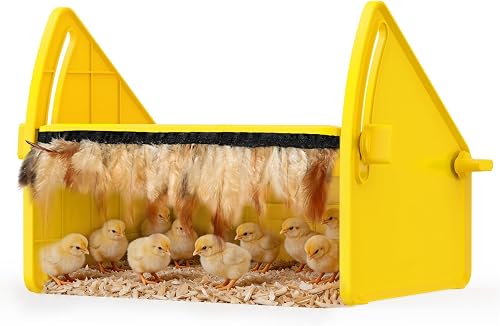
Check Price on AmazonThe WIONBE's pitch is the front digital temperature and humidity display, so you can read heat readiness at a glance instead of guessing from a sticky thermometer strip. The large control knob is simple and approachable for a beginner, and the fireproof PVC sides add a layer of safety over a bare lamp.
It handles a small batch inside a 15.75×11.8 inch box, and the 759 owner reviews at 3.8 stars paint a fair picture: it works well for a 10 to 15 chick batch, but the LED readout can drift a degree or two. Use a separate thermometer at chick level and let the chicks' behavior be your real guide.
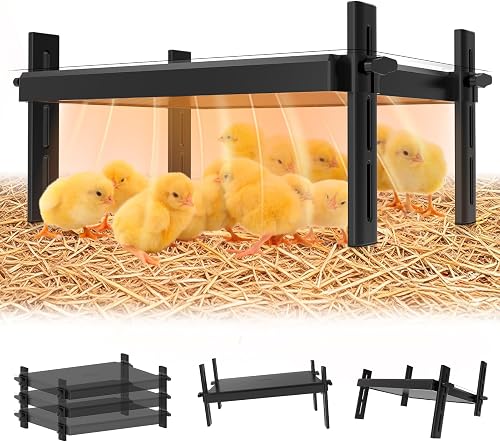
The cheapest safe way to brood a small quail batch. The Sindarhor gives radiant plate heat for the price of a clamp lamp, with three panel settings (131/149/167°F) and a washable ABS surface you can wipe between broods. 927 reviews back it at 4.3 stars, a strong signal for a budget unit.
The trade is the smaller heated panel: at 8.7×10.6 inches, figure on fewer than 15 chicks rather than 20. For a hatch of 10 to 12 coturnix, that is plenty of room. The three fixed temperature settings are coarser than the RentACoop's 25 height positions, so you trade fine control for a lower sticker price.
$
Check Price on AmazonThe KOOHYIA is the bargain for larger hatches: a 15×12.6 inch panel rated for 20 to 25 chicks at a lower per-chick price than the RentACoop. The surface runs from 86 to 140°F across three heights and a tilt, so you can pitch one side low for the day-olds and keep the other side higher as they grow. The flame-retardant ABS shell is UL-listed, which is the sort of certification you want for a heat plate running day and night.
At 49 W it draws about twice the power of the RentACoop, though the housing stays cool to the touch. For keepers running back-to-back large batches, the per-chick cost is the best on this page. Three height positions is fewer than the RentACoop's 25, but the tilt feature gives you a gradient across the plate that fixed-height plates cannot match.

$$$
Check Price on AmazonThe XITIANKJ is the only unit here that takes a full batch from day-old to feathered in a single frame. It is 32×16×16 inches of untreated pine with a radiant heating plate (no exposed bulb), a temp and humidity display, feeder and waterer all included. The chicks stay on a solid floor with bedding, and you have one box from hatch to grow-out.
Be aware: this is a new listing with only about 64 reviews at 3.7 stars, so the track record is shorter than the others on this page. If you want one box for the whole brood cycle and you are comfortable taking a chance on a fresh listing, the price reflects the risk. For the same money you could buy a RentACoop plate and a plastic tub, but you would not get the integrated display or the pine frame.
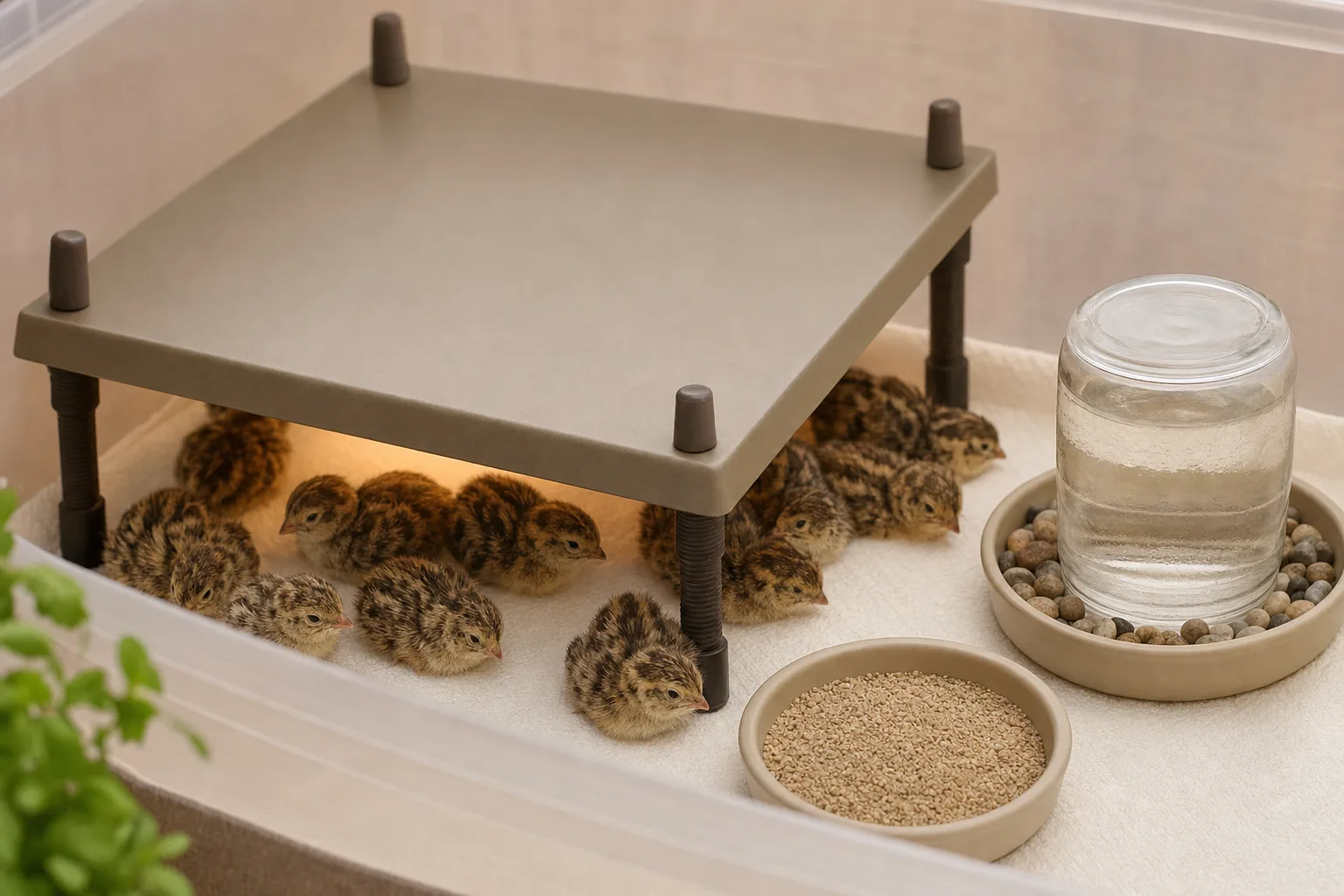
The RentACoop 12×12 radiant heat plate, around $60, is the best brooder heat source for a standard batch of quail chicks. It holds chick-level warmth at 22 watts with zero fire risk, and the 25 height settings let you raise it as the chicks feather out.
A brooder plate for almost everyone. Plates draw about 22 W against a 250 W heat lamp, carry no fire risk, and give off no light to disturb the chicks' daily rhythm. A lamp only makes sense as the cheapest option for a single first hatch, and only if you watch it closely and secure the clamp and cord.
95°F at chick level for week one, then drop about 5°F per week. Chicks come off heat entirely by 3–4 weeks once they are fully feathered, sooner in warm weather. Judge by behavior: huddled tight means too cold, spread out and panting means too hot.
A 12×12 plate covers roughly 20 chicks, and the box around it should give each bird room to move away from the heat. By grow-out at 3–4 weeks, coturnix need 1 ft² per bird on ¼ in wire. Overcrowding shows up fast as pecking, so when in doubt, split the batch.
At 3–4 weeks old, once they are fully feathered and the weather is mild. Move them into a grow-out pen at 1 ft² per bird with ¼ in wire for young chicks, stepping up to ½ in hardware cloth as they grow.