 Quail Corner
Quail Chicks Dying in Brooder? (2026): 7 Fixes That Work
Quail chicks dying in a brooder is almost always a fixable cause, and you can usually isolate it in a single evening. Work the checks in order: heat, water, bedding, space. If you have not picked a best quail brooder heat source yet, settle that first, since it is the most common way chicks go quiet.
Stop Losing Chicks in the Brooder
Pin down the cause in one evening, in this order
- Read at chick level, not lamp height
- Watch where chicks choose to park
- Drop about 5 F each week
- Cut heat by 3-4 weeks
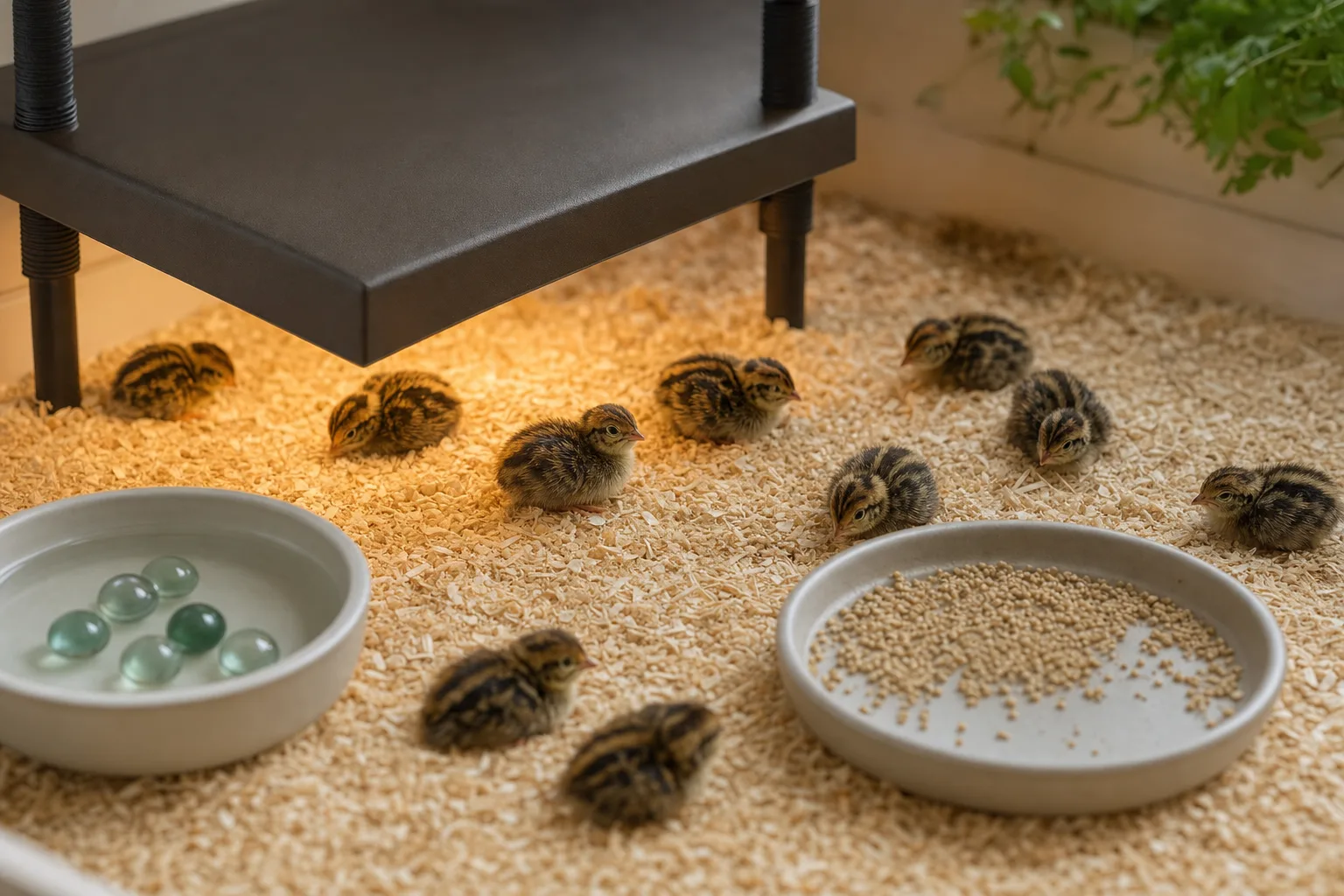
- Line a shallow dish with marbles
- Dip each beak once at transfer
- Set crumbs where chicks cross paths
- No slick sheet bedding
- Keep a square foot each in grow-out
- Move out at 3-4 weeks
Chicks settle, find feed and water, and stop dying off at night
Why are my quail chicks dying in the brooder?
Start with heat, because it kills fastest and it is the most common keeper miss. Then water, which can take a chick in a dry day or two. Then bedding and crowding, which cover the quieter ways a chick goes quiet. Work in that order and stop at the first cause you find, because fixing the one thing beats changing everything.
If the whole hatch arrived weak, a day late, or fully spent, the fault may sit at incubation rather than your brooder. Our hatching guides cover the day-to-lockdown window so you can rule that out before you blame yourself.
What you'll need
- A thermometer that reads at chick level, not room level
- A reliable heat source that holds 95 F without an open bulb
- A shallow dish lined with marbles, pebbles or sand
- Plain paper towel as bedding, never shiny newsprint
- 28 to 30 percent game bird starter crumble in reach on day one
If you have not settled a reliable heat source yet, our best quail brooder picks hold week-old chicks at 95 F without the fire risk of a lamp.
Diagnose in order
How hot is it, really?
Let the birds testify first. In a brooder that runs too hot, they bank across the far edge away from the heat, pant, and sit back with wings half open. Too cold and they pile into one tight huddle under the heat, cheep loudly, and never leave it. A settled chick walks to the spot it likes and spreads out, so that spread is your best sign.
Hold your hand around the birds' height under a lamp. If you want to pull back fast, the heat is too high. The birds tell you the same thing, but your hand answers faster than a wall thermometer.
Hold the correct temperature
Keep 95 F at chick level for week one, then drop about 5 F each week, and cut heat entirely by 3 to 4 weeks once the birds are fully feathered. The 99.5 F figure is an incubator number; read that into a brooder and you bake the chicks. Judge with a thermometer at the birds' height and by their behavior, not the lamp.
A radiant plate like the RentACoop 12×12 heats safely at low wattage, which ends most first-hatch overheating worries. If you are tired of guessing, the WIONBE digital box reads the air right at chick level so you always know where you stand.
Are they eating the bedding instead of the feed?
Chicks that never find the crumble start picking at the floor, swallow loose bedding, and go quiet from an empty crop. Set the first half-day's crumbs loose on a piece of cardboard or spread on the floor near the waterer so they cross paths with it. Use 28 to 30 percent game bird starter from day one.
A few chicks eating is enough; the rest follow. The gap is when nobody finds it, so put food where the birds already walk, not in one far corner.
Are they drowning, or going dry?
A deep bowl can drown button quail and pull a young coturnix chick under. The fix is a shallow waterer or a dish lined with marbles or pebbles, so the birds stand at the surface. Dehydration is the deadlier of the two, and it can kill within a couple of days, so check the water early if the hatch seems to shrink.
On the transfer into the brooder, dip each beak once into the water so they learn where it lives. One pass is enough to teach a chick to drink.
Give them room before the pile-up
Crowding causes smothering under the heat and early pecking once the feathers come in. Keep the brooder big enough that no group can trap the warmest chick at the bottom. Plan a grow-out at 1 square foot per bird once feathers are full, and move fully feathered birds out around 3 to 4 weeks.
Button quail want a solid or quarter-inch floor, and young coturnix ride quarter-inch wire in the grow-out until their feet can catch firm; grown coturnix can step up to half-inch. When the move comes, see our best quail cage picks for the wire spacing that keeps feet safe.
Common mistakes
- Reusing a chicken brooder. A lamp sized for a hen chick turns a quail into an oven. Swap to a low-wattage plate or drop the lamp size.
- Shiny newsprint on the floor. Paper towel is firm for week one; newsprint becomes the slippery slide that palpably cripples chicks.
- Judging heat from above the pen. That thermometer tells you the room, not what a chick feels at floor height.
- One deep bowl and no water in reach. A deep waterer can drown a button quail in one afternoon.
First aid only, then the vet
Pasty vent and splay leg are the only home-level fixes on this page; each one is a watch-then-fix, not a turnaround. A pasty vent is a blocked rear a chick cannot clear; clean it gently and keep an eye. A splay leg is a chick sliding out on a shiny surface; fix the footing with paper towel over something with grip.
That is the line this page draws. You fix what is obvious to the floor and the bowl, and anything left over goes to a vet or your extension office.
Frequently asked questions
What temperature should a quail brooder be?
95 F at chick level for week one, then drop about 5 F each week, and cut heat entirely by 3 to 4 weeks once the chicks are fully feathered. Judge by a thermometer at chick height and by behavior: a tight huddle under the heat means cold, while spreading out and keeping distance means too hot.
Why do my quail chicks keep dying in the brooder?
Check heat first, because it kills fastest and is the most common miss. Then water, which can take a chick in a day or two. Then bedding and crowding. Most early losses trace to heat and water, not disease, so work those two before you blame anything else.
Is my quail brooder too hot?
Yes if the chicks hug the edge, pant, or sit hunched away from the pad. Mississippi State poultry extension calls overheating the most frequent brooding error, so measure at chick level, not lamp height, where the needle runs hotter than the birds feel.
How do I keep button quail chicks from drowning?
Use a very shallow water dish and line it with pebbles or marbles so the tiny birds can push their head up to the surface. Button quail drown in deep bowls, the way young coturnix can, so the pebble trick is the whole fix.
When can quail chicks leave the brooder?
Once fully fe<br>athered, around 3 to 4 weeks in warm weather, move them to a grow-out at 1 square foot per bird. Young coturnix ride quarter-inch wire until their feet firm up, then can step up to half-inch, while button quail want a solid floor or the same fine mesh.