 Quail Corner
How Big Should a Quail Brooder Be? A Sizing Guide (2026)
Think in square feet, not brand. A quail brooder is big enough when it holds the full batch you will have at 3 to 4 weeks, which is the size most first keepers get wrong. By then each coturnix bird needs a full square foot of floor, so that is the number to size everything around.
Here is the shorthand. Pack about 6 chicks per square foot for the first week or two, then let the floor grow fast. A 20 chick batch starts in a small tub around 3 to 4 square feet and ends up needing 20 square feet by grow-out, so plan the bigger end from the start. The radiant plate, more than the box, decides how many you can keep warm at once. For the plates and starter kits we buy for a standard batch, see our best quail brooder picks.
Brooder types and the size each suits
Some brooders hold one fixed box, others expand as the chicks feather. The heater often sets the warm ceiling tighter than the walls do, so pick the heat source first and size the floor around it.
| Type | Who it suits | Sizing note |
|---|---|---|
| Plastic storage tub | First hatch on a DIY budget | Roughly 1 to 4 square feet; stack a second tub to grow |
| All-in-one starter box | First-timers who want one box | Small fixed batch; the box sets the whole size |
| Radiant heat plate | Most keepers, safest heat | A 12x12 plate covers about 20 chicks |
| Heat lamp | Cheapest first hatch | Sized by distance, not area, so it tells you little |
Storage tub
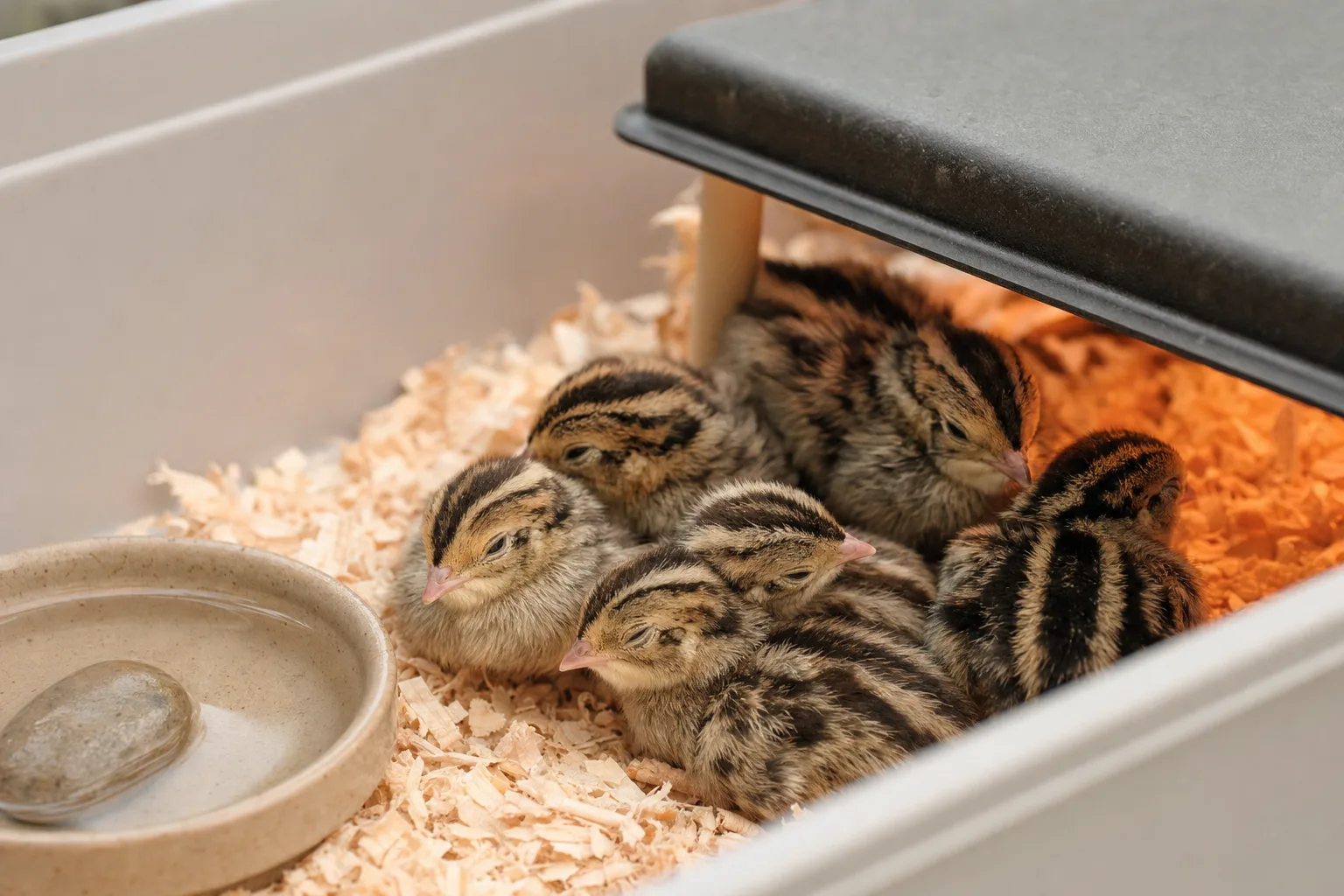
The storage tub is the cheap start that works, though a purpose-built large brooder box saves the retrofit, and the warm zone is really set by the heater rather than the walls, so size a 12x12 inch adjustable heating plate to the batch first. A standard under-bed tote gives you a couple of square feet for the first week, and you raise the size by stacking a second tub on top or cutting a doorway between two. It costs almost nothing and it carries a first hatch, but you will swap containers within a fortnight. Treat it as a starter, and have the next size ready before you need it.
All-in-one starter box
An all-in-one box bundles heat, pads, feeder and waterer into a single fixed footprint. The catch is a small batch. You buy a box that holds a set count, so right-size it for the chicks you plan to raise now, not a number you might add later. The LIAQICHA box we cover in our best brooder list is a good example: one footprint, one batch, everything included.
Radiant heat plate
A radiant plate gives steady heat right at chick level, with no bare bulb and no fire risk. A 12x12 plate keeps about 20 birds warm, and a smaller 10x10 manages roughly 15. Match the plate to the batch first, then build floor space around what each bird needs to move.
Heat lamp
A heat lamp sizes differently. Wattage and the distance to the floor matter more than the area it lights, so it tells you little about capacity. It is the cheapest start, but it runs hot and bright, and a 250 W bulb in a dry garage is a fire risk you have to watch.
Space per chick
One bird needs a full square foot at 3 to 4 weeks, and 1.5 is kinder when you can give it. Early on, you can pack about 6 chicks per square foot for the first couple of weeks, then thin to about 4 per square foot through weeks 2 to 6. The cap that matters is the square foot per bird at week 3 to 4, so size around that number.
What to look for when sizing
Low walls beat tall ones
Keep walls 8 to 12 inches tall and a scared bird cannot build speed to hit its head. Tall pens need a soft roof because birds spring straight up when flushed. Low walls remove a common injury without cost, so take that win.
Plate size sets the maximum batch
The heat plate does the work, and the box just houses it. A 12x12 plate holds about 20 birds, so match the plate to your largest hatch even if you start small. This keeps the warm zone big enough as the chicks grow.
Count the feeder and waterer square feet
Subtract the space the feeder, waterer and heat plate sit on. The floor square foot is per bird of usable space, and the equipment eats a visible fraction. Account for it up front or you will overpack before you notice.
Floor wire and waterer safety
Quail chicks need ¼ inch floor wire or a solid floor in the brooder, never the ½ inch mesh you use for adults. Put pebbles or marbles in a shallow waterer so the smallest chicks cannot drown, and feed a 28 to 30 percent game bird starter crumble from day one. These are the setup details that cost you chicks when you skip them.
Shape and access matter too
A long, low rectangle suits brooding far better than a tall container you have to reach into. Make the opening big enough to swap bedding and pull a bird, or every cleaning is a wrestling match.
What each size and price band costs
Most of the money goes into heat, and a plate is the repeat buy. A plain tub costs almost nothing, while a radiant plate sized for a repeat hatch is a real budget item.
| Price band | What you get | Before you buy |
|---|---|---|
| Under $25 | A storage tub, bedding and a heat lamp | Small first batch only |
| $30 to $70 | A radiant plate sized to the batch | Workhorse for the first season |
| $80 and up | An all-in-one box or large plate | A cleaner daily setup |
The no-name tub
You get a bin, paper and a warm source for the first week or two. It works for a single batch, and you replace it as the birds outgrow it. Watch the lamp in a garage: it dries fast and can get hot enough to melt plastic.
The $30 to $70 plate
This is the sweet spot for hatch after hatch. A plate takes up almost no floor, keeps a set batch warm, and uses far less power than a lamp. Run it on a thermostat for the first 3 weeks and forget the nightly bulb change.
$80 and up: the all-in-one
At this level you get a box that heats, feeds and waters in one footprint. It suits a small flock you plan to keep for years. The fixed size is a trade-off, so match the box to the largest hatch you will raise in it.
Brooder sizing mistakes to skip
- Buying for week one. A small tub works for a week, then it is cramped. Size for the week-4 bird.
- Swapping tubs every few days. Plan for the final size now and keep the same home through the whole brooding window.
- Counting feeder space as bird space. Birds move around the feeder, but the footprint still counts against the square foot.
- Slick bedding on a smooth floor. Put down paper towels or grippy shelf liner for the first week. Quail chicks slip on flat newspaper and splay their legs.
- Too much floor for a tiny batch. Ten birds in a 4x4 pen is overkill. Birds less than a week old feel lost in a giant empty box.
Which brooder should I pick?
For a first hatch on a budget, a storage tub with a radiant plate gives you the best value. For a repeating batch that stays compact, an all-in-one starter box beats a loose collection of parts. See our best quail brooder list for the models and sizes we picked, including the RentACoop plates and the LIAQICHA all-in-one box.
Moving to the grow-out
Once the chicks are fully feathered at 3 to 4 weeks and the weather is warm, they move out of the brooder and into a wire grow-out pen at 1 square foot per bird. The floor wire steps up to ½ inch mesh for adults, but the brooder floor stays at ¼ inch until then. For the full list of plates, boxes and grow-out setups, head to our quail brooder round-up, which walks through each model, how it heats and the batch it fits.
Frequently asked questions
How big should a quail brooder be for 20 chicks?
Plan about 3 to 4 square feet of floor for the first week or two, then grow to the full 20 square feet by week 3 to 4. The early tub is small because you pack roughly 6 chicks per square foot to start, but every bird needs that square foot at the grow-out end.
How much space does a single quail chick need?
One square foot minimum per coturnix by grow-out, with 1.5 square feet kinder if you can spare it. In the first week you can crowd them closer, around 6 chicks per square foot as keeper practice, then spread them out fast as they feather.
What size brooder for button quail?
Button quail are far smaller, so the per-bird number drops and the space question matters less. What matters is floor coverage over height and a low or soft roof, since they boink straight up when startled. Pair them or run a male with two or three hens.
When can quail chicks leave the brooder?
Move them out around 3 to 4 weeks once they are fully feathered and the weather is warm. Brooder heat drops from 95°F in week 1 by about 5°F per week, so by then they no longer need it before heading into a 1 square foot per bird wire grow-out.
How many quail chicks fit under a heat plate?
A 12x12 radiant plate covers roughly 20 chick-equivalents, and the smaller 10x10 plate manages about 15. The plate sets the warm batch under it, while the floor sets how much room each bird has to move.