 Quail Corner
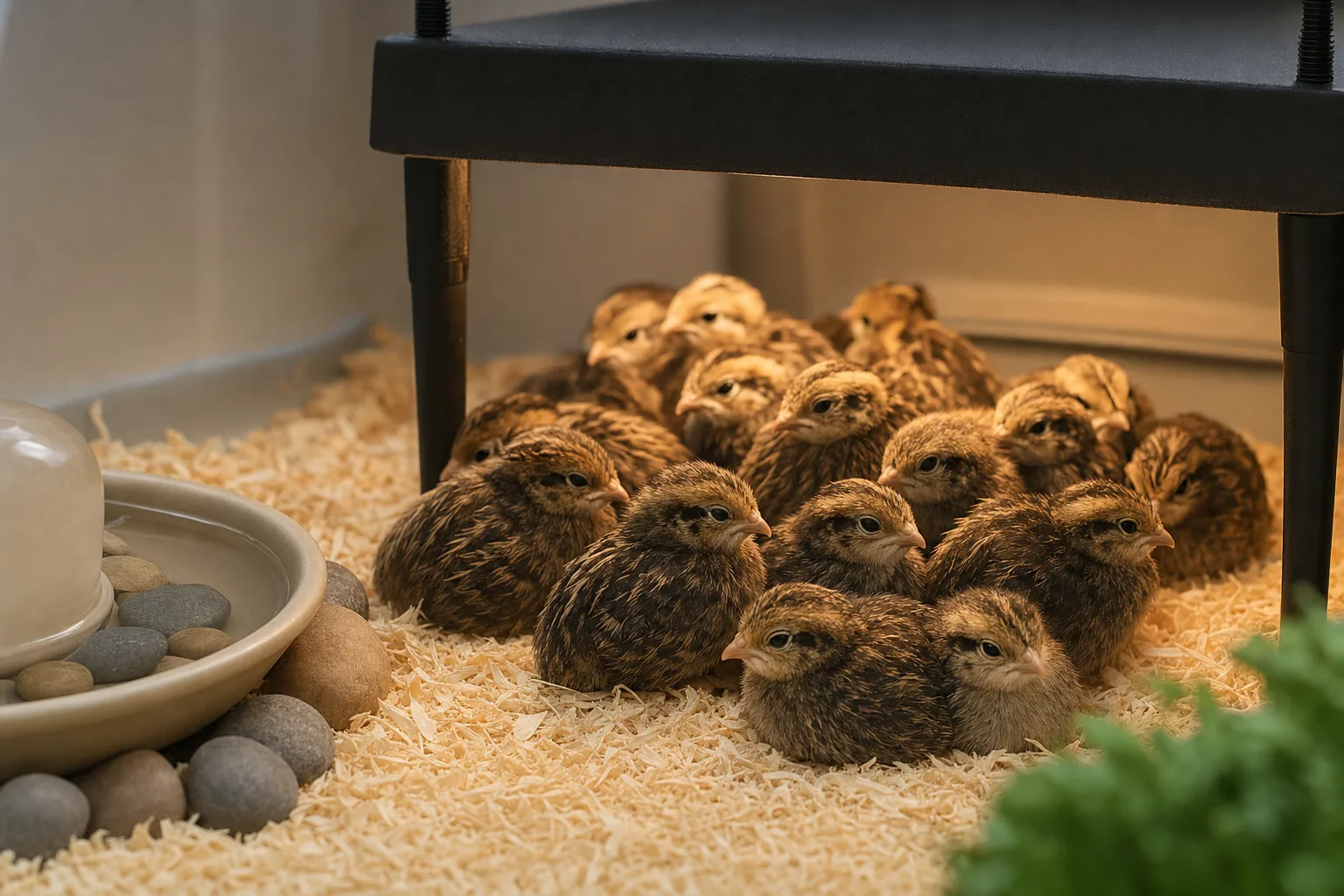
Quail chicks piling up in brooder (2026): 6 checks
A pile under or beside the heat source usually means baby quail are seeking more warmth. Check the whole brooder first, because a draft, misplaced sensor, blocked warm zone, or crowding can create the same picture.
Quail Chicks Piling Up in Brooder
A four-step check for a huddle under the heat
- Find the tightest cluster
- Check where it sits
- Place the sensor at chick level
- Read the warm zone
- Remove drafts or obstructions
- Change one heat variable
- Watch movement
- Confirm the gradient remains
A warm zone, a cooler escape zone, and a reading taken where the chicks actually are.
What do you check first when chicks pile?
Start with the pattern, then measure the warm zone at chick level. A tight pile under the heat suggests the reachable warm area is too cool, while a corner cluster points you toward drafts, obstructions, bedding, or a disturbance. Fix one issue at a time and keep a cooler escape area open. Start with our brooder thermometer picks if your current reading comes from room height or a heat-source surface.
Chick behavior is a useful cross-check, not a replacement for a well-placed thermometer. Coturnix need 95 °F / 35 °C at chick level in week 1. Button quail use the same warm-zone reference. Later, drop about 5 °F per week.
What do you need before checking the brooder?
You need a safe brooder, the existing heat source, and a thermometer whose sensing point can sit where the chicks actually rest. A remote-probe style is handy when an enclosed brooder would expose the display or put it near water and litter.
- A chick-level digital thermometer or remote probe
- A warm zone with room to move away from heat
- Dry bedding, a safe cable route, and a clear view of the chicks
The catalog recommendation, IncuTherm™ Plus Digital Thermometer and Hygrometer for Egg Incubator, is a $$ remote-probe option with an outside display, min/max memory, and temperature-plus-humidity readout. It is labeled for egg incubation, so judge it by safe placement and the brooder’s actual needs. See the remote-probe option
How do you check and correct the brooder?
Start by observing the pile, then measure the reachable warm zone at chick level. Confirm the heat source, inspect drafts and access, make one change, and recheck the same spot. This order keeps you from chasing a bad sensor reading or removing the cooler area chicks need.
Step 1: Observe where the chicks gather
Watch the whole group. Chicks packed tightly under the heat are likely seeking more warmth. Chicks far from the heat, panting, or holding their wings away may be too warm. A group pressed against one wall or corner deserves a draft and access check before you touch the heat setting.
Step 2: Measure at chick level
Put the sensing point in the warm area where a chick can stand or rest. Keep it off the heat-lamp bulb or warming-plate surface and out of the bedding. A remote probe keeps the display outside; a fixed digital monitor works when it sits securely at chick level and stays dry.
Infrared thermometers read the surface you aim at. They can spot-check a warm plate, but they do not provide a continuous air reading. A hygrometer is optional for trend awareness and matters less than the basic temperature decision here.
Step 3: Confirm the heat source
Check that the lamp or plate is operating and that the warm area is large enough for the group to reach without piling over one another. For week one, use 95 °F / 35 °C at chick level as the warm-zone reference for Coturnix and Button quail. The whole brooder should not sit at that same temperature.
Step 4: Inspect drafts and access
Look for moving air, a blocked path, slippery or damp bedding, or a bright disturbance pulling the group into one corner. Make sure every chick can reach warmth and can walk back to the cooler side. For heat-source and gradient setup ideas, see our quail brooder guide.
Step 5: Change one thing
Fix the clearest environmental issue first. If the chick-level reading is low in the reachable warm zone, adjust the heat setup safely. If the reading is suitable but the group is cornered, fix the draft or obstruction instead of adding heat.
Step 6: Recheck the same spot
Watch the chicks again after the change and read the sensor from the same position. Keep a cooler escape area open. Later, lower the warm-zone setting by about 5 °F per week; in warm weather, Coturnix chicks are generally off heat by 3–4 weeks.
What mistakes make piling worse?
Most avoidable errors come from measuring the wrong place or treating one number as the entire brooder. Correct the reading and the layout before making a large heat change.
- Room-height sensor: Move the sensing point to chick level in the reachable warm zone.
- Changing infrared targets: Aim at the same type of surface each time, and remember that surface readings are not air readings.
- Humidity-first shopping: Use humidity data for optional trend awareness, while keeping temperature placement central.
- Remote-only confidence: Treat an alert as a prompt to look in person. Check the local setup, power, battery, cable, and mount.
Why are chicks still piling up after you adjust heat?
If the cluster stays tight after the temperature check, inspect the brooder, warmth access, and route again. A blocked path, draft, crowding, wet bedding, or sudden disturbance can keep chicks together even when the warm-zone reading looks suitable.
Change one factor, then observe again. If chicks remain weak, injured, or distressed after environmental checks, talk to a poultry or avian veterinarian or your extension office. For a wider environmental checklist, see our broader brooder safety checks.
Which extension guidance supports these checks?
The temperature references here follow Mississippi State University Extension’s quail brooding guidance. For general brooder setup and hatchling behavior, compare Penn State Extension and eXtension poultry guidance.
Frequently asked questions
Why are my quail chicks piling up in the brooder?
A tight pile commonly means the chicks are seeking warmth. Check the sensor at chick level, inspect drafts, confirm the heat source is working, and make sure every chick can reach the warm zone and then move away from it.
Are quail chicks huddling in the brooder always too cold?
No. A huddle can point to cold, while a wall or corner cluster can also reflect a draft, obstruction, bright disturbance, or blocked access. Combine their behavior with a correctly placed thermometer reading before changing the heat.
What temperature should quail chicks have in the first week?
Coturnix and Button quail use a week-one warm-zone reference of 95 °F / 35 °C at chick level. Drop the setting about 5 °F per week afterward. Keep a cooler area available so the whole brooder is not one uniform temperature.
How do I place a thermometer for baby quail?
Put the sensing point at chick level where the birds rest, especially in the warm zone. Keep the display and electronics dry, away from water and litter, and route any cable safely. Do not place the probe on a heat-source surface or beneath bedding.
Can an infrared thermometer tell me why chicks are piling up?
It can spot-check a surface such as a heat plate or brooder zone. It cannot continuously measure ambient air throughout the enclosure. Pair it with a fixed or remote-probe monitor for the reading that guides ongoing brooder adjustments.
When should quail chicks leave the brooder?
Coturnix chicks generally move to grow-out at 3–4 weeks when fully feathered. In warm weather, they are generally off heat by 3–4 weeks. Use the warm-to-cool setup and the chicks’ feathering and behavior to guide the transition.