 Quail Corner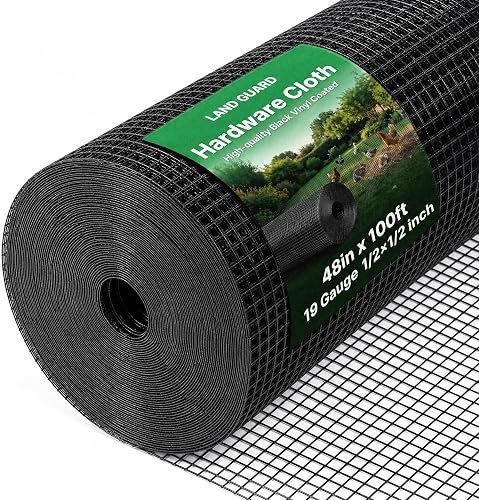
Best Overall
Land guard 48 inch×100 ft Black Vinyl Coated Hardware Cloth, 19 Gauge 1/2 inch Black PVC Hardware Cloth, Welded Wire Fence Supports Poultry Netting Cage Fence…………
$$
Check Price on AmazonFor an elevated adult Coturnix wire cage, choose 1/2 in x 1/2 in (13 mm) hardware cloth. Chicks need 1/4 in floor wire or a suitable solid floor. This guide shows how to check the finished floor, support, coating, tray fit, and enclosure type before you buy.
The opening is only the starting point. A roll is raw material, so you still need to cut it, fasten it, protect its edges, support the span, and make sure the manure tray or egg roll-out has room to work.
For an elevated adult Coturnix cage, use 1/2 in x 1/2 in (13 mm) welded hardware cloth. Chicks need 1/4 in wire or a suitable solid floor. Plastic slats can suit a washable build, and a solid panel can suit managed bedding. Ground pens and aviaries are a separate choice, with 2 ft² per bird or more.
Mesh is one part of the finished floor. See our quail cage flooring picks for the wider choice between coated wire, slats, and solid options.
| Setup | Starting choice | What to check |
|---|---|---|
| Adult elevated Coturnix cage | 1/2 in x 1/2 in welded wire | Foot support, tray clearance, edges, and frame support |
| Chicks or brooder | 1/4 in wire or suitable solid floor | Small feet, bedding, warmth, and easy cleaning |
| Plastic slats | Game-bird slat system only after checking its fit | Opening, leg height, support, and cleanability |
| Ground pen or aviary | Ground and bedding plan | 2 ft² per bird or more, shelter, drainage, and predator security |
This is the default floor material for an elevated adult wire cage. Welded squares hold their shape better than loose woven wire, and the open floor can work with a manure tray below. The floor still needs firm support and a finished edge that cannot scratch feet or catch feathers.
Chicks need the smaller 1/4 in floor wire or a suitable solid floor. Adult-floor mesh is not an automatic brooder floor. FarmstandApp’s brooder-floor discussion is useful for material ideas, but brooder advice must stay separate from adult cage construction.
Plastic slats can suit a washable elevated setup when the listing gives a quail-appropriate opening and the legs sit securely on the frame. Check the underside too. A panel that flexes, shifts, or leaves a foot-sized gap belongs back in the box.
A solid panel can suit an elevated or ground-based setup when bedding and moisture are managed on purpose. Community Chickens’ housing article describes elevated solid-floor and rigid-plastic approaches with drainage considerations. A solid floor still needs a plan for removing waste rather than leaving it under the birds.
A ground pen or aviary is not the same as an elevated cage floor. Plan for 2 ft² per bird or more, with dry shelter and secure boundaries. A short-term transport carrier has different priorities again, so do not buy a cage floor by assuming every enclosure serves every use.
The actual opening, welded construction, finish, edges, support, and waste handling matter as much as the label. Shop for the floor as a complete installation, even when the product arrives as a flat roll.
Measure the actual square opening, then measure the frame and every support underneath it. Product titles can round a size or describe a nominal mesh. Look at the product details and the wire itself, especially when replacing one damaged panel.
Galvanized wire and PVC-coated wire offer different surface and corrosion tradeoffs. Coating can suit a damp or outdoor-facing build, yet it does not remove the need to inspect welds, scratches, and exposed wire. The Happy Chicken Coop’s building advice is a useful reminder that fit and finish are part of the build.
Cut edges need folding, covering, or another secure finish. Run a gloved hand over the whole panel and look for lifted coating, rough welds, and gaps at the frame. Do this again after fastening, because a neatly finished roll can still leave a sharp corner where it was trimmed.
Give each bird at least 1 ft² in a wire cage. A kinder target is 1.5 ft² per bird. Check the complete floor, including a removable resting panel, so accessories do not quietly reduce the usable area.
If you would rather have the frame, floor, and tray designed together, compare our complete quail cage picks. A hardware-cloth roll is not a complete cage floor out of the package.
Before adding birds, slide the manure tray through its full path and check that the mesh does not sag into it. For egg collection, the floor, front lip, supports, and tray need to cooperate. A mesh choice that blocks the tray is the wrong choice, even if its opening is correct.
Spend according to the job. A small repair does not need a large roll, while a custom build can justify buying extra material for future panels. Prices and marketplace ratings change, so treat the bands below as buying routes rather than fixed dollar promises.
| Tier | Best fit | What you still handle |
|---|---|---|
| Repair tier | A localized replacement | Correct opening, edge finishing, fastening, and support |
| DIY or replacement tier | Several repairs or a custom floor | Cutting, installation, tray fit, and the unused remainder |
| Purpose-built tier | A known floor and tray fit | Verify opening, support, cleanability, and review depth |
If you are choosing a coated roll for a DIY floor, the catalog lists Land guard 48 inch×100 ft Black Vinyl Coated Hardware Cloth, 19 Gauge 1/2 inch Black PVC Hardware Cloth, Welded Wire Fence Supports Poultry Netting Cage Fence………… in the $$ band. Its catalog specs are 1/2 in x 1/2 in mesh, a 48 in x 100 ft roll, 19 gauge, black vinyl coating, galvanized after welding, 0.19 in wire diameter, 400 sq ft coverage, and flat welded wire mesh. The catalog rating is 4.6 and can change. A 100 ft roll is excessive for one small repair, and it still needs cutting, fastening, edge finishing, support, and tray checks.
$$
Check Price on AmazonBuy that route when you are replacing several floors or building a custom elevated cage. Skip it when you need one fitted panel, have no way to finish cut edges, or want a ready-made floor and tray system. Check the Land Guard roll on Amazon
Most floor problems start before the wire reaches the cage. Use this short check before you cut anything.
Flooring works best when it matches the whole enclosure. These guides cover the surrounding decision without turning this page into a product ranking.
For a roll-out build, choose the floor and tray together. See quail cages with egg-roll trays before cutting a slope into a replacement panel. The target is approximately 7–10°, yet the angle is only safe when the lip, supports, tray, and footing all line up.
Forget Me Not Quail Farm’s wire-versus-solid floor discussion explains the cage, pen, manure, and bedding tradeoffs. Community Chickens’ Coturnix housing article and The Happy Chicken Coop’s construction guide add practical context. Backyard Chickens threads titled “Choice of wire flooring for Coturnix Quail?” and “Wire floor vs sand/PDZ for quail hutch” are anecdotal keeper discussions, not a substitute for the floor facts above.
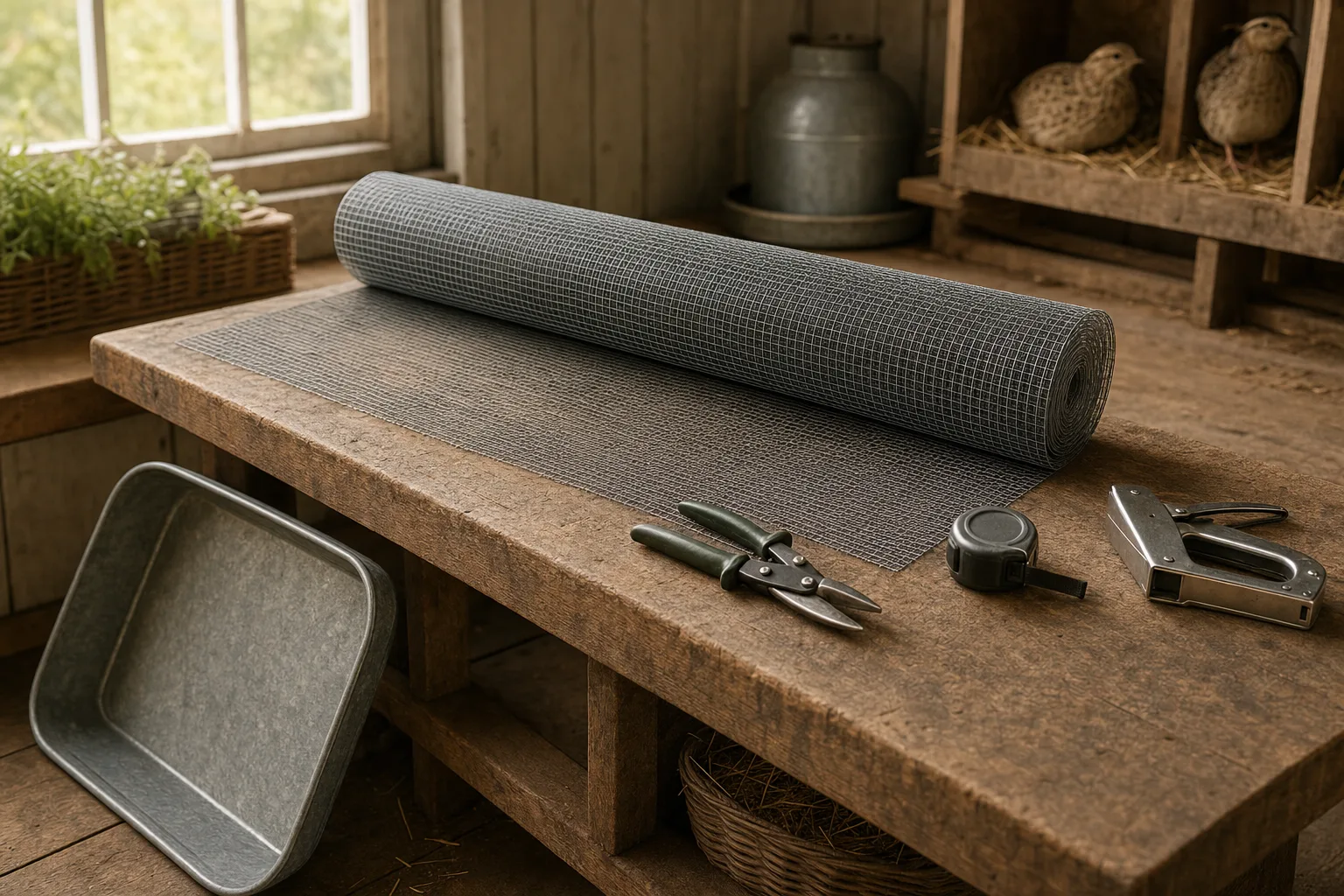
Use 1/2 in x 1/2 in hardware cloth for an adult Coturnix wire cage. Chicks need 1/4 in floor wire or a suitable solid floor. Check the actual openings and inspect every cut edge before birds go on it.
Wire works well with a manure tray in an elevated cage. Solid flooring requires deliberate bedding and moisture management. The housing type and the cleaning routine decide which fits your birds and your time.
Yes, if a game-bird listing has an opening, leg height, support, and cleanability that suit your setup. Do not assume every poultry or kennel slat is suitable for quail.
PVC-coated wire offers a different surface and a practical corrosion tradeoff. The wire-versus-solid discussion from Forget Me Not Quail Farm makes the same practical distinction. Inspect the coating and every cut edge, since coating quality varies.
An optional removable resting panel can give birds an off-wire area. Keep it dry and clean, and do not let it reduce usable floor space or trap waste beneath the flock.
Aim for approximately 7–10° when the cage is designed for roll-out collection. The floor, front lip, tray, supports, and footing must work together. Do not retrofit a slope that creates a gap or unstable footing.