 Quail Corner
What Size Brooder Mat for Quail Chicks? (2026)
Choose a brooder mat from the usable interior floor footprint, not from chick count. Measure the flat walking area, then pick a mat that covers it without curling, sliding, or leaving a gap along the edge.
For a purpose-sized option, the Hatching Time six-pack gives you six washable 17.25 x 11.38 inch mats with textured footing. If you want the wider product comparison, Best Brooder Mat for Quail Chicks (2026): 7 Picks compares fitted, washable, cut-to-fit, disposable, and household mat choices.
Types compared
Fitted mats are easiest to place, cut-to-fit liners handle odd shapes, and household shelf liner can save money. Every type still needs a flat fit and a grippy surface. Penn State Extension's brooding guidance warns against slippery floors, so traction matters from a chick's first step.
- Purpose-sized fitted mats: These are the simplest choice for a brooder with a matching footprint. Hatching Time's perforated polypropylene mats are washable, textured, and easy to rotate, though one mat can be too small for a broad floor.
- Cut-to-fit silicone or PVC: Rolls cover wide or oddly shaped brooders and let you trim around fixed edges. CVUTOVO's silicone liner measures 47.24 x 23.62 inches and has a non-slip dot texture. Measure twice before cutting because a short liner leaves an exposed strip.
- Household shelf liner: Non-adhesive grip liner is a practical budget alternative. Duck EasyLiner Select Grip is 12 inches wide and 24 feet long, so it works best when the floor is narrow enough for that width or when strips meet flat without creating a raised seam.
- Disposable pads: These reduce washing during a messy hatch. They create recurring waste, and small pads can shift or leave joins, so place them over a stable floor and inspect the edges at every change.
Key factors to consider
Measure the usable floor
Measure inside the brooder at floor level, from wall to wall. Ignore the outside dimensions, rounded corners, thick lips, and space occupied by a fixed divider. A mat should cover the walking area while leaving equipment stable.
Brooder footprint and batch planning are connected. Before cutting a liner, read How Big Should a Quail Brooder Be? A Sizing Guide (2026) for footprint and batch-sizing guidance. That keeps you from trimming a mat for a box that is already too cramped.
Prioritize traction and a flat surface
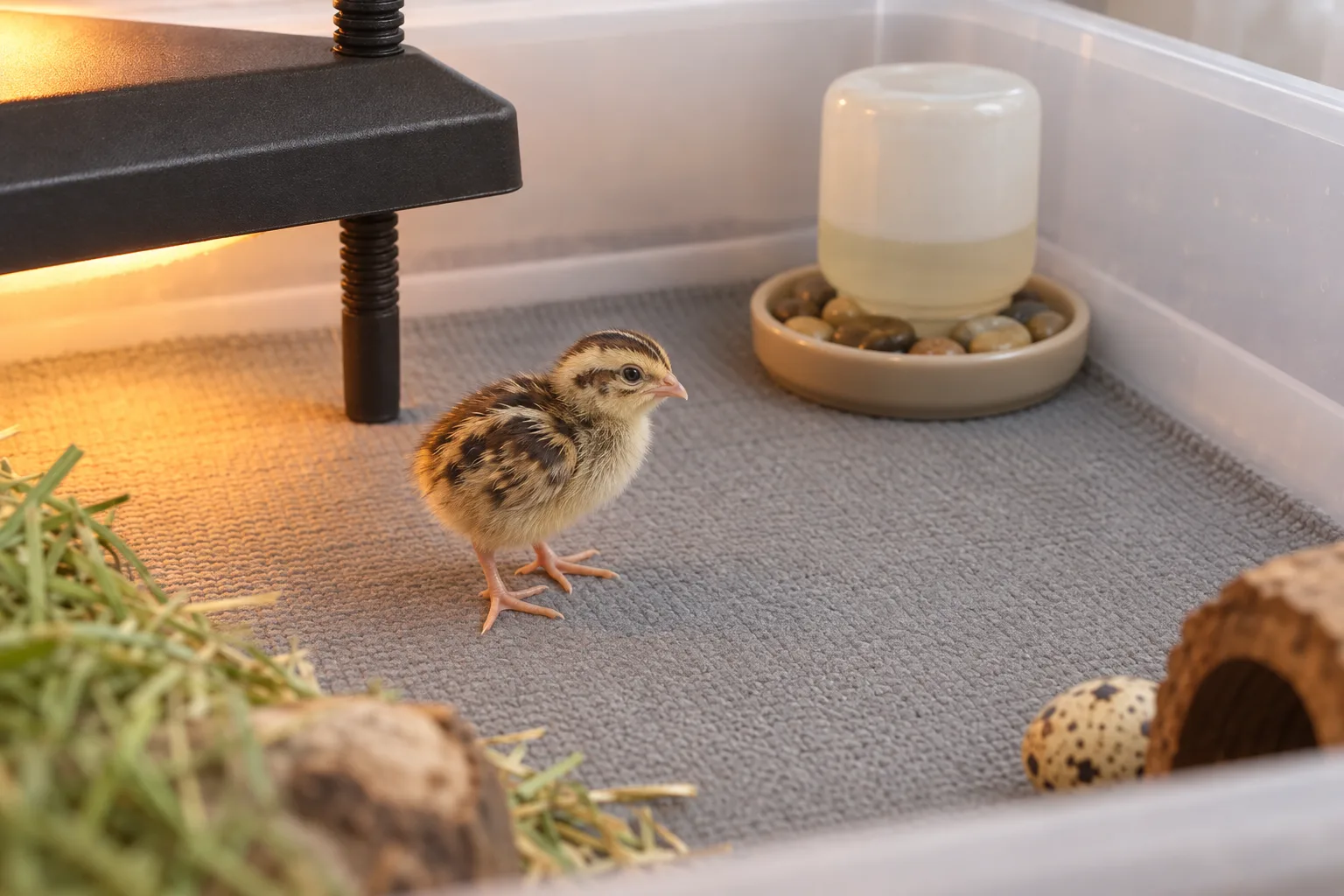
A textured surface gives chicks something to grip. Avoid smooth plastic, loose fabric, and any liner that bunches under a foot. A perforated or textured mat can still be wrong if it slides, so press it flat and inspect every corner.
The mat supplies flooring only. Coturnix chicks need 95 °F / 35 °C at chick level in week one, with the brooder temperature reduced by about 5 °F per week later. Use a separate heat source, such as a heat plate or guarded lamp, at one end. Chicks need a comfortable area away from that heat so they can move closer or farther away.
Secure the edges
Edges are the small detail that causes large trouble. A curled corner invites pecking and lets bedding work underneath. Trim a roll to the measured footprint. If the brooder wall bows the material upward, recut it instead of accepting a curled edge or exposed strip.
Keep seams out of the busiest walking path. If you must join pieces, make the join flat and check it after the chicks have walked over it. How to Build a Quail Brooder Box (2026) covers secure flooring, ventilation, and equipment placement around the liner.
Plan cleaning and rotation
Washable mats cost less work over several hatches when you have a dry spare ready. Hatching Time's six mats make rotation straightforward, while the CVUTOVO liner gives you a large washable sheet to trim once. Disposable pads suit keepers who value fast changes more than reuse.
Check the mat whenever you refill water or remove soiled material. A wet, bunched, or dirty floor needs attention before the next check, regardless of its material.
Budget tiers
The right budget depends on how often you hatch and how much cutting you want to do. Price bands change, so use the features below rather than treating a tier as a promise of a fixed cost.
$, entry level
This tier usually means a household shelf liner or a simple cut-to-fit roll. You get broad material for a low outlay, but you supply the measuring, trimming, and edge checks. Duck EasyLiner is the useful example here because it is non-adhesive, washable, and reusable.
$$, practical rotation
Spend in this range for multiple fitted mats or a larger reusable liner. The Hatching Time pack earns its place for keepers who want a clean replacement ready while another mat is washed. Multiple mats also help when the brooder gets dirty faster than expected.
$$$, specialized coverage
The higher tier makes sense for a large, unusual, or frequently reused setup where exact coverage saves daily fuss. Look for enough material to cover the whole usable footprint, a surface with grip, and care instructions you will actually follow. Extra features do not excuse a loose edge.
Common mistakes to avoid
- Buying by chick count: Chick number does not tell you the shape of the brooder floor. Measure the actual interior footprint and fit the liner to that space.
- Using the box's outside dimensions: Walls and lips steal usable floor area. Measure at floor level, then cut once.
- Leaving a curled edge: A corner that lifts can catch toes and lets debris collect underneath. Replace, trim, or secure the liner so it stays flat.
- Covering the heat source with the wrong idea: A mat supplies flooring, not warmth. Set the heat source separately at one end and cover the stable floor so chicks can walk away from the warm area.
- Ignoring the floor underneath: A mat should sit over a stable brooder floor. It does not turn unsuitable wire into a safe chick floor; chick floor wire is ¼ inch.
Our picks
For the measured-floor decision, start with the product that matches your shape and cleaning routine. Hatching Time is the best fitted choice when its 17.25 x 11.38 inch footprint suits your brooder and you want six mats for rotation. CVUTOVO is the better route for a large cut, and Duck EasyLiner is the household alternative when you will check every edge.
- Hatching Time Brooder Floor Mat 6-Pack fits keepers who want six washable, perforated mats with textured footing for rotation.
- CVUTOVO Silicone Brooder Liner 2-Pack suits broad or unusual floors that need a washable liner trimmed to shape.
- Duck EasyLiner Select Grip works as a budget household option when its 12-inch width matches the floor and its non-adhesive edge stays flat.
The mat still needs a separate heat setup. For that decision, see Best Quail Brooder (2026): 7 Heat Plates & Kits, which compares heat plates, brooder boxes, and complete brooder kits.
A quick fit check before chicks arrive
Put the liner in an empty brooder and run a finger around the entire edge. The floor should feel flat, the corners should stay down, and water equipment should sit without rocking. Remove the liner and trim again if a wall bows it upward.
Then set up the heat source at one end and leave a clear comfortable area at the other end. Cover the whole stable floor for consistent footing, while the heat source warms only one end. During week one, check temperature at chick level rather than guessing from the room. Coturnix chicks generally leave the brooder at 3–4 weeks when fully feathered, so choose a liner you can clean and replace throughout that period.
Frequently asked questions
What size brooder mat do quail chicks need?
Use the usable interior floor footprint, measured after accounting for corners, lips, and fixed equipment. The mat should lie flat across the walking area with no exposed gap and no loose edge for chicks to lift.
How much brooder mat for quail chicks?
Buy enough material to cover the stable floor area where the chicks walk. Chick count alone does not give a safe mat size. Measure the length and width, then cut a clean fit or keep a spare clean mat ready.
How to choose quail brooder liner size?
Measure the narrowest usable length and width inside the brooder, rather than the outside of the box. Choose a liner that can be trimmed to those measurements, then check that the finished edge stays flat after placement.
What are sensible quail brooder mat dimensions?
There is no single dimension for every brooder. A 17.25 x 11.38 inch fitted mat suits a smaller footprint, while a 47.24 x 23.62 inch cut-to-fit liner suits a broad or unusual floor. Match the product to your measured floor.
Can you use shelf liner in a quail brooder?
Yes, a non-adhesive grip shelf liner can work when it is cut to the floor and checked for loose corners, slick patches, and exposed gaps. Duck EasyLiner Select Grip is a household option, but it needs more measuring and edge checking than a fitted mat.
How do you clean a washable brooder mat?
Move the chicks to a secure warm area, shake or scrape off debris, then wash the mat with soap and water. Rinse it and let it dry fully before putting it back. A spare mat makes rotation easier during the first busy days.