 Quail Corner

Quail Brooder Ideas (2026): How to Choose a Safe Chick Box
The best quail brooder idea depends on your batch, storage needs, heat source, cleaning access, and escape control. Pick a box that gives chicks a measurable warm zone, a cooler area, fresh air without a direct draft, a safe floor, and an easy way to reach every corner.
A tote can work well when you build in the missing details. A purpose-built box or complete kit saves setup time. For specific models and current listing details, see our quail brooder box picks. The framework below helps you judge any box before the chicks arrive.
Which quail brooder box style fits your setup?
Choose the style that makes the important checks easy. A cheap enclosure becomes a poor buy if you cannot secure the lid, place the heat source correctly, clean the floor, or see whether a chick has reached an opening.
| Brooder style | Best for | Main advantage | Main check |
|---|---|---|---|
| Storage tote or DIY plastic box | Flexible, low-cost setups | Easy to adapt and store | Lid security, vents, floor, and heat mounting |
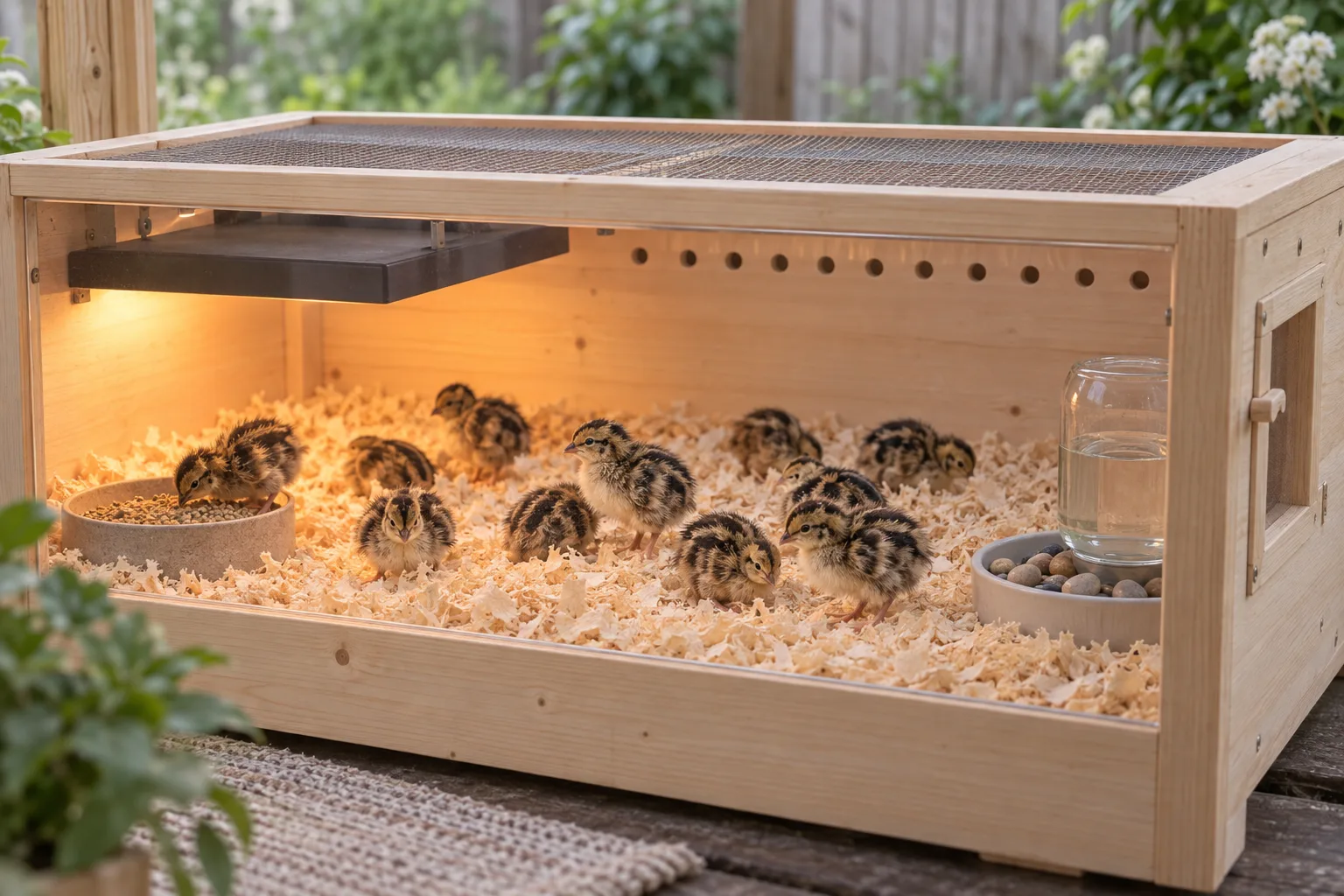
| Wooden or acrylic box | Observation and a finished station | Clear viewing and solid containment | Ventilation, wipeable surfaces, corners, and access |
| Fabric or mesh playpen | Portable storage and larger footprints | Folds away and opens quickly | Mat, zippers, seams, doors, and tiny gaps |
| Complete starter kit | First-time keepers wanting matched supplies | Box, heat, and accessories arrive together | Included parts, actual floor, and listed capacity |
Is a storage tote or DIY plastic box a good idea?
A tote is the practical choice when you already have a suitable container and enjoy solving the details. The lid needs secure ventilation openings without escape-sized gaps. The floor needs a solid liner or ¼-inch wire, and the heat source needs a stable mounting plan. Our guide to building a quail brooder box covers that route. DIY works only after you have checked every seam and opening.
Are wooden or acrylic boxes easier to use?
Wood and acrylic boxes make observation simple and feel more finished in a spare room or garage. Inspect the corners for wipeability, the panel for practical viewing, and the lid or door for full access. Clear sides do not replace ventilation. You still need a warm side and a cooler side.
When does a fabric or mesh playpen make sense?
A fabric playpen is handy if the brooder must fold away between hatches. Look underneath first. The mat should cover the whole usable floor, doors should close firmly, and seams should not leave openings a newly hatched chick can reach. Mesh also needs protection from direct drafts and messy bedding.
Is a complete starter kit worth choosing?
A kit is a good shortcut when the included heat source, feeder, waterer, bedding, and thermometer match your needs. One example is the LIAQICHA kit, listed at 15.7 x 12 x 12 inches with a 110V 50W adjustable heat lamp, clear acrylic panel, feeder, thermograph, waterer, bedding, absorbent pads, skylight, and access door. Those listed dimensions are product information, not a guaranteed chick-count promise.
Which feature tier should you buy?
Buy the tier that gives you a controllable warm zone, a cooler retreat, secure containment, and a floor you can clean. The tiers below describe convenience, not a safe chick count. Check the actual box, heat source, and included parts before you pay.
| Feature tier | What you get | Best fit | Trade-off |
|---|---|---|---|
| DIY essentials | Container, planned vents, safe floor, separate heat source, and simple bedding | Keepers who can build and inspect each part | More setup work and more chances to miss a gap |
| Ready-made box | Finished panels, doors, viewing area, and a defined floor | Keepers who value access and observation | You still need to verify heat and ventilation |
| Complete kit | Enclosure plus some mix of heat, water, feed, bedding, and monitoring parts | Beginners assembling a first brooder | Included accessories may not suit every batch or species |
| Portable mesh setup | Foldable walls, cover, mat, doors, and sometimes a heat plate | Temporary indoor use and easy storage | Seams, zippers, mats, and drafts need close checks |
What brooder-buying mistakes should you avoid?
- Choosing by appearance alone. A clear panel looks useful, but inspect the vents, floor, door, and heat clearance before you buy.
- Using the listed capacity as a stocking promise. Compare dimensions with the warm zone, cooler zone, food, water, and movement the chicks need.
- Leaving the floor until hatch day. Confirm solid flooring or ¼-inch wire before chicks arrive. Larger openings can let small feet slip through.
- Heating the whole enclosure. Place the source so chicks can move away from it, then check the temperature at chick level.
- Assuming a kit includes everything. Read the included-parts list and decide if the waterer, thermometer, bedding, and heat source fit your setup.
Where can you see specific brooder picks?
Use the category framework first, then compare listings with the checks above. Our quail brooder box picks cover specific boxes and kits. For the heat source itself, see our quail brooder and heat-plate picks. A box and a heat source are separate decisions when the enclosure does not include one.
The LIAQICHA listing is the page's complete-kit example. Its listed 15.7 x 12 x 12-inch size, 110V 50W adjustable heat lamp, clear panel, feeder, waterer, thermograph, bedding, absorbent pads, skylight, and access door make the parts easy to check in one place. The listing does not turn those dimensions into a stocking recommendation, so plan the warm and cool areas yourself.
If you want to build rather than buy, use our guide to building a quail brooder box. It is a better route when you can make the lid, vents, floor, and heat placement deliberate instead of improvising after the hatch.
Frequently asked questions
What size brooder box for quail?
There is no universal chick-count formula in this guide. Compare the listed dimensions or capacity with room for a warm zone, a cooler zone, food, water, and movement. A box that only fits the heat source leaves chicks with nowhere to move away from warmth.
What are good brooder box ideas for quail?
A storage tote suits a careful DIY keeper, a wood or acrylic box suits observation and a finished setup, and a mesh playpen suits portability. A complete kit is convenient when its heat source, floor, access, and included supplies fit your setup.
What are good quail chick brooder box ideas for beginners?
Beginners should choose a complete kit or a simple solid enclosure only when ventilation, access, floor material, and heat-source details are clear. You still need to check temperature at chick level and watch how the chicks spread through the box.
How should heat and ventilation work in a quail brooder box?
Start Coturnix at 95°F / 35°C at chick level in week one, then reduce by about 5°F per week. Ventilation should exchange air without blowing a direct draft across the chicks. Keep one warm zone and one cooler zone.
What floor is safest for quail chicks?
A solid floor or ¼-inch floor wire is suitable for quail chicks. Button quail also need a solid or ¼-inch floor because larger openings are unsafe for tiny feet. Whichever floor you choose, it should stay dry, level, and easy to clean.
When do quail chicks leave the brooder?
In warm weather, fully feathered Coturnix usually move to grow-out at 3–4 weeks and are generally off heat by 3–4 weeks. Use feathering, room conditions, and chick behavior alongside age. Button quail follow the same weekly temperature reduction, with extra attention to their small size.