 Quail Corner

Quail Brooder Box Too Cold: Fix Cold Spots (2026)
If your quail brooder box is too cold, watch the chicks first, then measure the warm zone at chick level. For Coturnix and button quail, the week-one target is 95°F / 35°C at chick level. Room temperature and a box display can mislead you. Restore a warm zone, leave a cooler area, and keep needed ventilation open.
Fix a Cold Quail Brooder Box
A calm five-step check for cold spots
Step 1 Observe the chicks
- Watch for sharp chirping
- Check for tight huddling
Step 2 Measure at chick level
- Place the thermometer in the warm zone
- Compare with 95°F / 35°C
Step 3 Check the heat source
- Confirm power and operation
- Check placement
Step 4 Correct drafts and placement
- Keep a warm zone
- Preserve ventilation
Step 5 Recheck the setup
- Watch behavior again
- Make one change at a time
Result
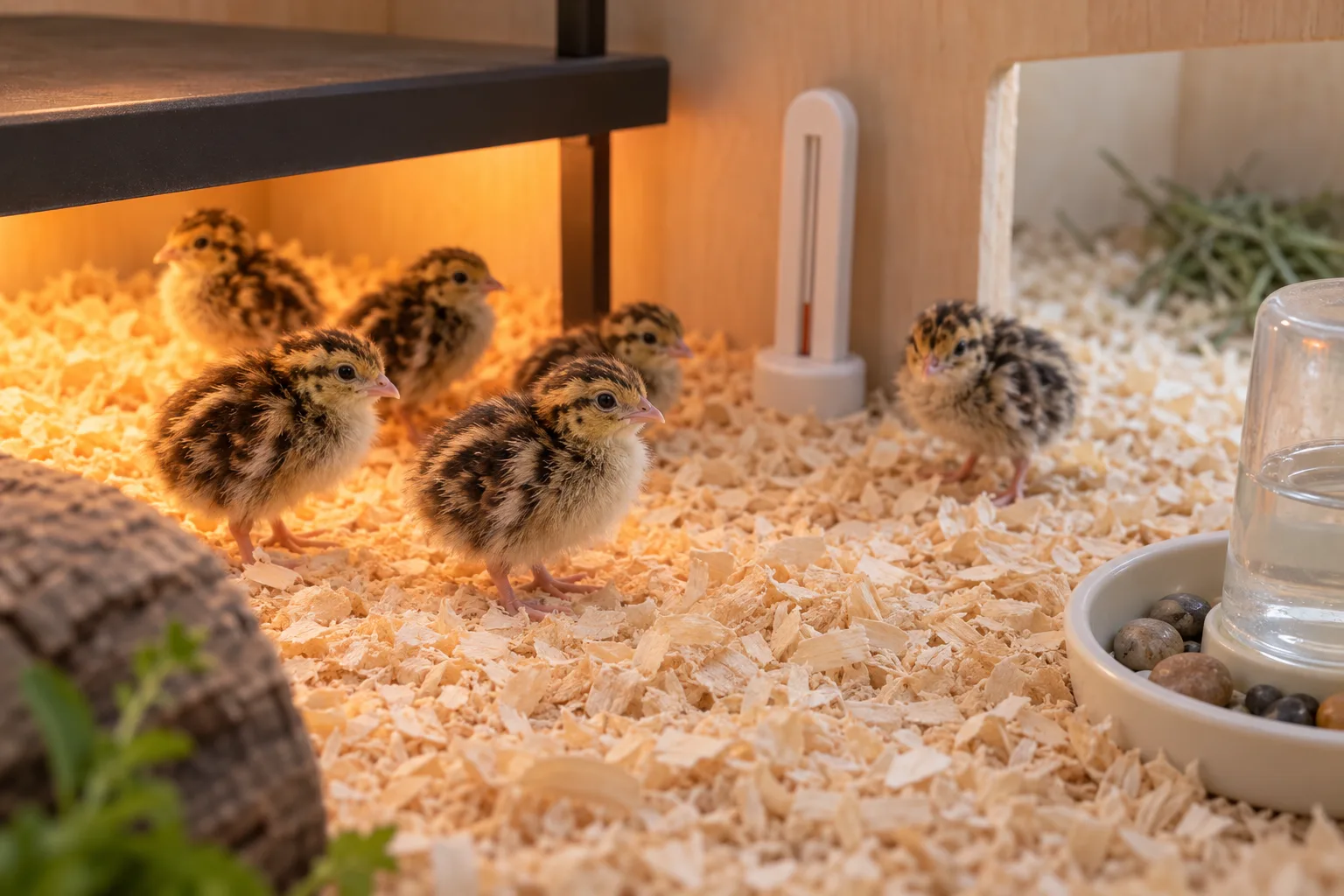
A measured warm zone with room for chicks to move away from the heat.
What is the quick fix for a cold brooder?
Sharp chirping and tight huddling under the brooder point to cold chicks. Check the temperature where the chicks stand, confirm the lamp or plate works, remove direct drafts, and recheck their behavior after one change.
Mississippi State University Extension covers the 95°F week-one target and these behavior clues in “Temperatures recommended for brooding quail”. A box should offer heat on one side and room to move away from it.
What will you need to fix it?
Set out a chick-level thermometer, the installed heat source, clean bedding, and a safe floor before you adjust anything. You want to measure the warm zone and correct the setup without trapping the chicks in one temperature.
- A thermometer placed at chick level in the warm zone. Our guide to a quail brooder thermometer helps with this purchase.
- The installed heat lamp or heating plate, plus its safe adjustment or mounting parts.
- Clean bedding and a solid floor, or ¼-inch floor wire if you use wire.
- A brooder layout with ventilation and no direct draft across the chicks.
If your box or heat source is the weak point, our quail brooder box picks compares layouts, heat sources, access, and ventilation. The roundup can help you decide if a replacement setup makes more sense than repeated adjustments.
Our Top Picks

How do you correct a cold brooder box?
Start with the chicks, take one chick-level reading, and then work through the heat source, drafts, and placement in that order. Make one change at a time so you can see what settles the covey.
Step 1: Observe the chicks
Look at the covey before touching the equipment. Sharp chirping and tight huddling directly under the heat suggest the chicks are cold, according to Mississippi State Extension. Huddling to one side can point to a draft.
Give them a moment to show you their preference. Chicks spread across the warm area and move freely toward a cooler side are giving you better feedback than chicks packed into one spot.
Step 2: Measure at chick level
Place the thermometer in the warm zone at the height where the chicks stand. The week-one target is 95°F / 35°C at chick level for Coturnix. Button quail also start at 95°F in week one.
A display attached to the box, a room reading, or a thermometer pressed against the heat source can miss the temperature the birds feel. Check the warm zone itself before adjusting the source.
Step 3: Check the heat source
Confirm that power reaches the source and that the bulb, controller, or plate operates. Check its position and mounting against the product instructions. The LIAQICHA listing gives an adjustable 50W lamp and thermograph, while the ComfyKit listing gives a heating plate. Neither listing guarantees the right warm zone in every room or setup.
For a lamp-versus-plate buying comparison, see our quail brooder and heat-plate picks. You can also use the LIAQICHA listing or the ComfyKit listing as equipment options, then verify the actual chick-level reading.
Step 4: Correct drafts and placement
Block a direct draft across the chicks without sealing the brooder shut. Shift the heat source or adjust the warm area so chicks can reach heat and then move away from it. The Mississippi State Poultry Science guide, “Brooding Chickens and Quail”, is a useful reference for basic brooder operation and ventilation.
Check the floor too. Newly hatched chicks need a solid floor or ¼-inch wire. Button quail also need a solid or ¼-inch floor and a soft or low roof because they jump straight upward.
Step 5: Recheck behavior and temperature
After one adjustment, measure the warm zone again and watch the chicks. Avoid changing the source, bedding, and box position all at once. That makes it hard to tell which correction helped.
If the chicks remain distressed, or if you have losses, contact a poultry veterinarian or extension office. This guide helps you check the brooder setup; it does not diagnose a health problem.
What mistakes keep a brooder cold?
Most cold spots come from measuring in the wrong place, heating the whole box, or closing off ventilation while chasing warmth. Keep a warm zone, leave a cooler area, and use the chicks' behavior alongside the thermometer.
- Heating the whole box: Chicks need a warm zone and access to a cooler area, so avoid treating one uniform reading as the goal.
- Measuring beside the source: A lamp or plate can make a nearby reading look useful while the chick-level zone stays cold.
- Closing every vent: Stop a direct draft, then preserve ventilation. A sealed box creates a different problem.
Why is the brooder still cold?
Match the symptom to the likely setup problem, then make one correction and check the chicks again. A cool side can be useful; a cold warm zone or persistent distress calls for another look at the source and drafts.
The chicks huddle under the heat and chirp sharply
Read the temperature at chick level and confirm the source is working. Restore the 95°F / 35°C week-one warm zone, then watch whether the chicks spread out and use the cooler side.
The chicks huddle at one edge
Check for a draft from a door, vent, fan, or gap. Also check whether the heat source sits too far from that edge. Correct the draft or placement while leaving ventilation available.
The box has a heating plate but the edges feel cold
Cold edges alone do not prove the setup is wrong. Measure the warm zone where chicks stand, check access under the plate, and make sure the top and doors stay secure. The larger ComfyKit layout still needs cold-edge checks. More space does not automatically make the warm zone warmer.
Frequently asked questions
What does it mean when quail chicks huddle under the heat?
Sharp chirping and tight huddling under the heat are cold signs described by Mississippi State Extension. Verify the reading at chick level before changing the setup, then watch the chicks after the adjustment.
What temperature should a quail brooder be?
Coturnix need 95°F / 35°C at chick level during week one. Button quail also start at 95°F in week one. Give chicks access to a cooler area so they can move away from the heat.
How do I measure quail brooder temperature?
Measure in the warm zone at chick level, where the birds actually stand. Do not rely on a room-wall reading or place the thermometer directly against the lamp or plate. See our guide to a quail brooder thermometer for suitable measuring gear.
Why is one side of my quail brooder box cold?
A cooler side is expected because chicks need a warm zone and an area away from the heat. Check for a direct draft, then check source position and ventilation. The goal is useful temperature choice, not identical heat throughout the box.
Is a heat plate better than a lamp for quail chicks?
Either can work when it is secured, monitored at chick level, and arranged with access to a cooler area. A plate suits some setups, while a lamp suits others. Compare options in our quail brooder and heat-plate picks.
When should quail chicks leave the brooder?
Reduce brooder temperature by about 5°F per week. In warm weather, Coturnix are generally off heat by 3–4 weeks and move to grow-out at 3–4 weeks when fully feathered.