 Quail Corner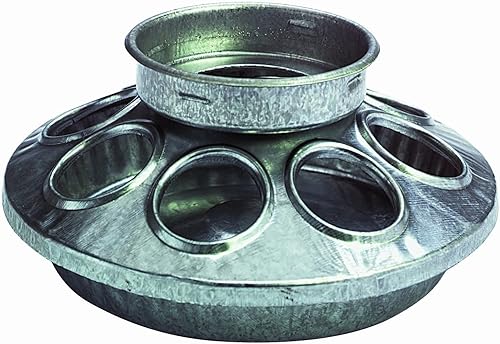
Reviewed Product
Baby Chick Feeder Base - Little Giant - Metal Feeder Base Jar, Standard 1 Quart (Item No. 9810)
$
Check Price on AmazonThe Little Giant 9810 is worth buying for a Coturnix brooder when you want a feeder-only base, can supply a compatible jar, and prefer its simple eight-hole layout. It sits in the $ price band. This is a feeder base, not a complete feeder-and-waterer set.
The current listing gives it a 1-quart capacity when paired with the compatible jar, eight feeding holes, heavy-gauge galvanized steel, and a 4.5 rating. It accepts a Little Giant standard 1-quart plastic screw-on jar or a standard Mason jar, with the jar sold separately. Care is hand wash only. Those specifications and the rating come from the current product listing, not independent Quail Corner testing. For the category-level recommendation, see the broader chick-feeder roundup.
$
Check Price on AmazonVerdict: A sensible feeder-only base for a Coturnix brooder if you can confirm the jar fit before buying.
Best for: Small Coturnix brooder setups that want a simple jar-fed metal base.
Rating: 4.5/5
Yes, for a keeper who wants a compact gravity base and is happy to source the reservoir. The eight holes give several Coturnix chicks a place to reach feed. You also avoid buying a waterer you may already have.
Skip it if you want an all-in-one kit, a translucent reservoir, adjustable height, or a dedicated flip-top or ported trough built around scratch control. Here’s the catch: jar compatibility. Confirm the Little Giant 1-quart screw-on jar or standard Mason jar and its threads before you fill anything. A wrong fit turns a simple base into a parts problem.
| Product | Baby Chick Feeder Base, Little Giant, model 9810 |
| Capacity | 1 quart when paired with a compatible jar |
| Feeding holes | 8 |
| Material | Heavy-gauge galvanized steel |
| Edge design | Rounded, embossed edge |
| Compatibility | Little Giant standard 1-quart plastic screw-on feeder/waterer jar or standard Mason jar |
| Jar included | No; compatible jar sold separately |
| Listed dimensions | 6 in L x 6 in W x 2.5 in H |
| Care | Hand wash only |
| Operation | Manual |
| Listing rating | 4.5 |
In a brooder, you’ll notice four things first: can the chicks reach it, how much crumble hits the bedding, does the jar stay put, and can you wash the mess away? The listing covers the hardware. Your bedding, placement, chick size, and assembled setup decide the rest.
Eight holes provide several access points, so multiple chicks can feed at once. The smallest chick in your group still needs to reach an opening without climbing into the base. Watch that first setup in your own brooder.
Penn State Extension’s “Brooding of Domestic Fowl” supports starting chicks with feed in a low dish or chick feeder. That is why observation matters here. The listing gives the hole count, yet it gives no universal quail flock-capacity rule and does not promise that every chick will reach every opening.
It can be neater than an open dish, though eight access holes do not make it a zero-waste feeder. Bedding depth, pecking, and where you set the base decide how much crumble ends up outside it.
Silver Homestead’s “No Waste Quail Feeders that Work” is useful keeper experience here. The report connects feeder design with chick behavior instead of promising a perfect result from a product label. Check the bedding around the base and move it if chicks are billing feed out through the openings.
The base screws onto the compatible Little Giant jar or a standard Mason jar according to the listing. Confirm that match before filling it. Once the fit is right, gravity feeding keeps refills simple.
The separate-jar design adds one check that a complete starter kit does not. Look at the connection, set the assembled feeder on a stable surface, and watch for rocking, tipping, or chicks trying to climb into it. A product title cannot promise stability in every brooder.
The care instruction is hand wash only. Inspect the holes, rounded edge, jar connection, and any crumble that has become damp or soiled before putting clean feed back in.
Heavy-gauge galvanized steel points to a solid metal base, and the rounded embossed edge is a practical listing detail. The listing says nothing about long-term life, so treat durability as an expectation from the construction, not a Quail Corner result. Check the connection and surface as part of your normal routine, and follow the hand-wash instruction.
Setup is straightforward after you confirm the compatible jar. Inspect the base and edge, fill it with appropriate crumble, and check that each chick can reach an opening. Place it securely so chicks cannot tip it or climb inside. Then watch the assembled unit instead of assuming the design will control mess.
Check for damp or fouled feed and hand-wash the component according to the listing and your keeper routine. Penn State Extension’s “Brooding of Domestic Fowl” advises keeping feeders near the heat while avoiding placement directly underneath it. For the rest of the brooder layout, compare our quail brooder picks, then use our feed and water guides for feed access and storage decisions.
Choose the TGEYD Chick Feeder and Waterer Set if you want feed and water together in one brooder starter setup. Its listing describes a shallow-water base and anti-drown design, but those listing claims are not a safety guarantee. Lixit’s Baby Chick Feeder or Waterer suits a keeper who values a reversible format, an included reservoir, and its listed capacity over a dedicated quail-port layout.
The ZenxyHoC 2-in-1 Chick Starter Set is a better match if adjustable waterer height, semi-transparent construction, and hanging hooks matter. Those are verified features; treat any spill-reduction claims separately. Kculehtlla offers two food troughs plus a waterer for a low-cost starter setup, so check fit and stability before settling it in the brooder.
Oncpcare’s two flip-top trays and Anscuto’s four-piece kit can spread access around a brooder or provide a spare. Oncpcare has a thin verified review count of 31, while Anscuto’s is 12. Check the parts and return policy instead of treating low-volume listings as proven. For more feeder styles, see the broader no-waste feeder comparison, and make the handoff to quail feed picks by life stage when the question becomes feed suitability.
Buy this if: you want a feeder-only jar base, eight feeding holes, a compact metal design, and a product from an established poultry-supply brand. You already own or can source the compatible jar, and you are willing to observe how it performs with your particular chicks.
Skip this if: you need a waterer in the same package, want a translucent reservoir or adjustable height, cannot confirm jar compatibility, or specifically want a flip-top or ported trough designed around scratch control.
For an all-in-one setup, the TGEYD set is the pick in the broader chick-feeder roundup. The Little Giant 9810 suits a keeper who wants a feeder-only jar base with eight holes, while Lixit gives you a reversible feeder/waterer format with a reservoir.
There is no universal winner. Ports can limit entry and scratching, while a trough can offer simpler access and cleaning. Balance the smallest chick’s reach, the unit’s stability, contamination, and what you actually observe in the brooder.
They can use one only if every chick reaches the feed safely and the mount cannot swing, tip, or create a gap. Watch the setup closely instead of applying an age rule, and treat hanging hooks as a feature rather than proof that every brooder suits a hanging position.
Choose a design that limits entry, place it securely, and change formats if chicks can climb inside. Silver Homestead’s “No Waste Quail Feeders that Work” offers practical keeper experience on reducing mess, though no feeder eliminates contamination in every setup.
Coturnix chicks should receive 28–30% game bird starter for weeks 0–6, according to the Quail Facts sheet. Penn State Extension and Mississippi State Extension support keeping suitable feed available, but a good feeder cannot correct the wrong or contaminated crumble.
Inspect the feeder for damp or soiled crumble, check that every chick can reach it, and follow the product’s care instructions. For the Little Giant base, the verified instruction is hand wash only, so do not assume dishwasher safety or use a fixed cleaning interval.