 Quail Corner
How Many Hours of Light Do Quail Need to Lay Eggs? (2026)
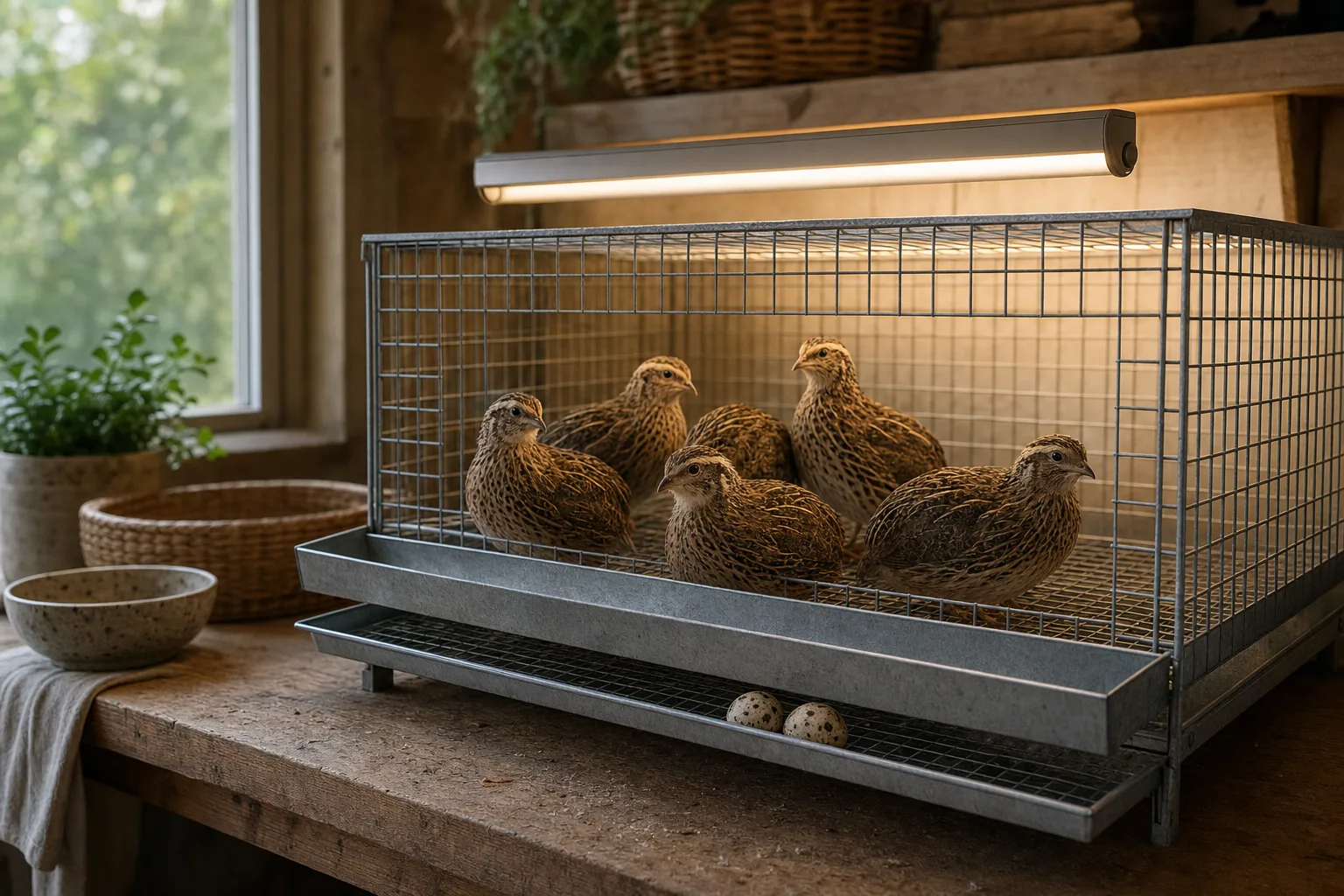
Coturnix quail need 14–16 total hours of light to keep laying. That total includes daylight, so a lamp supplies only the gap during shorter autumn and winter days.
A timer helps you repeat the same routine without guessing. Choose the power setup for the actual enclosure, then check the timer, moisture protection, mounting, and light level before you buy. For specific equipment, see our quail coop light picks. The schedule supports laying, but it cannot promise an egg from every hen every day.
Which types of quail lights and timers are worth considering?
For most keepers, a corded LED timer light is the simplest choice in a sheltered coop, shed, or garage. Integrated programmable units keep the controls together, while battery and solar options solve cord problems at the cost of more power checks. The lamp only fills the missing part of the day.
- Corded LED timer lights: These suit an enclosure with dependable mains power. Operation is predictable, though you must protect the cord and connections from moisture, pecking, and curious birds.
- Integrated programmable units: A combined lamp and timer can make setup neater. Read the schedule controls carefully and make sure they can support your total-light plan instead of assuming the preset is right.
- Battery-backed lights: These help where a cord is impractical. Check whether the unit uses a product-specific battery, how replacement works, and what happens to the schedule after a power or battery interruption.
- Solar or general-purpose lights: These can suit an off-grid covered location. Charging depends on the site, and a general-purpose solar bulb is not automatically quail-specific or waterproof.
Match the light to where the cage sits, not to the product photo. Our quail cage picks can help you think through cover, footprint, and placement before you run a lead to the enclosure.
What should you check before buying a quail coop light?
Start with dependable scheduling in the real enclosure. Look for a timer you can repeat, a power source you can maintain, suitable moisture limits, safe mounting, gentle even light, and a separate plan for winter shelter and warmth. Those checks matter more than choosing the brightest lamp.
Should supplemental light come on in the morning or evening?
Morning is the practical default. Penn State Extension's Artificial Lighting for Winter Egg Production recommends adding artificial light early in the morning and letting natural sunset signal roosting. Its Small-Scale Egg Production (Organic and Conventional) guidance also stresses a reliable timer and steady changes. That is general poultry guidance paired here with the Coturnix 14–16-hour range.
Penn State Extension's What Do I Do with All These Eggs? also uses morning light and day length as general poultry context. The exact clock time depends on the daylight around your enclosure. Measure the natural day, work out the missing time, and program a repeatable schedule. If you are moving from natural-only light, change it gradually, as discussed by Forget Me Not Quail Farm and Ashby Quail.
Can the timer repeat the schedule?
Check that the unit can create a morning supplement, or otherwise cover the missing daylight needed to reach 14–16 total hours. A manual override is handy for setup and checks. Also ask whether a power interruption resets the clock or schedule.
Will the power source work in your enclosure?
Corded mains power is a good fit for a dry shed or covered cage with a protected route for the lead. A product-specific battery avoids a cord but adds replacement checks. Solar gives you placement flexibility, yet charging conditions become part of the setup. Avoid runtime promises unless the listing provides them.
Can you keep it dry and away from birds?
A covered outdoor cage is not automatically dry. Confirm the listing's weather limits, keep non-waterproof equipment indoors or in a genuinely dry place, and route the lead where birds cannot peck it. For exposed sites, read the weather-ready outdoor cage guide before choosing the light.
How will it mount and cover the enclosure?
Check the attachment method, lead length, and the space available above or beside the cage. A claimed coverage area is a listing claim, not a measured result in your enclosure. The light should reach the birds evenly without creating one harsh bright spot.
Is the light gentle, and what is its winter role?
Penn State Extension's winter lighting guidance advises avoiding overly bright lighting. The keeper guidance from Forget Me Not Quail Farm and Ashby Quail covers harsh hot spots and gradual changes too. You do not need an unverified lux or color-temperature target to make a sensible choice.
A coop light is not a winter heating system. Solve shelter, drafts, and safe warmth separately with the winter cage setup guide.
How much should you budget for a quail light setup?
Think in setup tiers rather than a magic price. The basic tier costs less because you handle mounting and protection yourself. Integrated gear trades some flexibility for simpler controls, while off-grid gear buys placement freedom and adds charging or battery work. The right tier is the one you can keep running through winter.
- Basic: A simple corded light and timer. This works well in a sheltered location when you can protect the connections and mount the light securely.
- Integrated: A programmable unit with a purpose-built mount or combined controls. You pay for a tidier setup and simpler operation, with less freedom to swap separate parts.
- Off-grid: A solar or battery arrangement. You gain flexibility where no cord reaches, then accept charging, replacement, and weather-exposure checks as part of the job.
What mistakes should you avoid when adding light?
Most lighting problems start with a wrong total or a poor location. Count daylight and lamp time together, make changes gradually, and treat the light as a scheduling tool rather than a source of heat or guaranteed eggs. A timer cannot fix a damp cage or a poor power plan.
- Counting lamp hours alone: The target is total natural-plus-artificial light. Work out the daylight gap before programming the timer.
- Changing the routine abruptly: Move toward a consistent schedule gradually. Forget Me Not Quail Farm and Ashby Quail both provide practical keeper context for gradual transitions.
- Putting indoor gear outdoors: Rain, condensation, or splashing can reach a covered cage. Follow the listing's moisture limits instead of treating a roof as waterproofing.
- Assuming solar always works: A shaded or cloudy location can make charging a planning issue. Choose solar only when you can keep checking the arrangement.
- Making a harsh bright spot: Follow Penn State Extension's low-intensity principle and aim for calm, even light rather than the brightest lamp you can find.
- Using light as heat: A lamp does not replace dry, draft-free winter housing. Keep the heating plan separate.
Which quail light should you choose for your setup?
For the full product set, see our quail coop light picks, Best Quail Coop Light (2026): 7 Timer Picks. Compare individual lights there after you know your total-light plan, enclosure location, and power limits.
One useful example: AutoCoop LayLight2 with Smart Timer fits a dry coop or shed when programmable control and plug-and-play mounting matter. Its verified listing specifies 18 high-output LED bulbs, a 2.63-inch light, claimed coverage up to 50 square feet, a programmable timer with manual on/off, and one included product-specific battery. Those are listing specifications, not a promise of egg production or a result from using the product. The listing markets it for chicken coops, so judge it by its controls and fit for your enclosure.
Skip this unit if rain or persistent moisture can reach the mounting location, or if you need a different power arrangement. It is not waterproof, so a genuinely dry location is part of the purchase decision.
Frequently asked questions
Do quail need light to lay eggs?
Coturnix quail need 14–16 total hours of light to keep laying, and natural daylight counts toward that total. A timer can fill the daylight gap in autumn and winter. This supports a laying routine, though it does not guarantee that every hen lays daily.
How much supplemental light do quail need?
The lamp supplies the gap between the natural daylight in your enclosure and the 14–16-hour Coturnix total. It is not automatically a fixed number of lamp hours. Measure the natural day first, then schedule only the missing portion.
What is the best quail light schedule for laying?
A consistent timer routine with morning supplementation is the practical default. Penn State Extension recommends adding artificial light early in the morning and letting natural sunset signal roosting for general poultry. Apply that approach to the Coturnix 14–16-hour range.
Can quail have light all night?
No. Give laying quail a regular day-and-dark rhythm rather than leaving a lamp on continuously. A light can support a repeatable schedule, while continuous lighting removes the normal dark period and is not the setup recommended here.
Do Button quail need the same amount of light as Coturnix?
No. Button quail are different: the facts sheet gives them a 12+ hour light requirement, while this guide focuses on Coturnix. Do not apply the Coturnix schedule automatically to a Button quail aviary.
Will supplemental light guarantee more quail eggs?
No. Supplemental light can support laying when shorter natural days are the limiting factor, but age, season, health, housing, and other husbandry conditions still matter. No lamp can promise a particular egg output.