 Quail Corner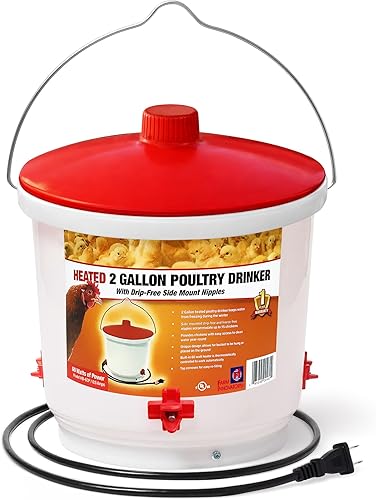
Best for Winter
Farm Innovators HB-60P Heated Poultry Waterer Drinker, 2-Gal, 60W
$$$
Check Price on AmazonNo, adult coturnix do not automatically need a heated waterer. They do need continuous access to liquid water, so choose heated equipment when freezing is a recurring chore or a cold-weather risk in your setup.
A working heated unit helps keep water liquid. It does not heat the cage or remove cleaning, inspection, and backup duties. This guide helps you choose between a complete drinker, a heated base, an add-on heater, and non-powered freeze prevention.
For a new winter installation, a complete drinker is the easiest starting point. A base or belt can cost less and store away neatly when you already own a compatible waterer. For specific models across these formats, see our heated quail waterer picks.
| Format | What it includes | Best fit | Main check |
|---|---|---|---|
| Complete heated drinker | Reservoir and drinking outlets | New winter installation | Cage fit and cleaning access |
| Heated base | Heating platform only | Existing compatible fount | Container compatibility and stability |
| Belt or add-on heater | Heater for specified waterers | A matching waterer already owned | Listing compatibility and cord path |
| Non-powered prevention | Insulation or extra chores | Occasional freezing | Water must stay liquid and clean |
This combines a reservoir and outlets in one unit. It is the simplest choice for a new installation, though its body can take more room and still needs a stable location, a practical refill route, and enough room for birds to reach the outlets. Do not treat a chicken capacity claim as a quail capacity match.
A base warms a compatible water fount from underneath. It is useful when you already own the right container and want to remove the base in warmer weather. The base is not a waterer by itself. Confirm the container fit, placement stability, and safe cord routing.
This wraps around or attaches to specified compatible waterers. The waterer is not included unless the listing says so. It can preserve a familiar outlet system, yet a mismatch leaves you with equipment that cannot be used as planned.
Insulation and more frequent clean-water changes can suit milder conditions or a keeper who does not want a cord. Insulation alone is no guarantee against freezing. You are trading equipment cost for labor and weather dependence. Our DIY waterer options can help with a backup rig.
Start with the format, then check drinking access, cleaning, cage fit, and safety. A heater only helps if the birds can use the outlets and you can keep the whole system clean and powered as directed.
Adult coturnix may learn nipple outlets, but you must watch the birds and confirm drinking after a system change. Check outlet position from inside the cage, drip control, and whether a startled or timid bird can reach the water.
Adult coturnix use approximately 1–1.5 fl oz (30–45 ml) per bird per day, more in heat. Use that as context for turnover, not as a stocking formula. A large reservoir still needs fresh-water checks and cleaning.
Heat does not stop litter, dust, or droppings from entering the water. Look for removable fill access, inspectable nipples, simple fittings, and a reservoir you will realistically clean. If a leak appears, stop treating it as normal and check the fittings and seals against the manual.
Measure the space around the waterer, including the reservoir, handle, outlets, and cord. For adult coturnix, an 8–12 in (20–30 cm) cage height and ½ in × ½ in (13 mm) floor wire are useful starting points. Check that the unit does not interfere with doors, bedding, or the egg roll-out floor.
Ground placement needs a stable footprint. Hanging placement needs a secure support and clear outlet access. The waterer should stay put when birds jostle it, and the cord should leave the cage without creating a snag or wet spot.
Follow the manual. Keep electrical connections protected from wet conditions, keep cords away from birds and bedding, and never operate a heater dry. A thermostat controls the heater; it does not warm the cage.
Product listings can change, so check the current manual for thermostat behavior, removable heating parts, seasonal storage, and compatibility. Penn State Extension's Small-scale poultry housing guidance offers broader placement context, not a quail-specific waterer test.
The Farm Innovators HB-60P illustrates the complete-drinker route. Its verified product record lists a 2-gallon reservoir, 60-watt thermostatically controlled heating, a removable top, side-mounted nipples described in the listing as drip-free and freeze-free, and a metal handle for hanging or ground placement. The manufacturer says it accommodates up to 15 chickens. Assess outlet access, cage layout, cleaning, and turnover for your own quail setup.
$$$
Check Price on AmazonThat unit suits a keeper who wants a self-contained winter drinker. Check the current listing and manual because product details can change. The $$$ marketplace band is changeable, and a marketplace rating is a snapshot, not proof of freeze performance.
The no-powered route avoids a heater purchase, while a complete heated drinker asks for the largest upfront commitment. Pick based on how often you can check water and whether you already own compatible equipment.
This works where freezing is occasional and you can provide clean liquid water through chores. The trade-off is labor and weather dependence. Insulation may slow freezing, yet it cannot promise liquid water in every condition.
This can be economical when you already own a compatible container. Budget attention for compatibility, stability, cord protection, and seasonal storage. A base or belt does not replace the waterer.
This is the simpler equipment choice for a new winter installation. The supplied HB-60P sits in the $$$ marketplace band, which can change. You still need time for cleaning, observation, and a non-powered backup plan.
Penn State Extension's broader Poultry Nutrition and Feeding guidance supports consistent water access. FarmsteadGuide's winter format discussion is an affiliate and keeper source, not authority for husbandry numbers.
Winter water trouble usually tells you where to look. Fix the access, fit, or operating problem first, and keep clean liquid water available while you check the equipment.
If fittings and seals still leave water on the cage, use our waterer leak checklist. For lived experience, the Backyard Chickens thread Quail Waterer in Cold Weather? is anecdotal keeper discussion. It is useful for ideas, not for temperature or water-use figures.
Use the heated roundup to compare complete heated buckets, heated bases, and low-watt options. It is titled Best Heated Quail Waterer (2026): 8 Winter Picks.
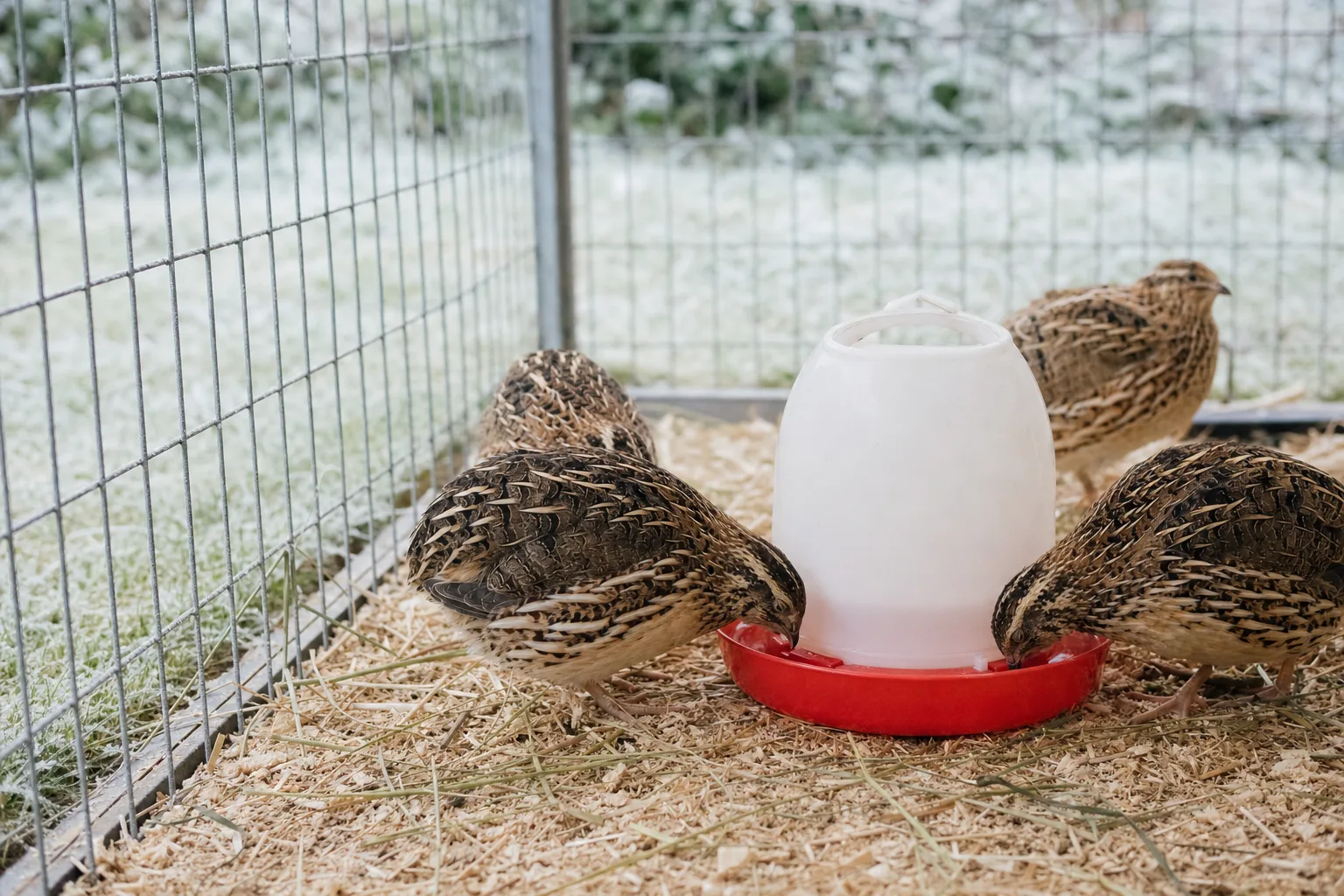
Adult coturnix do not automatically need a heated waterer. They do need continuous access to liquid water. A heater is one freeze-prevention choice, while dry, draft-free housing remains essential; adult coturnix are fine to approximately 20 °F (−7 °C) in that housing context.
A heated base suits a keeper who already owns a compatible fount and wants seasonal flexibility. A complete heated drinker is simpler for a new installation because its reservoir and outlets come together. A base is a heating platform, not a complete waterer.
Adult coturnix may learn nipple outlets, though acceptance is not universal. After changing systems, place the outlets where birds can reach them and confirm that every bird is drinking. Keep a close eye on access rather than assuming the flock understands immediately.
An adult coturnix uses approximately 1–1.5 fl oz (30–45 ml) of water per day, with more in heat. That figure helps you understand turnover, yet a larger reservoir does not replace fresh-water checks, cleaning, or watching the birds after a setup change.
No. A heated waterer helps keep its water from freezing. It is not bird heat, does not warm the cage, and does not replace dry, draft-free housing. Keep the water equipment and the housing plan as separate jobs.
Follow the product manual and inspect the system safely. Provide clean liquid water while you check the equipment. A second non-powered source can help only if it stays clean, accessible, and unfrozen; do not rely on an unverified outage or temperature promise.