 Quail Corner
Best Overall for 20 Birds
Large Metal Chicken Coop with Runs for Yard with Cover Waterproof Quail Coop Walk in Duck Coop,Chicken Pen with Security Lock for Outdoor Farm Rabbit Run
$$
Check Price on AmazonThe best quail cage for 20 birds is the Assark Large Metal Chicken Coop with Runs, priced in the $$ band. Its 236 x 118 x 77 inch footprint gives 19.7 x 9.8 feet of outdoor run, enough to clear the 40 square feet ground-pen target by a wide margin.
That answer changes for a garage or spare-room setup. The Hatching Time Jumbo is the best compact indoor-system option, though its seller capacity must not override the floor-space math. These picks were compared against usable area, access, construction, waste handling, expansion, and verified listing details. See our broader quail cage picks for smaller flock plans.
Ranked by usable floor area, protection, cleanup, access, and room to expand
The only single pick here with room for a true outdoor ground pen
$$
Best for 20 Coturnix outdoors
Check Price on AmazonA tidy breeder system when you can use multiple units
$$$
Best compact indoor option
Check Price on AmazonA flexible starting point if you connect two sets securely
$
Best low-cost expansion route
Check Price on AmazonQuick answer: Buy the Assark Large Metal Chicken Coop with Runs for a true 20-bird outdoor floor-space setup. For an indoor plan, choose the Hatching Time Jumbo as an organized starting system, then add units until you reach at least 20 square feet of usable wire floor. Its seller capacity is not a substitute for measuring floor area.
$$
Check Price on Amazon
$$$
Check Price on Amazon
$$$
Check Price on Amazon| Product | Best for | Price band | Key spec | Verdict |
|---|---|---|---|---|
| Assark Large Metal Chicken Coop with Runs for Yard with Cover Waterproof Quail Coop Walk in Duck Coop,Chicken Pen with Security Lock for Outdoor Farm Rabbit Run | 20 Coturnix in a roomy outdoor ground pen | $$ | 236 x 118 x 77 in (19.7 x 9.8 x 6.4 ft) | Genuinely suitable alone for an outdoor ground pen |
| Hatching Time Hatching Time Quail Breeding Cage Indoor, 3 Section, 2 Layer, Jumbo | Organized indoor breeding groups and multi-unit plans | $$$ | 38.6 x 24 x 35.8 in assembled; 35.8 x 17.3 in layer floor space | Indoor system, add floor area for 20 birds |
| Hatching Time Hatching Time Grow Out Pen, 3 Section, 3 Layer, H 15 Inch, PP Plastic Cage | Repeated grow-out batches with organized sections | $$$ | 38.6 x 25.2 x 68.1 in | Small, batch, or expansion option |
| Hatching Time Hatching Time Grow Out Pen, 3 Section, 2 Layer, H 15 Inch, PP Plastic Cage | Batch management when a three-layer stack is too tall | $$$ | 38.6 x 25.2 x 47 in | Small, batch, or expansion option |
| Sailret 63 Inch Heavy Duty Metal Chicken Coop with Bottom Mesh Floor, Portable Chicken Cage with Feeding Door and Top Access, Outdoor Rabbit Hutch for Chickens Ducks Bunnies Quail | Small flocks or a second outdoor unit in a modular plan | $$ | 63 x 24 x 29.92 in | Small, batch, or expansion option |
| TenaoVilleux Small Outdoor Chicken Run Coop for Hens, Ducks, Quails & Chicks | A small outdoor group or an expansion unit, not a one-unit 20-bird plan | $$ | 57.5 x 20.9 x 34.7 in | Small, batch, or expansion option |
| BUCATSTATE BUCATSTATE Guinea Pig Cages with Floor Mat, 20 Panels Guinea Pigs Playpen with Top Cover, Metal Rabbit Cage Indoor for Hedgehogs, Quail, Chickens (47" L x 24" W x 12" H) | Budget buyers willing to connect two sets and verify the gaps | $ | 47"L x 24"W x 12"H; listed 7.74 sq ft configuration | Two connected sets are the plausible route |
Usable floor area comes first. Coturnix need at least 1 square foot per bird in a wire cage, so 20 birds need 20 square feet. A kinder wire target is 30 square feet. A ground pen needs 2 square feet per bird or more, making the target 40 square feet. Outside dimensions, section counts, and tier counts do not replace bird-accessible floor.
After that, look at doors, removable trays, roll-out eggs, feed and water routes, and washable parts. Separate sections help with breeding groups, grow-out batches, or temporary separation. Partitions do not create extra floor. Outdoor housing needs checks for mesh, seams, latches, cover, shade, dry shelter, and airflow.
$$
Check Price on AmazonThis is the clear winner if 20 Coturnix are going outside into a real ground pen. The 236 x 118 inch footprint works out to about 193 square feet, so it clears the 40 square feet target with room for shelter and useful separation. The seller lists capacity for 45–60 domestic fowl; I would not turn that claim into a quail count.
The galvanized iron and alloy-steel structure, coated mesh, 420D Oxford waterproof cover, and security lock give you a sensible shell. It is a large walk-in run, not a compact cage. Check every seam, latch, and likely predator route, then add dry shelter, shade, and airflow before birds arrive.
That size is its strength outdoors and its drawback indoors. You can walk in to clean, move partitions, and keep the birds on ground-level floor. A garage keeper who wants eggs to roll to a front tray will spend space and money on features they cannot use. Pick it for yard capacity, not tidy indoor collection.
$$$
Check Price on AmazonThis is the neatest compact indoor option for a keeper who values sections and repeatable chores. It has three sections per layer, six configurable sections, gravity-fed watering, extended waste trays, and roll-out egg collection. Power-washable PP plastic suits a garage where a hose is close by.
Here is the catch: the listing says up to 30 standard quail, while a layer floor is listed as 35.8 x 17.3 inches. That is nowhere near 20 square feet by itself. Use it for organized indoor groups or as part of a multi-unit plan, with enough aisle space to reach every tray.
The Jumbo flooring is a listing distinction for larger quail. Do not assume those openings suit every Coturnix line without checking your birds. This unit wins on section control and egg handling. It does not win the floor-space calculation, so order the extra floor before you order the extra birds.
$$$
Check Price on AmazonThis three-layer unit makes sense for a keeper moving repeated batches through grow-out. Removable dividers let you change the group layout. The Smart Feeder, 5-gallon tank, and three steel nipple drinkers per layer reduce refills, while the deep droppings tray and Comfortplast elliptical flooring keep the chore list manageable.
Do not let the 68.1 inch overall height fool you into counting height as bird floor. The listing does not provide enough usable floor detail to call this a 20-bird cage at the fact-sheet minimum. Treat it as a grow-out tool or expansion beside a properly sized home.
The workflow is the reason to buy it. You can move batches through separate sections and remove dividers as birds change groups. The one-year manufacturer warranty is useful for a system with several parts. It cannot fix a cramped stocking plan, so measure each tier and plan the full floor before assembly.
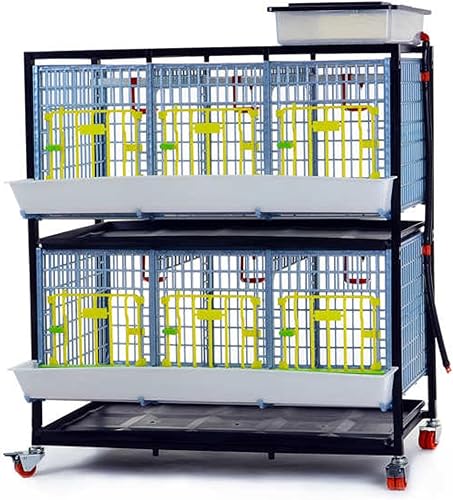
$$$
Check Price on AmazonThe two-layer version is a useful middle choice for batch work when a taller stack will not fit your room. It keeps the Smart Feeder, removable trays and dividers, Comfortplast flooring, and three steel nipple drinkers per layer. The 2-gallon tank fits a smaller refill routine than the three-layer model.
That shorter profile does not make it a one-unit answer for 20 birds. The 38.6 x 25.2 inch outside size is not the same as total usable floor, and the listing does not supply enough floor detail for a 1-square-foot calculation. Measure each accessible tier before stocking.
Buy this beside another unit when you want a repeatable batch setup at a more manageable height. Arrange the groups so you can reach trays, dividers, drinkers, and feed lines without leaning over a tall stack. It earns its place through workflow. The missing floor measurement keeps it out of the top spot for a 20-bird plan.
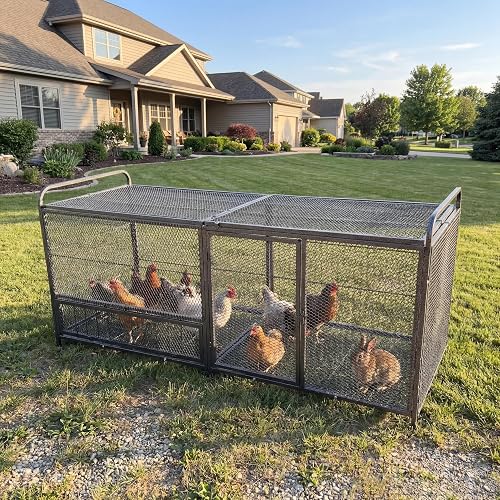
$$
Check Price on AmazonThe Sailret is a reasonable compact metal unit for a small flock or a second outdoor section. Its 63 x 24 inch footprint is 10.5 square feet, far below the 20 square feet wire minimum and the 40 square feet ground-pen target. That math settles it: this cannot house 20 Coturnix alone at the targets used here.
Two top access panels, a feeding door, and a gravity self-locking main door make routine access straightforward. Galvanized metal and the bottom mesh floor suit a portable setup. I would inspect the mesh, seams, floor, and every latch before trusting it outdoors, especially with the lower verified 3.2 rating.
Think of it as a modular piece, not the whole housing plan. It can hold a small group at the right density or add a separate outdoor area beside a larger run. Keep the placement dry and secure, and make sure the access panels let you reach every corner. A compact footprint saves yard space while giving up capacity quickly.

$$
Check Price on AmazonThis hutch-style option gives you a wooden alternative for a small outdoor group or an expansion plan. Fir construction, a movable tray, ramp, three ventilated access doors, and a listed waterproof and sunproof roof claim make the daily routine easy to picture. Indoor and outdoor use gives it placement flexibility.
The footprint is 57.5 x 20.9 inches, about 8.35 square feet. It falls well short of the 40 square feet ground-pen target, so do not buy it as a complete home for 20 birds. Use the tray and doors for a smaller properly sized group, then inspect the wood, roof, seams, and airflow at your site.
This is a convenience hutch, not a capacity solution. It can work in a larger layout when you have a clear reason for the second section and can keep the connected space secure. Check the roof claim against your weather, add shade, and keep bedding or the tray dry. The modest footprint limits what the ramp and doors can accomplish.

$
Check Price on AmazonThis playpen is the budget route for a keeper willing to build the plan from panels. One set is listed at 5.76 to 15.5 square feet depending on layout, so a single set misses even the 20 square feet wire minimum. The listing says two sets can be joined, creating a more plausible minimum-floor plan when the connected shape is secure.
The top cover and PVC-lined waterproof mat help with escapes and cleanup. The 18 wire panels and two doors make rearranging simple. Pay close attention to the listed 4 x 1 inch safety gaps, and check those openings against your Coturnix line before birds go in.
Two sets are a starting calculation, not permission to fill every corner. Join them into a shape with usable floor, cover the connections, and make sure the mat stays flat. This is the most flexible low-cost route on the page. It still asks you to do the measuring and the bird-safety check yourself.
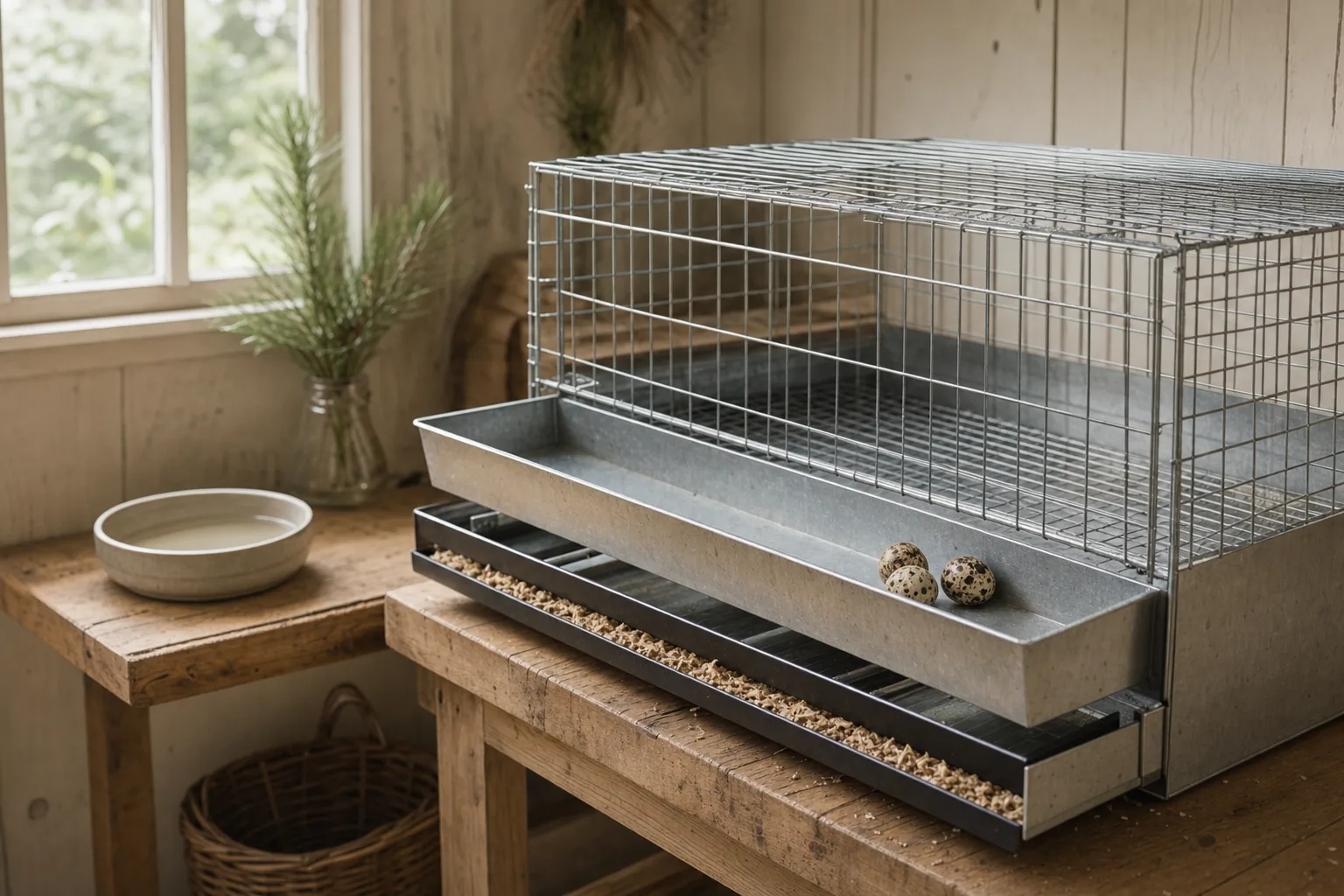
The Assark Large Metal Chicken Coop with Runs is the best single setup for 20 Coturnix in an outdoor ground pen. Its 236 x 118 inch footprint is far beyond the 40 square feet minimum. Indoor keepers should plan multiple systems instead of trusting a seller capacity label.
Choose the Assark for a roomy outdoor ground pen, or use multiple Hatching Time Jumbo systems indoors. The Jumbo listing says up to 30 standard quail, yet its listed layer floor does not reach the 20 square feet wire-cage minimum by itself.
Yes, if the cage provides at least 20 square feet of usable wire-cage floor, or 40 square feet for a ground pen. A tall stack can work only when each tier supplies usable floor and the full setup remains practical to clean and service.
Plan 20 square feet as the wire-cage minimum, 30 square feet as the kinder wire target, or 40 square feet or more in a ground pen. Measure the floor birds can stand on, excluding partitions and unusable edges.
A stackable cage saves room and simplifies indoor batch management. An outdoor pen gives more ground floor and movement space, yet needs serious checks for mesh, seams, latches, cover, shade, shelter, and airflow.
A wire cage needs at least 20 square feet of usable floor for 20 Coturnix, with 30 square feet kinder. A ground pen needs 40 square feet or more. Two tiers count separately only when both floors are accessible and genuinely usable.
Use these guides for the jobs this roundup cannot cover in depth: smaller flock layouts, outdoor protection, egg collection, and feed access.