 Quail Corner

Best Quail Aviary Netting (2026): 8 Picks
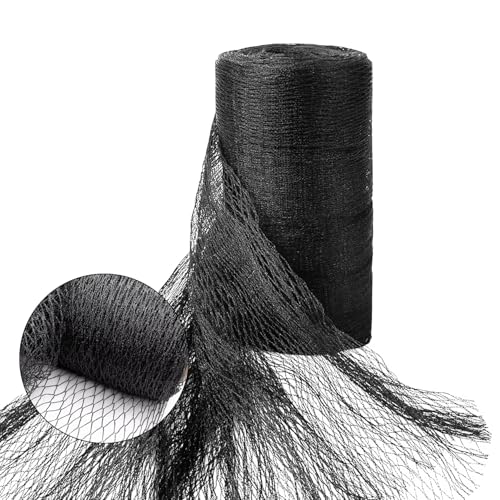
For most coturnix roof covers, buy Stromberg's 1-Inch Knotted Netting. It is the best all-around fit here because the listing gives it a 1-inch opening, a 25 x 25 ft format, black UV-resistant polyethylene, listed strength up to 85 pounds, and game-bird use.
- Best fit: a 1-inch roof cover over a framed game-bird aviary.
- Skip it if: you need a large low-cost roll, a rigid side or floor predator barrier, or a smaller opening for chicks.
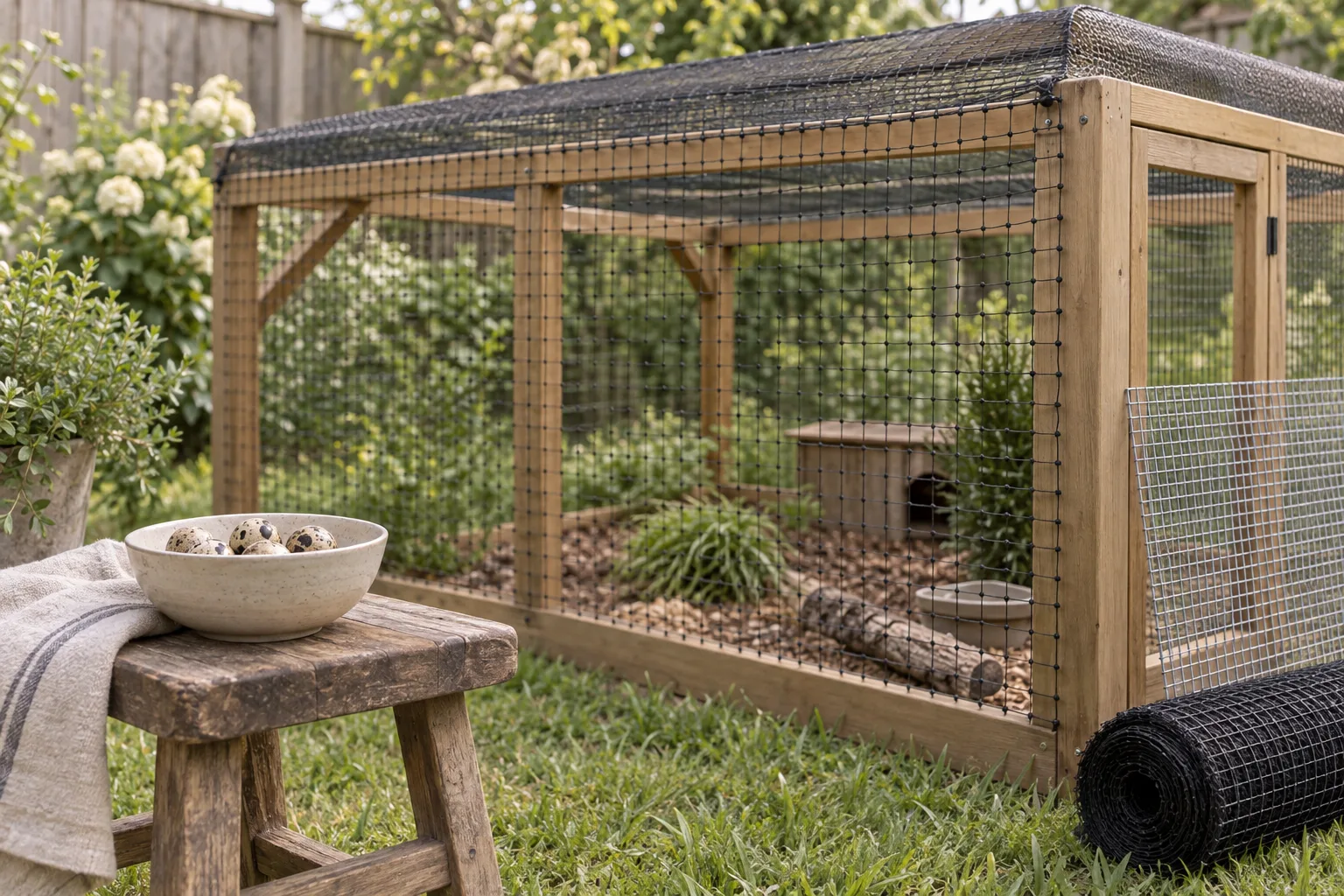
It is a roof cover, not a complete predator-proof enclosure. If you are still choosing the structure underneath it, start with Best Outdoor Quail Cage (2026): 7 Weather-Ready Picks for weather-ready cage context. Then choose smaller mesh, a larger sheet, or rigid wire based on the job.
8 Quail Netting Picks for Different Jobs
Ranked by mesh fit, covered area, material, installation, and the job each barrier can safely do
Overall
Best roof net for most coturnix aviaries
- 1-inch opening
- 25 x 25 ft format
- UV-resistant polyethylene
- Listed 85-pound strength
Top Pick Stromberg's 1-Inch Knotted Netting
$$$
Game-bird netting with a useful balance of size and handling
Check Price on Amazon Budget
Small-cover pick with fastening supplies included
- 0.8-inch mesh
- 19.5 x 19.5 ft
- Reinforced edges
- Cable ties and stakes included
Top Pick ORIVOGAS 0.8-Inch HDPE Netting
$
A practical starting point for a small, framed roof
Check Price on Amazon Large Cover
Broad 1-inch sheet for a bigger aviary
- 50 x 50 ft size
- Woven HDPE
- Black cover
- Cut-to-size use
Top Pick Vocray 1-Inch Aviary Netting 50x50
$$
More coverage when a smaller roll leaves seams everywhere
Check Price on AmazonQuick answer: Stromberg's is the overall roof pick. Choose ORIVOGAS for a small budget project, Vocray or Threekia for a larger 1-inch roof, Bird-X for lightweight 3/4-inch exclusion, and YARDGARD for steel side or floor barrier work. Excursions and Pinnon make sense only as large overhead covers after you solve containment elsewhere.
Quick picks
Our Top Picks

Comparison table
| Product | Best for | Price band | Key spec | Verdict |
|---|---|---|---|---|
| Stromberg's 1-Inch Knotted Netting | Most quail aviary roofs needing a game-bird-sized 1-inch mesh | $$$ | 1 inch, 25 x 25 ft, UV-resistant polyethylene | Best Overall |
| Excursions 2-Inch Heavy Knotted Netting | Large overhead covers where 2-inch mesh is appropriate for the enclosure design | $$$ | 2 inch, 25 x 50 ft, UV-inhibited polyethylene | Large Overhead Cover |
| Vocray 1-Inch Aviary Netting 50x50 | Large aviaries needing a broad 1-inch roof cover | $$ | 1 inch, 50 x 50 ft, Woven HDPE | Best Large 1-Inch Cover |
| Threekia 1-Inch Aviary Netting 25x50 | Medium aviaries needing a 25 x 50 foot 1-inch cover | $$ | 1 inch, 25 x 50 ft, 0.8 mm HDPE | Best Mid-Size Cover |
| Bird-X 3/4-Inch Standard Netting | Lightweight overhead bird exclusion where the frame is already secure | $$ | 3/4 inch, 100 x 14 ft, UV-stabilized lightweight mesh | Lightweight Mesh |
| ORIVOGAS 0.8-Inch HDPE Netting | Small aviaries and first-time keepers who want included fastening supplies | $ | 0.8 inch, 19.5 x 19.5 ft, 45 gsm HDPE | Budget Pick |
| YARDGARD 1-Inch Steel Poultry Netting | Aviary sides and barrier sections where wire is more appropriate than soft roof netting | $$ | 1 inch, 24 inches x 150 ft, 20-gauge galvanized steel | Best Rigid Barrier |
| Pinnon Hatch Farms 2-Inch Quail Netting | Large roof spans where the keeper has separately solved small-bird containment and predator access | $$$ | 2 inch, 12.5 x 150 ft, Polyethylene and polypropylene | Best Long Roll |
How we evaluate
Start with the job. A roof net has to contain adult birds and close off overhead access without creating an obvious snag or escape route. A side or floor barrier faces a tougher job. For coturnix ground pens, allow 2 ft² of floor space per bird or more, and use 1/2 x 1/2-inch hardware cloth as the floor-wire reference.
We compare the listed mesh, material, size, edge design, UV and weather positioning, attachment method, and intended location. Strength and longevity figures belong to the product listings, so they are vendor claims rather than independent results. FarmstandApp focuses on mesh choices and escape control, Mossy Garden Lane discusses heavy-duty poultry netting, and CritterNets stresses full coverage and frame attachment. Those topics sharpen the practical trade-offs here.
Individual product reviews
1) Stromberg's 1-Inch Knotted Netting | Best Overall
This is the first one I would reach for on a normal coturnix aviary roof. The 1-inch opening suits the game-bird use described in the listing, and the 25 x 25 ft sheet is large enough for many backyard frames without forcing you into a huge roll. Black polyethylene also sits quietly over a frame instead of shining like bare wire.
The listing claims UV resistance, up to 85 pounds of mesh strength, and 7–10 years in the field. Treat those as vendor claims. The practical catch is fit: a 25 x 25 ft sheet is a poor match for a very large pen, and 1 inch is still too open for chicks or a side that must stop small predators. Rings, a ring clincher, or zip ties still need careful edge work.
Pros
- ✓ Useful 1-inch roof opening
- ✓ Game-bird purpose
- ✓ Manageable 25 x 25 ft sheet
Cons
- ✗ Not a rigid side or floor barrier
- ✗ Too large for chick containment
- ✗ Large aviaries may need several sheets
2) Excursions 2-Inch Heavy Knotted Netting | Large Overhead Cover
Excursions makes sense when the roof is the large, awkward part of the build. The 25 x 50 ft format covers a broad span with fewer joins than a collection of small sheets. Its 2-inch mesh and UV-inhibited polyethylene are aimed at overhead aviary work, and the Excursions listing gives a temperature range of -10°F to +150°F.
That wide opening is the decision point. Use it only where the enclosure already handles quail containment through its sides and lower sections. It is a poor sole cover for chicks, small birds, or a pen where a quail can reach the perimeter. Skip it if you want a small, close-mesh roof or a predator barrier you can rely on at ground level.
Pros
- ✓ Very broad roof format
- ✓ Useful overhead option for a large frame
- ✓ UV-inhibited polyethylene
Cons
- ✗ 2-inch opening needs a containment caveat
- ✗ Too much material for a small pen
3) Vocray 1-Inch Aviary Netting 50x50 | Best Large 1-Inch Cover
Vocray is the better fit for a large aviary that still needs a 1-inch opening. The 50 x 50 ft woven HDPE sheet gives you room to cover an expansive roof or cut several sections from one purchase. That flexibility can simplify a spread-out flight pen, though it also means more material to fold, tension, and secure.
The listing says the 7.63-pound sheet supports over 100 pounds. That is a vendor statement, so do not turn it into a promise about snow, ice, or wind. Plan the frame and attachment points first. Skip Vocray for a small roof where its size creates waste, or for floor and side work where galvanized steel is the more sensible barrier.
Pros
- ✓ Large 50 x 50 ft format
- ✓ 1-inch opening
- ✓ Cut-to-size HDPE cover
Cons
- ✗ Large sheet takes planning to handle
- ✗ Listed support figure is not independent proof
4) Threekia 1-Inch Aviary Netting 25x50 | Best Mid-Size Cover

Threekia lands between the small starter sheet and the broad Vocray roll. Its 25 x 50 ft format suits a long, medium-sized aviary, especially when the roof is rectangular and you want one continuous run. The knotted diamond design and color-coded corners should make orientation less annoying during installation.
The 1-inch mesh is the useful part for a coturnix roof, while the 0.8 mm HDPE and listed 8–12 year longevity describe the maker's positioning rather than a guarantee. Measure before ordering. This format is a bad fit for a square pen that needs a 25 x 25 ft sheet, and it does not replace close mesh or wire along the sides and floor.
Pros
- ✓ Long 25 x 50 ft format
- ✓ 1-inch roof mesh
- ✓ Color-coded corners
Cons
- ✗ Awkward for compact square frames
- ✗ Longevity is a listing claim
5) Bird-X 3/4-Inch Standard Netting | Lightweight Mesh

Bird-X is the lightweight choice for a keeper who already has a secure frame and mainly wants overhead bird exclusion. The 100 x 14 ft roll is long and narrow, which works well over a run of connected sections. Its 3/4-inch opening is smaller than the 1-inch picks, so it fits a roof where you want less open space.
Lightweight mesh is easier to lift, though it gives you less material confidence around a rough frame or a determined predator. Reinforce the edges and inspect for gaps after stretching it. Skip Bird-X if you need a rigid side, a floor panel, or a compact square sheet. The listing describes garden and patio exclusion, so treat the aviary use as a careful application of that design.
Pros
- ✓ Smaller 3/4-inch opening
- ✓ Easy-to-handle roll
- ✓ Long 100 x 14 ft format
Cons
- ✗ Lightweight material needs a secure frame
- ✗ Not a floor or rigid predator barrier
6) ORIVOGAS 0.8-Inch HDPE Netting | Budget Pick

ORIVOGAS is the easy budget starting point for a small framed roof. The 19.5 x 19.5 ft sheet is less intimidating than a 50 x 50 ft cover, and the 0.8-inch mesh sits between the 3/4-inch Bird-X and the 1-inch roof options. It also includes 50 cable ties and eight ground stakes, which saves a first-time keeper a separate supply run.
Those included ties and stakes are useful for setup, not proof that the whole enclosure is secure. The reinforced edges, integrated ropes, and 45 gsm HDPE still need a frame with no sharp snag points. Skip it for a large aviary, a rigid side, or a floor barrier. For a small roof where the frame is already right, it is a sensible low-cost pick.
Pros
- ✓ Budget price band
- ✓ 0.8-inch opening
- ✓ Fastening supplies included
Cons
- ✗ Smallest listed roof area among several picks
- ✗ Light material is not predator-proof wire
7) YARDGARD 1-Inch Steel Poultry Netting | Best Rigid Barrier
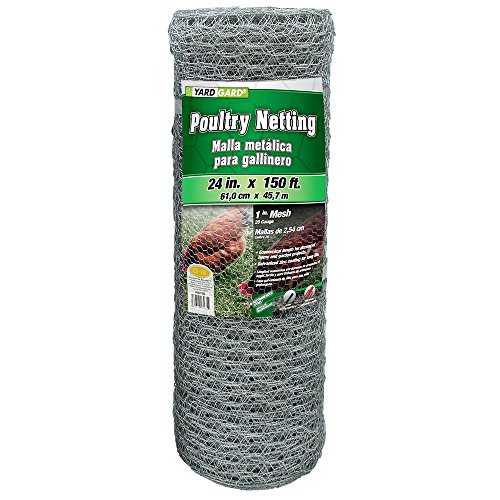
YARDGARD belongs in this roundup because a good aviary often needs two different materials. Its 20-gauge galvanized steel is the right logic for a side, lower panel, or barrier section where flexible roof netting leaves too much room for damage or access. The 24-inch by 150 ft roll is narrow and long, which suits runs of side mesh.
The 1-inch opening is not the same as the 1/2 x 1/2-inch floor-wire reference for coturnix. Use the wire where the job calls for it, and keep sharp cut ends away from birds. This is a poor overhead cover because it is steel and because the format is made for barrier work. Skip it only if you need soft, lightweight roof netting and have already solved the sides and floor.
Pros
- ✓ Galvanized steel barrier material
- ✓ Long roll for side sections
- ✓ Flexible and pliable listing design
Cons
- ✗ Not a soft roof net
- ✗ 1-inch mesh is not the floor-wire reference
8) Pinnon Hatch Farms 2-Inch Quail Netting | Best Long Roll

Pinnon is the long-roll answer for a large overhead span. At 12.5 x 150 ft, it covers a long flight area with fewer short joins, and the listing names aviary, gamefowl, quail, and poultry use. Polyethylene and polypropylene give it a different material mix from the HDPE sheets above.
The 2-inch opening is the deal breaker for a general quail enclosure. Use Pinnon only after you have handled small-bird containment through the side mesh and lower barrier. The listed 85/245-pound break and burst figures and 8–10 year life are vendor claims. Skip it for chicks, a compact pen, or any design that expects the roof net alone to stop escapes.
Pros
- ✓ Very long 150 ft roll
- ✓ Purpose-listed for quail and aviary use
- ✓ Good option for broad overhead spans
Cons
- ✗ 2-inch opening needs separate containment
- ✗ Too much roll for small projects
Frequently asked questions
What is the best mesh size for a quail aviary roof?
For a typical coturnix roof, Stromberg's 1-Inch Knotted Netting is the clearest starting point here. Mesh size does not solve every escape or predator problem, so secure the edges and use proper side and floor barriers too.
Can aviary netting keep predators out?
Overhead netting can discourage some access from above, yet it is not a complete predator barrier. Add properly secured side mesh, floor barriers, sound latches, and a dry shelter. The YARDGARD wire is a better fit for rigid barrier sections.
Is 2-inch netting safe for coturnix quail?
Treat 2-inch netting as an overhead cover for an enclosure whose containment is already solved. Excursions and Pinnon offer large spans, though their wider openings leave more room for a small bird to reach or slip through.
How much aviary netting do I need?
Measure the roof area and account for the way the sheet will attach to the frame. Choose a format that limits seams and leaves room for secure edge attachment. The listing sizes here range from 19.5 x 19.5 ft to 50 x 50 ft.
Can I use soft netting on the sides of a quail pen?
It can work for a contained flight area when the frame and edges are secure, though soft netting is a poor substitute for a rigid side or floor barrier. Use 1/2 x 1/2-inch hardware cloth as the coturnix floor-wire reference.
What else does a netted aviary need?
Plan for shade, airflow, a dry shelter, secure seams, and a way to inspect every edge. The outdoor cage setup guide covers placement and secure setup alongside the related guides below.
Related guides
- Best Outdoor Quail Cage (2026): 7 Weather-Ready Picks for the structure under your netting.
- How to Set Up an Outdoor Quail Cage (2026) for shade, airflow, and placement.
- How to Predator Proof a Quail Cage: 7 Steps for edges, latches, and floor contact.
- How to Set Up a Quail Cage: Step-by-Step (2026) for the daily setup after the build.