 Quail Corner

Best Brooder for Button Quail (2026): 7 Safe Picks
The best brooder for button quail is the Brinsea Ecoglow Safety 600. Its low-voltage radiant warmth, adjustable legs, clear cover, and explicit quail listing make it the strongest safety-first fit for these tiny chicks. Price band: $$.
- Verified spec snapshot: 12-watt radiant heat from a 12-volt supply.
- Adjustment: Screw-on legs that raise the plate as chicks grow.
- Included: Clear plastic cover and power supply.
- Capacity claim: Up to 20 newly hatched chicks, or 12 older chicks. That is a listing claim, not a button-quail stocking recommendation.
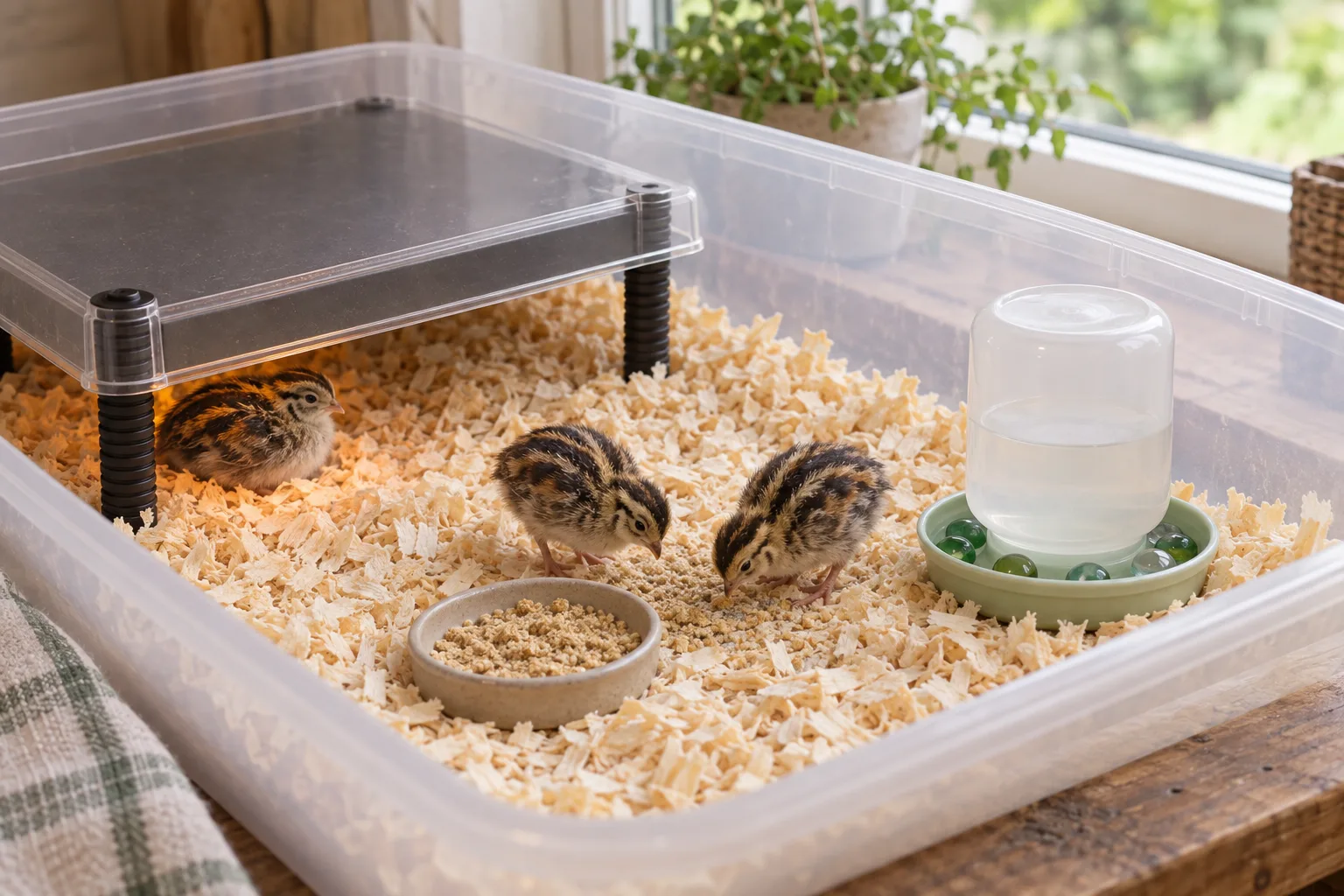
Button quail, also called king quail, are much smaller than Coturnix. The brooder is a whole system: enclosure, solid or ¼-inch floor, warm-side thermometer, feed access, chick-safe water, and an escape-proof lid all matter as much as the heater.
Quick picks for button-quail chicks
Ranked by retreat space, containment, adjustability, cleaning, and electrical design
Overall
Best low-voltage radiant fit
- 12-watt radiant warmth
- Adjustable screw-on legs
- Clear cover included
- Listing names quails
Top Pick Brinsea EcoGlow Safety 600 Brooder
$$
Safety-first plate for most small keepers
Check Price on Amazon Compact
Small batch alternative
- 10 x 10-inch coverage
- 15-watt output
- 25 height settings
- Foldable anti-roost cone
Top Pick RentACoop 10x10-Inch Brooder Heating Plate
$$
Useful when enclosure space is tight
Check Price on Amazon Complete box
Enclosure and kit together
- 50W heating lamp
- Digital temperature display
- Waterer and two feeders
- PVC enclosure
Top Pick WIONBE Intelligent Brooder Box for 10-15 Chicks
$$
Convenient, with closer lamp monitoring
Check Price on AmazonQuick answer: Choose the Brinsea Ecoglow Safety 600 for low-voltage radiant warmth and a retreat area. Choose the RentACoop 10x10-inch plate for a compact adjustable alternative, or the WIONBE Intelligent Brooder Box if you want an enclosure and supplies in one kit. Advertised capacities are manufacturer or listing claims, not a button-quail stocking recommendation.
Quick picks
Our Top Picks


Safety-Listed Pick
K&H Thermo-Poultry Brooder Kit (Small + Thermo-Peep Pad)
$$
Check Price on AmazonComparison table
| Product | Best for | Price band | Key spec | Verdict |
|---|---|---|---|---|
| Brinsea EcoGlow Safety 600 Brooder | Safety-first button-quail keepers who want low-voltage radiant warmth | $$ | · | Check Price |
| RentACoop 10x10-Inch Brooder Heating Plate | Small batches needing a compact height-adjustable plate | $$ | Up to 15 chicks · 15 watts | Check Price |
| K&H Thermo-Poultry Brooder Kit (Small + Thermo-Peep Pad) | Keepers who prioritize a safety-listed, simple plate | $$ | Up to 15 newborn chicks; fewer as they grow · 25 watts (brooder); 25-watt pad included | Check Price |
| Premier 1 12-Inch Chick Brooder Heating Plate | Buyers wanting a straightforward plate with a clear height range | $$ | Warms up to 20 chicks · 22 watts per hour | Check Price |
| WIONBE Intelligent Brooder Box for 10-15 Chicks | Buyers who want an enclosed starter kit with built-in monitoring | $$ | 10–15 newborn chicks · 110V, 50W heating lamp | Check Price |
| Premier 1 Heating Plate Kit, 16 x 16 in | Larger brooder with room for a cool retreat; check chick reach | $$ | Seller rates up to 30 chicken chicks; not a verified quail capacity · | Check Price |
| Tetuga Brooder Box Kit with Heating Plate | New keepers who want enclosure and basic brooder accessories together | $$ | Brooder pen, adjustable heating plate, feeder, waterer, pad, storage bag, and 3 stakes · | Check Price |
How we evaluate
We compared each listing for a warm zone with a clear retreat. A plate or lamp should sit at one side of the brooder, leaving the other side cooler. That lets chicks choose their comfort level instead of forcing every inch to be heated.
Containment comes next. Button-quail chicks need ¼-inch floor wire or a solid floor, and they can slip through surprisingly small openings. We also looked for physical height adjustment, wipe-clean surfaces, removable covers, and a design that keeps cleaning separate from the heat source.
Low-voltage or low-watt radiant designs reduce the bright light and hot bulb hardware of a lamp-based box, though no electrical product is risk-free. The WIONBE kit brings useful monitoring and supplies, yet its 50W heating lamp needs careful placement and regular checks. Advertised capacity, dimensions, and power help you compare the products, but they do not tell you how much usable retreat space your button quail will have. For a wider mix of plates and kits, see our broader quail brooder picks.
Individual product reviews
1) Brinsea EcoGlow Safety 600 Brooder: best overall
This is the pick I would start with for a small indoor button-quail brooder. Radiant warmth comes from below the clear cover, and the adjustable screw-on legs let you raise the plate as chicks grow. The 12-volt power supply is a useful distinction for a keeper who wants a lower-voltage design.
Set it at one side of a solid-floor enclosure and check the chick-level warm zone before arrival. The cover gives tiny birds a barrier against climbing onto the plate, while the listing explicitly names quails among suitable birds. Skip it only if you need a built-in pen or a larger, all-in-one kit.
Pros
- ✓ Low-voltage radiant design
- ✓ Adjustable legs and clear cover
- ✓ Listing names quails
Cons
- ✗ Requires a separate enclosure
- ✗ Advertised chick capacity is not a button-quail recommendation
2) RentACoop 10x10-Inch Brooder Heating Plate: compact adjustable alternative
The 10 x 10-inch coverage makes this a practical choice for a small hatch and a tight brooder footprint. Its 25 height settings, from 1 to 9 inches, give you more physical adjustment than a plate with only one or two leg positions. The foldable anti-roost cone is another sensible detail for curious chicks.
The trade-off is the direct 110V design and listed 15-watt output. Inspect the cord route and plug before use, then keep bedding and water away from the electrical connection. Skip it if you want low voltage or if your enclosure needs a wider warm zone.
Pros
- ✓ Compact 10 x 10-inch plate
- ✓ 25 height settings
- ✓ Anti-roost cone included
Cons
- ✗ Direct 110V design
- ✗ Separate enclosure required
3) K&H Thermo-Poultry Brooder Kit (Small + Thermo-Peep Pad): safety-listed option
Safety-Listed Pick
K&H Thermo-Poultry Brooder Kit (Small + Thermo-Peep Pad)
$$
Check Price on AmazonK&H keeps the idea simple: a wipe-clean plate, adjustable height, and a safety certification in the listing. Our link goes to K&H's warming kit, which adds a 25-watt Thermo-Peep heated pad. That suits a keeper who already has a secure tub or pen and wants a straightforward radiant heat source without a full brooder box.
Measure your enclosure before ordering. The listed 13.5 x 8 x 8-inch brooder dimensions need to leave room for a cooler retreat, feed, water, and a safe route around the plate. Skip it if the actual enclosure cannot fit those dimensions without crowding the chicks.
Pros
- ✓ Wipe-clean surface
- ✓ Adjustable height
- ✓ Safety certified listing
Cons
- ✗ Dimensions need careful enclosure checking
- ✗ Kit includes a pad you may not need
- ✗ No low-voltage supply listed
4) Premier 1 12-Inch Chick Brooder Heating Plate: simple established plate

The Premier 1 is a good fit for buyers who want a familiar plate with a clearly stated 1.5 to 6-inch height range. Its 12 x 12-inch surface gives you a defined warm area to position at one end of the pen, while the 110V setup stays easy to understand.
There is no all-in-one enclosure here. Check the floor, roof, and cable path yourself before chicks go in, and use a thermometer at chick level. Skip it if you want a low-voltage supply or a box with feeders and a waterer included.
Pros
- ✓ Clear height range
- ✓ 12 x 12-inch plate
- ✓ Simple standalone setup
Cons
- ✗ 110V design
- ✗ No enclosure or water supplies included
5) WIONBE Intelligent Brooder Box for 10-15 Chicks: complete box option

This is the most complete starting package in the group. The listing includes a PVC box, waterer, two feeders, spare bulbs, and a digital temperature and humidity display. That saves a new keeper from assembling every part on hatch day.
The 50W heating lamp needs more attention than a radiant plate. It creates visible light and a concentrated hot area, so inspect its mount, clearance, cord, and bulb before use. Keep a cooler retreat inside the box and monitor the reading at chick level. Skip it if you prefer a quiet day and night routine from a non-glowing plate.
Pros
- ✓ Enclosure and supplies included
- ✓ Digital temperature and humidity display
- ✓ Spare bulbs listed
Cons
- ✗ 50W lamp needs careful monitoring
- ✗ Lamp gives off light day and night
6) Premier 1 Heating Plate Kit, 16 x 16 in: larger plate option

The Premier 1 kit gives you a 16 x 16-inch heating plate with an anti-roost cover. Its adjustable 1.5–6-inch height is clearly specified, and the larger footprint gives growing chicks more covered room when the enclosure is large enough.
This is a contact heater: chicks must be able to reach the warm underside. Check that at the lowest setting before using it for very small button quail, and choose a lower-adjusting plate if they cannot reach. The seller’s chicken-chick capacity does not establish a quail capacity. Leave an unheated retreat beside the plate and observe how chicks settle.
Pros
- ✓ 16 x 16-inch plate
- ✓ Anti-roost cover included
- ✓ Specified 1.5–6-inch height adjustment
Cons
- ✗ May sit too high for very small chicks
- ✗ Large footprint needs a roomy brooder
- ✗ No verified quail capacity
Check Premier 1 plate on Amazon
7) Tetuga Brooder Box Kit with Heating Plate: convenience starter kit
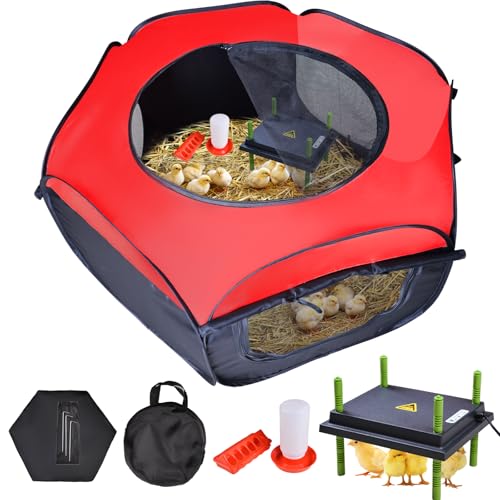
Tetuga is aimed at the keeper who wants the pen and basic accessories in one purchase. The verified kit includes an adjustable heating plate, brooder pen, feeder, waterer, pad, storage bag, and three stakes. The listing also claims overheat protection, which is worth checking during setup.
Confirm the usable enclosure dimensions before purchase because the catalog dimension field is unreliable. Also check every mesh seam and opening for a button-quail escape route, then test the plate and waterer without chicks inside. Skip it if the pen cannot provide a solid or ¼-inch floor and a soft or low roof.
Pros
- ✓ Pen and accessories included
- ✓ Adjustable plate
- ✓ Storage bag and stakes listed
Cons
- ✗ Confirm usable dimensions first
- ✗ Mesh design needs a careful escape inspection
Frequently asked questions
What is the best brooder for button quail?
The Brinsea Ecoglow Safety 600 is the best overall choice for most button-quail keepers. Its 12-volt radiant plate, adjustable legs, clear cover, and listing reference to quails make it a sensible safety-first starting point. You still need a secure enclosure, safe floor, thermometer, feed, and chick-safe water.
Is a heat plate suitable for button quail chicks?
Yes. A heat plate gives chicks a warm underside and a cooler area to leave, which suits a side-mounted brooder layout. Set the height so chicks can reach the warmth, then adjust it physically as they grow. A plate still has electrical risks, so inspect the cord, plug, legs, and surrounding bedding.
What temperature should a button quail brooder be in the first week?
Aim for 95°F at chick level during week one. Then drop the target by 5°F each week. Check the warm zone with a thermometer and watch the chicks: crowding under the plate suggests cold, while avoiding it suggests excess heat or poor placement.
What floor is safest for button quail chicks?
Use a solid floor or ¼-inch floor wire. Button-quail chicks are tiny, so larger openings can trap a foot or let a chick escape. Cover a solid floor with a grippy, replaceable surface, and inspect every seam, corner, feeder opening, and lid before the chicks arrive.
How do you keep button quail chicks from drowning in the brooder?
Put marbles or pebbles in the water dish so the chicks cannot get their heads into deep water. Keep the dish stable, check it often for bedding, and make sure every chick can reach it without climbing through a gap. A clean, shallow drinking area is easier to monitor.
How long do button quail need supplemental heat?
There is no fixed button-quail cutoff age in the facts we use here. Follow the 95°F first-week schedule and lower it by 5°F each week, while watching feathering and behavior. If chicks crowd under the plate or avoid the warm zone, adjust the setup instead of rushing them off heat.
Related guides
- Our broader quail brooder picks: compare heat plates and kits for Coturnix and button quail.
- Brooder sizing guide: work out how the enclosure and warm zone should fit together.
- Build a simple brooder box: plan a solid floor, ventilation, bedding, and a safe heater route.