 Quail Corner

Why Are My Button Quail Eggs Not Hatching: 7 Checks (2026)
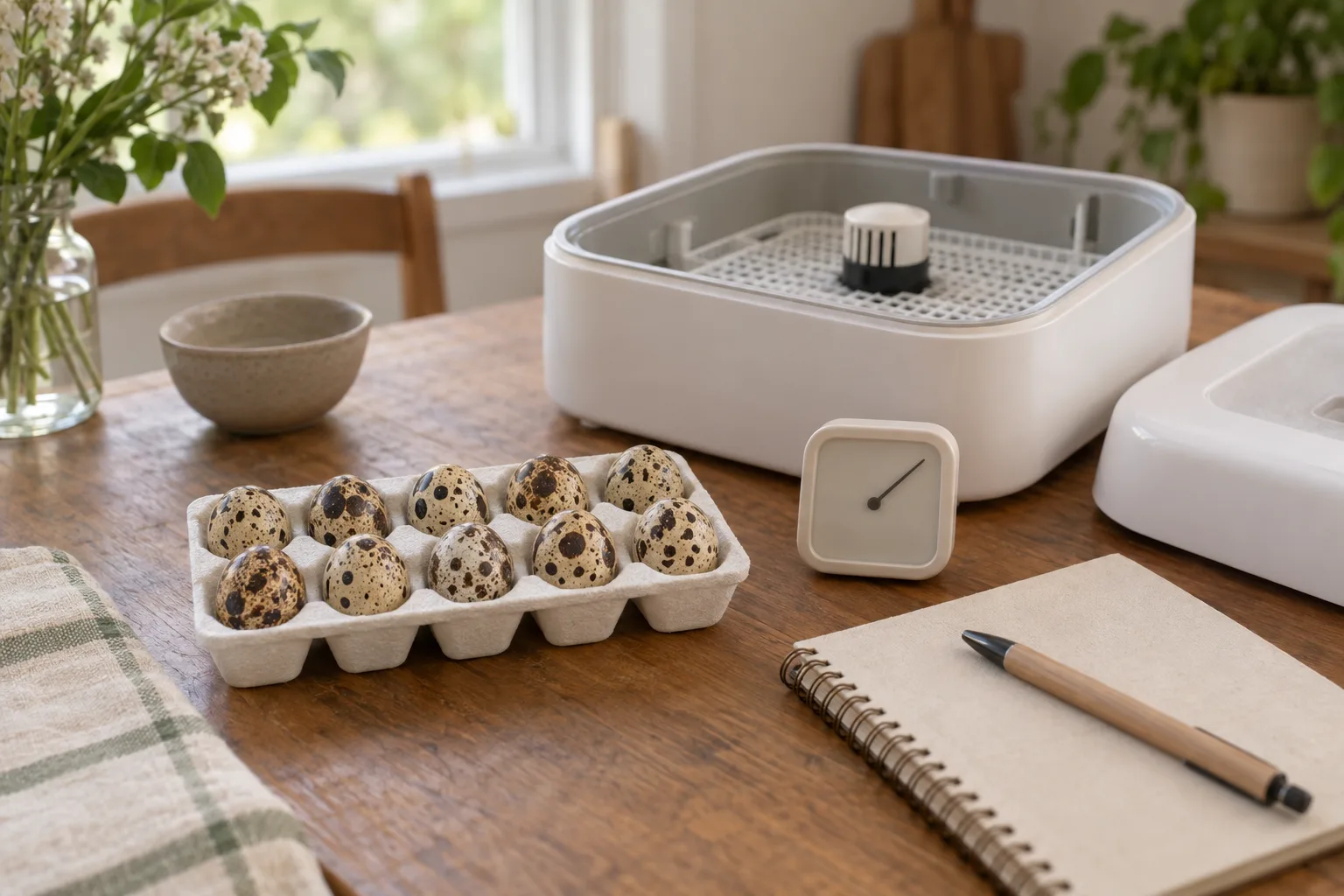
If your button quail eggs are not hatching, start with the timeline, then check temperature, humidity process, fertility, and tray fit in that order. Button quail hatch around day 16, with a 15–17-day range, so a quiet incubator on day 16 is not automatically a failed hatch.
Diagnose a Button Quail Hatch Failure
A calm 3-step check before you change settings
Step 1 Check the timeline
- Confirm the set date
- Count to day 16
Step 2 Verify conditions
- Check 99.5°F forced-air temperature
- Review humidity and turning notes
Step 3 Check eggs and tray
- Candle carefully
- Look for fertility and movement
Result
A species-specific diagnosis and one sensible next step
Quick answer
Confirm that these are button quail eggs and that day one was counted correctly. In a forced-air incubator, check for 99.5°F / 37.5°C, review the humidity trend and turning record without borrowing exact Coturnix figures, then candle gently for development. Change one thing at a time.
For a tray that lets tiny eggs roll or wobble, see best button quail incubator (2026): 6 picks. It compares small-egg tray compatibility, turning, visibility, and humidity-control options. For temperature context, Quail Egg Incubator Settings: Day-by-Day Schedule for Coturnix offers a day-by-day reference, but its schedule is Coturnix-focused.
What you'll need
- A reliable thermometer placed where the eggs sit
- A hygrometer and your humidity notes or photos
- A notebook for set date, readings, turning, and candling observations
- A suitable candler that lets you view one small egg without rough handling
If the incubator's tray lets eggs roll, wobble, or miss the turning motion, a fitted small-egg insert is worth considering. The CluckRun 30-Quail Incubator includes a dedicated quail tray and built-in LED candler, so it is the better fit of these two options for a tray-related hatch problem. The Brinsea Mini II Advance is the smaller-batch alternative, with its optional small-egg insert.
Our Top Picks

Step-by-step
Step 1: Confirm the timeline and species
Write down the date and time the eggs went into the incubator. Button quail incubation is 16 days, with a 15–17-day range. Count the set day consistently, and confirm the eggs are button quail rather than Coturnix. A late start, mixed batch, or mistaken day count can make a normal hatch look late.
Keep the incubator steady while you check. Do not discard eggs just because day 16 is quiet. A pip can happen later in the normal range.
Step 2: Verify temperature and the process around humidity
Check the reading at egg level with a reliable thermometer. For forced air, set 99.5°F / 37.5°C. Compare a second thermometer with the incubator display and write down swings instead of reacting to one glance.
Button-quail keeper guidance does not agree on one exact humidity target or lockdown day. Button Quail Eggs, a breeder/vendor guide, lists 45–50% for days 1–14 and 60–70% for lockdown. Phil's Best Button Quail, a breeder guide, says about 55% during turning and 65–75% for the final three days. Incubator Warehouse lists 50–55% and day 13. Use one species-specific schedule, follow its instructions, and watch the trend rather than chasing numbers from several guides.
Review whether the lid was opened often, water was added in large changes, or turning stopped at the wrong point. Those notes are more useful than a last-minute reset.
Step 3: Check fertility, development, and tray fit
Candle in a dim room with clean, dry hands. Look for evidence of development across several eggs, and note clear, unchanged, or uncertain views. Candling alone cannot give a definitive diagnosis. The guide How To Use Egg Candler For Quail Eggs: 5 Steps shows safer candling technique and clearer ways to interpret an unclear view.
Finally, inspect how the tiny eggs sat in the tray. They should stay supported and receive the intended turning movement. A chicken-sized cup can let a button egg tip, spin in place, or fall into a gap. If eggs developed but did not pip, record that separately from eggs that showed no development.
Common mistakes
- Changing several settings at once: You lose the trail. Record the reading and make one controlled change only when your source supports it.
- Using a Coturnix schedule: The species has a different incubation timeline. Keep button-specific figures separate.
- Discarding on day 16: The button range reaches day 17. Check the date and observe before making a decision.
- Ignoring the tray: Tiny eggs need a secure fit. Confirm that every egg stayed in place during turning.
Troubleshooting
The eggs are on day 17 with no pip
Recheck the set date, species, and thermometer first. Keep conditions steady while you candle gently for development. If there is no clear answer, ask an experienced button-quail breeder or extension office rather than guessing at assisted hatching.
There are clear eggs or no visible development
Fertility, storage before setting, or an early temperature problem could be involved. Candling can suggest a pattern across the batch, yet it cannot prove one cause. Record the result, review your source and equipment, and ask the breeder about the parent flock and collection process.
Eggs developed, then stopped
Review temperature swings, humidity changes, turning, and how often the incubator was opened. Also check that the tray supported the eggs. Avoid a dramatic reset after the fact, since it can make the next batch harder to diagnose.
When to seek another opinion
Talk with a breeder or extension office when several eggs fail at the same stage, your readings disagree, or you cannot tell what you see while candling. Keep the notebook, egg dates, incubator model, and photos of the display. Good records turn a disappointing hatch into useful information for the next setting.
Frequently asked questions
Why are my button quail eggs not hatching in the incubator?
First confirm the set date and species. Button quail usually hatch around day 16, with a 15–17-day range. Then check forced-air temperature, the humidity trend, turning process, fertility evidence, and whether the small eggs sat securely in the tray.
What should I do if button quail eggs are not hatching on day 16?
Do not discard them on day 16. The normal range reaches day 17, so keep conditions steady and watch for a pip. Recheck the date and thermometer before changing anything. If the range has passed with no signs of development, candle carefully and record what you see.
Can Coturnix incubator settings cause a button quail hatch failure?
They can cause confusion because button quail have a shorter incubation period. Button quail use 99.5°F in a forced-air incubator, while button-specific humidity, lockdown timing, and turning frequency need source-checked guidance. Keep the Coturnix schedule separate from the button-quail figures.
How can I tell if button quail eggs were fertile?
Candling can show development, but a cloudy or dark egg is not a definitive diagnosis by itself. Compare several eggs, handle them gently, and note clear evidence such as early development or an unchanged interior. Ask a breeder or extension office for help if the view is unclear.