 Quail Corner

Best Button Quail Incubator (2026): 6 Small-Egg Picks
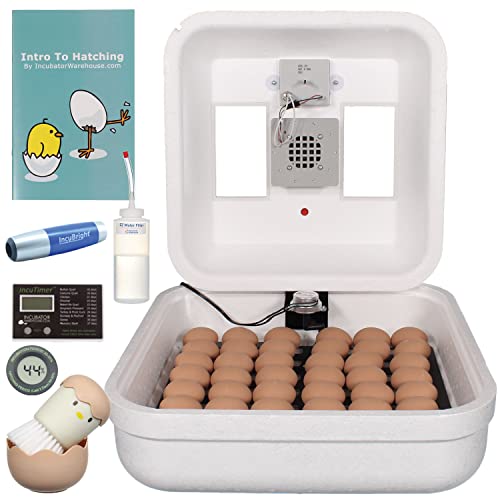
The best button quail incubator is the CluckRun 30-Quail Incubator. Its dedicated 30-slot quail tray, built-in candler, and adjustable automatic turner fit tiny eggs better than a generic chicken tray.
Button quail are small, so the egg count printed on a box tells you very little. Tray grip, stable 99.5°F forced-air temperature, clear controls, and a sensible way to check development matter more. I compare six catalog models below without pretending a newer listing has years of field history.
Six Button Quail Incubators Worth Considering
Ranked by tray fit, condition control, turning design, visibility, and room to grow
Overall
The clearest fit for tiny button eggs
- Dedicated 30-egg quail tray
- Built-in LED candler
- Adjustable automatic turning
Top Pick CluckRun 30-Quail Incubator
$$
Best for most button-quail keepers
Check Price on Amazon Premium
Automatic humidity for repeat hatches
- Automatic humidity pump
- External reservoir
- Power-fail and deviation alarms
Top Pick Brinsea Ovation 56 EX
$$$
Best for serious repeat hatchers
Check Price on Amazon Budget
Basic automation at the lowest band
- Automatic turning
- Temperature and humidity display
- Built-in candler
Top Pick VEVOR 24-Egg Incubator
$
Best for a broad-use starter unit
Check Price on AmazonQuick answer: Buy the CluckRun 30-Quail Incubator for the most button-specific setup. Choose the Brinsea Ovation 56 EX if automatic humidity and alarms matter more than price band, or the VEVOR 24-Egg Incubator if you want the budget pick and can confirm that its general tray holds button eggs safely.
Button quail incubate for 16 days, with a 15–17 day range. Forced-air temperature is 99.5°F. For a day-by-day reference, use Quail Egg Incubator Settings: Day-by-Day Schedule for Coturnix, then separate its coturnix schedule from the button-quail facts on this page.
Quick picks
Our Top Picks

Comparison table
| Product | Best for | Small-egg fit | Humidity approach | Link |
|---|---|---|---|---|
| CluckRun 30-Quail Incubator | Button keepers who want a dedicated small-egg tray | 30 quail eggs; 12 chicken-egg tray also included | Manual or listing-dependent | Check Price |
| Harris Farms Nurture Right 360 | Keepers who want a household-style unit with quail-tray options | 22 chicken eggs; quail capacity depends on compatible quail tray | Humidity display and control knob | Check Price |
| HovaBator 2370 Deluxe Combo | Repeat hatchers who need room to scale | 41 chicken eggs; up to 120 quail eggs with compatible quail racks | No built-in humidity control; add a hygrometer | Check Price |
| Brinsea Ovation 56 EX | Serious hatchers who want automatic humidity and alarms | 56 chicken eggs; optional carriers support quail eggs | Automatic pump and external reservoir | Check Price |
| VEVOR 24-Egg Incubator | Budget shoppers who can verify general tray fit | 24 eggs; listing supports quail and other poultry eggs | Manual or listing-dependent | Check Price |
| Brinsea Mini II Advance | Small button hatches where compact size and support matter | 7 standard chicken eggs; up to 12 small eggs with optional insert | External water top-up system | Check Price |
How we evaluate
Tray fit comes first. Button eggs are easy to lose in a wide chicken cradle, and a loose egg can roll, tip, or sit where the turner cannot move it correctly. A dedicated quail tray or a clearly compatible insert earns more weight than a large headline capacity.
Next I look for steady forced-air temperature, readable controls, turning that can stop at the right point, and a practical way to check eggs. Humidity control matters, too, but a display alone does not make a unit automatic. Brinsea's pump, for example, is a different class of setup from a water channel you fill by hand.
Button quail need 99.5°F in forced air and hatch in 16 days, within 15–17 days. Keeper sources fill in the missing settings: Button Quail Eggs uses roughly 45–50% through day 14 and 60–70% for lockdown, while Phil's Best Button Quail uses about 55% during turning and 65–75% for the final three days. Both stop turning three days before the expected hatch, which puts lockdown around day 13–14 for a 16-day hatch depending on how the keeper counts days. Manual turning guidance is 3–5 times daily. Treat those as starting points, then follow your incubator's instructions and watch the eggs rather than copying a coturnix schedule by habit.
Individual product reviews
1) CluckRun 30-Quail Incubator
The dedicated tray is the reason this unit wins. It gives button eggs a defined home instead of asking you to improvise with a chicken rack. The display also puts days, temperature, humidity, turn countdown, and turn status in one place, which is useful during a short incubation.
The turning schedule offers 60, 120, or 180-minute intervals and stops four days before hatch, according to the supplied product details. That stop point deserves a check because keeper guidance usually stops turning about three days before the expected button hatch. Confirm how the YMD-12 counts days and move the eggs to a hatching surface at the right time if the setting cannot be changed. The built-in LED candler saves a separate purchase. The caution is simple: CluckRun is a newer listing, so buy it for the fit and controls rather than for an invented history of long-term performance.
Pros
- ✓ Dedicated 30-slot button-quail tray
- ✓ Built-in candler
- ✓ Flexible automatic turning
Cons
- ✗ No fully automatic humidity pump
- ✗ Auto-stop timing needs a button-quail check
- ✗ Newer listing has less long-term history
2) Harris Farms Nurture Right 360
The Nurture Right 360 suits a keeper who wants a familiar household-style incubator and expects the flock or hatch plans to change. Its 360-degree clear view makes it easier to check the batch without lifting the lid, while the induced airflow supports the forced-air approach button eggs require.
Its quail capacity depends on finding a compatible quail tray, so this is an adapter decision rather than a button-specific out-of-box choice. The humidity display and control knob are useful, though they still leave you responsible for water management. Skip it if you do not want to research the insert before buying.
Pros
- ✓ Clear all-around visibility
- ✓ Humidity display and control knob
- ✓ Room to adapt for future hatches
Cons
- ✗ Quail capacity depends on tray choice
- ✗ Less direct button-egg fit than the CluckRun
3) HovaBator 2370 Deluxe Combo
The HovaBator 2370 is the scale-up choice. With compatible quail racks, its listed capacity reaches up to 120 quail eggs, so it makes sense for repeat batches rather than one small indoor hatch. The forced-air fan and included automatic turner cover the basic mechanical work.
Humidity is the trade-off. There is no built-in humidity control, so you need a separate hygrometer and a repeatable water routine. That is manageable for a keeper who likes direct control, yet it is extra equipment beside the incubator. Measure the rack spacing before ordering, especially if button eggs are your main use.
Pros
- ✓ Large expansion path with quail racks
- ✓ Forced-air fan included
- ✓ Automatic turner included
Cons
- ✗ Needs a separate hygrometer
- ✗ Quail racks are a separate compatibility check
4) Brinsea Ovation 56 EX

The Ovation 56 EX is for keepers who want the incubator to handle more of the water routine. Its automatic pump uses an external reservoir, and the display tracks temperature, humidity, and turning status. Deviation and power-fail alarms add a useful warning when a room or outlet problem changes the setup.
Optional carriers support quail eggs, so the tray question still matters for button quail. This is a premium machine with more capacity than a first small hatch needs. Choose it when you plan repeat hatches and value automatic humidity; skip it when the main problem is simply finding a safe 30-egg tray.
Pros
- ✓ Automatic humidity pump
- ✓ Alarms for temperature and power issues
- ✓ Programmable turning intervals
Cons
- ✗ Premium price band
- ✗ Needs optional quail carriers
- ✗ More machine than a tiny first batch requires
5) VEVOR 24-Egg Incubator

VEVOR is the budget route for a keeper who wants basic automation and broad species support. The listing mentions quail, and the unit includes automatic 360-degree turning, a temperature and humidity display, a built-in candler, and automatic water refill.
That list sounds attractive, but it does not describe a dedicated button-quail tray. Confirm the egg holders before purchase and watch the first turn closely with an empty test setup. This is a sensible low-band option when you accept more fit checking and less button-specific guidance.
Pros
- ✓ Budget price band
- ✓ Automatic turner and water refill
- ✓ Built-in candler
Cons
- ✗ No dedicated button-quail tray listed
- ✗ Broad-use design needs careful tray checking
6) Brinsea Mini II Advance

The Mini II Advance is the neat small-batch choice. Its compact body holds seven standard chicken eggs or up to 12 small eggs with the optional insert, so it suits a small button hatch or a keeper who wants a short run instead of a full tray.
Fan-assisted circulation, an external water top-up system, automatic stop, and temperature alarms give it more control than its size suggests. Capacity is the hard limit. If you want room for spare eggs or several pairs, the CluckRun is the more practical buy.
Pros
- ✓ Compact for a small hatch
- ✓ Optional insert supports small eggs
- ✓ Temperature alarms and external water top-up
Cons
- ✗ Small capacity
- ✗ Insert is needed for button eggs
- ✗ Premium price band for a tiny unit
Frequently asked questions
What is the best incubator for button quail eggs?
The CluckRun 30-Quail Incubator is the best fit for most button-quail keepers because its dedicated 30-slot quail tray removes the guesswork around tiny eggs. Its built-in candler and adjustable turning schedule add useful control without requiring a separate tray.
Can a regular chicken incubator hatch button quail eggs?
Yes, if the egg holders keep the small eggs upright and the machine holds a stable forced-air temperature. A chicken tray can leave button eggs rolling or sitting in a gap, so check the adapter before buying. Our guide to chicken incubators explains when a quail insert is necessary.
What temperature do button quail eggs need?
Button quail eggs need 99.5°F in a forced-air incubator. Keep the probe at egg height and avoid chasing every small display change by opening the lid. Button incubation lasts 16 days, with a normal range of 15–17 days.
Do button quail eggs need a special incubator?
They need a setup that holds the eggs securely and keeps conditions steady. A dedicated small-egg tray is helpful, though a compatible insert can make a general incubator work. The tiny chicks also need ¼-inch floor wire or a solid brooder floor after hatching.
Is an automatic turner worth it for button quail?
Usually, yes. Automatic turning keeps the routine consistent and reduces lid opening, provided the cradle or tray actually fits button eggs. Read our automatic-turner guide for the trade-offs, including when a simple manual setup makes more sense.
Related guides
- Quail Egg Incubator Settings: Day-by-Day Schedule for Coturnix for a clearly labeled coturnix reference.
- Can You Use a Chicken Incubator for Quail Eggs? (2026) for tray adapters and fit checks.
- Quail Egg Incubator with Automatic Turner: Is It Worth It? for turning trade-offs.
- Best Egg Candler for Quail Eggs (2026): 7 Picks for separate candling gear.