 Quail Corner
What Waterer Is Safe for Baby Quail (2026): Buying Guide
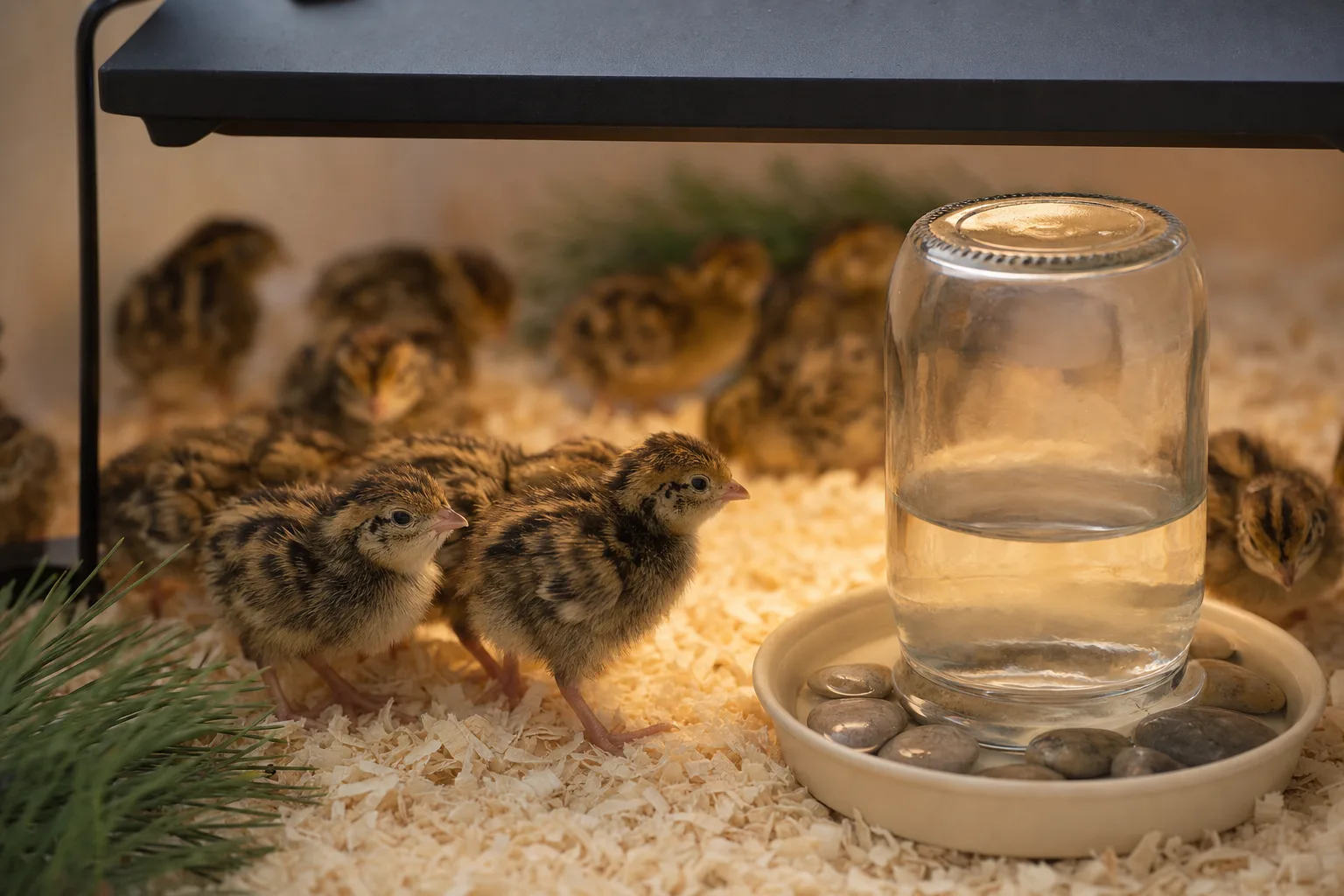
For most newly hatched Coturnix, start with a purpose-built shallow quail or chick waterer base that limits access to a deep reservoir. A shallow dish with clean, smooth pebbles can also work when arranged carefully. Neither option guarantees safety, so keep the waterer stable, watch every chick find the drinking point, and keep the water clean.
The Rite Farm Products quail and chick safety waterer base is the practical purpose-built pick here. It sits in the $ price band and includes a 1-quart poly mason jar, with regular-mouth glass mason-jar compatibility, plastic construction, and a blue finish. For the complete set of choices, see our quail chick waterer picks.
Which waterer types work for baby quail?
Start with restricted access and a steady base. The table shows how the main options differ for tiny Coturnix, then the notes explain where each one fits.
| Type | Access and hazard exposure | Cleanliness | Learning/setup issue | Best fit |
|---|---|---|---|---|
| Shallow jar/base | Limited drinking access and a small exposed water area | Easy to see and wipe when removable | Level placement and correct bottle fit matter | Strong default for very small chicks |
| Shallow tray or cup with clean pebbles | Low water access when stones are stable; no prevention promise | Low-cost, though stones and tray need inspection | Stones must leave drinking room | Budget setup with close observation |
| Nipple cup or nipple system | Small open water surface | Can reduce bedding contamination | Every chick must find and operate it | Monitored transition or older chicks |
| Adult-style open fount | Often too deep or wide for tiny chicks | Open surface catches bedding and feed | Simple to fill, poor stage match | Usually a poor first choice |
Shallow jar or base: This is my first choice for a new Coturnix brooder. The base exposes a small drinking area while the jar supplies water behind it. A loose base or tilted jar can still turn a good design into a poor setup.
Pebble-supported tray: This is the cheap route when you can check it often. Penn State Extension's The Brooder Box describes clean marbles or gravel in a water dish as a way to keep chicks from soaking themselves. Use clean, smooth, stable pieces and leave the drinking path open.
Nipple cup or system: The small exposed surface can stay cleaner than an open tray, but the mechanism adds a learning step. Treat it as a monitored option until you have seen every chick find and operate the nipple.
Adult-style open fount: This is a stage mismatch for most hatchlings. An open fount can work for a larger bird, yet its broad or deep access gives tiny chicks more water exposure than I want in the first brooder.
Button-quail note
Button-quail chicks are tiny and need 1/4-inch floor wire or a solid floor. Clean marbles or pebbles in the water dish can help limit access, but a Coturnix waterer is not automatically the right size for a button chick.
What should you check before buying?
Buy for clean, easy access first, then capacity. The best waterer for baby quail holds fresh water without adding a deep pool and keeps cleanup simple, so warm bedding and droppings do not build up around the drinking point.
Can every chick reach the drinking point?
Check the height, edge, and opening, along with the bedding under it. Each chick should reach the water without climbing into it or pushing litter across the drinking area. With nipples, observe every chick drinking before you rely on the system.
How much open water is exposed?
Prefer restricted access for very young birds. A shallow surface or tray with a few clean, smooth pebbles limits the exposed water area. Penn State Extension's Brooding of Domestic Fowl says young birds need drinkers they can reach without falling into, and points keepers toward suitable brooding equipment.
Will it stay upright and dry?
Choose a level base that stays put, or a mount that grips the brooder wall. Keep the water away from the busiest scratching line while leaving it easy to reach. A tipped tray wets chicks and bedding, then turns a simple refill into a brooder cleanup.
Can you clean and refill it without disturbing the brooder?
Look for a removable drinking area, a visible refill opening, and surfaces that show residue. Mississippi State University Extension Service's Grow Healthy Chicks says waterers should provide clean, fresh, cool water at all times. Choose a design you can inspect and wash whenever it gets dirty.
What does the product actually include?
Read the listing for the difference between a complete jar-and-base unit and a base that needs a compatible bottle. The Rite Farm base includes a 1-quart poly mason jar, accepts regular-mouth glass mason jars, and is made of plastic in blue. Its catalog rating is a 4.3 snapshot and can change.
The Rite Farm base fits a keeper who wants the purpose-built shallow-base route and wants the included jar to remove a compatibility guess.
How much should you spend on a baby-quail waterer?
The $ tier is enough for many first brooders. Spend on a design that stays clean, holds the right water level, and is easy to fill, rather than on a label that promises built-in safety for a tiny chick.
| Tier | What you get | Trade-off | Who should choose it |
|---|---|---|---|
| $ | A simple shallow base or a tray that you supervise | More careful cleaning and setup checks | A keeper starting one small brooder |
| $$ | A cup, nipple, or multiple-base setup | More parts to inspect and clean | A keeper planning to change stages |
| $$$ | A larger, multi-stage, or cleaner-flow system | More money and more parts to maintain | Keepers with several brooders |
What mistakes cause trouble?
Most waterer problems come from a stage mismatch, a placement problem, or a build that leaks or tips. Check these before blaming the design.
- Choosing an adult fount. A deep or wide base can suit an older flock and still be a poor match for tiny chicks. Start shallower and reassess as the birds grow.
- Using unsuitable stones. Dirty, sharp, unstable, or oversized stones add problems of their own. Use only clean, smooth pebbles and keep the drinking path open.
- Putting water in the traffic line. Bedding, feed, and droppings get kicked into a water kept beside constant scratching. Place it on a calm, level spot chicks can still reach.
- Installing nipples without checking the flock. One successful chick does not prove the others have learned. Watch each bird find and use the drinking point.
- Ignoring a loose connection. Inspect the thread, seam, gasket, base, and mount before water reaches the bedding. Stop a leak before it spreads with the quail waterer leak checklist if the setup still drips.
If a chick appears weak, wet, or repeatedly unable to drink, contact a poultry veterinarian or extension office. Observe and report what you see rather than fitting a diagnosis.
When should you change waterer systems?
Change systems when bird size, observed access, and base stability say the current setup no longer works. Fully feathered Coturnix generally move out of the brooder around 3 to 4 weeks, but that is context for the whole setup, not a fixed switch date.
For a purpose-built shallow base, the Rite Farm option is the clearest start from the supplied catalog. The Lixit reversible base is a low-cost alternative when hand-wash-only care fits your routine. Its catalog lists a 0.95-liter capacity, a reversible food-or-water base, and a screw-on jar. Or use check the Lixit option if you want that reversible setup today.
When the birds are ready for adult equipment, compare our quail waterer picks, a roundup built around clean, steady water for a mature flock rather than tiny-chick access.
Frequently asked questions
What is the best baby quail waterer?
A purpose-built shallow base is the best starting point for most very young Coturnix. It limits access to a deep reservoir, though you still need to watch access, stability, and cleanliness. See our quail chick waterer picks for the full product set.
What is the best waterer for baby quail?
Choose the option every chick can reach and use. A shallow base suits most new hatchlings, while a nipple or cup can work after you observe each chick drinking and confirm the mount stays steady.
What is the best waterer for quail chicks?
A shallow chick or quail base is the easiest first choice. A monitored nipple system can reduce exposed water and bedding contamination, while an adult-style open fount usually gives tiny chicks too much access to a deep or wide water area.
What is a safe waterer for quail chicks?
No design removes the need for checks. Look for restricted access, a level base, clean water, and an area every chick can reach; watch for wet bedding or a chick that cannot find the drinking point.
Is a shallow waterer better for baby quail?
Usually, yes, for very young Coturnix. Restricted access can reduce exposure to deep water, but shallow does not mean risk-free, so placement and observation still matter.
Should I use a quail chick waterer with an anti drowning tray?
It can be sensible when the tray is stable, clean, and sized for the chicks. "Anti-drowning" describes a design rather than a guarantee. Button-quail chicks also need 1/4-inch floor wire or a solid floor, and clean marbles or pebbles can be used in their dish.