 Quail Corner
Quail Chicks Drowning in Waterer: 7 Safe Fixes (2026)
If you find quail chicks drowning in a waterer, remove the deep or open hazard first and move any wet chick to a dry, safe area. Replace it with a chick-scale safety base, or a shallow dish arranged with clean marbles or pebbles. A narrow design reduces exposure to the hazard, but placement and observation still matter.
Stop chicks climbing into the water
A repeatable four-part brooder safety check
- Take out the deep or unstable dish
- Move chicks away from wet litter
- Fit a narrow chick base
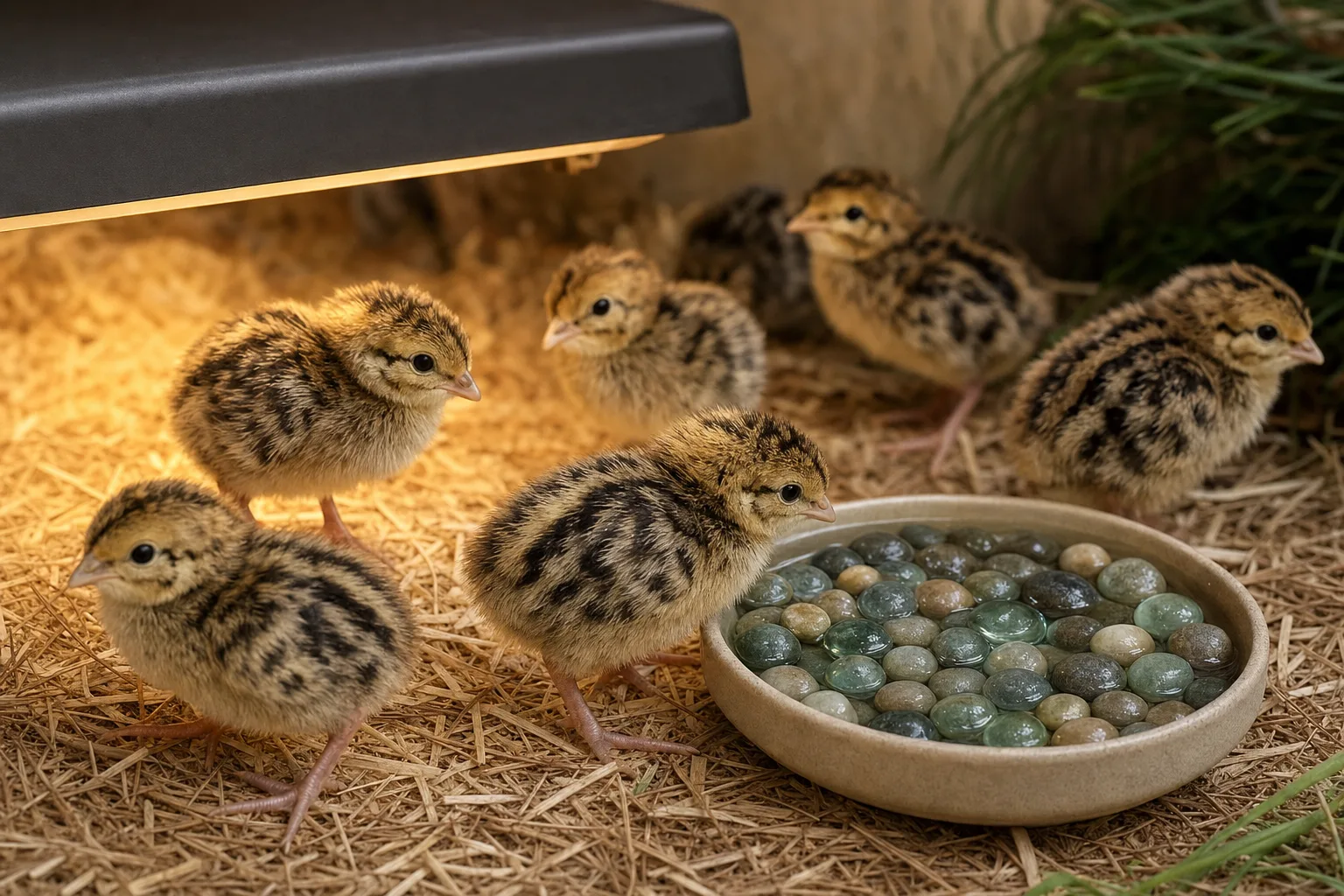
- Or prepare a shallow pebble-filled dish
- Keep the waterer level and stable
- Confirm every chick can reach the drinking point
- Look for wet feathers or tipping
- Replace contaminated water
A dry, reachable water source with less opportunity for a chick to climb into the drinking area.
What should you do first?
Take out the adult-sized fount, deep dish, or unstable container. Dry a wet chick carefully, then set up a level, stable narrow base or pebble-filled shallow dish and watch every bird drink. For more stage-specific options, see our quail chick-waterer picks. A safety base reduces the amount of water a chick can enter. It does not remove the need to check access, litter, tipping, and wet feathers.
What will you need?
Gather the replacement water source before putting chicks back beside it. Keep the setup simple and easy to see.
- A chick-scale narrow waterer or shallow dish
- Clean water
- Clean, stable marbles or pebbles for an open dish
- A dry towel and suitable dry holding area
- The brooder’s normal heat setup
Keep feed and water access easy to check together. Our safe first-brooder feeding routine covers that wider first setup.
How do you fix a dangerous chick waterer?
Step 1: Remove the immediate hazard and check the brooder
Remove any adult poultry fount, deep dish, or container that tips when a chick leans on it. Move chicks away from wet litter. If one is wet, dry it carefully and return it to a properly warmed brooder area. For Coturnix, set 95°F / 35°C at chick level in week one. Drop it about 5°F per week after that.
Do not try to diagnose a weak or worrying bird from a web guide. Contact a poultry vet or extension office if the bird does not look right and the concern continues.
Step 2: Switch to a chick-scale drinking point
Choose a narrow quail or chick safety base when you can. Its channel limits how much of the bird can enter the water. An open dish can work as a short-term option, and it needs a safety measure and closer observation. For a small brooder, the Lixit® Baby Chick Feeder or Waterer pairs a reversible base with a screw-on jar. The catalog lists 0.95 liters and hand-wash-only care. It is a buying option, not a promise that every chick will use it safely without checks.
See the Lixit chick waterer option
Step 3: Add clean marbles or pebbles to an open dish
Use clean, stable marbles or pebbles if an open dish is the only available source. Penn State Extension’s The Brooder Box describes marbles or gravel in a water tray as a way to help keep chicks from becoming wet. Arrange the material so the chicks can still reach the water.
Do not treat marbles as a guarantee. Dirty, loose, or obstructive material creates a fresh problem, so watch the dish and replace contaminated water.
Step 4: Place the setup where chicks can drink safely
Set the waterer on a level, stable surface, away from a corner where chicks can become trapped and crowd one another. Keep a dry route through the brooder. Water placement must also work with the heat source, whether you use a plate or lamp. Our quail brooder picks can help you review the whole layout.
Step 5: Confirm access instead of assuming it
Watch until every chick finds the drinking point. Look for crowding, wet breast or head feathers, a tipped base, litter in the water, or a chick climbing into the dish. Mississippi State University Extension Service’s Grow Healthy Chicks supports providing clean, fresh, cool water.
Step 6: Recheck the setup as chicks grow
A tiny-brooder waterer can become unstable, hard to reach, or too small as birds grow. Move fully feathered Coturnix out of the brooder at 3–4 weeks. That move does not set a mandatory date for changing waterers. For the adult flock setup, compare our quail waterer picks.
Which mistakes increase drowning risk?
Most problems start with a container that is too deep, too unstable, or too hard to monitor. Penn State Extension’s Brooding of Domestic Fowl discusses suitable water equipment and the danger wet young birds face.
- Standard adult poultry fount: Replace it with a chick-scale base.
- Deep open dish: Use a shallow protected arrangement and watch it closely.
- Dirty or loose pebbles: Use clean, stable material that leaves water reachable.
- Corner placement or unstable litter: Move the source to level, open footing.
- Trusting an “anti-drowning” label: Treat the feature as risk reduction, then keep checking.
- Unverified nipples: Confirm every chick can use the nipple and is drinking before you rely on it.
Check the thread, seam, base, and tipping before blaming the water. Then use our quail waterer leak checklist if water keeps escaping.
What should you do when a chick or waterer needs attention?
A chick is standing in the water
Remove that container, dry the chick, and replace it with the safer setup. Check the new source while the chick is calm, then watch the group for repeat climbing.
The waterer keeps tipping
Move it onto a level, stable surface and secure it according to its design. Replace wet, shifting litter beneath the base.
The chicks cannot reach the drinking point
Lower or reposition the source without creating a route into the drinking area. Stay and observe the group until you know every chick can drink.
The water is dirty
Replace it with clean water, then address bedding, placement, and splashing. Clean, fresh water is a basic part of brooder care.
A chick is wet, cold, weak, or repeatedly affected
Dry and warm it within the normal brooder setup. Do not try to diagnose the bird or give treatment from this guide. Contact a poultry vet or extension office if the concern continues.
Frequently asked questions
What is the best baby quail waterer?
For most small brooders, choose a chick-scale narrow safety base. The Lixit® Baby Chick Feeder or Waterer has a reversible base, screw-on jar, 0.95-liter capacity, and a $ price band in the catalog. Placement and observation still matter because no design removes every hazard.
What is the best waterer for baby quail?
A purpose-built shallow or narrow drinking area is preferable to an adult poultry dish. It limits how much of a tiny chick can enter the water. The right choice depends on stable placement, clean water, and watching each chick find the drinking point.
What is the best waterer for quail chicks?
A safety base gives the best balance of access and reduced wetness risk for many Coturnix brooders. A pebble-protected shallow dish works when watched closely, while nipples can reduce open-water exposure after every chick learns to use them. Supervision remains part of the setup.
What is a quail chick waterer with anti drowning tray?
It is a waterer with a narrow or protected drinking area that reduces a chick’s access to a deep pool. That design lowers submersion risk. “Anti drowning” describes the intended feature, not a guarantee, so keep the base level, stable, clean, and reachable.
Can marbles or pebbles stop quail chicks from drowning in water?
Clean marbles or pebbles can reduce access to an open pool when arranged so chicks can still reach water. Penn State Extension’s <em>The Brooder Box</em> describes this kind of water-tray safety measure. Keepers still need to monitor the dish and replace dirty water.
What should I do if a quail chick gets wet in its waterer?
Remove the chick from the hazard, dry it carefully, and return it to the normal warmth of the brooder. Watch for a weak or worrying bird without trying to diagnose it. Contact a poultry vet or extension office if the concern continues.