 Quail Corner
Best Overall
Hatching Time Quail Breeding Cage Indoor, 2 Section, 1 Layer, Traditional
$$
Check Price on AmazonThe right size starts with usable floor area, then height. For Coturnix, allow 1 ft² (0.09 m²) per bird minimum in a wire cage, 1.5 ft² if you can, and 2 ft² per bird or more in a ground pen or aviary.
Measure the floor the birds can actually use. Then check the 8–12 in (20–30 cm) height, floor openings, ventilation, cleaning access, and placement before comparing outside dimensions or a seller's capacity claim. Once you have that target, see our quail coop picks, Best Quail Coop (2026): 7 Picks for Every Flock.
Choose a purpose-built wire cage for an efficient indoor setup, an enclosed hutch for roofed shelter, or a ground pen or aviary for more room at ground level. Modular housing can work too. Count each independent usable level on its own.
A coop or cage is the sheltered enclosure. A run is an attached exercise area. A tray collects waste or eggs, and a divider separates birds. Those parts help the setup, yet only reachable floor counts toward housing space.
Use 1 ft² (0.09 m²) per bird minimum in a wire cage, with 1.5 ft² kinder. For a ground pen or aviary, allow 2 ft² per bird or more. Measure usable floor by multiplying its length by its width, leaving out areas blocked by dividers, feeders, waterers, or ledges the birds cannot reach.
Read interior or usable floor measurements instead of trusting the outside footprint. A sloped roll-out section, narrow access area, or separate tier can change the floor the birds reach. For help applying the standard to your flock, use our quail stocking math guide, How Many Quail per Cage? (2026 Stocking Guide).
Coturnix housing should be 8–12 in (20–30 cm) high. This low, quail-scale height limits how much speed a startled bird can build during a vertical launch, which helps reduce head impacts.
A tall hutch is not automatically safer or better. If you choose one, look for a soft roof and doors that let you reach birds, trays, feeders, and waterers without an awkward opening. Judge the whole enclosure, not height alone.
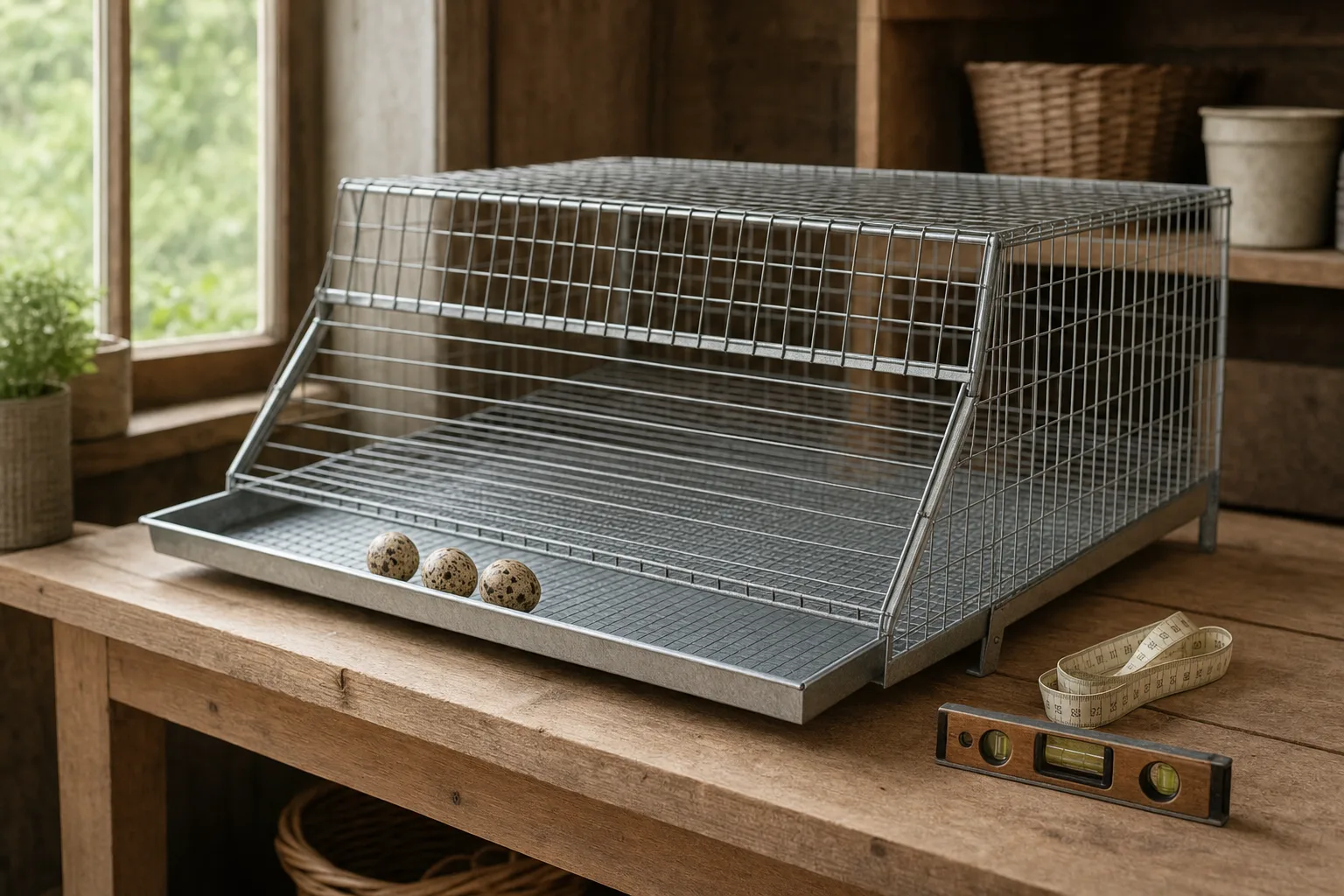
Adult quail need ½ in × ½ in (13 mm) hardware cloth on a wire floor; chicks need ¼ in. If you choose a solid floor, check how it lifts out or wipes clean. For an egg roll-out floor, look for a slope of about 7–10° and a collection area outside the bird space.
Eggs that roll clear of the birds take seconds to collect, so you handle fewer dirty shells. A removable waste tray changes the daily job too: pull it, scrape or clean it, and replace it without taking apart the enclosure. Check that doors open wide enough for each tray, feeder, waterer, and bird.
Indoor or sheltered housing needs dry, draft-free placement, controllable ventilation, cleaning access, and feed and water that stay clear of waste. Penn State Extension's Small Scale Poultry Housing guidance is a useful reference for adapting small housing and working through airflow, drainage, and daily access.
Outdoor placement adds roof coverage, shade, seams, openings, floor contact, latches, and weather exposure to your shopping list. Housing is fine to about 20°F (-7°C) when dry and draft-free, while heat stress begins above about 90°F (32°C). For that bigger checklist, read our weather-ready outdoor cage guide, Best Outdoor Quail Cage (2026): 7 Weather-Ready Picks.
Spend for the feature that solves your daily chore or placement problem. Treat the band as a starting point, not proof that the unit suits quail.
Once you know your usable floor target, open our quail coop picks, Best Quail Coop (2026): 7 Picks for Every Flock. That roundup compares complete ready-made housing by flock fit, cleaning, and placement. It does not lump a cage, hutch, and run into one category.
For a garage or shed, Best Quail Cage (2026): 6 Verified Picks for Every Flock narrows the choice to cage-style housing. For a yard, Best Outdoor Quail Cage (2026): 7 Weather-Ready Picks covers the outdoor checks that follow sizing.
For a small indoor or enclosed-shelter setup, this catalog example has a divider, roll-out egg collection, gravity-fed watering, and a removable waste tray. Its placement note says it is not predator-proof, so keep it in the right shelter rather than on an exposed run. Check the usable floor area against your flock before accepting the listing's capacity claim.
$$
Check Price on AmazonBottom line: If you are still asking what size quail coop you need, choose the usable floor area first. Then match the height, floor, access, and placement to your birds. That order keeps a tidy-looking cage from becoming a cramped one.
Choose the one with enough usable floor area, a low or soft roof, easy access, and a placement that fits your flock. A purpose-built cage is often simpler indoors. An outdoor buyer must check the roof, openings, latches, and floor contact.
Quail need sheltered usable floor space; a run adds room but does not replace it. A wire cage can be the complete indoor enclosure. A ground pen or aviary needs 2 ft² per bird or more and still needs a dry, secure shelter.
A quail coop can stay outside if it stays dry and draft-free, with shade, ventilation, roof coverage, and checked openings and latches. Housing is fine to about 20°F (-7°C) in those conditions. Heat stress begins above about 90°F (32°C).
Measure usable floor area first. Allow 1 ft² (0.09 m²) per bird minimum in a wire cage, with 1.5 ft² kinder. For a ground pen or aviary, allow 2 ft² per bird or more. A run, divider, or stacked level is not shared floor.
Keep Coturnix housing 8–12 in (20–30 cm) high. Low housing limits the speed of a startled vertical launch. A taller enclosure needs a soft roof and easy access, because extra height alone does not make a coop safer.