 Quail Corner

Quail Overheating During Transport (2026): Safe Fixes
Heat during transport is usually an environment problem. Stop early, move the crate out of sun, clear blocked airflow, and reduce crowding. A tighter cover makes heat buildup worse.
Cool a Quail Transport Setup
A repeatable 4-step response for a hot move
Step 1 Prepare
- Choose a clean, ventilated crate
- Plan shade before loading
Step 2 Load lightly
- Give birds room to settle
- Secure doors without tight covers
Step 3 Keep airflow
- Keep vents open
- Move the crate out of direct sun
Step 4 Reassess
- Stop when panting starts
- Seek help for severe distress
Result
A cooler, better-ventilated move with a clear stop rule
Quick answer
When Coturnix start panting, treat it as your stop signal. Pause the trip and inspect the crate, vehicle, and birds. Give them shade, clear the air path, and check whether the load is too crowded. If panting continues after those changes, stop the journey and talk to a veterinarian or extension office.
Coturnix experience heat stress above approximately 90°F / 32°C. Treat that as a general warning point, not as a safe transport temperature. Virginia Tech VCE's “Transporting Poultry in a Humane Manner” identifies panting, poor ventilation, sun, and unsafe vehicle placement as reasons to interrupt transport.
What you'll need
- A clean, ventilated crate: Check every opening, latch, floor, and door before birds go in.
- Open shade: Use a shaded position or loose shade that cannot seal over the vents.
- A water plan: Adult Coturnix use approximately 1–1.5 fl oz / 30–45 ml per day, with more in heat. Do not turn that daily figure into a transport schedule without a named source.
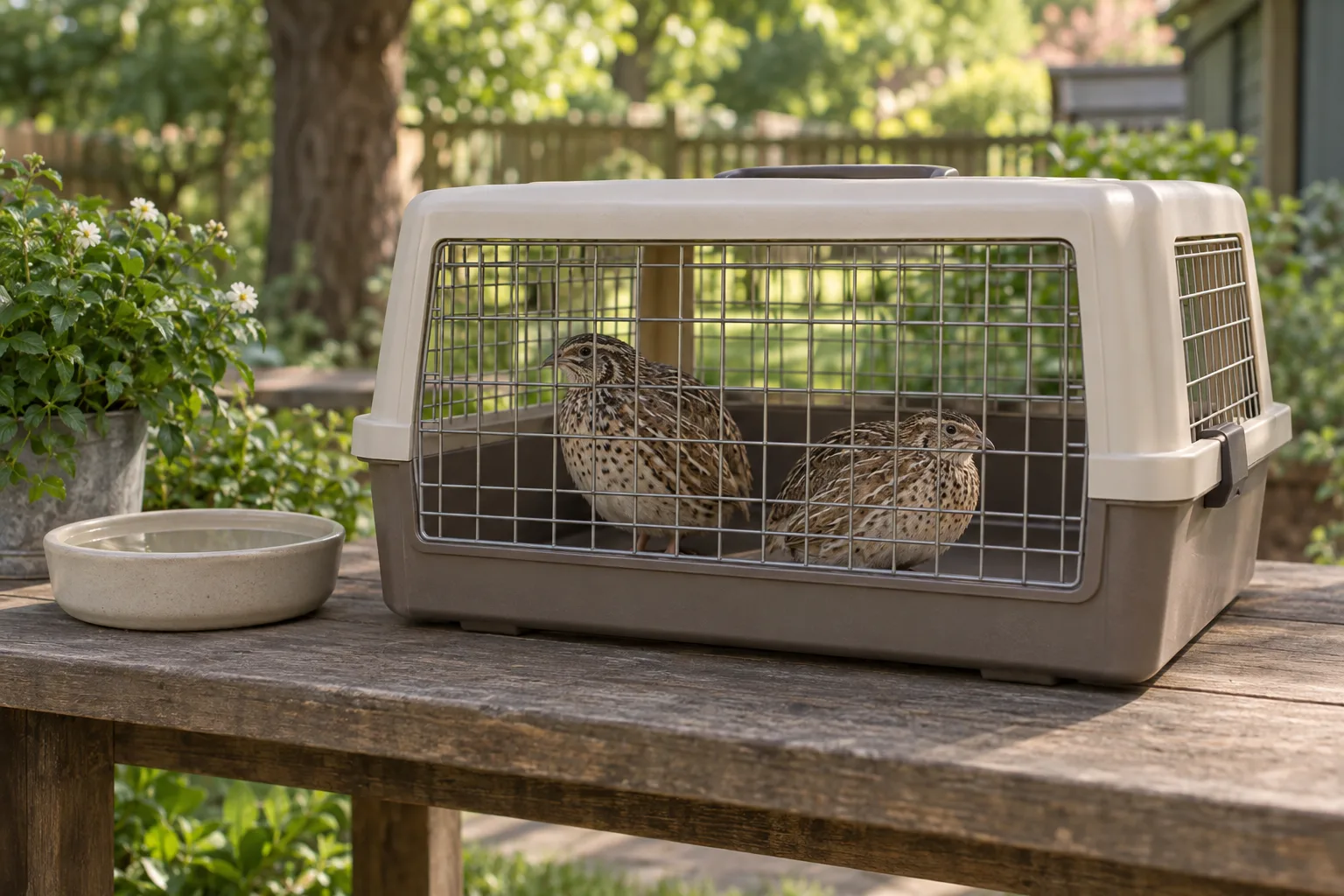
- A suitable crate choice: The Premier 1 QuailCrate 26in has a solid floor, top and side doors, and a listed size of 26 x 16 x 5 in. Premier 1 Supplies' QuailCrate page warns that capacity changes with bird size and ambient temperature. Its listing says up to 30 quail, which is a product maximum, not a responsible loading plan. Check the Premier 1 QuailCrate on Amazon before loading.
For a broader look at quail-specific crates, doors, floors, dimensions, and loading trade-offs, see best quail transport crate (2026): 7 picks for safe moves.
Our Top Picks
Step-by-step
Step 1: Prepare the crate before loading
Wash and dry the crate, then inspect the vents and doors. Remove anything that blocks the sides. A solid floor gives birds steady footing and avoids toes catching in wire. Virginia Tech VCE also warns against wire-bottomed transport cages for that reason.
Pick birds that are fit for the move. Animal Welfare Extension's “Transport and Care of Poultry” stresses clean crates, careful handling, and selecting suitable birds. Check the crate listing too. A stated capacity is a product maximum, not automatic permission to fill every inch, especially in warm weather.
Step 2: Load calmly and leave airflow open
Load birds gently, close the doors securely, and keep the crate in its low, stable position. Do not wrap it in a tight blanket, plastic, or solid-sided cover. Shade is useful only when air can still enter and leave through the crate.
Check floor space before you decide the load. Coturnix need at least 1 ft² per bird in a wire cage, and 1.5 ft² is kinder for permanent housing. Those are housing figures, not a transport-capacity formula. Transport listings use different measurements and assumptions. Read How Many Quail per Cage? (2026 Stocking Guide) for floor-space math that shows why a listing capacity is not automatically a responsible transport load.
Step 3: Control the travel environment
Keep the crate out of direct sun and away from hot vehicle surfaces. Leave space around ventilation openings rather than pushing the crate against a wall, another load, or a seat back. Virginia Tech VCE advises shade, airflow between stacked crates, and avoiding airtight transport.
Recheck the birds during stops. Natural air circulation drops when a vehicle is stopped or moving slowly, so an open crate vent does not make a parked hot vehicle safe. Move the crate into shade, improve the air path, and reduce the heat source before you decide to continue. Never use a vehicle's still, hot interior as a waiting area.
Step 4: Stop and reassess warning signs
Stop the journey when panting worsens, does not settle after environmental changes, or appears with severe weakness, collapse, or injury. Keep the birds in a ventilated, shaded place while you contact a veterinarian or extension office. This page cannot diagnose the cause or tell you to give medication.
Common mistakes
- Sealing the crate for calm: A tight cover traps heat and stale air. Shade the crate while leaving ventilation openings clear.
- Trusting the printed capacity: The Premier 1 listing says up to 30 quail, while its product page warns that capacity varies with bird size and ambient temperature. Treat that as a product maximum, not a humane load.
- Blocking the vents in the vehicle: A crate pressed against a wall or covered by luggage cannot exchange air properly. Position it so the openings stay clear.
- Using a travel crate as housing: Travel gear is for moving birds. For permanent housing, compare options in Best Quail Cage (2026): 6 Verified Picks for Every Flock.
Troubleshooting
The birds are panting, and the crate feels hot
Stop and move the crate out of sun. Open any blocked ventilation path, separate it from hot vehicle surfaces, and remove a tight cover. Wait for the birds to settle before deciding whether the trip can continue. If they do not settle, call a veterinarian or extension office.
Only the birds in one crate are panting
Inspect that crate first. A blocked side, a load placed against a vent, a different sun angle, or a tighter group can make one crate hotter than the others. Correct the local problem rather than adding a cover over every crate.
Panting starts after loading, before the vehicle moves
Handling stress can add to heat, but check the environment instead of assuming it will pass. Move to shade, keep the doors and vents clear, and reassess the load. Animal Welfare Extension advises careful handling and fit birds; severe or lasting distress calls for professional help.
Frequently asked questions
What does panting in a transport crate mean?
Panting is a warning sign that the bird is struggling with heat or stress. Check for blocked vents, direct sun, crowding, and a hot vehicle, then pause the move and improve the setup before continuing.
Can I cover a crate to keep quail calm?
Use shade that still leaves the ventilation openings clear. A tight blanket or plastic cover can trap warm, stale air, so it is the wrong fix for overheating.
How hot is too hot for Coturnix quail?
Coturnix quail experience heat stress above approximately 90°F / 32°C. That is general husbandry context, not a guaranteed safe transport limit, because sun, airflow, crowding, and the vehicle change the risk.
When should I stop transport and call for help?
Stop if panting does not settle after you fix shade and airflow, or if a bird collapses, becomes severely weak, is injured, or remains in distress. Contact a veterinarian or extension office for guidance.