 Quail Corner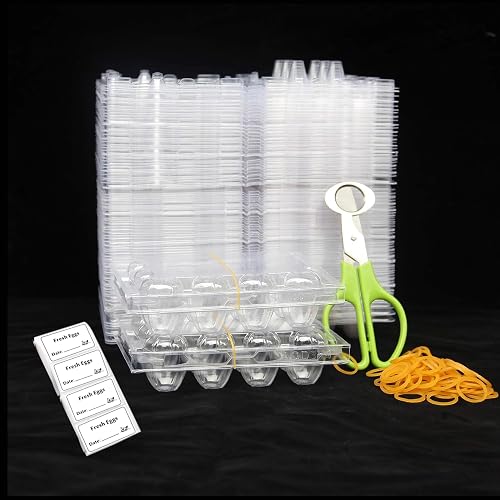
Best Overall Carton
Loving Basso 100 PCS Quail Egg Cartons Plastic Bulk,12 Grids Clear Storage Holders with Lids and Rubber Band,Reusable Quail Eggs Carton Trays for Quail,Pheasant,Pigeon Eggs
$$
Check Price on AmazonWhen quail eggs crack in cartons, check fit and closure before blaming your carrying technique. Test one egg, repack without forcing the lid, and retire cartons that are damaged or clearly mismatched.
A repeatable five-step fit and packing check
A carton that fits the eggs, closes without pressure, and is ready for careful handling
Inspect the empty carton, then test one representative egg in one cavity. The egg should sit without excessive rocking, and the lid should meet the base without touching it. If you need a replacement, compare our quail egg carton picks by cavity fit and closure style.
A “12-count” label describes capacity, not a universal cavity size. Standard-size and jumbo eggs can need different cartons, and a snap that catches does not prove the eggs are protected.
Gather a clean, dry carton, one representative egg for the fit test, and the eggs you plan to pack. Use a level surface, and keep a temporary band outside the lid so it cannot squeeze the eggs.
If the current carton is damaged or mismatched, Loving Basso's listed clear 12-grid PET carton is one replacement option. The listing gives a snap closure, included rubber bands, and hand-wash care. Check the fit for your eggs before buying a bulk pack.
$$
Check Price on AmazonFollow these steps in order. Stop when the lid touches an egg or a latch needs hard pressure. Squeezing the carton can turn one weak point into several cracked shells.
Look for cracked dividers, a warped lid, residue, and a closure that no longer lines up. Open and close it once. A high corner or leaning divider can explain one recurring crack.
Place one egg in an empty cavity and lower the lid gently. Reopen it and check for shell contact, excessive rocking, or a bowing lid. The verified NWQuailFarm jumbo listing states a 1.30 in / 33 mm cavity diameter and 1.77 in / 45 mm height. Those are product-specific measurements, not a universal jumbo standard.
Use a clean, dry carton and place one clean, dry egg into each intended cavity without pushing it down. Check that no egg rests on a divider or rises above its cavity. Loose fill can interfere with the lid, so skip improvised padding.
Lower the lid slowly and confirm that it clears every egg. Press evenly at the designed latch points. Never squeeze the carton hard to make it catch. A band helps with ordinary handling only when it does not compress the lid or eggs.
Keep the carton level while moving it and avoid loose stacking. Label collection or batch information as appropriate. Separate wet, dirty, cracked, or warped cartons from the usable stack. Penn State Extension's egg-storage guidance also covers date-marking and organized storage.
Most repeat cracks come from treating capacity as fit, forcing a closure, or keeping a damaged carton. Check the carton empty, then make one change at a time.
Find the symptom first, then inspect the matching contact point. A closed carton can still press on an egg, allow too much movement, or transfer pressure from a warped base.
The cells may be too large for your eggs. Test a smaller or better-matched quail carton, and skip loose fill that can interfere with the lid.
An egg may be too large, sitting high, or resting on a divider. Remove and reposition one egg at a time. If the lid still resists, replace the carton size instead of forcing the snap.
Inspect for lid contact, uneven loading, a warped base, and stacking pressure. The latch proves only that the carton closed, not that the eggs have clearance.
Inspect that cavity, its divider, and the hinge first. A local defect or one unusually large egg is more likely than a general closure failure.
Move cartons level, avoid loose stacking, and use stable cavities with a closure suited to the route. No carton is break-proof.
Set it aside and follow named extension guidance for egg handling. Washing a carton does not create a food-safety guarantee. Reuse plastic only where the listing gives reusable and hand-wash care.
For eggs intended for incubation, use our quail egg candling guide and our incubator settings guide for the next decisions.
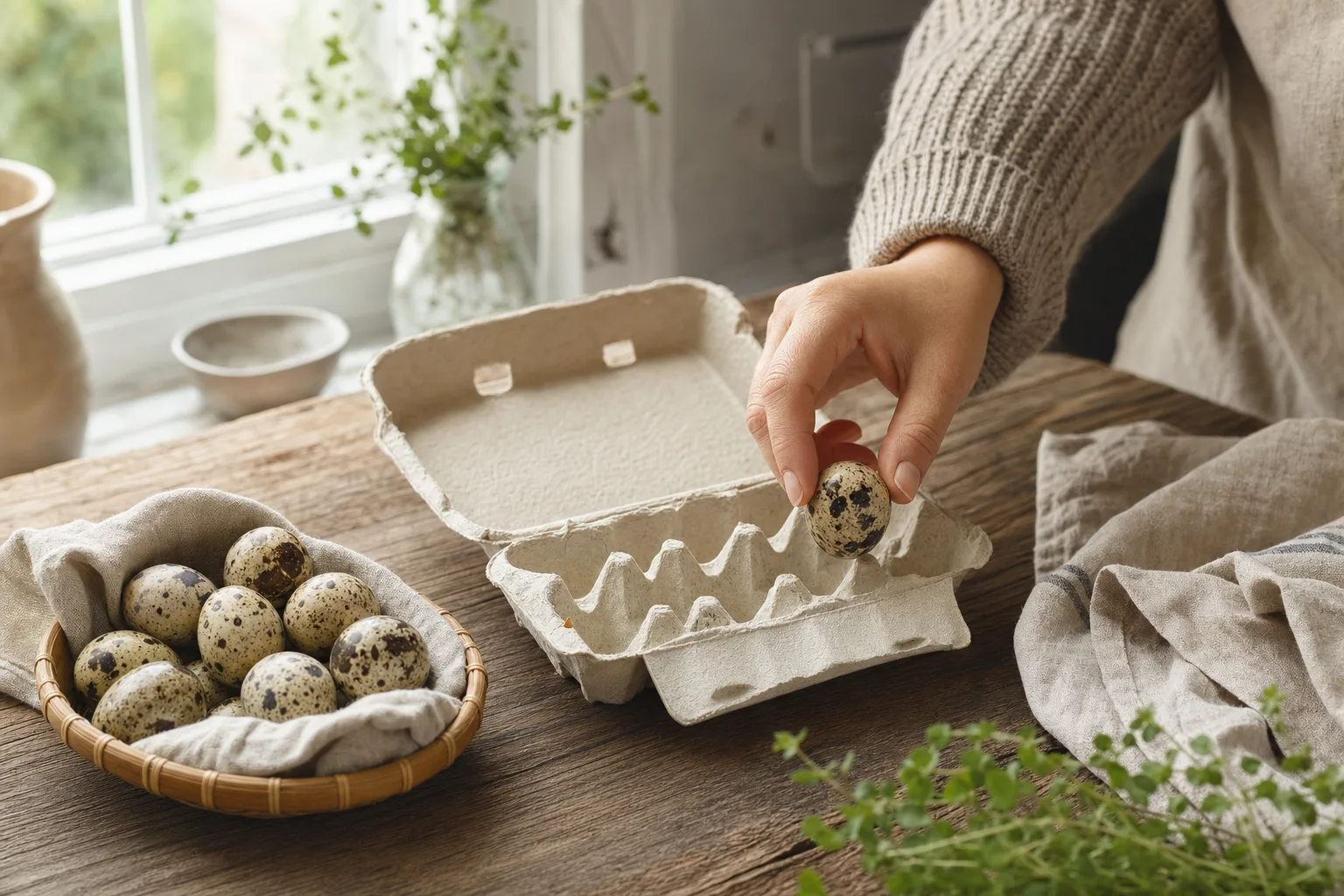
A 12-count carton is common in the verified catalog, but capacity alone does not prove fit. Check the cavity shape and dimensions against your eggs, especially if your Coturnix line produces larger eggs. A dozen carton can still have cells that are too loose, shallow, or tight.
Clear plastic makes eggs easy to see and can support snap closures, cleaning, and reuse when the listing allows it. Pulp offers a natural look and an easy writing surface. Judge the closure, care instructions, and wet-handling limits against your routine.
The verified NWQuailFarm jumbo listing gives a 1.30 in / 33 mm cavity diameter and 1.77 in / 45 mm height. Use those figures as a product-specific reference, then measure your eggs and check the listing for the carton you buy. Do not assume another 12-grid carton matches it.
Only consider that workflow for a plastic listing that specifically says it is reusable and gives hand-wash care. Inspect every carton for cracks, residue, warped lids, and damaged closures before use. A carton that stays wet, dirty, or misshapen belongs in the discard stack.
Choose separate cavities, a reliable closure, label space, clean presentation, and a format that suits your transport route. A 12-count carton is a practical dozen presentation, but local packaging requirements vary. Check your local authority before selling.
A carton can organize incubation eggs if it keeps them protected during handling, but carton choice does not replace incubation guidance. Use a candling guide and an incubator schedule for those next decisions.