 Quail Corner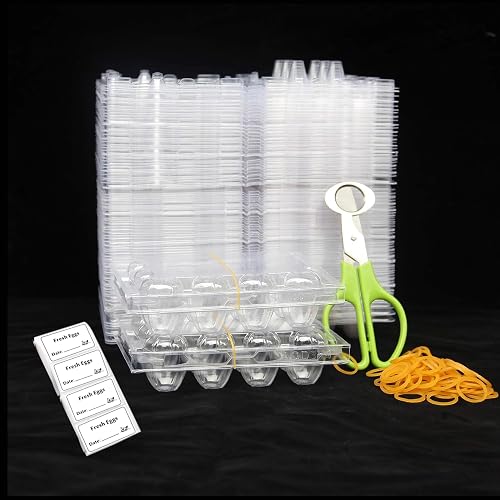
Best All-Around Carton
Loving Basso 100 PCS Quail Egg Cartons Plastic Bulk,12 Grids Clear Storage Holders with Lids and Rubber Band,Reusable Quail Eggs Carton Trays for Quail,Pheasant,Pigeon Eggs
$$
Check Price on AmazonPackage quail eggs safely by matching a clean, dry carton to the eggs, placing one egg in each cavity, closing the lid without pressure, and labeling the finished carton. This routine works for storage, gifting, and a local handoff while giving you a clear point to reject a poor fit.
A repeatable 4-step packing process
A labeled carton with eggs supported in separate cavities and no shell forced against the lid.
Inspect the carton, check that each cavity supports the egg, then place clean and dry eggs one at a time. Close the lid gently, label the batch or collection date, and keep packed cartons clean and dry. An egg that rocks, binds, or touches the lid needs a different carton.
Use Loving Basso for routine storage, gifting, or repeat packing when its cavities fit your eggs. If a standard carton is tight, the NWQuailFarm listing is a fit alternative. The catalog lists its brand as Generic and its manufacturer as NWQuailFarm, with 12 larger-egg capacity, recycled PET, a 1.30 in / 33 mm cavity diameter, a 1.77 in / 45 mm cavity height, a 50-count package, and a flat label area.
$$
Check Price on Amazon
$$
Check Price on AmazonInspect the carton, match each cavity to the egg, and place one clean, dry egg into each space without forcing it. Check lid clearance before closing, then label the carton and keep it dry. Eggs that rock, bind, or press into the lid need a different carton.
Check every cavity, the lid, hinge, closure, and flat surfaces for cracks, residue, deformation, or a closure that will not engage. Set aside anything damaged. "12-count" describes capacity, not a universal cavity fit.
Compare listed dimensions with your eggs before filling. Our quail carton picks explain the fit and format differences. The Loving Basso listing gives an overall size of 5.4 x 4 x 1.5 in and a 12-grid layout, yet those details do not prove that every Coturnix line fits.
Work with eggs that are clean and dry. Look for a shell that is cracked or otherwise unsuitable for the carton, then keep those eggs separate from the packed stack. Use a stable work surface so a filled carton does not slide while you work.
Set one egg into each cavity and let it settle naturally. Do not force a shell into a tight cup or use the lid to press it down. If the egg rocks, binds, or sits high enough to touch the lid, stop and change cartons.
For larger eggs, compare your measurements with the NWQuailFarm listing, which gives a 1.30 in / 33 mm cavity diameter and 1.77 in / 45 mm cavity height. Treat those figures as product details, not as a universal jumbo standard.
Lower the lid without pressure and check that it clears the shells. Engage the snap or clamshell closure only after the eggs are settled. The Loving Basso carton lists a snap-close button and included rubber bands; use a band only as a closure aid when it does not compress the eggs.
Write a legible batch or collection date on the carton before it leaves the work area. Penn State Extension's "What Do I Do with All These Eggs?" discusses date-marking and organized storage. Its guidance on safe handling and storage also supports clean containers and dry shells; check the same source for egg-washing context when selling.
Keep the finished carton clean and dry, check the closure before moving it, and separate damaged cartons. For ordinary hand transport, use a stable container that stops the carton from sliding. Shipping is a separate job, so this routine does not promise protection from shipping breakage.
If the eggs are headed for the incubator, keep the packing routine separate from hatching setup. Use our quail egg candler guide for inspection and our incubator-settings guide for the hatching schedule.
The usual problems come from forcing a poor fit, closing before checking lid clearance, or sending a damp or unlabeled carton onward. Catch those issues at the work surface, where changing one carton is simple.
Use the symptom to find the fix. Remove the carton from the handoff stack until the fit, closure, and label are right.
Stop filling and compare the cavity dimensions with the eggs. Move larger eggs to a carton designed around the listed 1.30 in / 33 mm diameter and 1.77 in / 45 mm height, or choose another verified fit. Never use the lid to hold an egg down.
Check for a mismatched egg, residue in the rim, a bent lid, or a damaged hinge. Remove the problem egg or carton. Close only when the lid settles without pressure and the closure engages normally.
Pause packing and keep the carton out of the finished stack. Penn State Extension and Texas A&M AgriLife Extension's backyard egg handling guidance provide useful context for careful handling and drying. Follow the relevant extension advice before storage or a local handoff.
Inspect the hinge and snap first. Use the manufacturer-listed closure aid only when it does not compress the eggs, and replace a carton that cannot stay closed without pressure.
Twelve-count cartons are common in the verified product set and make a convenient dozen, but capacity does not guarantee cavity fit. Compare the listed cavity details with your eggs before filling, especially if your covey produces larger Coturnix eggs.
Clear plastic gives you visibility, a reusable option when the listing says so, and a closure you can check quickly. Pulp offers a natural presentation and easy writing. EggCartons.com and Poultry Cartons list both formats, so choose for your handling and labeling routine.
The verified NWQuailFarm listing, with brand shown as Generic and manufacturer shown as NWQuailFarm, lists a 1.30 in / 33 mm cavity diameter and 1.77 in / 45 mm height. Measure your eggs and compare those figures instead of treating "jumbo" as a universal fit.
Reuse belongs to listings that specify reusable construction and hand-wash care. Inspect every carton for cracks, residue, deformation, and a damaged closure before using it again. Remove questionable cartons from the packing stack instead of assuming they are good for unlimited reuse.
Add a clear batch or collection-date label before the carton leaves your work area. Sales packaging and washing requirements vary by location, so use Penn State Extension guidance and check with your local authority for the rules that apply to you.
A carton can organize clean, dry, protected eggs, but incubation is a separate workflow. Keep those eggs in a carton that supports them without pressure, then use the candler and incubator-settings guides for the hatching steps.