 Quail Corner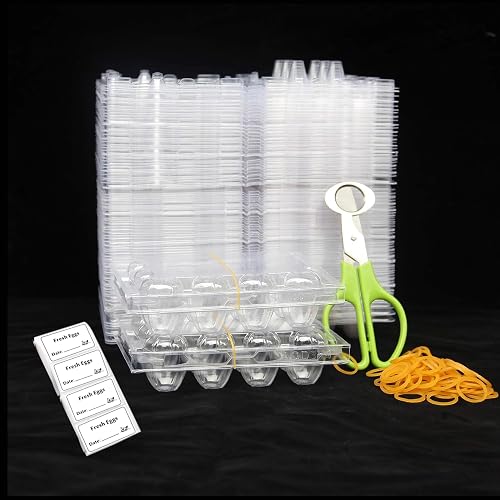
Best Overall
Loving Basso 100 PCS Quail Egg Cartons Plastic Bulk,12 Grids Clear Storage Holders with Lids and Rubber Band,Reusable Quail Eggs Carton Trays for Quail,Pheasant,Pigeon Eggs
$$
Check Price on AmazonChoose a 12-count carton for a simple dozen presentation, an 18-count carton when fewer larger cartons suit a higher-volume workflow, or a jumbo carton when standard cells crowd the eggs or press against the lid. For specific options, see our quail egg carton picks.
Count and fit are separate decisions. This guide compares cavity dimensions, materials, closures, labels, pack sizes, and storage so you can buy cartons that suit your eggs and your routine.
For most keepers, start with 12 count, then choose the material and cavity size. An 18-count carton suits higher volume, while jumbo cartons earn their space only when their listed cavities fit your larger eggs.
| Format | Best use | Check before buying |
|---|---|---|
| 12 count | A dozen, gifting, labeling | Cell fit and closure |
| 15 count | A middle capacity | Vendor dimensions and availability |
| 18 count | Higher-volume packing | Fridge space and partial fills |
| Jumbo | Larger eggs | Cavity diameter and height |
A 12-count carton is the easiest choice for a dozen presentation. It is convenient to gift, label, and fit into a small storage routine, and it is a common format in the catalog. The number twelve says how many eggs it holds. It does not prove every cell fits every egg.
A 15-count carton sits between a dozen and an 18-grid. Vendors such as EggCartons.com and Poultry Cartons list multiple quail carton categories, including different counts and materials. Treat 15 count as a vendor-listed category, then check the specific cavity shape and closure on the listing you are considering.
An 18-count carton can reduce the number of packages a repeat customer or higher-volume seller handles. The tradeoff is simple: it takes more refrigerator room, and a partly filled carton can be awkward to move. Choose it when the larger capacity matches your collection rhythm.
Buy a jumbo carton by cavity dimensions, not by the word jumbo. NWQuailFarm gives a concrete example with a 1.30 in / 33 mm cavity diameter and 1.77 in / 45 mm height. Confirm those measurements on the current listing and compare them with your eggs before ordering.
Clear plastic helps you see the eggs and can support snap closure, stacking, and repeat storage when the individual listing says it is reusable and gives hand-wash care. Pulp or cardboard gives a natural presentation and a writable surface. The EggCartons.com and Poultry Cartons ranges show both material categories, but neither material is right for every wet-handling routine.
Check fit first, then count, material, closure, label space, and pack quantity. A carton that looks cheap is poor value if eggs rock in the cells, press against the lid, or leave you with more stock than you can store.
Compare your actual eggs with the seller's cavity diameter and height, especially for jumbo Coturnix lines. A 12-count carton can still be a poor fit if eggs crowd the sides, rock in the cells, or touch the lid. Close one sample without force before committing to a bulk pack.
Use 12 count when you present a dozen, give eggs away, or want easy labels and smaller packages. Use 18 count when higher volume makes fewer packages worthwhile. Larger cartons need more refrigerator space and can be less convenient when your collection does not fill them.
Plastic is practical for visibility and repeat storage when the listing explicitly supports reuse and hand-wash care. Pulp suits a natural look and writing on the top, but it is a weaker choice for a repeatedly wet or washed workflow. Remove dirty or damaged cartons instead of promising that any carton can be cleaned forever.
Look for an attached lid, snap or clamshell closure, stable cavities, a flat writable top, and a shape that stacks in your storage area. A secure closure reduces handling trouble, though it cannot guarantee zero breakage. Penn State Extension's egg-handling guidance supports keeping eggs in a clean carton or container and marking storage context where appropriate.
A small pack makes sense for occasional home use or a fit test. Bulk packs suit a seller or a multi-cage operation that has dry storage space and a steady flow of eggs. Loving Basso is a useful catalog example: its listing represents a 100-count package, with 12 eggs per clear carton and a $$ price band. Do not buy bulk until one carton fits your eggs.
Spend first on a correct cavity fit and a closure you will use. The right tier depends on handling frequency, material preference, and storage space, not an arbitrary dollar cutoff.
The common failures happen before the eggs reach the refrigerator. Match the carton to the eggs and the routine, rather than choosing from the capacity number alone.
For our specific quail egg carton picks, see best quail egg cartons (2026): 8 picks compared. The Loving Basso listing is a sensible all-around example for a reusable clear 12-grid: its listed details include 5.4 x 4 x 1.5 in dimensions, BPA-free and food-grade claims, hand-wash care, a tight snap closure, cone supports, and included rubber bands.
$$
Check Price on AmazonThat combination suits repeat storage, gifting, and small-scale selling. Keep the cartons dry, follow the Hand Wash Only instruction, and treat the product details as listed specifications rather than a guarantee that every flock's eggs will fit.
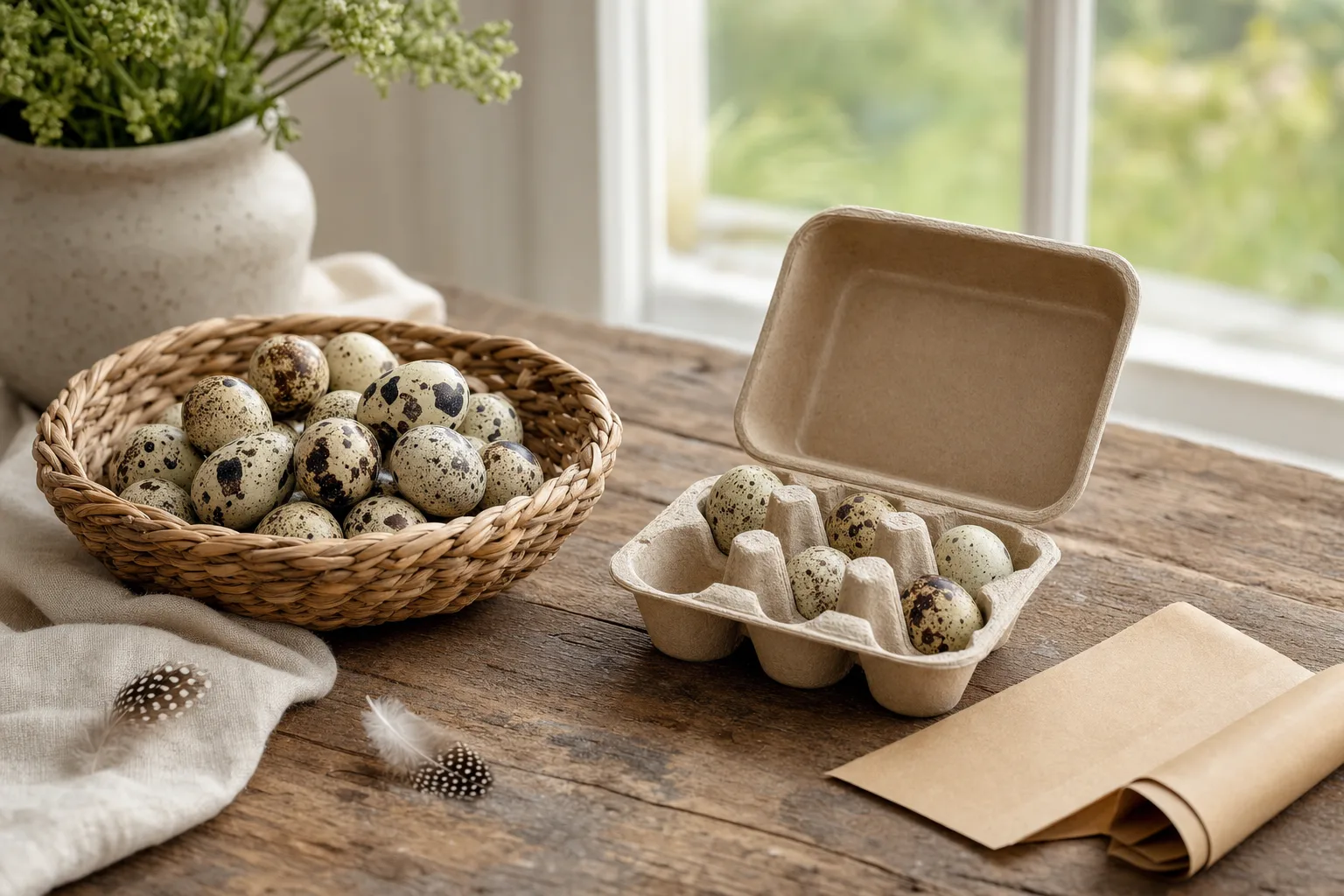
A 12-count carton is common in the current catalog and convenient for presenting a dozen. Capacity does not guarantee fit, so compare the carton cavities with your eggs before buying a large pack.
Clear plastic makes eggs visible and can offer snap closure and reuse when the listing supports hand-wash care. Pulp gives you a natural presentation and writable surface, while wet handling can shorten its useful life.
Choose a carton by cavity dimensions, such as the NWQuailFarm listing with a stated 1.30 in / 33 mm diameter and 1.77 in / 45 mm height. Measure your eggs and confirm the current listing instead of assuming every 12-grid carton fits.
Only plastic listings that specify reusable construction and hand-wash care belong in that workflow. Inspect each carton for cracks, residue, and a damaged closure, then remove questionable units from the usable stack.
Prioritize individual cavities, a reliable closure, a flat label area, clean presentation, and local packaging compliance. A 12-count presentation is practical for a dozen, but it is not a universal selling rule.
A carton can organize incubation eggs if it keeps them clean, dry, and protected, but carton storage is separate from incubation procedure. Use our quail egg incubator settings guide and our quail egg candler picks for those next steps.