 Quail Corner

Quail Coop Fan Not Working: 7 Fixes (2026)
A quail coop fan that is silent, intermittent, or weak usually points to a power, control, blockage, or placement problem. Classify the symptom first, then work through the power path before cleaning or replacing anything.
Use this check on a Coturnix outdoor coop or cage. For a solar-versus-electric replacement comparison and safe placement criteria, see best quail coop fan (2026): 8 Solar & Electric Picks before buying another unit.
Quail Coop Fan Not Working
A safe seven-step fault check for outdoor quail housing
Step 1 Classify the symptom
- Separate dead, intermittent, and weak airflow
- Check the setup before touching wiring
Step 2 Trace the power
- Check electric connections or solar charging
- Test the sensor and battery behavior
Step 3 Clear and decide
- Remove safe-to-clean blockage
- Repair, replace, or stop using the fan
Result
You will know why the fan stopped, what you can safely clean, and when replacement or qualified help is the right call.
Quick answer
Check the outlet, plug, switch, cable, panel, battery, and temperature control first. Then turn the fan off and clear safe-to-reach dust or obstruction from the guard, shutter, and openings. A fan supports air exchange, while shade, passive openings, and water access remain essential. It cannot act like an air conditioner.
What you'll need
- Flashlight
- Soft brush, or a vacuum used away from exposed electronics
- Dry cloth
- Manufacturer instructions
- Phone for photographing connections before you move them
Keep the birds away from the work area. Do not open a sealed motor, splice mains wiring, or bypass a controller to force a test.
Our Top Picks
Step-by-step
1. Decide whether it is dead, intermittent, or weak
Watch the fan for a few minutes and describe what you see. Completely dead means no sound or blade movement. Intermittent means it starts, stops, or runs only in sun. Weak means the motor runs yet the air barely moves.
That split tells you where to look. Dead units need a power or motor check. Intermittent units often involve a sensor, battery, cloud cover, or loose connection. Weak units usually need an airflow and obstruction check.
2. Check the setup before touching the fan
Look for shade over a solar panel, a loose plug, a pinched cable, a tripped outlet, wet electrical parts, or a blocked opening. Photograph connections first. Make sure the exhaust side points out of the coop and that a guard or mesh has not collapsed against the fan.
Passive openings matter. eXtension's Ventilation in Small and Backyard Poultry Flock Housing explains why an exhaust fan needs a path for replacement air. For shelter, shade, mesh, airflow, and cleaning around the unit, use How to Set Up an Outdoor Quail Cage (2026).
3. Troubleshoot an electric fan
Turn off the switch, then check the plug, outlet, timer, fuse, and visible cable in the order your manufacturer gives. Restore power only after the housing is dry and the guard is secure. A fan that hums without turning may have a jammed blade or a failing motor, so do not reach through the guard.
Check a thermostat or speed controller separately. A control can intentionally keep the fan idle below its set point. A permanent wall fan also needs a screened, guarded opening that keeps birds and predators out.
4. Troubleshoot a solar fan that stopped
Put the panel in direct sunlight and inspect the panel cable, connectors, and mounting for shade, cuts, or water. Remington Solar's Trouble shooting a fan not running is useful context for sunlight, temperature, and solar fault checks. Solar-only fans stop at night by design, while battery-backed fans depend on stored charge and their selected mode.
For one battery-backed example, the SUNYIMA listing specifies a 20W panel, 6600mAh battery, claimed 5–8 hours of continuous operation, two 4.7-inch fans, up to 2 × 120 CFM, IP65 construction, and an auto-mode threshold of 78.8°F. Those figures describe that listing only. This is the useful replacement option when you need solar ventilation with some night and cloud backup:
5. Clear weak airflow without making a draft
Disconnect power, then brush dust, feathers, and droppings from the guard, shutter, and nearby opening. Feathered Farm Life's Boost Quail Coop Ventilation for a Healthy Flock also flags clogged vents and cleaning as practical causes of poor airflow. Keep the exhaust path open and aim moving air across the space rather than directly at the birds.
Check panel placement too. A shaded panel can make a healthy solar fan look broken. If the coop is enclosed, add passive intake space and shade rather than increasing fan force until the birds sit in a constant draft.
6. Check the guard, cable route, and opening
Replace a loose guard, exposed blade, cracked shutter, or chewed cable before running the fan. Secure mesh around a new opening and keep cable loops outside the birds' reach. The checklist in How to Predator Proof a Quail Cage: 7 Steps helps close gaps without creating a predator entry point.
7. Choose repair, replacement, or help
Clean and reconnect only the parts the instructions identify as user-serviceable. If the motor needs internal electrical repair, stop and contact the manufacturer or a qualified electrician. Replace a sealed or failed unit when the motor stays dead, the battery no longer holds charge, or the panel and cable are sound but the controller will not respond.
A fan is one layer of hot-weather management, not the whole plan. Penn State's Hot Weather Management of Poultry supports shade, water, and airflow as setup priorities.
Common mistakes
- Testing in shade: A solar panel may simply lack useful light. Move the panel before condemning the fan.
- Blocking the replacement-air path: An exhaust fan cannot move much air through a sealed coop. Keep passive openings screened and protected.
- Pointing the blast at the birds: Aim for air exchange across the housing, with shade and sheltered resting space available.
Troubleshooting
Stop using it if electrical damage is visible
Stop immediately for damaged insulation, exposed blades, water inside electrical parts, a burning smell, or repeated breaker trips. Do not tape, splice, or bypass the fault. Contact the manufacturer or a qualified electrician.
The fan works, yet the coop still feels stale
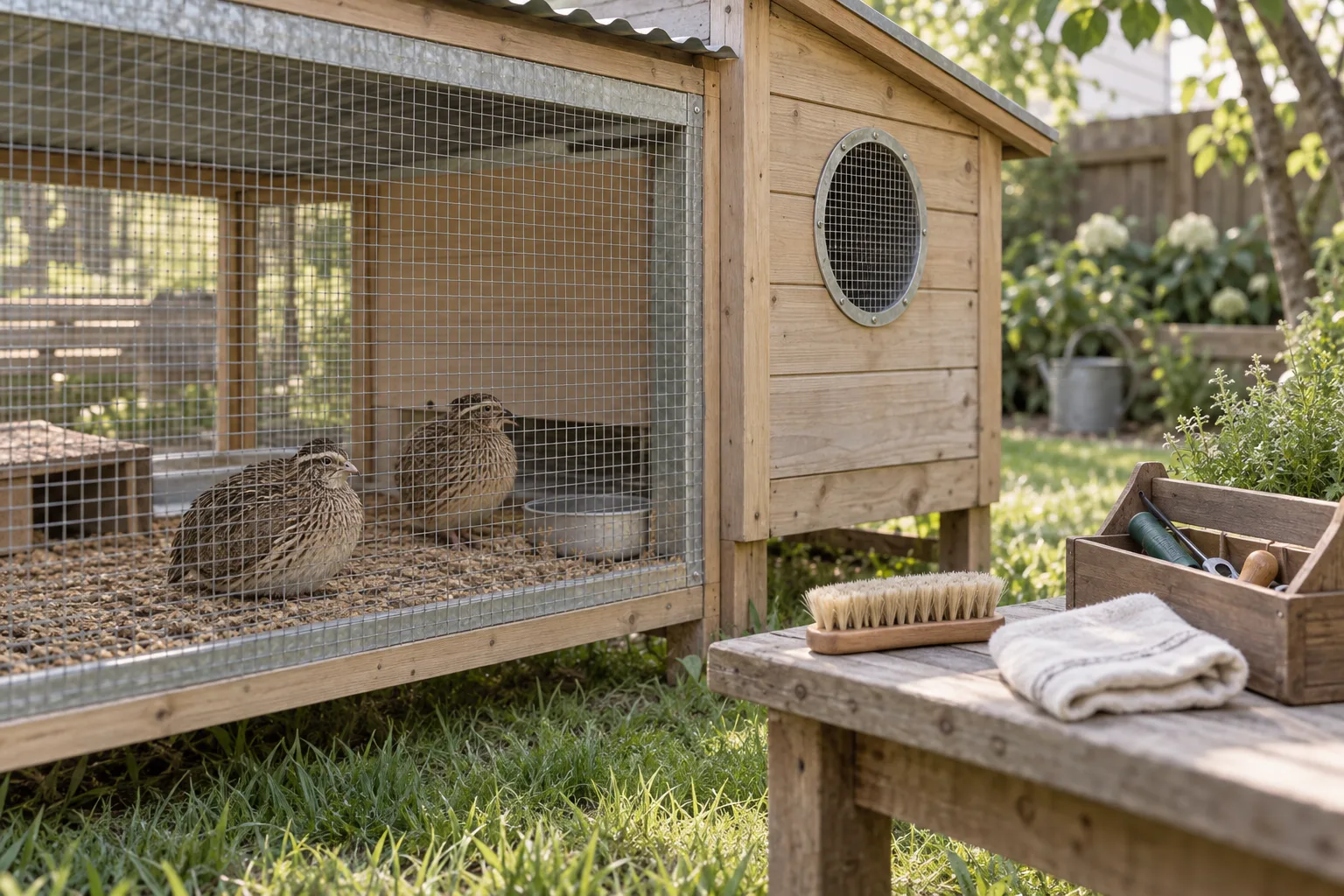
Check the intake opening, exhaust direction, shutter, guard, and nearby mesh for blockage. Confirm that shade is still covering the coop and that the fan is not stirring air inside a closed box. Review the housing plan in Housing for more ventilation guidance.
Frequently asked questions
Why is my quail coop fan not running?
Start with the power path: outlet, plug, switch, cable, solar panel, battery, and temperature control. Then look for dust, feathers, droppings, or a jammed guard. A solar-only fan can be idle in shade, clouds, or darkness, while a battery-backed model can keep running after sunset. Stop if wiring is damaged or smells hot.
What should I do if my solar quail coop fan stopped working?
Move the panel into direct sun and inspect its cable and connector without opening sealed parts. Check whether the fan is in automatic temperature mode, since a sensor can leave it idle below its trigger point. If it has a battery, let it charge under the conditions in the product listing, then test again before deciding that the motor has failed.
Why is my quail coop ventilation fan not running at night?
A solar-only fan normally stops when the panel has no sunlight. A battery-backed fan can run at night only if its battery has charge and the control mode allows it. Check the manual, battery indicator, and temperature setting. Do not bypass a controller or improvise a mains connection.
How do I fix a quail coop fan with weak airflow?
Turn it off, then clear dust, feathers, droppings, a blocked guard, and a stuck shutter with a soft brush or dry cloth. Check that the intake and exhaust openings are open and that the fan points out of the housing. If airflow stays weak after cleaning, the motor, guard, panel, or battery needs a closer look.
Can a fan cool a quail coop above 90°F?
A fan exchanges air and helps birds lose heat through moving air. It does not refrigerate the coop or lower the air temperature like an air conditioner. Coturnix heat stress becomes a concern above about 90°F, so provide shade, water access, and passive openings while treating the fan as one part of the setup.