 Quail Corner
Best Overall
RentACoop Chick2Chicken 5lb 2-Port Feeder and 1-Gal Small Cage Waterer Set
$$
Check Price on AmazonGood placement keeps feed cleaner and cuts waste. This setup is for adult Coturnix first, with separate checks for Coturnix chicks and tiny button quail chicks.
A repeatable five-action process for clean, reachable feed and water
A stable feeder and waterer that every bird can reach without wet litter, loose hardware, or unobserved water access.
Choose equipment for the birds, place the openings around back height in a dry spot, and mount both units level. Test every feed port and water outlet, then keep backup water until each bird is visibly drinking.
For a compact adult cage, the RentACoop Chick2Chicken listing includes a 5 lb feeder with two medium ports and a 1-gallon waterer with two cups and two horizontal nipples. See our quail feeder and waterer set picks if you are still choosing. Those are listing specifications, not a guaranteed flock size.
Before birds enter, have clean feed, clean water, mounting hardware, and a way to catch spills. Check the listing for the exact bracket, hooks, cups, nipples, and cage compatibility. A seller’s general poultry claim does not tell you how many quail your setup can serve.
$$
Check Price on AmazonFirst identify an adult Coturnix cage, a Coturnix brooder, or a button-quail setup. Adult and chick equipment do different jobs. Chicks need stable, shallow or anti-drowning water access and openings they can use. Button quail chicks need ¼-inch floor wire or a solid floor, with marbles or pebbles in water dishes.
The RentACoop listing includes BPA-free plastic, a mounting bracket, S-hooks, two medium feed ports with sliders, two auto-fill cups, and two horizontal nipples. Treat those as listing specifications. Do not assume every nipple is chick-ready or assign a universal bird count.
Put the units at a dry, level access point where birds reach the openings without standing in wet or heavily soiled litter. Keep feed and water far enough apart that a tipped waterer cannot soak the feed. Outside-mounted feed ports can also limit digging in the feed.
Penn State Extension’s Small Scale Poultry Housing uses back height as a practical placement principle for feeder and waterer lips. It helps reduce contamination and waste. If you need a dedicated feeder, compare our best quail feeder picks.
Fit and secure the feeder before adding a full load. Check that the bracket, hooks, or cage mount cannot twist. Keep the unit level, both ports clear, and every edge safe.
Add a little normal feed and watch the birds reach it. Look below the ports for scattered crumble. Adult Coturnix eat about 1 oz / 25–30 g per bird per day, so use observed waste and flock demand to adjust your routine. The 5 lb listing capacity is not a refill promise.
Fill the reservoir, check the seal, and test each cup or nipple before birds rely on it. The listing includes two auto-fill cups and two horizontal nipples. Offer the delivery method the birds can use and observe. A nipple is not automatically learned or leak-free.
Keep the backup source until every bird is visibly drinking. A cup can ease the transition for birds unfamiliar with nipples. Adult Coturnix use about 1–1.5 fl oz / 30–45 ml per bird per day, with more in heat, yet spillage and flock access change real use. If the bundled delivery does not suit the cage, see our quail waterer comparison.
Activate each nipple and test each cup, confirm the cups refill, inspect the mount for wobble, and check the cage floor after use. Watch every bird feed and drink without a dominant cage mate blocking access. Make one adjustment at a time so you know which change helped.
Check again after the first refill and during warm weather. You want reachable feed and water with no standing wet patch below the delivery point. If competition is the concern, use our feeder-capacity setup guide.
Look for scattered feed, wet litter, or a bird that cannot reach the delivery point. Check the mount, life-stage fit, and access pattern before replacing equipment.
Start with the symptom you can see, then change one part of the setup. If a bird appears unwell beyond an equipment-access issue, talk to a veterinarian or extension office.
Quail ignore a nipple when they cannot find it, it fails to release water, or the delivery point does not suit them. Demonstrate the outlet, check its release, offer a cup or backup source, and observe until every bird drinks. Birds do not all learn at the same speed.
Feed keeps landing on the floor when port height, slider position, mount stability, or exposed openings allow too much access. Watch the birds, correct the mount, and move the feeder only after you understand their access pattern.
An overflowing cup or wet floor points to a seal, level, refill path, or mounting problem. Test each part, clean the catch surface, and replace a faulty part or change delivery methods if the unit cannot hold a clean water line.
One bird blocks the setup when the flock cannot approach without competition. Add another access point or change the layout, then watch whether every bird can feed and drink. Use our feeder-capacity setup guide if you are deciding whether one feeder is enough.
An unexpectedly empty reservoir needs a leak check first, followed by checks for a tipped unit, heat-related demand, or birds playing in the cup. Keep a backup source while you find the cause.
A DIY reservoir or cup line fits a cage whose wire spacing does not match a bundled bracket. Check the parts carefully and keep the same leak, access, and backup-water tests. For unusual layouts, see our DIY quail waterer guide.
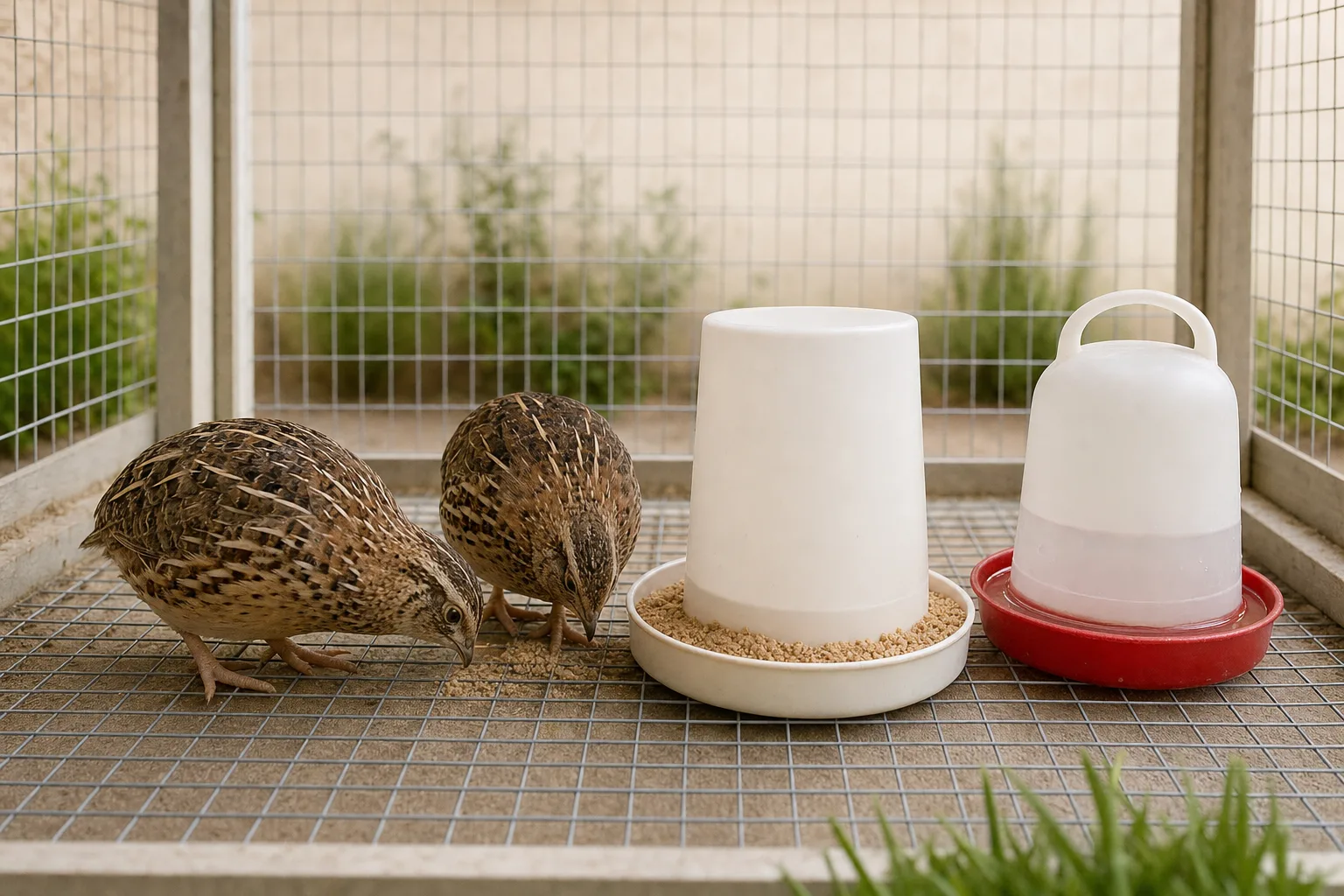
Use a dry, accessible location with the lips around the birds’ back height, keeping feed and water away from the dirtiest litter. The exact mount depends on the cage design and product hardware, so check clearance and watch how the birds approach each opening.
Place each opening around back height so birds can reach without standing in the litter or stretching excessively. This is a placement principle, not a universal inch measurement. Observe the flock and adjust the mount if birds climb, strain, or foul the openings.
Only use adult equipment when its openings, base stability, and water delivery are demonstrably chick-safe. Chicks need shallow or anti-drowning access and a backup source during introduction. Button quail chicks are especially small, so use ¼-inch floor wire or a solid floor and marbles or pebbles in water dishes.
Secure level mounts, keep feed ports covered or controlled, test seals and cups, and inspect the floor after use. Quail behavior and cage layout can require a second access point or a different delivery method, so change one part at a time while watching the flock.
Use the position that keeps openings reachable, reservoirs secure, and feed away from wet litter. Many cage-mounted feeders work through the wire. Cage compatibility and the included bracket decide the final position, so confirm the hardware fits before filling either unit.
There is no universal number from a product label. Provide enough accessible delivery points that every bird can feed and drink without blocking. Use our feeder-capacity setup guide when deciding whether one unit is enough, then watch for competition, spills, and empty reservoirs.