 Quail Corner

How to Set Up a Quail Ground Pen (2026): 8 Steps
A safe quail ground pen starts with usable floor space, a covered frame, and a perimeter you can check by hand. Set the site first, then add adult-safe mesh, dry shelter, shade, feed, and water before moving Coturnix out of a cage or brooder.
How to Set Up a Quail Ground Pen
An eight-step setup for a safer outdoor run
Step 1 Plan the footprint
- Choose shade and drainage
- Measure usable floor area
Step 2 Build the shell
- Fit adult-safe mesh
- Cover the top and close seams
Step 3 Set up supplies
- Add shelter, feed, and water
- Check access before release
Result
A covered, dry ground pen with enough usable space and a checked perimeter.
What does a safe quail ground pen setup include?
A safe setup includes 2 ft² of usable ground space per bird or more, 1/2 x 1/2-inch hardware cloth for adults, a covered top, dry shelter, shade, and secure edges. The Kecreque A-Frame Coop with Run is a practical starting point for a pair or very small covey. Its listing names quail, an outdoor run, a nesting box, and two doors. The listed 47 x 18-inch outside footprint makes your clear interior measurement especially important. Inspect it on site before release.
A ground setup can be a small fixed run, a movable tractor, or a larger aviary. This guide sticks to a compact fixed run, the easiest format to inspect and service each day. For the wider choice of finished runs, DIY mesh, sizing, covers, and predator checks, see best quail ground pen (2026): 7 Backyard Picks.
What you'll need
- A shaded, well-drained patch and a tape measure
- A finished run or a frame, plus 1/2 x 1/2-inch hardware cloth
- Ground pegs or anchors, fasteners, and a tool for closing seams
- A roof or weather cover, dry shelter, shade, feeder, and waterer
If you are reinforcing a frame or extending a small run, the YARDGARD 1/2-Inch Hardware Cloth listing is a sensible DIY mesh option. The listing describes 1/2-inch welded mesh. It is material for a repair or build, not a finished pen.
Our Top Picks

Step-by-step
Step 1: Choose a shaded, well-drained site
Place the pen where rain can drain away and afternoon shade reaches at least part of the run. Avoid a low patch that stays muddy. Outdoor ground access brings scratching and foraging, yet wet footing quickly turns that benefit into a cleaning problem.
Keep daily chores in mind too. You should be able to reach the doors, refill supplies, and inspect the lower edge without crawling through a flower bed.
Step 2: Measure usable floor area
Measure the clear footprint inside the frame. Give Coturnix 2 ft² per bird or more. Do not count a nesting box, blocked corner, or the advertised outside dimensions. The What Size Outdoor Quail Cage? A Practical Sizing Guide explains the same usable-footprint calculation in more detail.
Step 3: Assemble or frame the enclosure
Follow the finished-run instructions, or build a frame that matches the space you measured. The Kecreque A-Frame Coop with Run is a compact starting point for a pair or very small covey. Its listing gives a 47 x 18 x 19.5-inch outside size and claims quail suitability, an outdoor run, a nesting box, and two openable doors. Those are vendor claims, so check the actual frame, doors, and clear floor before birds go in.
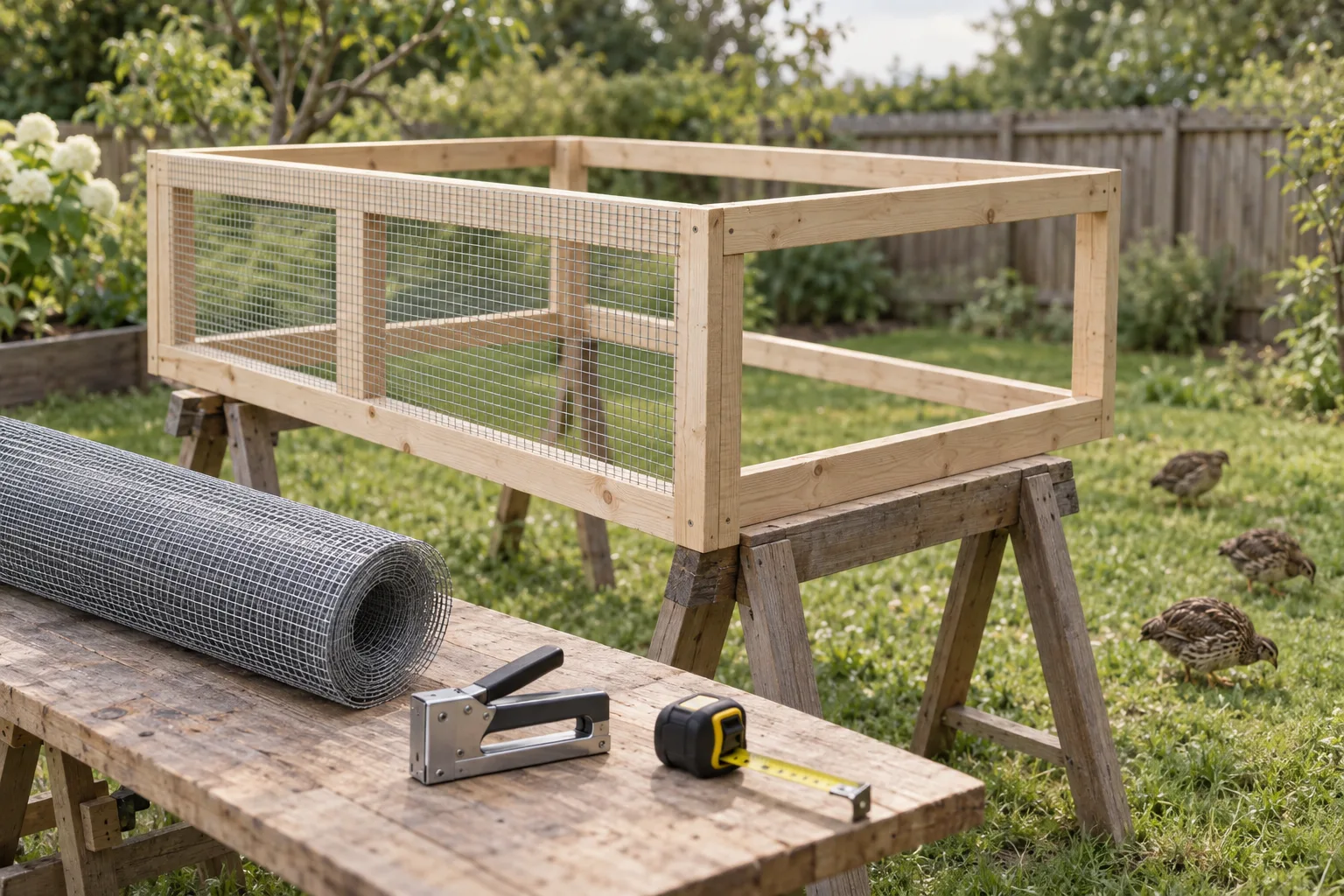
Step 4: Fit adult-safe mesh and a roof
Use 1/2 x 1/2-inch hardware cloth for standard adult quail. Chicks need 1/4-inch wire. Cover the top so birds cannot flush out and predators cannot drop in. A roof also keeps much of the rain off the floor, though it does not replace a dry shelter.
Step 5: Anchor the perimeter
Secure the bottom edge against lifting, digging, and reach-through. Close every seam, fasten every panel, and test each latch with a firm pull. Look at corners from ground level. A pen can appear closed from standing height while leaving a gap at the turf.
Use the dedicated How to Predator Proof a Quail Cage: 7 Steps checklist for a fuller perimeter and latch inspection.
Step 6: Add dry shelter, weather cover, and shade
Give the birds a solid, dry retreat inside the run. Keep it draft-free while allowing normal airflow around the enclosure. Coturnix are fine in dry, draft-free housing to about 20°F. Heat stress is a concern above about 90°F, so plan shade for the hottest part of the day.
Step 7: Place feed and water for easy cleaning
Set feed and water where you can refill them without opening the main bird door. Keep them under cover, away from the wettest ground, and leave enough room to remove the containers. Forget Me Not Quail Farm makes the same practical point in its pen-setup guidance: supplies need to stay reachable and the enclosure needs airflow. Clean, reachable equipment beats a clever layout you cannot service daily.
Step 8: Inspect before releasing the birds
Walk the entire perimeter. Check for lifted edges, reach-through gaps, loose mesh, open seams, weak hinges, and latches that do not seat fully. Look inside after rain and during the hottest part of the day. Release the quail only after the shelter stays dry and the pen is shaded, closed, and easy to clean.
Common mistakes
- Counting outside dimensions: Calculate from the clear interior floor, then remove space occupied by boxes and fixed equipment.
- Leaving the roof until later: Fit the top before release. Quail can escape through an uncovered run, and predators can enter from above.
- Trusting a listing without an inspection: Vendor features are listing claims. Check the real mesh, seams, latches, and lower edge at home.
Troubleshooting
The pen floor stays wet
Move the run to higher ground or improve the roof and drainage around it. Add a dry shelter inside and check that waterers are not leaking onto the living area. A covered pen still needs a place where birds can get fully out of rain.
The quail crowd one corner
Check shade, drafts, heat, and access to feed and water. Add a second retreat or move supplies so one bird cannot block the route. If the enclosure is undersized, recalculate its usable footprint at 2 ft² per bird or more.
You find a gap after setup
Remove the birds from that section, close the seam, and test the repair from the outside and inside. Add hardware cloth for a weak panel or repair, then repeat the perimeter and latch check before returning the covey.
Frequently asked questions
How do you keep quail on the ground?
Keep Coturnix in a covered enclosure with 2 ft² per bird or more, secure mesh, dry shelter, and a checked perimeter. Ground access works when birds cannot escape and predators cannot lift, dig under, or reach through weak sections.
How do you set up a quail ground cage?
Pick a shaded, well-drained site, calculate the usable footprint, assemble the frame, and fit 1/2 x 1/2-inch hardware cloth for adults. Add a roof, shelter, feed, and water, then test every seam and latch before moving birds.
What is a good ground pen setup for Coturnix quail?
A good setup gives each bird 2 ft² or more, blocks rain from the living area, and provides shade for hot weather. Keep the housing dry and draft-free, and remember that heat stress becomes a concern above about 90°F.
Is a quail pen kit a finished run or a DIY material bundle?
The word kit can mean either. A finished run normally includes a frame and enclosure panels, while a DIY bundle can be only mesh or panels. Read the listing closely, then inspect the assembled pen yourself for gaps, weak doors, and exposed edges.
How do you measure usable ground space?
Measure the clear floor birds can actually use inside the frame. Exclude nesting boxes, solid storage areas, thick framing, and blocked corners. Divide that usable area by 2 ft² to estimate the minimum number of Coturnix the pen can serve.
Does a covered pen still need shelter and shade?
Yes. A roof limits rain and escape, while a separate shelter gives birds a dry place to retreat. Shade matters because heat stress is a concern above about 90°F, even when the run has a cover.