 Quail Corner
Quail Escaping Ground Pen: 7 Fixes (2026)
Quail escaping a ground pen usually means one seam, door, roof edge, or ground contact has failed. Contain the birds calmly, find the route in a fixed order, and repair that point before a curious Coturnix finds it again.
For the wider choice of finished runs, DIY material options, sizing, covers, and predator checks, see Best Quail Ground Pen (2026): 7 Backyard Picks. This guide focuses on the escape that has already happened.
Stop Quail Escapes From a Ground Pen
A repeatable 5-step repair process
- Move birds to a covered holding area
- Keep handling calm and gentle
- Check the perimeter and seams
- Look for feathers, tracks, and bent wire
- Close gaps and overlaps
- Use compatible clips or fasteners
- Stop lifting and digging
- Check doors, roof, and latches
- Inspect from bird height
- Watch the pen after return
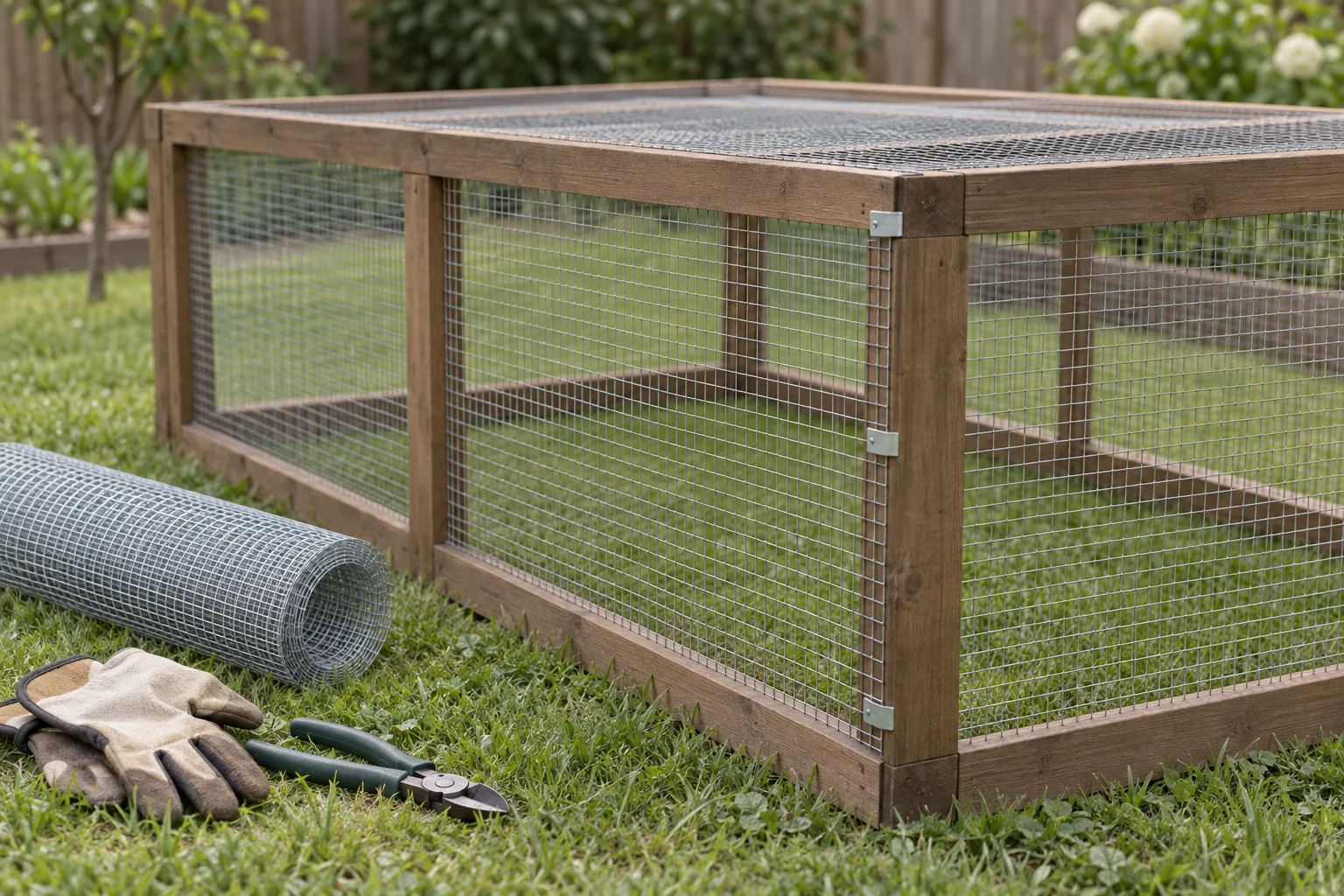
A calmer covey and a ground pen with every likely escape route checked.
Quick answer: contain first, then inspect every route
Move the birds to a temporary covered holding area. Walk the empty pen with a flashlight and check the mesh, overlaps, bottom edge, roof, doors, and latches from quail height. Patch the exact route, secure the edge against lifting or digging, then test the pen before returning the covey.
What you'll need
Gather the inspection and repair items before opening the pen. A ready-made example to inspect is the Kecreque A-Frame Quail Coop. Its listing gives dimensions of 47 x 18 x 19.5 inches, wood and metal mesh construction, two openable doors, and an outdoor run. Those details describe the product, not a guarantee that every edge is escape-proof.
- Flashlight and gloves
- Wire cutters and compatible fasteners or clips
- Repair mesh, such as 1/2-inch hardware cloth
- A temporary covered holding area for the covey
How do you find and close the escape route?
1. Contain the birds calmly
Move the covey into a covered carrier, spare cage, or other temporary holding area before you start. Keep the space dry and draft-free. Dry, draft-free housing is fine to about 20°F, but Coturnix can suffer heat stress above about 90°F, so work during a comfortable part of the day.
2. Inspect the whole perimeter
Start where the escape was seen, then work around every side. Shine the flashlight along the bottom edge and look for bent wire, a stretched overlap, fresh soil, feathers, droppings, or a corner that lifts when pressed. Check the frame-to-mesh seam as carefully as the mesh itself.
Count usable floor area rather than outside dimensions when you check the setup. Ground pens and aviaries need 2 ft² per bird or more. A crowded covey makes weak points harder to spot, especially after a startled rush.
3. Close openings and overlaps
Cut away loose wire only when that makes a clean repair possible. Overlap replacement mesh firmly with sound mesh and fasten it along the full repair, rather than tying one corner. Standard quail housing uses 1/2 x 1/2-inch hardware cloth. Chicks need 1/4-inch wire.
The Happy Chicken Coop warns that loosely woven wire can let young quail escape. Use tight mesh and a firm overlap here. If the gap is part of a damaged frame, a tiny patch will keep failing. Replace that section or add a rigid framed panel.
4. Secure the bottom edge against lifting and digging
Press along the entire base. Secure any section that moves with ground stakes, a fixed skirt, or an edge held tightly against the soil. Silver Homestead's ground-pen guidance likewise recommends a buried or weighted perimeter because digging can open a route beneath the wall. Recheck corners and joins after rain, pen moves, and soil disturbance.
For a fuller perimeter and predator inspection sequence, follow How to Predator Proof a Quail Cage: 7 Steps. Do not call the pen predator-proof until you have checked openings, seams, latches, roof coverage, and ground contact.
5. Secure the roof and doors
Look up. An uncovered top, a loose roof panel, or a door that swings open gives a quail a direct route out. Close every latch and test it with a gentle push. Check door clearance at the bottom and sides, since a small opening can appear when the frame shifts.
If the current run stays exposed to rain or is difficult to close, compare it with Best Outdoor Quail Cage (2026): 7 Weather-Ready Picks for broader weather-ready options.
6. Test the empty pen, then return the covey
Walk around the repaired pen twice. Push each patch, lift each corner, open and close every door, and inspect from the bird's eye level. Put a temporary weight or stake on any part that moves during the test, then replace it with a proper fastening method.
Return the birds only after the roof, doors, seams, and ground edge stay secure. Watch the pen for the first period after release. If the birds crowd one corner, that behavior points you back to the nearby seam or edge.
Common mistakes that leave a route open
- Patching only the visible hole: Inspect the full side and its frame. A pulled fastener can loosen several inches of mesh.
- Trusting the product label: “Outdoor run” or “quail suitable” describes a listing claim. Check the finished pen yourself.
- Ignoring the roof: A complete wall does not contain a startled bird if the top is open.
- Using the outside footprint: Feeders, shelters, and dividers reduce usable floor area. Base stocking on the space the birds can actually use.
Troubleshooting: what to do after the first repair
The quail escape again, but the first hole is closed
Assume there is a second route. Inspect the roof, door clearance, opposite corners, and every overlap. Loose fasteners often leave no large hole, yet the mesh lifts enough for a bird to push through. Add a rigid framed panel when the frame itself flexes.
Fresh soil appears outside the pen
Focus on the bottom edge and corners. Press the mesh down, secure it along the whole section, and check for a gap that opens when the ground softens. If the base keeps moving after a proper repair, redesign that edge with a fixed skirt or a more secure frame.
The pen passes inspection, yet birds still gather by one wall
Watch that spot before changing the whole structure. A bird may be reacting to light, shelter, food, or a draft. If it keeps testing the same seam, reinforce that section and check the usable footprint. If the current run cannot stay dry and secure, a new housing format may be the safer choice.
If the current run is too exposed
A ground pen can work well when its usable footprint, roof, shelter, and perimeter all suit the covey. If yours remains hard to secure after a proper repair, compare a more weather-ready setup rather than adding endless patches. Keep the birds dry and draft-free, and provide shade when temperatures climb.
For a different housing format, see Best Outdoor Quail Cage (2026): 7 Weather-Ready Picks. A raised cage or a rebuilt run can be the better decision when the frame has repeated failures.
Frequently asked questions
Why are quail escaping a ground cage?
The usual routes are a lifted bottom edge, a loose overlap, a door gap, a weak latch, or an uncovered roof. Start with the place where feathers, disturbed soil, or bent wire shows activity. A listing that says outdoor or quail suitable does not prove every seam is secure.
How do you stop quail escaping a ground pen?
Contain the covey first, then inspect the whole perimeter, roof, doors, and ground contact. Patch openings with compatible mesh and fasteners, pin or skirt the bottom edge, and test the pen while empty. Return the birds only after the door and roof stay closed.
How do you stop quail digging out of a ground pen?
Secure the bottom edge tight against the soil with ground stakes, a buried edge, or a properly fixed skirt. Check for lifted corners after rain or moving the pen. Keep the usable footprint large enough for 2 ft² per bird or more so birds have room to forage.
Can quail jump out of a ground pen?
Yes. A startled Coturnix can use an uncovered top or a door left ajar as an escape route. Cover the roof, check the top edge for gaps, and close doors before walking away. A ground run still needs a complete top and secure access points.
What mesh prevents quail escapes?
Standard quail housing uses 1/2 x 1/2-inch hardware cloth. Chicks need 1/4-inch wire because they can pass through larger openings. Mesh size alone does not secure a pen, so inspect the wire, overlaps, fasteners, roof, and ground edge.
Is a ready-made ground run escape-safe?
No ready-made label proves that. A kit may be a finished run or a DIY material bundle, and either one needs an inspection. Check mesh openings, seams, latches, roof coverage, and ground contact before calling it safe for a Coturnix covey.