 Quail Corner
Best Overall Budget
HBlife Digital Egg Incubator for Hatching 9-12 Chicken, Quail and Duck Eggs
$
Check Price on AmazonFor a first small coturnix hatch, the best budget quail incubator is the HBlife Digital Egg Incubator / JANOEL 12. Its $ price band, automatic turning, and explicit quail support make it the sensible low-cost starting point.
ONKO takes the quail-first capacity spot. Apdoe adds refill access and monitoring features, GQF suits a keeper who wants manual control, and Farm Innovators makes more sense for a bigger batch after you confirm the quail tray setup.
Ranked by quail fit, turning, humidity chores, visibility, and buying risk
The simplest low-cost automatic start
$
Best for a first small hatch
Check Price on AmazonMore room in a quail-first design
$$
Best for a larger quail batch
Check Price on AmazonMore monitoring with less lid opening
$$
Best for a feature-minded keeper
Check Price on AmazonA straightforward poultry incubator
$$
Best for keeper-managed hatching
Check Price on AmazonQuick answer: Pick the HBlife Digital Egg Incubator for Hatching 9-12 Chicken, Quail and Duck Eggs for the lowest-cost automatic setup. It keeps the entry price down while naming quail support. Choose ONKO for listed quail capacity, Apdoe for humidity and candling features, GQF for manual control, or Farm Innovators for a larger circulated-air unit.
$
Check Price on Amazon
$$
Check Price on Amazon
$$
Check Price on Amazon| Product | Best for | Price band | Key spec | Verdict | Link |
|---|---|---|---|---|---|
| HBlife Digital Egg Incubator for Hatching 9-12 Chicken, Quail and Duck Eggs | First-time keeper who wants the lowest-cost automatic setup | $ | Automatic turning; quail support listed | Best low-cost starting point | Check Price |
| Quail Egg Incubator for Hatching 40 Quail Eggs with Automatic Turner | Keeper who wants a quail-first automatic unit with more listed capacity | $$ | 40 quail eggs; automatic turning | Strong capacity angle, thinner review history | Check Price |
| APDOE Egg Incubators for Hatching Eggs, Temperature and Humidity Control, Automatic Egg Turning, Egg Candler, External Water Bottle, Air Vent, for Chicken, Duck & Quail Eggs, 18 Eggs | Small hatcher who values refill access, alerts and monitoring features | $$ | External refill; candler; alerts | Useful extras for a careful monitor | Check Price |
| Hova Bator Still/Thermal Air Incubator 1602N | Keeper who prefers a straightforward manual-control poultry incubator | $$ | Still or thermal air; manual control | Good control, more work each day | Check Price |
| Farm Innovators 41 Egg Digital Circulated Air Incubator, Auto Turner, White | Keeper who wants a larger circulated-air unit and will verify quail tray compatibility | $$$ | 41 eggs; circulated air; automatic turner | Promising batch value after tray check | Check Price |
Start with the tray. A chicken-egg count does not tell you how many small eggs will sit securely or turn correctly. We give more weight to explicit quail support, a quail-sized tray or rail, and clear instructions than to a large number printed on a box.
Heat readings need context. Forced-air coturnix settings are 99.5°F / 37.5°C. Still-air machines use 101–102°F / 38.3–38.9°C measured at the egg top. A display is only a starting reading, so check the manual, place the sensor as directed, and use an independent calibrated thermometer and hygrometer.
Humidity chores matter during a busy hatch. External refill access, channels, alerts, and a clear view can reduce lid opening. Automatic turning saves routine handling until day 14–15, while a manual unit works for a keeper who can turn eggs 3–5 times per day. Washable surfaces and visible water status earn their keep too.
The catalog supplies the listed specifications, images, prices, and ratings. The verdicts are editorial judgment. A marketplace rating describes buyer feedback, not a hatch-rate measure. Support, replacement parts, review depth, and any needed accessory also matter before a low price becomes a good deal.
For most first-time keepers, start with HBlife because it combines the lowest price band with automatic turning and named quail support. Move to ONKO for listed quail capacity, Apdoe for monitoring features, GQF for manual control, or Farm Innovators when the batch needs more room.
$
Check Price on AmazonFor a first small hatch, this is where I would start. The listing names quail support, and the fully automatic turner removes the daily chore people forget first. Its temperature display and SET controls keep the basic adjustments easy to find, and the compact shape suits a shelf or work area.
Water still goes in by hand, so humidity remains your job. The listing gives a 9–12 chicken-egg capacity and says it supports quail, so treat it as a small-batch choice rather than inventing a quail count. Skip this if you need a larger quail run or want external refill and alert features.
$$
Check Price on AmazonONKO is the better starting point once a tiny hatch no longer covers your plans. The 0206 listing is built around quail and gives a 40-quail-egg capacity, which is more useful than guessing from a chicken count. Automatic turning keeps the routine manageable through the first part of incubation.
The catch is the thinner review history. Check the current listing, tray details, and instructions before ordering, then make sure the turner holds your eggs securely. Skip this if you want a long-established general poultry design or a deeper support trail from a familiar name.
$$
Check Price on AmazonApdoe earns its place for keepers who want to watch and manage a hatch without lifting the lid every time. The external water bottle, humidity control, optional alerts, and built-in candler deal with the fiddly jobs. Adjustable one-hour, two-hour, or three-hour turning intervals let you set the routine to fit your plan.
The 18-slot standard tray is listed for up to 50 quail or other small-bird eggs, so confirm the actual tray arrangement before filling it. You pay more for the controls, and a very small hatch may leave most of them unused. Skip this if you want the fewest settings or prefer to add a separate candler later.
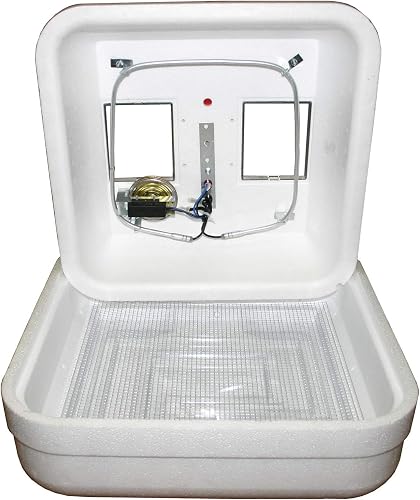
The Hova Bator 1602N suits a keeper who wants a straightforward poultry machine and is happy to make the adjustments. The listing calls out thermal airflow, a wafer snap-action temperature control, and quail use. Its included tray, stand, and manual give you a clear starting kit, though the machine still needs keeper attention.
This ASIN is the manual-control incubator, not an automatic-turner bundle. You must decide how the small eggs will be turned and keep a consistent schedule of 3–5 turns per day until lockdown. Skip this if your hours are irregular or you want turning and humidity chores reduced.
$$$
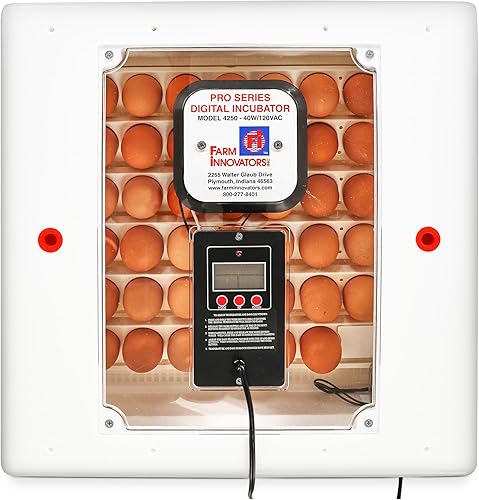
Check Price on AmazonFarm Innovators is the sensible step up when a starter incubator leaves too little room. The 4250 brings together a temperature, humidity, and days-to-hatch display with circulated air, an automatic turner, and easy-fill water channels. That combination gives a larger batch more useful information than a bare manual box.
The listing mentions quail among supported poultry, yet it does not give a quail-specific count. Check the tray and rail fit before buying, then confirm the turner can hold small eggs securely. Skip this if your intended batch is small and you would rather avoid paying for unused capacity.
The HBlife Digital Egg Incubator is the lowest-cost automatic starting point in this group. Choose ONKO for a quail-first larger batch, Apdoe for extra monitoring, GQF for manual control, or Farm Innovators for a larger circulated-air unit.
A mini incubator is a good fit only when its tray explicitly supports quail eggs and matches your intended batch. The HBlife is the clearest small-batch choice here because its listing names quail support. Do not turn chicken capacity into a quail count without tray confirmation.
Yes, if it holds small eggs securely and you set it up correctly. For coturnix in forced air, use 99.5°F / 37.5°C, and expect incubation to run 17–18 days. Those settings support careful hatching, not a promised result.
No. You can turn coturnix eggs 3–5 times per day until lockdown, which begins on day 14–15. An automatic turner reduces routine handling, though you still need correct temperature, humidity, and a proper lockdown.
For coturnix, aim for about 45% on days 1–14. Dry-hatch keepers sometimes run 25–35%. Raise humidity to 65–70% from lockdown through hatch, and monitor the actual unit with an independent thermometer and hygrometer.
Most coturnix eggs hatch in 17–18 days, with most pipping within 24 hours of day 17. Leave late hatchers through day 19–20. Button quail are different, with an incubation period of 16 days, so do not apply coturnix timing to them.
For the wider setup, browse our quail hatching guides. After the chicks leave the brooder, compare quail cage picks for the next housing stage.