 Quail Corner

What Size Feed Storage Container for Quail (2026): Capacity Guide
For most small Coturnix keepers, a 25 lb class bin is the practical middle ground. Choose a 3–5 lb container for a tiny flock or daily portion, and choose a 60 lb vault only when you store a full bag, keep separate rations, or refill infrequently.
The right size follows your flock's estimated use, the bag you buy, and the space beside the cage. This guide shows how to choose without leaving old feed buried at the bottom or wrestling a huge bin every morning.
Which feed container size fits your flock?
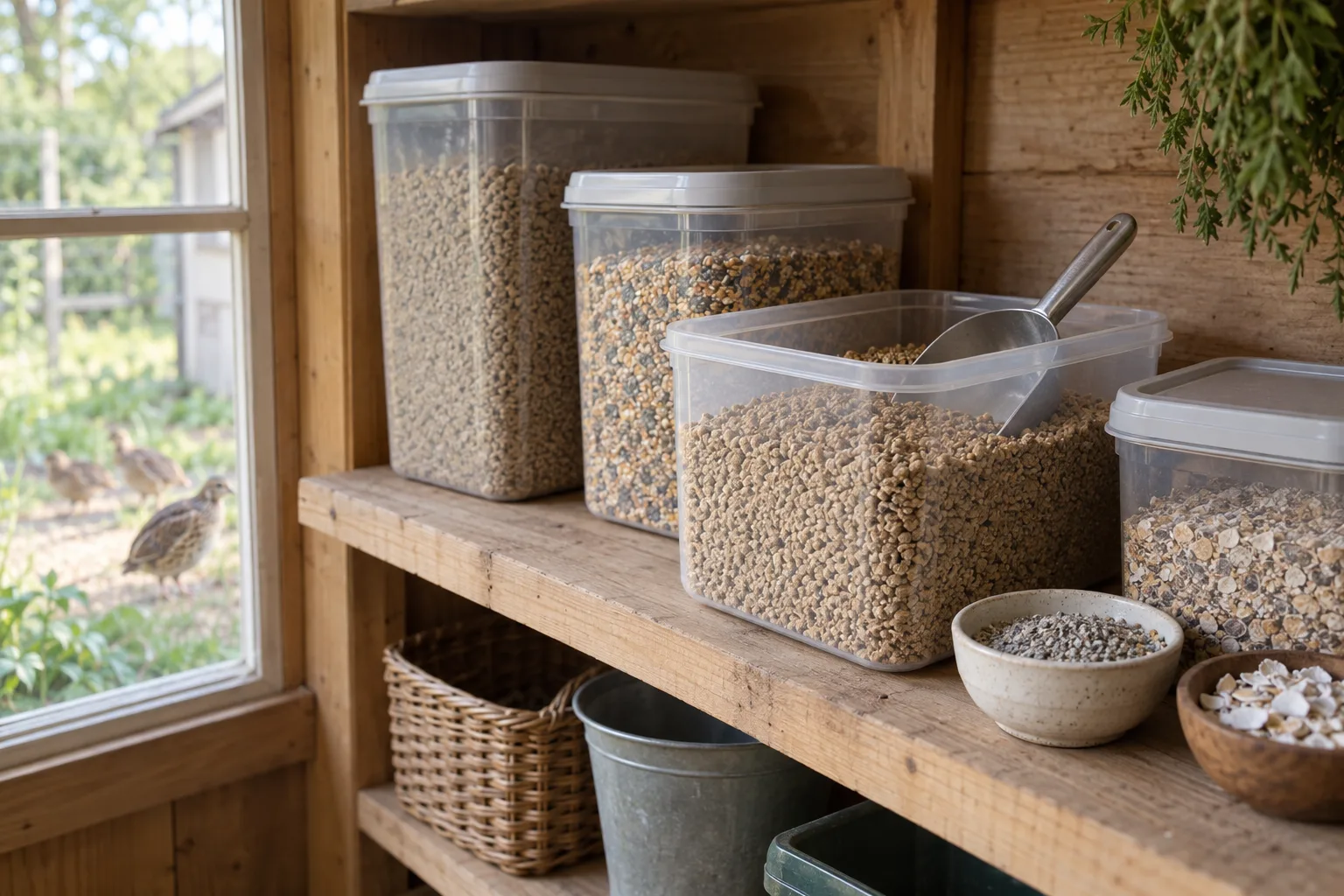
Start with the amount you can handle cleanly. A small working tub is easy to lift and clean. A 25 lb container suits compact medium storage. A larger sealed vault earns its footprint when it holds a full bag or lets you keep starter and layer feed separate.
Small daily-use tub or reserve
A small container works for a tiny flock, a working portion near the enclosure, or a reserve decanted from a larger bag. The USYOGO Airtight 4.2 Qt is listed for 3–5 lb of dry pet food, measures 5.3 x 10.3 x 6.1 inches, and includes a 1/4-cup scoop. Its one-click lid and stackable shape suit a shelf or indoor feed station.
Use this size when lifting matters more than holding a whole bag. It also keeps a daily portion away from the main stock, though you still need to rotate older feed first.
25 lb class container
A 25 lb class bin is the sensible default for many backyard flocks. The Reddy by Petco Airtight 25 lb measures 14.72 x 12.91 x 17.36 inches, uses food-safe BPA-free plastic, and has an airtight lid. It can stack with like sizes, or a smaller container can sit on a larger one.
This is the size to choose when a full bag is close to 25 lb, or when you want a compact bin without the reach and floor space of a large vault. Check the actual bag weight first. Capacity labels do not guarantee that every crumble or pellet fills the same way.
Large sealed vault
A large vault makes sense for a full bag, separate feed types, or a keeper who wants fewer refills. The Gamma2 Vittles Vault Stackable 60 lb has a food-grade HDPE body, a Gamma Seal airtight lid, and a stackable design. Its listed dimensions are 14.5 x 22 x 19 inches, so measure the shelf, door, and lifting path before buying.
Keep the vault on a dry surface indoors or in covered outdoor storage. A large container earns its keep only when you can open it, scoop from it, and clean it without knocking it over.
Before choosing a capacity, identify the ration and bag size. Best quail feed (2026): 7 picks by life stage can help you choose the actual feed and life-stage bag before you size the container.
Ready to compare sealed options? See best quail feed storage container (2026): 7 Airtight Picks for the specific roundup of compact bins, stackable storage, and larger vaults.
Key factors to consider
Estimate flock use before capacity
Use about 1 oz, or 25–30 g, of feed per adult Coturnix per day. That gives an estimate of 10 adults using about 10 oz per day, or roughly 5 lb over 8 days. It is an estimate derived from the daily figure, not a promise of exact consumption. Spillage, age, weather, and feed form change the amount you pour.
A small flock may need a 3–5 lb working portion, while a larger group may refill a 25 lb bin sooner than expected. How often should you feed quail (2026): A simple schedule explains a routine for estimating use and deciding how much to keep at hand.
Match the bin to the bag
Buy for the bag you can use and rotate, rather than the biggest capacity printed on a lid. A bin that holds the stock with a little room for a scoop is easier to clean than one packed tight. If you buy several smaller bags, separate bins can make life-stage changes easier to track.
Write the feed type and date opened on a removable label. Dry placement, clean scooping, stock rotation, and a suitable seal work together. A lid cannot rescue damp storage or old feed.
Check the footprint and access
Measure the shelf depth, lid clearance, and the route from storage to feeder. The Reddy's 14.72 x 12.91 x 17.36 inch shape is compact but still needs room for its lid. The Gamma2 is wider and deeper at 14.5 x 22 x 19 inches, so put it where you can reach over it safely.
If the bin will move often, a smaller tub is easier on your back. A wheeled container can help, though wheels do not fix a poor storage location or a lid that is awkward to clean.
Choose a seal and cleaning routine
A suitable seal helps keep out damp air and pests when the lid is closed. Meyer Hatchery's “Poultry Feed Storage Guidelines” and Backyard Poultry's “How to Avoid Chicken Feed Storage Mistakes” both point keepers toward dry, protected storage and clean handling. Treat the seal as part of that system.
Empty the container before washing it, let every surface dry fully, and use a clean scoop. Never top a new bag onto a dusty layer of old feed. A removable daily tub can make this cleaning job less annoying.
Keep dispensing separate from bulk storage
A big vault is a storage tool, not automatically a good feeder. Scoop a manageable amount into the daily tub, close the main lid, and carry only what the birds need. For the feeder that works alongside clean storage, see Best quail feeder (2026): 7 no-waste picks.
Budget tiers
Price bands are a better guide than a fixed price because listings change. Spend at the level that solves your actual handling problem.
- $ entry tier: Expect a small portion container or simple working bucket. The USYOGO 4.2 Qt is the useful example here, with a 3–5 lb dry-food capacity, stackability, and an included scoop. It is a good fit for a tiny flock or daily-use station.
- $$ middle tier: Look for a suitable seal, a food-safe plastic body, and enough capacity for your normal bag. The Reddy 25 lb is the compact choice. The Gamma2 60 lb is the better fit for full-bag storage and separate feed towers.
- $$$ premium tier: Pay more for a feature you will use every week, such as a specialized lid, a tidier indoor design, or easier movement. A larger bin is not automatically better if it is hard to lift, clean, or rotate.
Common mistakes to avoid
- Buying by flock size alone: A bag's weight and your refill habit matter just as much as bird count. Work from the 1 oz, or 25–30 g, adult daily estimate, then leave room to scoop.
- Choosing a container that barely fits: A tight fill makes scooping messy and cleaning harder. Check the actual feed bag and the opening, not only the advertised capacity.
- Putting the bin in a damp spot: A seal cannot correct a wet floor, roof leak, or condensation problem. Store feed dry and covered.
- Adding new feed over old feed: Empty and clean the bin before refilling. Rotate the oldest stock first so leftovers do not disappear under a fresh layer.
- Using the bulk vault as the feeder: Large lids and deep bins are awkward beside a cage. Decant a working amount and keep the feeder clean.
Our picks by storage job
Choose the capacity first, then compare the sealed-container designs. The specific roundup, best quail feed storage container (2026): 7 Airtight Picks, covers the full set when you are ready to compare products.
- Tiny flock or daily portion: The USYOGO Airtight 4.2 Qt holds a listed 3–5 lb of dry pet food and includes a 1/4-cup scoop. Check the USYOGO listing
- Compact medium storage: The Reddy by Petco Airtight 25 lb is the middle-ground choice when you want a smaller footprint and stackable storage. Check the Reddy listing
- Full bag or separate feed types: The Gamma2 Vittles Vault Stackable 60 lb offers the largest stated capacity here, with a Gamma Seal airtight lid and stackable form. Check the Gamma2 listing
Before committing to a large bin, confirm the ration label. Do Quails Eat Chicken Feed? Label Guide for Coturnix (2026) covers feed-label decisions that affect which bag you will store.
Frequently asked questions
What is the best quail feed bin?
The Gamma2 Vittles Vault Stackable 60 lb is the best fit for a keeper storing a full bag or separating feed types. Its food-grade HDPE body, Gamma Seal airtight lid, and stackable shape suit indoor or covered outdoor storage. It is oversized for a tiny flock.
Do I need an airtight quail feed container?
An airtight lid helps limit damp air and pests, but it is only one part of storage. Meyer Hatchery and Backyard Poultry both stress dry placement, clean handling, and protection from pests. Scoop cleanly, rotate older feed first, and inspect the lid each time.
What size feed storage container do quail need?
Choose by the bag you actually buy and your refill routine. Adult Coturnix eat about 1 oz, or 25–30 g, per bird per day, so a 3–5 lb portion suits a tiny flock while a 25 lb bin fits compact medium storage. These are estimates from that daily figure.
What is the best game bird feed storage container?
For full-bag storage, the Gamma2 60 lb vault gives the most room among these picks. For a smaller stock, the Reddy 25 lb bin is easier to place. Choose the container that leaves room for a clean scoop and fits the feed bag you buy.
Is plastic or metal better for storing quail feed?
Food-safe plastic keeps weight down and offers useful shapes such as stackable vaults. Metal can suit a tidy indoor setup, though the container still needs a suitable seal and clean interior. The material matters less than dry placement, pest control, and easy cleaning.
Can I use a pet-food container for quail feed?
Yes, if its stated capacity, lid, and material suit the feed and your storage spot. The USYOGO 4.2 Qt is sized for a 3–5 lb dry-food portion and includes a 1/4-cup scoop. Keep the container clean and use a separate scoop for each feed type.