 Quail Corner
How to Store Quail Feed: A Dry, Pest-Safe Setup
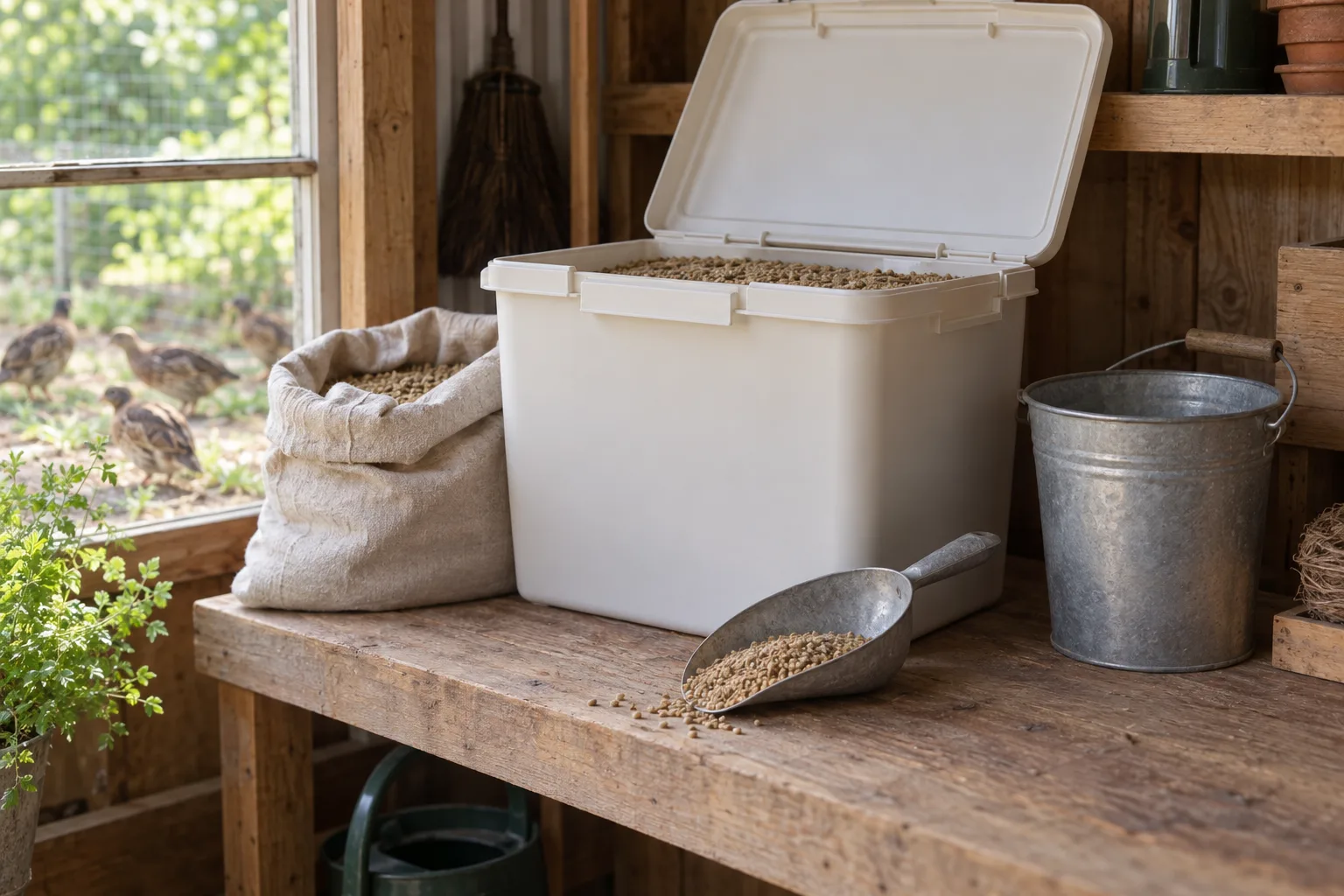
Use a sealed reserve container for a full bag, then add a smaller working bucket near the enclosure if daily scooping is easier that way. This setup keeps dampness, spills, and pests away from the main supply while making rotation simple for a coturnix flock.
How to Store Quail Feed
A repeatable four-step storage routine
- Check for dampness or damage
- Record the feed type and date
- Keep reserve feed sealed
- Set up a smaller working bucket if useful
- Lift feed off the floor
- Put the oldest usable feed first
- Use a clean scoop
- Close the container after every refill
Feed stays dry, easy to measure, and easier to rotate before storage problems spread.
Quick answer
Inspect the bag, put dry feed in a clean container with a secure lid, and store it raised off the floor in a covered, dry place. The best quail feed storage container (2026): 7 Airtight Picks compares more capacities, while the Gamma2 Vittles Vault Stackable 60 lb is the sensible reserve choice for a full bag or separate feed types.
Use a label with the feed type and opening date, and refill from the oldest usable stock first. An adult coturnix eats about 1 oz, or 25–30 g, per day, so use that figure only for an estimate of flock consumption. For the ration itself, see Best quail feed (2026): 7 picks by life stage before choosing container capacity.
What you'll need
- A clean, dry reserve container with a secure lid
- A smaller working container if carrying the full bin to the enclosure is awkward
- A dry scoop, feed labels, and a marker
- A raised shelf or other stable storage surface in a covered area
The Gamma2 Vittles Vault Stackable 60 lb is the reserve option here. Its food-grade HDPE body, Gamma Seal airtight lid, stackable form, and 14.5 x 22 x 19 in dimensions suit a full bag or several feed types. For a smaller daily portion, the Little Giant Better Bucket 10 Quart uses impact-resistant polyethylene resin, a heavy-duty wire bail handle, and a flat-back shape. Its listing does not state an airtight seal.
If the reserve vault will stay in one place, use a clean scoop beside it. If the enclosure is far away, decanting a manageable amount into the Little Giant Better Bucket 10 Quart can reduce spills and repeated handling of the reserve supply.
Step-by-step
Step 1: Inspect the bag before opening it
Check the bag for tears, wet patches, clumps, or a musty smell before you pour anything. Confirm the feed type and life stage, then write the opening date on the bag or container. If the feed is damp or visibly compromised, set it aside and ask the supplier or an extension office how to handle it.
Keep the bag intact until you have a dry place ready. Feed choice comes first, since starter and layer feed can need separate labels and separate storage. The guide Do Quails Eat Chicken Feed? Label Guide for Coturnix (2026) helps prevent storing the wrong ration.
Step 2: Match the container to your routine
Choose the Gamma2 Vittles Vault for reserve storage when you keep a full bag or separate feed types. It holds up to 60 lb, has a food-grade HDPE body and Gamma Seal airtight lid, and can stack with another unit. Its size takes a fair bit of shelf space, so measure before buying.
Choose the Little Giant Better Bucket when a smaller working portion makes daily feeding easier. Its flat back can sit against a wall, and the wire bail handle helps with short carries. Buy it for access and handling, then treat the lid as a closure rather than assuming an airtight seal.
See the Gamma2 reserve containerStep 3: Fill, label, and seal the reserve
Pour only dry feed into the clean container. Keep the label visible with the feed type, opening date, and any lot information you want to retain. Close the lid fully after filling, then wipe stray crumble from the rim so it does not attract pests or interfere with the seal.
Leave enough room for a scoop to move without forcing feed over the sides. A smaller flock can use a smaller container or a working bucket instead of filling a large vault. Do not mix old feed into a new bag without checking the older feed first.
Step 4: Store it off the floor and rotate it
Put the sealed container on a stable shelf or platform in a dry, covered area. Meyer Hatchery's Poultry Feed Storage Guidelines recommends dry, elevated storage for poultry feed. Backyard Poultry's How to Avoid Chicken Feed Storage Mistakes also discusses watertight placement; that is chicken-feed guidance rather than quail-specific testing.
Use the oldest usable stock first. For a rough estimate, multiply 1 oz, or 25–30 g, by the number of adult coturnix and the number of days between checks. The result is planning math, not a shelf-life promise. How often should you feed quail (2026): A simple schedule can help you set a refill routine.
Step 5: Dispense with a clean, dry scoop
Scoop from the reserve container with dry hands and a dry scoop, then close the lid immediately. Keep the working bucket closed between refills and place it where rain, splash, bedding, and droppings cannot reach it.
A good feeder finishes this job. The guide Best quail feeder (2026): 7 no-waste picks covers ways to reduce feed being kicked onto the floor, where it becomes harder to keep clean.
Common mistakes
- Leaving the opened bag exposed The folded top still lets spills and dampness reach the feed. Put the bag inside a suitable container or decant it into one.
- Buying more container than the shelf can handle A 60 lb vault is useful for reserve stock, yet it needs a stable home. Measure first and choose a smaller working container when daily handling is the problem.
- Pouring wet tools into dry feed A damp scoop can introduce moisture to the whole supply. Keep the scoop clean and dry, and close the lid after each use.
- Mixing feed types without labels Starter, layer, and other game bird feeds should remain easy to identify. Label every container before you fill it.
Troubleshooting
The feed has clumps or feels damp
Move the container away from the leak, splash, or humid storage spot and stop adding fresh feed to it. Check the lid, rim, scoop, and floor below the bin. Do not blend questionable feed into a new supply; ask the supplier or an extension office about the affected batch.
You keep finding feed on the floor
Check the scoop first, then the working bucket lid and feeder position. Decant less into the daily bucket and refill more often if carrying a full container causes spills. A feeder that limits feed reaching the floor and a lid that closes after every refill protect the reserve from the mess.
You see pests near the container
Remove spilled feed, inspect the storage area, and check the container closure. Keep reserve feed elevated and move it to a clean, dry container if the lid or body is damaged. If the problem continues, ask a local extension office for pest-control guidance that fits your building and local rules.
Frequently asked questions
How do I keep quail feed fresh?
Keep it sealed in a clean, dry container raised off the floor, and handle it with a dry scoop. Store reserve feed away from leaks and pests, then rotate older usable stock first. A sealed bin helps, though no container keeps feed good indefinitely.
Do I need an airtight quail feed container?
An airtight seal is useful for reserve feed because it limits exposure to damp air and storage hazards. The Gamma2 Vittles Vault has a Gamma Seal airtight lid. The Little Giant Better Bucket is handy for daily use, though an airtight seal is not stated in its listing.
What size feed storage container do quail need?
Size the container around the bag you can use sensibly and the space you have. An adult coturnix eats about 1 oz, or 25–30 g, per day, so flock-day calculations are estimates. Leave room to scoop without spilling and avoid buying a huge bin for a tiny flock.
How do I store game bird feed?
Keep the original bag clean and dry, then place it inside a sealed reserve container or decant it into one. Put the container in a covered, dry area, off the floor, and label the feed type. This is general poultry storage advice from Meyer Hatchery and Backyard Poultry, applied to quail.
Can I use a pet-food container for quail feed?
Yes, if it is clean, dry, sized for your feed routine, and closes securely. The Gamma2 vault suits a full bag or separate feed types. A smaller bucket works for a working portion near the enclosure, where quick access matters more than a stated airtight seal.
Where should quail feed be stored?
Choose a dry, covered spot away from leaks, splash, direct exposure, and floor-level hazards. Meyer Hatchery recommends dry, elevated poultry-feed storage, while Backyard Poultry discusses watertight placement. Check the container and scoop regularly for dampness, spills, or pests.