 Quail Corner

Quail Eggs Cracking in Storage Tray: 7 Fixes (2026)
Quail eggs cracking in a storage tray usually take a knock at one repeatable point. Find that point before buying another tray. Check the crack location, test the cell fit with a few eggs, and move eggs meant for transport into a closed carton.
Stop quail eggs cracking in the tray
A repeatable five-step check for collection and storage
Step 1 Inspect the cracks
- Check where the shell is damaged
- Separate visibly damaged eggs
Step 2 Test the fit
- Set a few eggs in empty cells
- Look for pinching or wobble
Step 3 Load gently
- Place eggs into clean cells
- Keep the tray level
Step 4 Protect the stack
- Keep heavy trays off the eggs
- Use a lid for carrying
Step 5 Reassess the tray
- Repeat the test with the next batch
- Change formats if cracks continue
Result
Eggs reach the refrigerator, market, or handoff point with less avoidable impact.
Quick answer
Inspect the damaged shells first. Cracks on one side suggest contact with a cell or divider; cracks after stacking or moving suggest pressure or impact. Use an open high-capacity flat for collection and staging, then switch to separated reusable storage or a lidded carton for the refrigerator, labels, sales, and transport.
The best quail egg trays (2026): 7 storage picks compares capacity, protection, stacking, and storage formats if you need to replace the tray rather than adjust your handling.
What you'll need
- A clean open flat, reusable tray, or closed quail egg carton
- A soft clean cloth for wiping the tray and work surface
- A marker and labels for cartons that will be stored or handed over
- A level shelf or work surface with room to load without bumping the tray
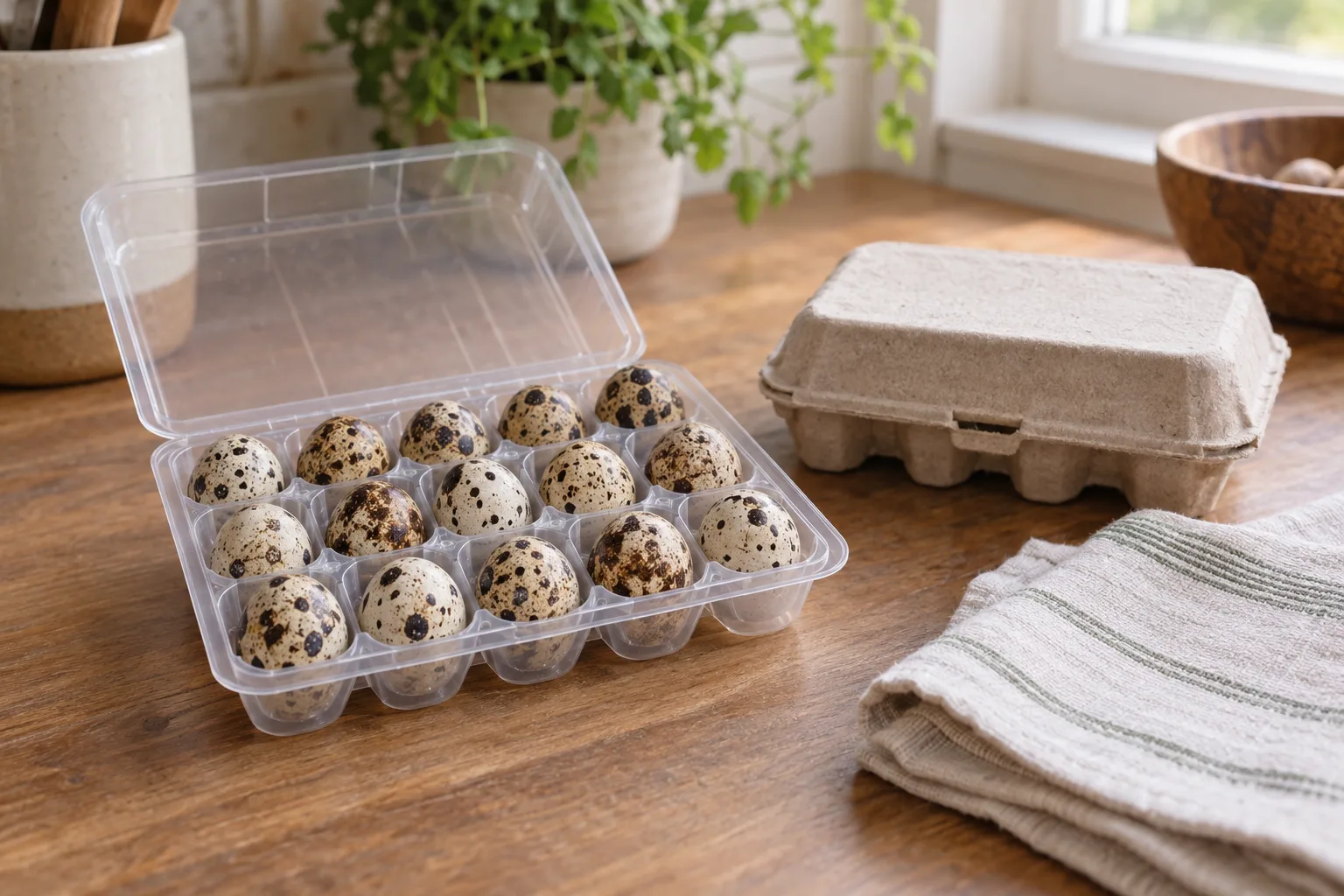
If carrying causes the breakage, the LayHyand 60-Pack Quail Cartons fits the job better. Its listing describes 12-egg cartons with a clamshell snap lock, reusable PVC, and blank space for labels. An open flat cannot provide that closed protection.
Our Top Picks


Step-by-step
Step 1: Inspect where the shell is damaged
Separate cracked or visibly damaged eggs, then look at the remaining shells before loading another tray. A repeated mark on the same side of several eggs points toward a divider, cell edge, or tight contact point. Cracks that appear after a tray is lifted or stacked point toward movement or pressure.
Check the tray itself. Feel for a warped edge, a sharp damaged spot, or debris sitting in a cell. Clean it according to its care directions and dry it before the next test.
Step 2: Test-fit a small batch
Place a few sound eggs into empty cells without forcing them down. Each egg should sit in its pocket with enough support to stay put, while still coming out without scraping the shell against a divider. A cell that pinches the sides is the wrong fit for that egg size.
If the eggs wobble and touch neighboring shells, the open tray gives them too much room for the job. The Rite Farm 90-Egg Quail Flat suits collection and staging because its listing names quail-size eggs and washable heavy-duty poly. It has no lid, so use another format for transport.
Step 3: Load from a level surface
Set the tray down before you load it. Place each egg into a cell instead of dropping several eggs into a pile and sorting them afterward. Keep the work surface clear so your wrist, sleeve, or collecting bowl does not knock the tray while you fill it.
Fill only as much as you can carry without tilting. For compact household storage, the KGFKTYU 18-Count Stackable Tray holds 18 eggs and is listed for refrigerator, counter, pantry, and food-preparation storage. Its smaller format is easier to place securely than a large open flat on a refrigerator shelf.
Step 4: Protect the loaded eggs
Keep heavy trays, boxes, and loose equipment off a loaded open flat. Stack empty flats separately when possible. If a tray must move across the room, support it from underneath with both hands and keep it level.
For market trips, gifts, or any handoff where someone else will carry the eggs, use a closed carton. A snap or clamshell closure keeps the count together and gives each egg a defined pocket. Add the label after the carton closes so you do not press on the shells while writing.
Step 5: Reassess after the next collection
Use the adjusted setup for the next batch and record when the damage appears: during loading, stacking, lifting, or travel. If the same cell or stage causes cracks again, stop using that format for the affected job.
Repeated impact cracks call for a tray change. Repeated soft or unusually fragile shells are outside a storage-tray fix, so seek qualified poultry or extension advice rather than diagnosing shell quality yourself.
If these eggs are being moved to hatching equipment, stop at the storage advice here. Best Egg Candler for Quail Eggs (2026): 7 Picks covers candler options, while Quail Egg Incubator Settings: Day-by-Day Schedule for Coturnix is the separate settings reference. A storage tray is not a setter tray.
Common mistakes
- Forcing eggs into tight cells. A pocket that pinches or scrapes the shell will keep causing trouble. Test the fit before filling the tray.
- Carrying an open flat by one edge. The tray can tilt and let eggs roll into dividers or one another. Support it from below, or use a closed carton.
- Putting weight on loaded eggs. Stack empty flats, boxes, and equipment somewhere else. A stackable tray does not mean the eggs underneath are protected from pressure.
- Using one format for every task. Collection volume and transport protection call for different designs. Do not make an open 90-egg flat do the work of a lidded carton.
Troubleshooting
Cracks appear while the eggs are being loaded
Check for a tight cell, a rough divider, or eggs being dropped into a partly filled tray. Test-fit a few shells and load one at a time on a level surface. If one pocket keeps marking shells, retire that tray for this job and use a different cell format.
Cracks appear after the tray is stacked
Remove the weight and inspect the top layer for contact points. An open flat offers no lid between the eggs and the tray above it. Keep loaded trays unstacked, or transfer the eggs to a closed carton before stacking and moving them.
Cracks appear only on the way to the refrigerator or market
The movement is the clue. A tray that works on a stationary counter can still let eggs knock together during carrying. Choose a lidded carton for transport, and use a compact reusable tray such as the KGFKTYU when the main job is stable household storage.
Cracks keep appearing in different trays
Watch the collection bowl, the loading motion, the shelf, and the route between them. If the damage is impact-related, changing the transfer point can solve more than buying another tray. If shells are consistently soft or unusually fragile, talk to a qualified poultry professional or extension office.
Frequently asked questions
Why are my quail eggs cracking in the storage tray?
The damage usually comes from a tight cell, a loose fit that lets eggs knock together, pressure from stacking, or a bump while the tray is being moved. Find the crack location first, then test the empty cells before changing the whole setup.
Are open flats safe for storing quail eggs?
Open flats are useful for collection and short staging because they hold many eggs and let you sort quickly. A closed carton or separated reusable tray gives the eggs more support for refrigerator storage, labeling, selling, and transport.
How do I stop eggs cracking when I stack trays?
Keep the stack level and avoid placing a loaded tray where another tray, box, or object presses on the eggs. If the tray is open, move eggs intended for carrying into a closed carton instead of relying on the stack to protect them.
Should I use a quail egg carton or an 18-count tray?
Use a carton when eggs will be carried, sold, or labeled. The KGFKTYU 18-count reusable tray suits compact refrigerator, counter, or pantry storage, while the LayHyand carton has a clamshell snap lock and blank labeling space according to its listing.
Can I use a storage tray in my incubator?
Do not assume so. A storage tray holds collected eggs, while a setter tray must match the incubator dimensions and turning system. Check the incubator maker before moving eggs into hatching equipment.
What if the shells are soft or unusually fragile?
Repeatedly soft or unusually fragile shells are a different problem from impact cracks in a tray. Watch the pattern and talk with a qualified poultry professional or extension office instead of trying to diagnose the cause from the tray alone.