 Quail Corner
Best compact purpose-built cage
Hatching Time Quail Breeding Cage Indoor, 1 Section, 1 Layer, Jumbo
$
Check Price on AmazonThe best indoor quail cage for most small Coturnix flocks is the Hatching Time two-section traditional model. It combines separable sections, roll-out egg collection, a removable waste tray, and gravity-fed watering in a practical indoor layout.
Expect a $$ price band for the overall pick. Capacity claims in product listings do not replace floor-space math: allow at least 1 ft² of usable wire-cage floor per Coturnix, with 1.5 ft² as the kinder target.
Ranked by usable floor area, quail geometry, cleanup, and room-friendly layouts
Best balanced indoor system
$$
The easiest all-round starting point for a small flock
Check Price on AmazonBest low-cost floor pen
$
Flexible, provided you verify the wide panel gaps
Check Price on AmazonBest separated vertical layout
$$$
More groups in less floor footprint
Check Price on AmazonBest room-friendly appearance
$
A hutch-style option that needs a careful geometry check
Check Price on AmazonQuick answer: The Hatching Time Quail Breeding Cage Indoor, 2 Section, 1 Layer, Traditional is the most balanced choice for a small indoor setup. It has two sections with a removable divider, a 23.8 x 17.3 in listed floor area, polypropylene construction, a roll-out egg area, removable waste tray, and a one-gallon tank with drinker cups and water-line parts.
That assembled listing is 18.1 in high, so check the actual bird compartment and add a soft roof if it exceeds the 8–12 in reference. Verify each usable floor area before stocking.
$
Check Price on Amazon
$$
Check Price on Amazon
$$$
Check Price on Amazon| Product | Best for | Price band | Key spec | Verdict | Link |
|---|---|---|---|---|---|
| Hatching Time Quail Breeding Cage Indoor, 1 Section, 1 Layer, Jumbo | A compact purpose-built setup for a small indoor flock or breeding group | $ | 11.8 x 17.3 in; Jumbo flooring and roll-out area | Best compact purpose-built setup | Check Price |
| Hatching Time Quail Breeding Cage Indoor, 2 Section, 1 Layer, Traditional | Most small indoor Coturnix keepers who want separable sections and easier daily care | $$ | undefined; two sections with removable divider | Best balanced purpose-built setup | Check Price |
| Hatching Time Quail Breeding Cage Indoor, 3 Section, 2 Layer, Jumbo | A larger indoor setup that needs separated sections without adding as much floor footprint | $$$ | undefined; six sections across two layers | Best for vertical capacity | Check Price |
| BUCATSTATE Guinea Pig Cages for 2, 20 Panels Guinea Pigs Playpen with Waterproof Mat, Metal Rabbit Cage Indoor for Hedgehogs, Quail, Chickens (56" L x 24" W x 12" H) | A flexible floor-pen layout for buyers willing to verify and adapt generic panel geometry | $ | 9.33 sq ft listed; 4 x 1 in listed panel gaps | Best flexible floor pen, after gap checks | Check Price |
| Small Chicken Coop Indoor Outdoor, Wooden Triangle Quail Cage All Weather Used Bunny Hutch with with Wire Fence,Pull-Out-Tray for Chick Duck Rabbit Guinea Pig(Brown) | A budget-minded buyer considering a simple indoor/outdoor hutch after verifying quail-specific fit | $ | 46.46 x 19.7 x 17.52 in; pull-out tray, mesh to verify | Low-cost hutch experiment, after fit checks | Check Price |
Usable floor area comes first. Wire-cage housing needs at least 1 ft² per bird, while 1.5 ft² is kinder. Measure the floor where birds stand, then ignore shelves, trays, outside dimensions, and the vertical footprint. A two-level cage gives you two separate floors. It does not give one shared floor for a single stocking calculation.
We also check quail geometry and daily ownership. Adult cage wire has a ½ in × ½ in reference, while chicks need ¼ in. Cage height is another safety issue: 8–12 in is the reference, and taller designs need a soft roof or another plan for upward flushing. Removable trays, washable surfaces, egg access, water placement, ventilation, assembly, mobility, and a dry, draft-free location decide how pleasant the cage will be to live with.
Listing facts and editorial judgment stay separate. Thin review evidence, missing dimensions, and generic listings with incomplete mesh information lower confidence. Penn State Extension's Small Scale Poultry Housing and its poultry facilities material are useful references for general housing and ventilation principles.
$
Check Price on AmazonThis is the sensible starting point when your indoor flock is small and you want a cage designed around quail rather than a repurposed rabbit habitat. The Jumbo flooring suits larger Coturnix, and the roll-out egg area keeps collection outside the bird space. The removable waste tray also gives you a clear cleaning routine.
The compact footprint is its strength and its limit. The listed usable floor is 11.8 x 17.3 in, so work out the actual bird count from that area instead of accepting the listing's capacity language. One section also leaves little room to separate groups later. Its 3.6 rating is a reason to read current owner feedback, not a quality verdict. Check the 18.01 in assembled height and add soft roof protection if the bird area is taller than the 8–12 in reference.
$$
Check Price on AmazonThe two-section layout earns the top spot because it solves several small-flock problems at once. Keep a divider in place for separate groups, or remove it when you need one longer run. Eggs roll toward the collection area, waste drops to a removable tray, and the tank, cups, and water-line parts keep daily watering organized.
The listed floor is 23.8 x 17.3 in across one layer, or about 2.86 ft² before the divider changes the usable sections. That gives you useful room for a modest setup, yet the sections still need their own floor-space calculation when separated. The plastic body suits indoor cleaning, while the 3.6 rating means you should read current owner feedback and inspect parts on arrival. This is the cage I would choose for a first indoor breeding layout.
$$$
Check Price on AmazonThis is the upgrade for a keeper who needs separated groups while protecting room floor space. Two layers and three sections per layer create six configurable sections, with Jumbo flooring, extended removable trays, roll-out egg areas, and gravity-fed watering on both levels. The listed floor area is 35.8 x 17.3 in per layer.
Vertical organization brings work upward. You have more trays, more water-line parts, and more assembly to check, and the price rises with the layout. The listing also gives a 7/8 x 5/8 in opening, so do not treat the word Jumbo as a substitute for inspecting the floor and deciding if it suits your birds. The 35.8 in assembled height also calls for a soft roof or another head-impact plan if the bird compartments exceed the 8–12 in reference. Use each section's usable floor area, not the headline capacity.
$
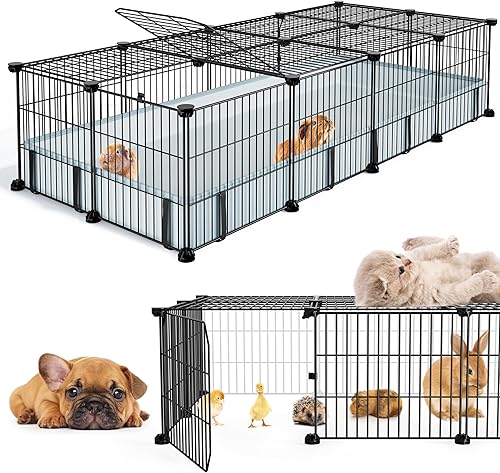
Check Price on AmazonThis modular panel system gives you a broad, configurable floor pen with a waterproof mat, 20 panels, two doors, and a top cover. The listed footprint is 56 x 24 in, with 9.33 ft² of floor area. That flexibility appeals when a room corner needs an unusual shape or you want floor-level housing.
Here is the catch: the listing gives 4 in × 1 in safety gaps. That is a prominent reason to verify fit before use. Wide openings can allow escapes and create foot problems, and a title that names quail does not prove the geometry is safe. It also lacks an egg roll-out system, so collection and cleaning require a different routine. Do not infer quail capacity from the guinea-pig claim.

$
Check Price on AmazonThis A-frame wooden hutch is the low-cost route for a keeper who wants an indoor or outdoor enclosure with two doors, a pull-out tray, and a ventilated feature. The footprint is long and fairly shallow, so it can fit along a wall where a square pen would not. The tray should make routine waste removal less awkward.
Evidence is sparse, with only six reviews, and the listing does not specify quail mesh, floor details, or egg roll-out. Check the actual delivered wire, all edges, the tray fit, and door access before birds move in. At 17.52 in overall, it also needs soft roof protection if the bird area is taller than the 8–12 in reference. Keep it dry and away from direct drafts indoors. This is a budget hutch experiment, not a cage to buy on the product title alone.
The Hatching Time Quail Breeding Cage Indoor, 2 Section, 1 Layer, Traditional is the best overall choice here. Its divider, roll-out egg area, waste tray, and watering parts suit a small Coturnix setup. A generic hutch can still suit you if furniture appearance or a broad floor pen matters more.
Yes, if it provides enough usable floor area, safe floor geometry, ventilation, and cleaning access. Purpose-built cages usually make those checks easier. A repurposed panel pen or hutch needs a close look at gaps, edges, roof, and floor support before birds move in.
Start with at least 1 ft² of wire-cage floor per Coturnix, with 1.5 ft² as the kinder target. Measure the usable bird floor and calculate each level separately. Do not count stacked levels as one shared floor or rely on a seller headline capacity.
The reference height for a Coturnix cage is 8–12 in. A taller enclosure needs a soft roof or another head-impact mitigation plan because startled birds can flush upward. Extra height does not replace floor area.
They can when the room and cage stay dry, draft-free, ventilated, and easy to clean. The usable floor still sets the flock size. Keep the setup away from heavy traffic and direct airflow, and choose a layout you can reach every day.
Check usable floor area, gap size, roof safety, tray alignment, door access, feed and water placement, ventilation, and the return policy. Listing titles are a starting point only. Measure generic panels and inspect the delivered edges before stocking birds.