 Quail Corner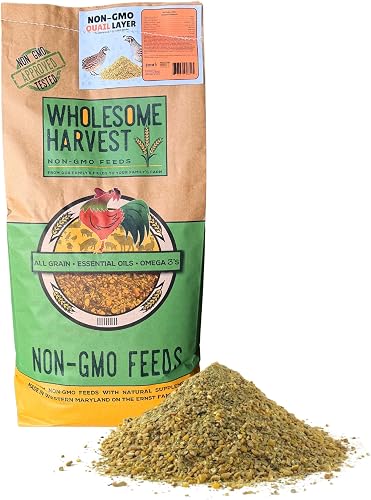
Contextual Layer Option
Non-GMO Quail Layer Feed 26% - Premium 40 lb Food for Laying Birds, Button Food
$$
Check Price on AmazonSwitch Coturnix quail to a complete game-bird layer ration as the flock approaches or enters lay, rather than on a rigid birthday. Coturnix commonly produce first eggs at 6–8 weeks. Game-bird layer feed is 20–24% protein, while starter feed is 28–30% for weeks 0–6, so starter guidance does not answer a layer-feed question.
Read the current product label and watch the birds’ actual stage before changing anything. Mississippi State University Extension also ties feed programs to the birds’ production stage. A new ration cannot promise more eggs, and it cannot replace the rest of a sound setup.
A three-step stage check and feed change
A layer-stage ration the flock accepts without confusing starter, grower, and layer guidance.
Coturnix first eggs commonly arrive at 6–8 weeks. As the flock approaches lay, choose a complete game-bird layer feed in the 20–24% protein range, then follow the product label and introduce it gradually alongside the current feed. Watch acceptance and flock condition instead of treating age as the only rule. For label-by-label context, see our quail layer-feed picks.
Gather the current bag, a suitable complete ration, and clean feeding equipment before you start. Keep the bag dry and sealed so storage does not muddy the feed change.
$$
Check Price on AmazonCheck the flock stage first, select a label that fits laying game birds, and make the change in a way that lets you see what the covey accepts. Keep the steps simple and record what is in the feeder so a sudden change in appetite does not leave you guessing.
Confirm that you have Coturnix and note the current feed. First eggs commonly appear at 6–8 weeks, so that window is a useful sign that the flock is approaching lay. Look at the whole picture, including age, sex, current ration, and the birds’ normal eating behavior.
Do not copy the starter plan into this stage. Starter feed is 28–30% game-bird starter for weeks 0–6. If your birds are still chicks, keep following the current starter label and use our quail starter-feed guide for that earlier decision.
Buy a complete feed labeled for laying quail or laying game birds, then read the guaranteed analysis. Our game-bird layer range is 20–24% protein. Avoid assuming a chicken layer product is equivalent: chicken layer feed at 16% is too low for quail. Our quail layer-feed picks compares the current verified options and their label details.
If you want a dedicated quail-layer listing in a bulk bag, the supplied Wholesome Harvest option reports 26% protein, a 40-pound package, and granule form on its current listing. That 26% figure sits outside our 20–24% layer range. Treat it as a product-specific detail, check the current guaranteed analysis, and choose a smaller or local bag if your flock will not use a 40-pound bag while it stays fresh and dry.
Check the current Wholesome Harvest listing
Offer the new ration beside the familiar feed first and let the birds show you that they accept it. Do not invent a fixed mixing schedule when the label does not provide one. Watch what disappears, then settle on the appropriate complete ration.
Keep the feeder clean and the feed dry throughout the change. If the birds receive anything besides crumble, provide insoluble grit. Layers can have oyster shell free-choice. The complete ration remains the main feed.
Most trouble comes from stage confusion, label confusion, and poor storage. Prevent it by writing down the current feed, reading the new guaranteed analysis, and changing one major feed decision at a time.
Most switch problems show up as refusal, waste, or a confusing change in the birds’ routine. Pause and inspect the label, feeder, storage, and flock stage. Persistent health concerns belong with a poultry vet or extension office.
Check that the new feed is fresh, dry, and in a form the birds can pick up easily. Offer it alongside the familiar feed, then observe which one they choose. If acceptance remains poor, ask an extension office about a suitable local option rather than forcing a sudden change.
Spillage is hiding actual use. Clean the feeder, check its placement, and audit what the flock consumes without restricting access. A scale can help you understand waste, while the adult estimate of about 1 oz (25–30 g) per quail per day gives you a useful starting point.
Do not assume feed is the only cause. Recheck the stage, label, storage, light, water, and general setup. Watch for persistent changes in appetite or condition and talk to a poultry vet or extension office.
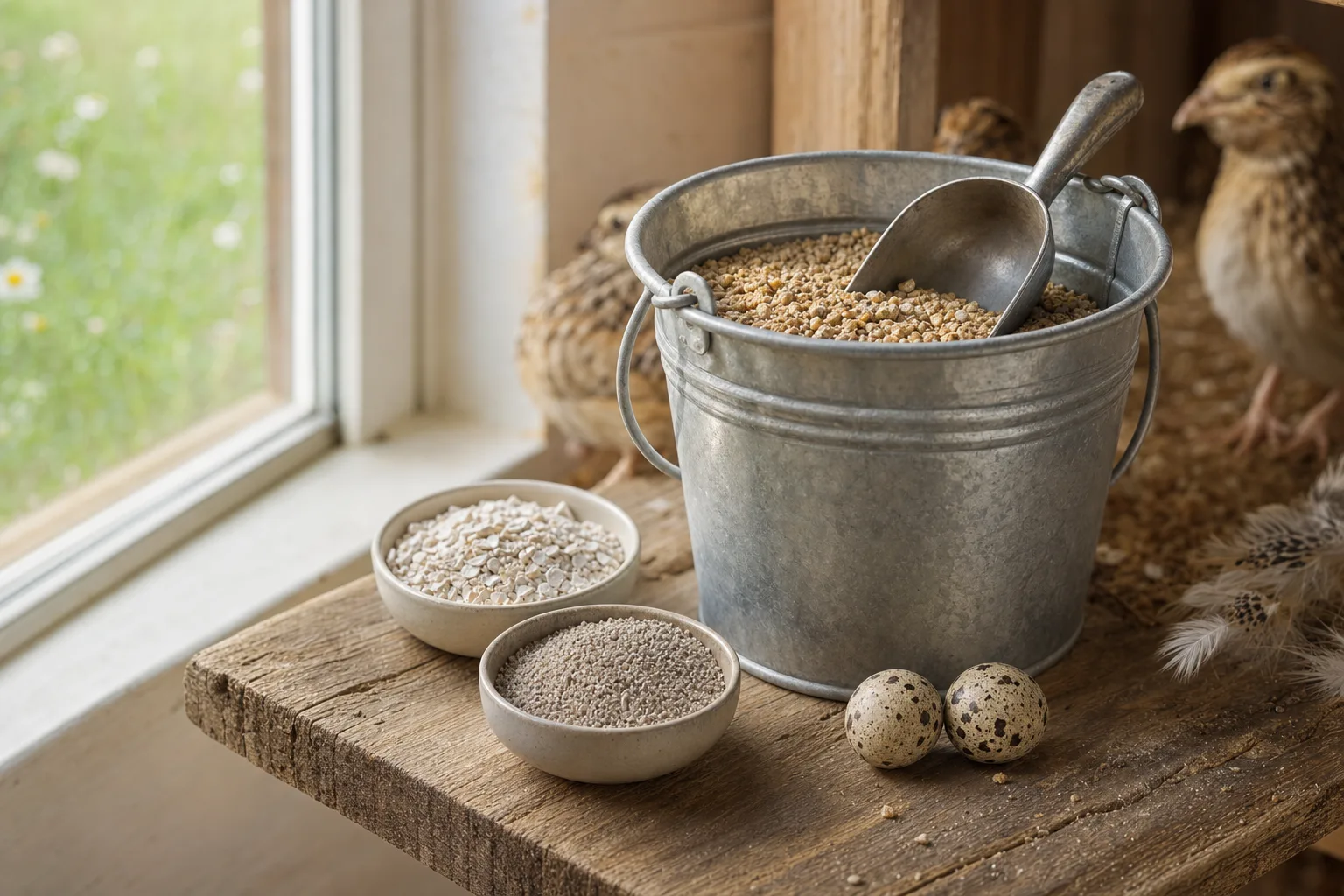
A quail-specific layer-labeled feed is the clearest choice for keepers who want that label. The Wholesome Harvest listing supplied for this guide reports 26% protein, outside our 20–24% range for game-bird layer feed. Check the current guaranteed analysis before buying.
Game-bird layer feed should be 20–24% protein according to Quail Corner’s feed guidance. The current product label controls for the bag you buy, so read its guaranteed analysis. Starter feed has a separate purpose and its higher range does not belong in this decision.
Start with a complete game-bird layer ration whose protein and label fit the laying stage. Feed alone does not guarantee egg production. Layers can have oyster shell free-choice, while insoluble grit is appropriate if birds receive anything besides crumble.
Chicken layer feed at 16% is too low for quail according to the facts sheet. Choose a complete game-bird or quail-layer label instead. Our chicken-feed label guide explains what to check when a poultry bag description is unclear.
Use the flock stage as the decision rule. Coturnix commonly lay their first eggs at 6–8 weeks, which is a useful cue, but age alone does not settle the choice. Check the current feed, the birds’ stage, and the new product label.
An adult quail uses about 1 oz (25–30 g) of feed per day. Treat that as an estimate, since free access, spilled feed, and flock behavior change the total. A simple feeding schedule helps you watch use without restricting access.