 Quail Corner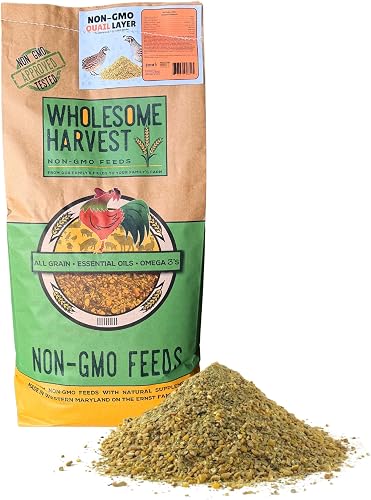
Best Overall
Non-GMO Quail Layer Feed 26% - Premium 40 lb Food for Laying Birds, Button Food
$$
Check Price on AmazonStart with a complete game-bird layer ration in the 20–24% protein range. Then read the full label: life stage, complete-ration wording, target species, calcium language, feed form, bag size, and freshness matter as much as the protein line.
The current Wholesome Harvest listing shows why that label check matters. It names laying adult birds and lists 26% protein, above the facts sheet’s general layer range. Treat that as a product-label fact to verify on the current bag, not as a universal target. For specific options, see our quail layer-feed picks.
A dedicated quail-layer ration is my first stop. A game-bird layer ration works when its stage wording and analysis line up. General game-bird feed needs closer inspection, and ordinary 16% chicken layer feed is too low for quail.
This is the cleanest buy when the bag names laying quail and calls itself a complete ration. The stage match is plain on the front. Still read the guaranteed analysis, because a product name does not replace the label’s numbers.
This is a sensible second choice when the product is clearly intended for laying game birds and fits the 20–24% range. Look for layer wording, complete-feed language, and calcium wording. A bag that says only “game bird” leaves too much of the decision to you.
Use a general game-bird ration only after checking its stage direction and guaranteed analysis. “Game bird” names a broad group, not a laying stage. If the bag emphasizes growth, starter use, or maintenance, put it back and keep looking.
Ordinary chicken layer feed is not an equal substitute for quail layer feed. The facts sheet puts chicken layer feed at 16%, too low for quail. A complete game-bird layer label is the better shopping direction.
Choose 20–24% protein for game-bird layer feed. That is a husbandry range, while the guaranteed analysis controls the choice for a particular product. The supplied listing says 26%, so verify the current bag instead of treating the higher figure as the ideal for every laying flock.
Coturnix commonly produce first eggs at 6–8 weeks. Use that as a stage cue, then follow the feed label and look at the flock in front of you. For the wider life-stage picture, compare our quail feed picks. Keep starter guidance separate with our quail starter-feed guide.
Read the label in this order: life stage, complete-ration wording, target species, calcium language, form, and freshness. That keeps a bold protein number from hiding a less obvious line that sends you home with grower or general game-bird feed.
After those checks, the Wholesome Harvest example has a clear place. Its current listing names laying adult birds, added calcium, a 40-pound package, a granule form, and 26% protein. That makes it a useful label-reading example for a keeper with dry storage. Check the current bag before buying, especially because its protein line sits above the general range.
$$
Check Price on AmazonPlan around 1 oz (25–30 g) of feed per adult quail per day. That is a useful estimate, not a promise of exact consumption. Spills, flock size, access, and waste decide how quickly feed actually leaves the feeder.
For example, 10 adults at 1 oz each would use about 10 oz per day before waste. A 40-pound bag is a bulk purchase, so make sure you have dry storage and enough birds to use it while the feed is fresh. Smaller bags suit a new formula or a small covey. Use a simple quail feeding schedule to track refills and waste.
Price badges describe a shopping trade-off, not a protein guarantee. Package weight, shipping, availability, storage, and freshness often matter more than the badge itself. Compare the usable bag and label clarity before chasing the lowest listed price.
| Tier | What it buys | Check before ordering |
|---|---|---|
| $ | A way to try a formula or serve a small flock. | Shipping and package weight can change the unit value. |
| $$ | A practical middle ground for label clarity and availability. | Make sure the bag fits your dry storage. |
| $$$ | A specialized or convenient product. | Higher price does not guarantee better laying performance. |
Most buying mistakes happen when a keeper stops at the protein number or product photo. Match the flock’s stage to the complete-ration label, then check the bag condition and the amount you can store.
Use the label framework above before opening a product roundup. For a shortlist of layer options, see our quail layer-feed picks, titled “best quail layer feed (2026): 5 picks.” For a wider life-stage view, see our quail feed picks. Chicks need a separate decision, covered in our quail starter-feed guide.
Mississippi State University Extension’s Feeding Quail is a useful named nutrition guide. Product pages establish listing details. Your current bag label decides how a particular feed fits.
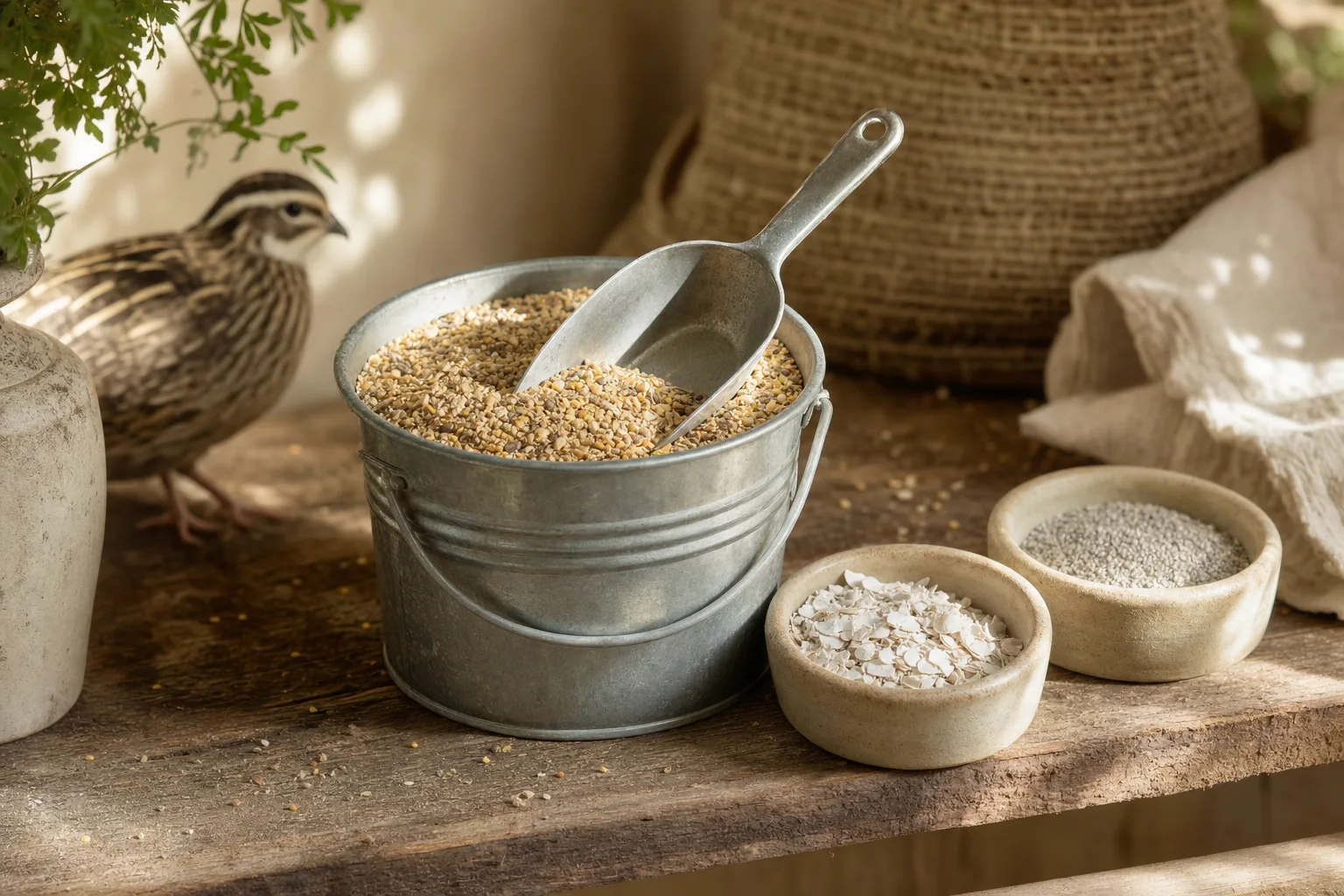
A layer-labeled game-bird product is the clearest starting point for laying quail. The Wholesome Harvest listing says 26% protein, while the facts sheet gives 20–24% for game-bird layer feed. Check the current guaranteed analysis before buying or switching.
Game-bird layer feed should be in the 20–24% protein range according to the facts sheet. The guaranteed analysis on the individual bag controls for that product. This layer range does not apply to starter feed.
Start with a complete game-bird layer ration that fits the label and provides suitable protein and calcium support. Feed alone cannot guarantee production. Oyster shell is free-choice for layers, so birds can use it alongside the base ration.
Ordinary chicken layer feed at 16% protein is too low for quail according to the facts sheet. Choose a complete game-bird layer ration with clear stage wording, and read our chicken-feed label guide before treating chicken feed as an equivalent.
Coturnix commonly lay their first eggs at 6–8 weeks, which gives you a useful stage cue. Age alone is not a switch rule. Follow the product label and consider whether the flock is moving into the laying stage.
An adult quail eats about 1 oz (25–30 g) of feed per day. Use that as a planning estimate for flock totals. Free access, spills, flock variation, and waste can change how fast the bag disappears.