 Quail Corner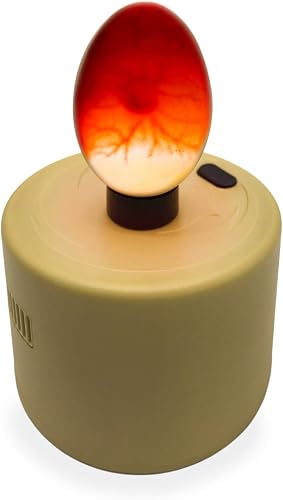
Best Upgrade
Titan Incubators High Intensity LED Chicken Egg Candler/Tester
$$
Check Price on AmazonDark or mottled quail eggs can be genuinely hard to read, and an opaque-looking view is not proof that an egg failed. Start by darkening the room and making the tightest safe seal around the small egg, so the light travels through the shell instead of escaping at the sides.
If your current light cannot seal around a small egg, compare our quail egg candler picks, including dedicated and rechargeable options. Set up your supplies in a steady place near the incubator; quail housing guides can help if the hatch station is cramped or unstable.
A calm four-step check for mottled or hard-to-read shells
A better-lit observation without treating one dark view as a hatch diagnosis
Darken the room, fit the egg to the smallest suitable candler cover or flexible ring, and rotate it slowly. Compare the view with other eggs from the batch, record uncertainty, and return the egg promptly. Do not discard it solely because one attempt did not show veins.
Visibility and viability are different questions. Candling shows what you can observe, not a guaranteed fertility or hatch result. Coturnix incubation is 17–18 days, while jumbo lines sometimes take 18–19 days. Lockdown begins on day 14–15, when turning stops and humidity rises.
Gather the light, a dark work area, and a way to log each egg before opening the incubator. If your current candler simply is not bright enough for the shell, a high-intensity LED candler or a high-intensity candling lamp is the fix that actually changes what you can see. That small bit of setup keeps you from fumbling over a hard surface or handling the same unclear egg again and again.
$$
Check Price on Amazon
Turn off a ceiling light and move away from a bright window. Steady the candler on a firm surface, open the incubator only when you are ready, and handle eggs with clean, dry hands. The dark room improves contrast, while a stable station keeps a small egg from slipping.
Place the broader end, or the appropriate end for your device, against its smallest supplied cover, tapered tip, or flexible ring. The fit should block side spill without squeezing, scraping, or forcing the shell into the candler. A general poultry opening can leave too much space around a quail egg.
Hold the egg and light steady before making one slow rotation. Look for changes that stay visible as the egg turns rather than chasing a single angle. Compare the egg with others from the same batch, since markings and contrast differ from shell to shell.
The Backyard Chickens photo guide, “A day by day photo guide to normally developing quail eggs using a phone light to candle the eggs,” is useful keeper visual experience. It supports clean hands, a dark room, gentle handling, batch comparison, and waiting when the view is uncertain. Treat it as a visual reference, not extension authority.
Write “unclear” in your batch log if you cannot interpret the view. Plan an early development check and a pre-lockdown check without inventing a new schedule. Coturnix lockdown is day 14–15, when turning stops and humidity rises. After that boundary, follow your incubator’s hatch procedure instead of repeatedly removing eggs.
For temperature and incubation handling context, compare Penn State Extension, Mississippi State Extension, or Texas A&M Extension poultry guidance. Forced-air incubators are set to 99.5°F / 37.5°C, while still-air temperature is measured at the egg top at 101–102°F / 38.3–38.9°C. Coturnix turning is 3–5 times per day or automatic turning, and most pips occur within 24 hours of day 17, with stragglers left to day 19–20.
Most failed views come from light escaping around the shell or from trying to read one heavily marked egg in a bright room. Fix the viewing conditions first. Shell color and thickness still vary, so even a good candler will not make every quail egg look alike.
Reseat the egg with the smallest suitable cover or ring and move to a darker room. The fix is a tighter fit, not more pressure. If your candler has no narrow attachment, dedicated options in our quail egg candler picks are the comparison point.
Treat pigmentation or shell thickness as a visibility problem first. Rotate slowly, compare another egg from the same batch, and do not call the egg a failure from darkness alone. Myshire Farm’s “INCU-BRIGHT QUAIL EGG CANDLER” page offers a vendor perspective on marked shells. Use it as one perspective, not a promise of what your candler will show.
Shell pattern, light leakage, angle, or timing can hide veins. Note the uncertainty and recheck at the next planned observation rather than guessing at a new day. The Backyard Chickens “Coturnix Quail Egg Candling Guide” is lived keeper experience, so weigh it alongside extension guidance.
Slow down with one controlled movement. If reading the shell becomes guesswork, stop and return the egg. Candling should inform your next step, not become an endless session.
Stop and return the eggs. Day 14–15 is the lockdown boundary, when turning stops and humidity rises. Do not add a new “last day” rule from a forum post. For broader setup, temperature, humidity, and lockdown context, see our hatching guides.
Mottling, shell pigmentation, shell thickness, and light leaking around the egg can all make the inside look dark. Darkness alone does not show that an egg failed. Improve the room and seal, compare the batch, and record your next planned observation before setting the egg aside.
Use a dark room, the smallest suitable cover or flexible ring, and a steady hold. Rotate the egg slowly and look for details that stay visible as it turns. Compare it with other eggs from the same batch because shell pattern and contrast vary.
Shell pattern, viewing angle, light leakage, contrast, or observation timing can hide veins. Write down that the view was unclear and recheck at your next planned observation. A single disappointing view is not enough reason to discard the egg.
Prepare the dark station first, inspect one egg at a time, and keep the incubator opening brief. Use clean, dry hands, return each egg promptly, and make a note. Repeatedly removing eggs for a single photograph adds handling without guaranteeing a clearer answer.
No. An unclear image is not enough by itself. The egg next to it in the batch may show the same shell pattern, so wait for a recheck. Candling documents what you observe, and it cannot promise fertility or hatch success.
Coturnix lockdown begins on day 14–15, when turning stops and humidity rises. Use that boundary as the point to follow your incubator’s hatch procedure rather than repeatedly removing eggs. This guide avoids inventing an earlier final candling day.