 Quail Corner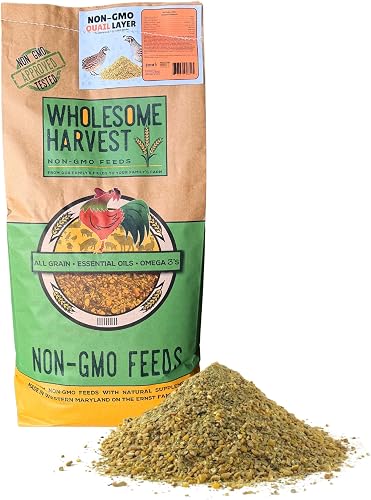
Best Quail-Specific Transition
Wholesome Harvest Non-GMO Quail Layer Feed 26% - Premium 40 lb Food for Laying Birds, Button Food
$$
Check Price on AmazonTo switch quail to organic feed, first check the label, life stage, complete-feed status, and particle form. Then blend the new ration into the current one in successive stages while watching intake and waste.
A six-step label, mix, and observation routine
A complete commercial ration that fits the flock, label, and birds’ acceptance.
Keep the old feed in the mix instead of emptying the feeder and replacing it all at once. Compare the new label with the birds’ life stage and complete-feed needs, mix progressively more new feed into the current ration, and pause the next increase if the flock refuses particles or eats noticeably less.
Gather the current ration, the new feed and its label, clean mixing tools, dry storage, and a simple observation note before you start.
For an adult-layer option with direct quail labeling, see the current Wholesome Harvest quail layer listing. Its 40 lb bag suits some flocks, but it can be excessive for a small covey if storage, freshness, or delivery cost is poor.
$$
Check Price on AmazonWrite down the current product, form, guaranteed analysis, and flock stage: Coturnix chicks, growers, or adult layers. Coturnix starter is 28–30% game-bird starter for weeks 0–6. Coturnix layer feed is 20–24%. Chicken layer feed at 16% is too low for quail.
The 26% protein shown in the Wholesome Harvest layer listing is above the site’s typical Coturnix layer range. Treat that as listing data, not a reason to rank it higher. Compare the full label and intended use. If these are chicks, follow our quail chick feeding routine for the first-brooder setup. Mississippi State University Extension also separates starter, developer, and layer jobs in its quail feeding programs overview.
Find the exact certification and ingredient claims on the package or listing. USDA Certified Organic, non-GMO, organic ingredients, and organic vitamins or minerals describe different things. The USDA Agricultural Marketing Service explains the certification rules in Organic Standards. For the product context, see our organic quail feed picks.
The Pink Rose Organix listing states USDA Certified Organic, Non-GMO, soy-free, and corn-free. It is a generic poultry pellet with only three verified reviews, so treat it as an option to investigate. Confirm quail fit, complete-feed status, life stage, and particle size. Only repeat the USDA certification claim for that listing. Wholesome Harvest and TOULIFLY are not presented here as USDA certified.
Identify crumble, granule, mash, pellet, or seed-based feed, then look for particles the birds can comfortably eat, manageable dust, and low waste. Wholesome Harvest is shown as a granule, Pink Rose as a pellet, and TOULIFLY as seeds with organic Fertrell vitamins and minerals claimed in the listing. TOULIFLY is presented as a game-bird feed, not a USDA-certified whole-feed organic product.
Form is a practical fit check, not a universal ranking. Do not make a seed or scratch blend the main ration unless its label supports that it is a complete feed for these birds.
Mix a small amount of new feed into the current feed, observe acceptance, and increase the new proportion through successive stages. Mix thoroughly instead of offering a separate full bowl, which lets dominant birds sort around new particles. Do not advance after clear refusal or a sudden drop in consumption.
There is no single calendar to follow here. Incubator Warehouse’s quail guide suggests a shorter staged change, while Feathered Farm Life gives a longer general-quail schedule. Those keeper sources disagree, so use the last accepted mix and the flock’s intake to set your pace rather than forcing a number.
Check the feeder for untouched particles, unusual waste, dampness, and signs that dominant birds are monopolizing access. Keep clean water available and make sure every bird can reach the feed.
An adult quail eats about 1 oz (25–30 g) per day. Use that only as a rough planning figure because flock size, waste, age, weather, and form change bag use. For persistent concerns or unusual changes, contact a poultry veterinarian or extension office.
Finish only after the flock is eating the new ration normally. If acceptance falls, continue the current mix or return to the last accepted stage rather than forcing the next increase. Keep the original product information for later label comparisons.
Store the accepted feed sealed in a dry, pest-resistant bin and keep the label or lot information with it. If the feed becomes damp, clumped, contaminated, or stale-smelling, stop using the questionable bag and ask the seller or an extension office how to proceed.
Stop the increase at the first clear refusal, return to the last accepted mix, and check the label, form, freshness, water, and feeder access before trying again.
Stop increasing the new proportion. Inspect particle size and dust, then check that the feed is complete and fits the flock’s life stage.
Return to the last accepted stage and check freshness and water access. Contact a poultry veterinarian or extension office if the concern persists.
Do not repeat the claim as fact. Look for explicit USDA certification and keep non-GMO, organic-ingredient, and organic-vitamin wording separate.
Stop using it and preserve the label and lot information if available. Ask the seller or an extension office how to proceed.
Pause the switch. Compare intended life stage, analysis, calcium information, and form before proceeding.
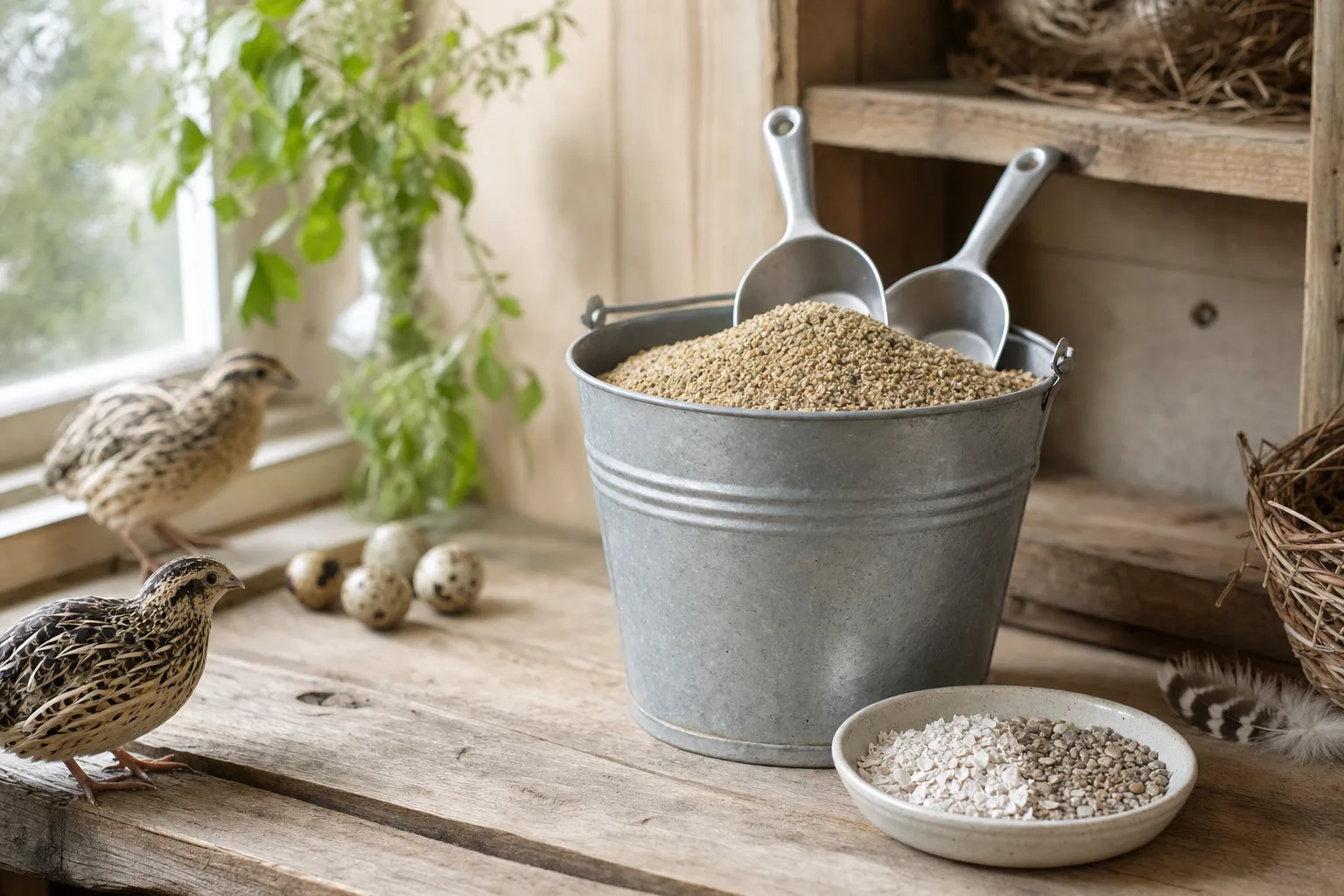
Use successive mix stages and increase the new feed only when the flock is eating normally. The site’s quail facts do not set an exact number of days, and keeper guides give different schedules, so use acceptance as the stop-and-go test.
No. USDA organic certification and non-GMO status are separate claims. Organic ingredients or organic vitamins and minerals also do not automatically certify the whole ration, so read the exact certification statement.
Choose 28–30% game-bird starter for Coturnix weeks 0–6, then check the complete-feed and life-stage language. Organic status does not replace the guaranteed analysis or prove that a product is starter feed.
They can be evaluated on an organic layer product when the label identifies a complete ration that fits the birds. The facts-sheet comparison for Coturnix layer feed is 20–24%, and 16% chicken layer feed is too low for quail. Higher protein is not automatically better.
Return to the last accepted mix stage and inspect particle form, dust, freshness, water access, and life-stage fit. If the concern persists or the birds show unusual changes, contact a poultry veterinarian or extension office.
Use about 1 oz (25–30 g) per adult bird per day as a rough planning figure. A large bag can be a poor fit when delivery cost, dry storage, waste, or flock size means it sits too long.