 Quail Corner

How to Feed Oyster Shell to Quail (2026): A Safe Setup
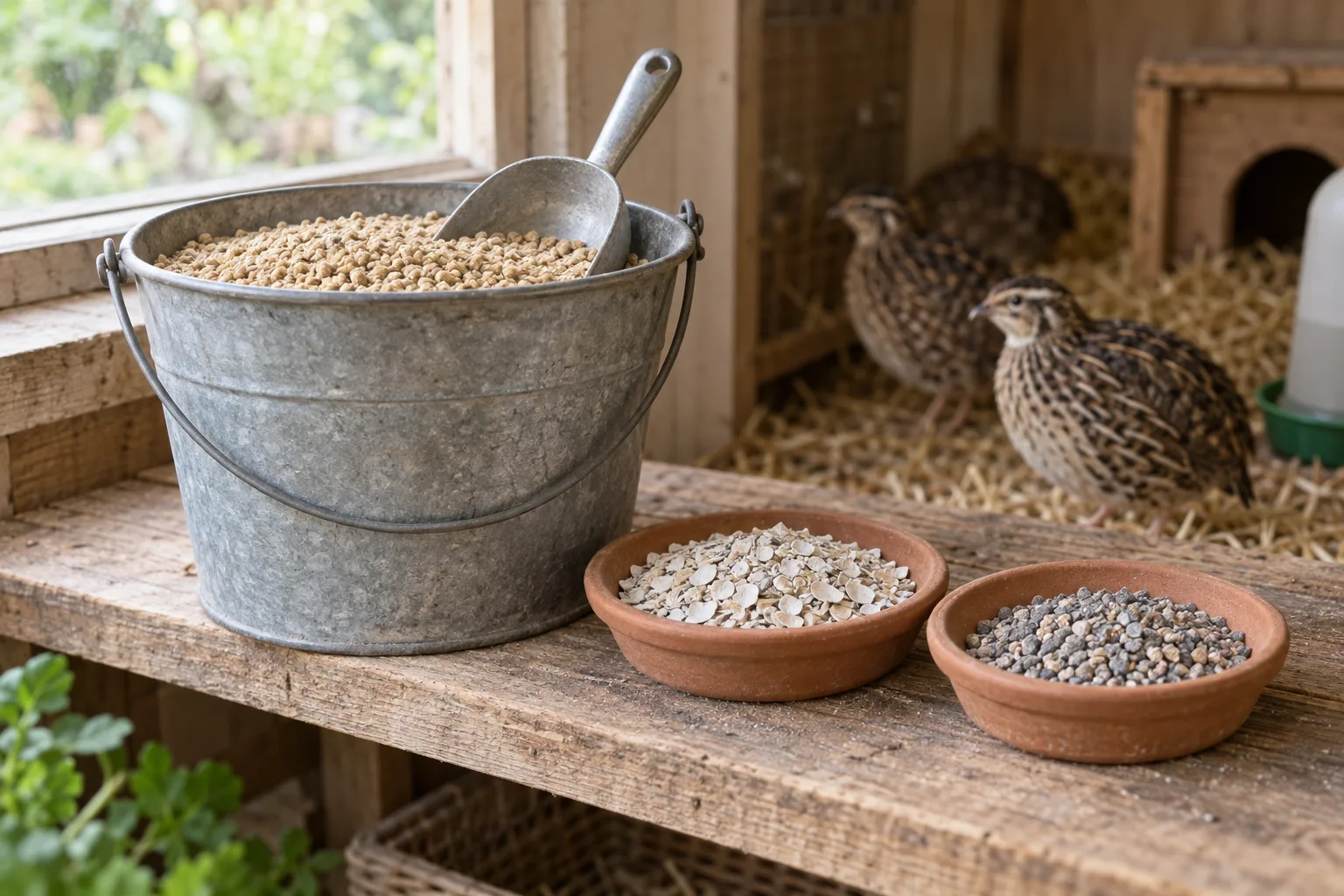
Feed oyster shell to laying Coturnix by offering it free-choice in a separate, dry dish. Keep the complete layer ration as the main feed, and keep insoluble grit in its own container because oyster shell is supplemental calcium, not grit.
How to Feed Oyster Shell to Quail
A repeatable 4-step calcium station setup
Step 1 Inspect the shell
- Check fineness and cleanliness
- Remove sharp or dusty material
Step 2 Set up a dish
- Use a dry, dedicated container
- Keep shell away from grit
Step 3 Keep feed complete
- Continue the correct layer ration
- Offer shell free-choice
Step 4 Check and refresh
- Watch for dampness and waste
- Refresh the station as needed
Result
A clean, optional calcium station for laying Coturnix, with feed and grit kept separate.
Quick answer
Put clean, suitably fine oyster shell in a dedicated dish that laying birds can visit on their own. Do not stir it through the ration, use it as grit, or rely on it as a complete feed.
For help choosing a manageable form, see best oyster shell for quail (2026): 8 calcium picks. That comparison covers shell form, flock fit, bag size, and separate-serving practicalities.
What you'll need
- Feed-grade oyster shell: Choose a form you can inspect easily, with relative fineness suited to small quail rather than large, sharp poultry pieces.
- A dedicated dish or feeder: It should stay stable, dry, and easy to empty.
- A small scoop: Use it only for the shell station so you do not carry shell into the feed bin.
- A dry location: Shelter the container from rain, drinker splashes, and wet litter.
- An inspection routine: Look for dampness, fouling, excess dust, and pieces the birds cannot manage.
If you need a container that keeps supplemental material accessible and dry, Best quail feeder (2026): 7 no-waste picks shows useful options.
Our Top Picks

Step-by-step
Step 1: Inspect the shell before serving
Open the bag and look at the material in good light. Choose shell that is reasonably fine or flaked for your quail, clean, and easy to pick up. Set aside very coarse, jagged pieces and anything with a strong damp or dirty smell. The Quail Coop gives the same practical warning: shell sold for larger poultry can be too coarse for small birds.
Skip mesh numbers. Quail do not have one useful shell-size target that fits every bag. Look for relative fineness, low dust, clean material, and pieces you can spot and remove before they reach the dish.
Step 2: Pick a manageable product when you need one
For a flaked option, Small Pet Select Flaked Oyster Shell lists fine flakes, uniform sizing, and a low-dust formula. Its manageable bag suits a keeper who wants to store shell without committing to a large bulk pack. Check the current listing for Small Pet Select Flaked Oyster Shell when this form fits your setup.
For a compact 15-ounce bag that explicitly names quail, RAINFLOW Crushed Oyster Shell 15 oz lists crushed shell for laying hens, ducks, and quail. That suits a small flock that does not need a large bag. Inspect the actual pieces when it arrives, then check the current listing for RAINFLOW Crushed Oyster Shell 15 oz.
Step 3: Place oyster shell in its own dry dish
Put the shell station beside the regular feeding area, where hens can find it without shell spilling into the ration. A shallow, stable container works if it stays clean and the birds can reach it. Keep it away from the drinker and from spots where rain or wet litter can collect.
Offer the shell free-choice for layers. Do not force it into a fixed scoop or dose. Replace material that becomes wet, fouled, or excessively dusty. A separate station also makes it obvious how much shell is being wasted and whether the flock is ignoring it.
Step 4: Keep the complete ration in place
Continue feeding a complete game-bird layer ration at 20–24% protein. Oyster shell supplements calcium; it does not replace the ration or supply everything a laying bird needs. Chicks from weeks 0–6 belong on 28–30% game-bird starter instead, so keep the shell station out of a chick setup.
For help choosing the base feed before adding supplemental calcium, read Best quail feed (2026): 7 picks by life stage. Keep insoluble grit separate whenever birds receive anything other than crumble, such as treats or greens. Shell and grit do different jobs.
Step 5: Inspect the station and refresh it
Make the dish check part of your normal feed-and-water round. Feel for damp shell, remove droppings or bedding, and look for a powdery layer that is blowing around the cage. Top up with clean material only after the container is fit to use.
Watch the birds and the eggs without trying to diagnose a problem from the shell dish. A persistent bird or egg concern deserves a conversation with a poultry veterinarian or extension office.
Common mistakes
- Mixing shell into the ration: Separate serving keeps the complete feed consistent and lets birds choose supplemental shell.
- Using shell as grit: Oyster shell is a calcium source. Provide insoluble grit separately when birds eat more than crumble.
- Trusting a chicken label without inspecting the form: Large poultry pieces can be awkward for quail. Check the actual texture.
- Serving damp shell: Wet material soils quickly. Move the dish, fix splashing, and discard contaminated shell.
- Treating shell as a cure or replacement feed: Keep the complete ration available and ask a vet or extension office about ongoing concerns.
Troubleshooting
The shell is wet or clumped
Move the dish away from the drinker, rain, and damp litter, then discard the wet material and start with a clean, dry portion. A covered or better-positioned feeder can help. If the same problem keeps returning, review the whole feeding station rather than adding more shell.
The birds scatter shell everywhere
Use a heavier, more stable container with a smaller accessible opening, and place it on a clean surface. Remove the spilled material so it does not mix with litter or grit. A feeder designed to reduce waste can be useful here, and the Best quail feeder (2026): 7 no-waste picks guide covers practical container choices.
The pieces look too coarse or sharp
Stop serving that portion and choose a finer flake or crushed form that you can inspect. Do not add a fixed dose or a guessed particle-size rule. If you make a homemade powder, use a clean, food-safe process and still serve it separately; Silver Homestead discusses the preparation angle without making it a replacement for a complete ration.
An egg or bird concern continues
Check that the birds have the correct complete feed, clean water, dry shell, and separate grit where needed. Persistent concerns, changes in a bird's condition, or repeated egg problems call for a poultry veterinarian or extension office. Oyster shell is supplemental calcium, not a treatment plan.
Frequently asked questions
Should oyster shell be mixed into quail feed?
Offer oyster shell in a separate dish instead of mixing it into the ration. That lets laying birds take supplemental calcium as needed while the complete feed remains their nutritional base.
Is oyster shell the same as grit for quail?
No. Oyster shell supplies supplemental calcium, while insoluble grit helps birds process foods other than crumble. Keep the two products in separate containers and provide grit when your birds receive treats, greens, or other foods.
Can chicks have oyster shell?
Do not use oyster shell as a chick ration. Chicks need game-bird starter at 28–30% protein through weeks 0–6. Reserve the free-choice shell station for laying birds and keep complete feed available.
What should I do if an egg concern continues?
Check the ration, water, shell station, and flock routine first. If a bird seems unwell or egg concerns persist, talk to a poultry veterinarian or your extension office rather than treating the shell as a cure.