 Quail Corner

Best Quail Processing Kit (2026): 8 Quail-Scale Picks
The best quail processing kit for most repeat small batches is the Hatching Time Quail Plucker. Its 16.2-inch ABS drum has 216 natural-rubber fingers, handles 4–6 quail per batch, and uses a 100 W/110 V direct-drive motor at 200 RPM.
The machine has a feather chute and weighs 28 lb. Skip a $$$ drum if you process one bird at a time, lack suitable power, water, or drainage, or prefer hand-plucking. A kit is a workflow, not necessarily one box.
8 Quail-Scale Processing Picks
Ranked by batch fit, quail-specific design, cleanup, handling, protection, and packaging usefulness
Overall
The sensible drum for repeat small batches
- 16.2-inch ABS drum
- 216 natural-rubber fingers
- 4–6 quail per batch
- Front feather chute
Top Pick Hatching Time Quail Plucker
$$$
Best for repeat Coturnix processing
Check Price on Amazon Compact
A smaller quail-first footprint
- 13-inch barrel
- 174 soft rubber fingers
- 3–5 quail per batch
- About 21 lb
Top Pick PluckerUkraine Mini 330
$$$
Best where workspace is tight
Check Price on Amazon Hand Method
Controlled cutting without a drum
- Micro-serrated blades
- Spring-loaded handles
- Separates for cleaning
- Handle lock
Top Pick OXO Spring-Loaded Poultry Shears
$$
Best for one bird at a time
Check Price on AmazonQuick answer: Buy the Hatching Time Quail Plucker for repeat Coturnix batches and pair it with the restraint, shears, gloves, cleaning, and packaging gear your station needs. Choose the OXO Spring-Loaded Poultry Shears for a hand-first setup, or the PluckerUkraine Mini 330 when a smaller drum fits your workspace better.
Quick picks
Our Top Picks


Which quail processing kit pieces fit your station?
| Product | Best for | Price band | Key spec | Verdict | Link |
|---|---|---|---|---|---|
| Hatching Time Quail Plucker | Repeat small-batch processing of 4–6 Coturnix at a time | $$$ | 16.2-inch drum, 216 fingers | Strong machine option | Check Price |
| PluckerUkraine Mini 330 | Keepers wanting a compact quail-first drum with a smaller footprint | $$$ | 13-inch barrel, 174 fingers | Strong machine option | Check Price |
| Rite Farm Pro Texas Quail Plucker | Small-bird processors prioritizing a lightweight quail-first machine | $$$ | 72 small-bird fingers | Strong machine option | Check Price |
| Power Plucker Medium Kill Cone | Adding a low-cost steel cone when the medium opening fits the bird | $ | 9-inch top opening | Useful station add-on | Check Price |
| OXO Spring-Loaded Poultry Shears | Controlled cutting and easier cleanup around small poultry joints | $$ | Separating micro-serrated blades | Useful station add-on | Check Price |
| Yardbird Poultry Scalding Gloves | Handling hot water and wet birds with forearm coverage | $$ | Long heat-resistant cuffs | Useful station add-on | Check Price |
| Schwer A7 Cut-Resistant Gloves | Adding reusable hand protection for cutting and tool handling | $ | ANSI A7 cut resistance | Useful station add-on | Check Price |
| FoodSaver Vacuum Seal Combo Pack | Packaging finished birds after chilling when a compatible sealer is already available | $$ | Rolls and precut freezer bags | Useful station add-on | Check Price |
Prices change often. Check the current price on Amazon.
How should you judge a quail processing kit?
The useful question is how each piece fits the whole station. A plucker must match bird size, batch size, power, water handling, and cleanup space. A hand setup must give you controlled cutting, safe handling, washable surfaces, and a clear plan for chilling and packaging.
We separate quail-first gear from generic poultry gear. A product can be useful without being quail-specific, though its openings, fingers, blades, and loading pattern still need checking. UMN Extension's home poultry-processing guidance, Penn State's meat and poultry preservation guidance, and Mississippi State's backyard poultry guidance put sanitation, clean surfaces, chilling, and packaging beside the equipment choice, so those needs count as much as motor power.
Which products deserve a place in the station?
The Hatching Time Quail Plucker earns the top spot for repeat batches. The OXO shears make more sense for one-bird keepers, while the Mini 330 suits tight workspaces. The remaining picks fill restraint, protection, and packaging gaps around either workflow.
1) Hatching Time Quail Plucker
This is the easiest recommendation for a keeper processing several Coturnix at a time. The 4–6 bird batch size is quail-scale, and the front feather chute gives runoff a defined direction instead of leaving you to improvise around the whole machine. The 28 lb body is a real station decision. Set it where 110 V power, rinse water, drainage, and a washable work surface are already available. It still works only after suitable scalding, and it does not replace a humane handling plan or clean finish work.
For a closer look at how the 16.2-inch drum fits Coturnix work, read Hatching Time Quail Plucker Review (2026): 16.2 in Drum vs Coturnix Reality.
Pros
- ✓ Quail-scale 4–6 bird batch capacity
- ✓ 216 natural-rubber fingers
- ✓ Front feather chute
Cons
- ✗ Large and costly for one-bird keepers
- ✗ Needs suitable power, water, and drainage
2) PluckerUkraine Mini 330
The Mini 330 makes sense when a full-size tabletop drum feels like too much machine. Its 13-inch barrel and 3–5 quail capacity keep the focus on small-bird work, while the listed 21 lb weight is easier to move between storage and the processing area. It remains a $$$ purchase, so the smaller footprint needs to solve a real problem. Keepers with only occasional birds should compare its space and cleanup demands with hand-plucking. The deeper plucker comparison covers the drum-style versus hand-tool decision.
Pros
- ✓ Compact quail-first barrel
- ✓ 3–5 bird batch fit
- ✓ Lighter than the overall pick
Cons
- ✗ Still expensive for occasional use
- ✗ Less batch room than the Hatching Time
3) Rite Farm Pro Texas Quail Plucker
This lightweight machine is aimed at small-bird processors who care more about moving and storing the unit than about a large batch. The welded aluminum body and 12 lb listed weight suit a compact station that gets packed away after each session. The listing specifies 72 small plucker fingers, dimensions, and a standard US plug, yet it does not give a batch count. Treat it as a lightweight quail-first option, then confirm loading guidance before purchase.
Pros
- ✓ Only 12 lb listed
- ✓ Small-bird fingers
- ✓ Compact 11 x 13 x 19 inch body
Cons
- ✗ No listed batch capacity
- ✗ Still a $$$ machine
4) Power Plucker Medium Kill Cone

A restraint cone earns its place before the cutting stage, when you need a repeatable way to position a bird and keep your hands focused. This galvanized steel model has a 9-inch top opening, 3.5-inch bottom opening, and 16-inch length. Do not assume medium means it fits every quail or mounting point. Check the opening against your birds and the wall, board, or stand where you plan to attach it. It is a $ add-on, so it can suit a hand-plucking station.
Pros
- ✓ Low-cost restraint add-on
- ✓ Steel construction
- ✓ Reinforced mounting hole
Cons
- ✗ Fit depends on the bird and mount
- ✗ Generic poultry sizing needs checking
5) OXO Spring-Loaded Poultry Shears

These shears are the best answer for a one-bird-at-a-time keeper or anyone who prefers a hand workflow. Spring-loaded handles reduce the need to reset your grip, while micro-serrated and notched blades give you a controlled cut. The strongest practical feature is cleanup. The blades separate, and the listing says they are dishwasher safe. Read extension guidance for your full sanitation routine, then keep the shears reserved for this work and dry them properly after cleaning.
Pros
- ✓ Good hand-first choice
- ✓ Separating blades
- ✓ Spring-loaded non-slip handles
Cons
- ✗ Slower for repeated batches
- ✗ Does not replace restraint or chilling plans
6) Yardbird Poultry Scalding Gloves

These gloves are for the hot, wet part of the station. Waterproof neoprene, an insulated liner, long cuffs, and a textured surface give you forearm coverage while handling hot water and wet birds. They are a protection layer, not permission to rush. Fit them before the session, keep the work surface clear, and plan where wet gloves will go between tasks. The $$ band makes them a sensible add-on when scalding is part of your routine.
Pros
- ✓ Long cuffs
- ✓ Waterproof textured neoprene
- ✓ Useful grip for wet work
Cons
- ✗ Only one pair in the pack
- ✗ Not a substitute for careful handling
7) Schwer A7 Cut-Resistant Gloves

Cut-resistant gloves add a separate layer of protection for cutting and tool handling. This listing specifies food-grade meat handling, ANSI A7 cut resistance, and two pairs, which is useful when one pair is being cleaned or dried. Gloves do not make a dirty station safe. Use them with clean surfaces, a controlled workflow, and sanitation steps recommended by extension guidance. Check the medium listing size against your hands before ordering.
Pros
- ✓ ANSI A7 cut resistance
- ✓ Two pairs
- ✓ Food-grade meat-handling use
Cons
- ✗ Medium listing may not fit everyone
- ✗ Cut protection does not cover heat
8) FoodSaver Vacuum Seal Combo Pack

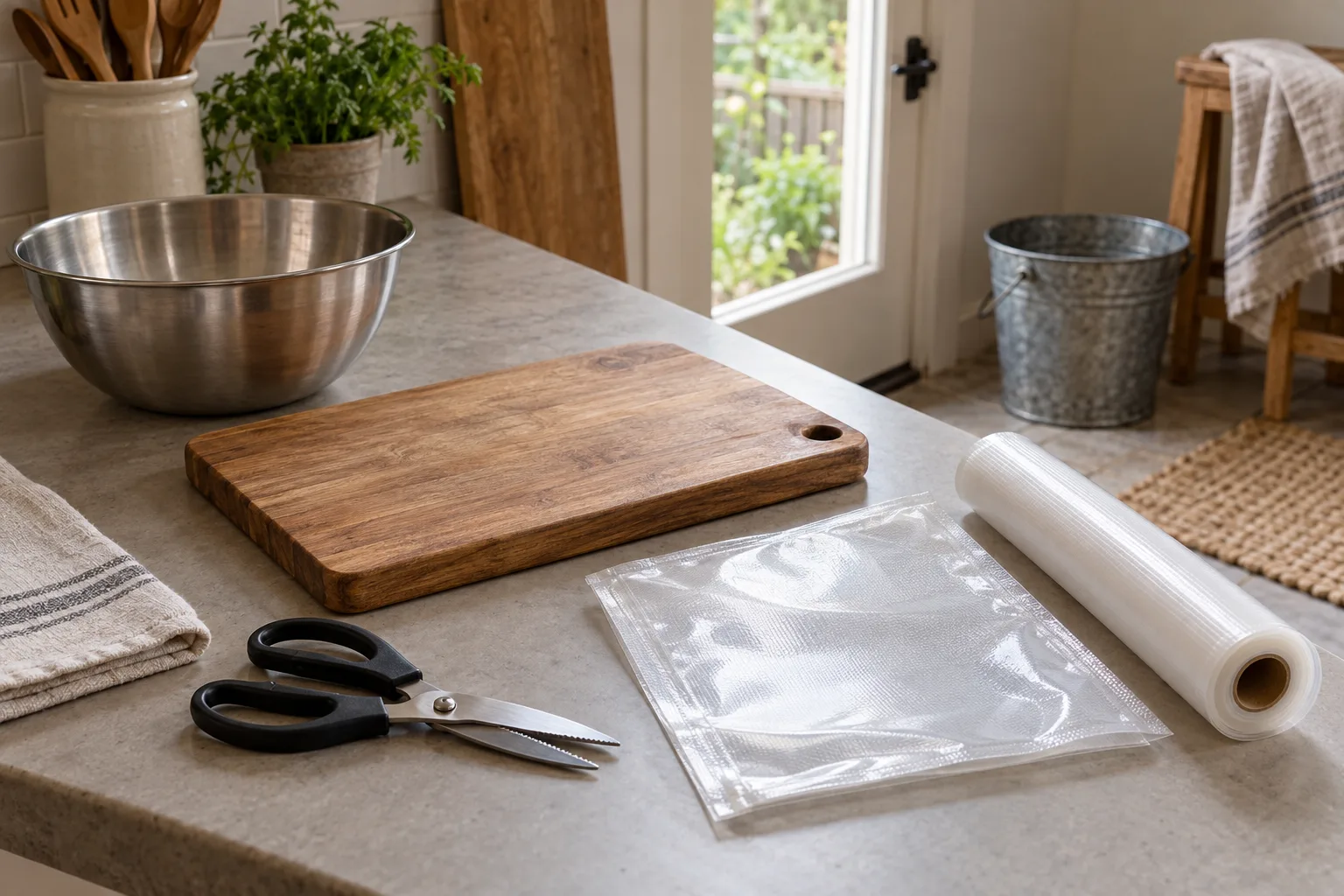
Packaging is the final part of the workflow, and this combo pack suits a keeper who already owns a compatible FoodSaver heat-seal system. It includes rolls and precut bags, so you can choose a format that matches the finished birds and your freezer space. Use packaging after the birds have been chilled according to current extension guidance. Keep the sealing area clean and dry, label each package, and check compatibility before adding this $$ consumable.
Pros
- ✓ Rolls plus precut bags
- ✓ Useful for a compatible sealer
- ✓ Flexible freezer formats
Cons
- ✗ Needs a compatible heat-seal system
- ✗ Consumable rather than a complete station
Frequently asked questions
What is the best quail processing equipment kit?
The best quail processing equipment kit for repeat small batches is the Hatching Time Quail Plucker paired with suitable restraint, poultry shears, protective gloves, clean water, drainage, and freezer packaging. One-bird keepers should choose shears and a hand workflow instead of paying for a drum.
What belongs in a quail processing kit?
A quail processing kit needs a humane handling plan, a plucking method, a clean cutting tool, hand protection, washable work surfaces, water, drainage, and a chilling and packaging plan. Add a plucker only when batch size and workspace justify its cleanup and power needs.
Is the Hatching Time Quail Plucker good for Coturnix?
Yes. Its listed 16.2-inch ABS drum, 216 natural-rubber fingers, and 4–6 quail batch capacity suit repeat Coturnix processing. It still needs suitable scalding beforehand and enough room for water, feather runoff, electrical safety, and cleanup.
Do I need a quail butchering kit for one bird?
No. For one bird at a time, poultry shears, appropriate gloves, a clean surface, water, and packaging are usually the sensible starting point. A drum earns its space when repeated batches make hand-plucking the slow part of the job.
Can a chicken plucker process quail?
A chicken plucker can work in some cases, yet its drum, fingers, and loading pattern may be poorly matched to small birds. Check quail compatibility before buying, and read our chicken-plucker guidance before placing a small bird in oversized equipment.
What should I buy after a quail plucker?
Buy the restraint, cutting, protection, cleanup, and packaging pieces your station lacks. A cone, poultry shears, waterproof gloves, cut-resistant gloves, washable surfaces, water access, drainage, and compatible vacuum bags cover the practical gaps around a plucker.
Related guides
- Best Quail Plucker (2026): 6 Tabletop Picks for Coturnix for a plucker-only comparison.
- How to Pluck a Quail (2026): Step-by-Step Scalding and Hand-Plucking for the hand method.
- Can You Use a Chicken Plucker for Quail? (2026) for oversized-machine compatibility.
- Hatching Time Quail Plucker Review (2026): 16.2 in Drum vs Coturnix Reality for a closer machine review.